
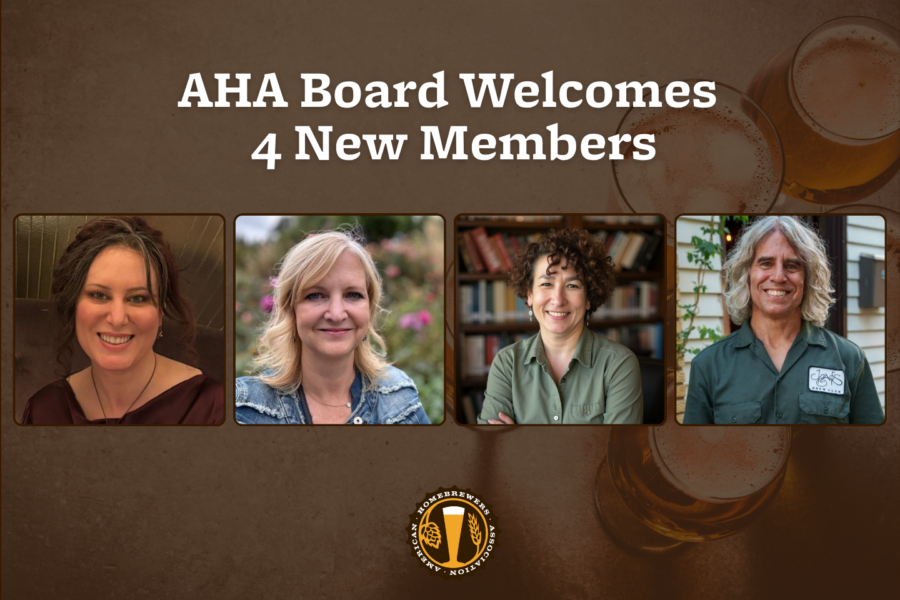
The American Homebrewers Association (AHA) has officially concluded its first historic election cycle as an independent entity, signaling a transformative era for the world’s largest organization dedicated to the hobby of home fermentation. Following a rigorous selection process that began earlier this year, the association’s membership has elected four new leaders to its Board of Directors: Jen Blair, Stephanie Butler, Jen Pereira, and Jeff Whelpley. This election represents a pivotal moment in the association’s nearly 50-year history, as it navigates its new status as a dual-structured organization comprising a 501(c)(6) membership association and a 501(c)(3) educational foundation.
The newly elected directors were chosen from a competitive slate of 10 finalists, who were narrowed down from an initial pool of 28 nominees. This high level of engagement from the community underscores the renewed interest in the AHA’s governance following its recent transition to independence. The four incoming board members will each serve a three-year term, contributing their diverse expertise to a board that also includes continuing members Shawna Cormier, Drew Beechum, and Gregory Roskopf. The official seating of the new board is scheduled to take place during the AHA’s 2026 annual meeting on June 20, 2026, in Asheville, North Carolina. This meeting will be a central highlight of Homebrew Con, the association’s premier annual gathering for hobbyists and industry professionals alike.
A Strategic Transition to Independence
The significance of this election cannot be overstated within the context of the AHA’s organizational evolution. For decades, the American Homebrewers Association operated under the umbrella of the Brewers Association (BA), a trade group primarily focused on commercial craft breweries. However, the recent shift to an independent 501(c)(6) and 501(c)(3) structure allows the AHA to focus exclusively on the needs of homebrewers without the competing priorities of commercial industry advocacy.
The 501(c)(6) designation enables the AHA to function as a professional membership organization, allowing for more robust advocacy regarding homebrewing rights, legislative issues, and member benefits. Simultaneously, the establishment of the A-HA Foundation as a 501(c)(3) nonprofit allows the organization to pursue charitable and educational missions, such as scholarship programs, technical research, and the preservation of brewing history. This dual structure is common among high-impact trade and hobbyist organizations, providing the flexibility to both lobby for members’ interests and accept tax-deductible contributions for educational initiatives.
The Election Process and Demographic Engagement
The 2026 election cycle was designed to be the most transparent and member-driven in the association’s history. The process began with an open call for nominations, resulting in 28 individuals putting their names forward. These nominees represented a wide cross-section of the brewing community, including BJCP (Beer Judge Certification Program) judges, professional brewers who started in their kitchens, technical writers, and community organizers.
A nominating committee reviewed the initial pool to select 10 candidates for the final ballot. Criteria for selection included previous volunteer experience, specialized skills in finance or non-profit management, and a demonstrated commitment to the AHA’s core values of community, education, joy, and volunteerism. The final four winners—Blair, Butler, Pereira, and Whelpley—bring a mix of technical brewing knowledge and organizational leadership that the AHA believes is essential for its next phase of growth.
The level of participation in the vote also reflects a broader trend in the hobby. While homebrewing saw a massive surge in the early 2010s followed by a period of stabilization, the move toward independence has re-energized the core membership base. Data from recent industry surveys suggest that today’s homebrewers are increasingly focused on diversity, technical precision, and the social aspects of the hobby, all of which were reflected in the candidates’ platforms.
Honoring the Founding Board and Legacy Leaders
As the AHA prepares to seat its new directors, it also pauses to recognize the contributions of its departing board members, Sandy Cockerham and Gary Glass. Both served as founding board members during the critical transition period when the AHA was establishing its independent framework. Glass, in particular, has been a familiar face in the homebrewing world for decades, having previously served as the AHA Director under the Brewers Association for many years.
Cockerham and Glass were instrumental in navigating the legal and financial complexities of the "split" from the Brewers Association. Their work ensured that the AHA retained its intellectual property, including Zymurgy magazine and the National Homebrew Competition, while establishing the administrative infrastructure necessary for a standalone non-profit. Their departure marks the end of the "transitional" board and the beginning of the "elected" board era.
Strategic Vision: A Homebrewer in Every Neighborhood
Board Chair Shawna Cormier has been vocal about the ambitious goals of the new leadership. The association’s vision is "a homebrewer in every neighborhood and a homebrew club in every community." This mission goes beyond simply increasing membership numbers; it focuses on the democratization of brewing knowledge and the strengthening of local networks.
To achieve this, the new board is expected to prioritize several key initiatives:
- Digital Resource Expansion: Enhancing the HomebrewersAssociation.org platform to provide more interactive and accessible technical resources.
- Club Support Systems: Providing local homebrew clubs with better administrative tools, insurance options, and educational content to help them thrive in a post-pandemic social environment.
- Legislative Advocacy: Continuing to protect the rights of homebrewers to transport their beer to competitions and club meetings, which remains a legal gray area in certain jurisdictions.
- Diversity and Inclusion: Implementing programs to ensure the hobby is welcoming to individuals of all backgrounds, reflecting the changing demographics of the United States.
The Significance of Homebrew Con 2026 in Asheville
The decision to seat the new board in Asheville, North Carolina, is a strategic nod to one of America’s most vibrant beer cultures. Known as "Beer City USA," Asheville boasts one of the highest numbers of breweries per capita in the country. Many of the professional brewers in the Asheville region began as homebrewers and remain active members of the AHA, making it the ideal location for an annual meeting centered on community and education.
Homebrew Con 2026 is expected to draw thousands of attendees. The event serves as the final round for the National Homebrew Competition, the world’s largest international homebrew competition. The seating of the new board during this event provides a public forum for members to interact with their new representatives and discuss the future direction of the association.
Broader Impact and Industry Implications
The independence of the AHA has broader implications for the American craft beer industry at large. Historically, homebrewers have been the primary "R&D" wing of the craft beer movement. Techniques that are now standard in commercial brewing, such as heavy dry-hopping, the use of non-traditional adjuncts, and the revival of ancient styles like Gose and Grätzer, were largely pioneered or rediscovered by homebrewers.
By strengthening the AHA as an independent entity, the brewing community ensures that the grassroots level of innovation remains healthy. A well-funded, well-governed AHA can continue to provide the educational foundation that produces the next generation of professional brewers and informed consumers.
Furthermore, the 501(c)(3) foundation arm of the AHA is expected to play a larger role in the scientific study of fermentation. As homebrewers push the boundaries of yeast management and water chemistry, the AHA can facilitate peer-reviewed research and technical white papers that benefit both hobbyists and small-scale commercial operations.
Conclusion and Future Outlook
The election of Jen Blair, Stephanie Butler, Jen Pereira, and Jeff Whelpley marks the successful completion of the AHA’s first major democratic exercise as an independent body. With a full board now in place, the association is positioned to tackle the challenges of a modern hobbyist landscape. The transition from a subsidiary of a trade group to a member-directed non-profit is a bold move that grants the AHA the autonomy to define its own future.
As the association looks toward its 50th anniversary in 2028, the foundation laid by the founding board and the new energy brought by the elected directors suggest a bright future for American homebrewing. The focus remains steadfast on the core pillars of the organization: providing unmatched resources through Zymurgy and technical databases, celebrating excellence through the National Homebrew Competition, and fostering a sense of joy and community among those who find art and science in the simple act of brewing beer at home.