
The human journey from hunter-gatherer to digital-age inhabitant has been marked by profound shifts, none more evident than in how we understand and manage our own bodies. For millennia, our forebears navigated their health and performance through an intricate symphony of internal and external cues: the rumbling of a hungry stomach, the burn of fatigued muscles, the chill of an approaching storm, or the subtle shift in a fellow tribe member’s gait. Today, this ancient reliance on innate sensory perception is being rapidly augmented, and in some cases, supplanted, by a burgeoning ecosystem of wearable technology. If one possesses even a modicum of curiosity, a sleek device strapped to the wrist or finger can now meticulously track heart rate, step count, exercise intensity, and sleep quality – often all within a single, interconnected platform.
At its best, this technological revolution offers a crucial bridge between the subjective realm of personal feeling and the objective domain of measurable data. This convergence is, by and large, a remarkable advancement. While our subjective feelings and self-assessments are undeniably vital to our lived experience, they are often surprisingly unreliable indicators of physiological reality. Humans, despite our advanced cognitive abilities, are not inherently skilled at quantifying our experiences and behaviors with cold, impartial precision. Consider the common scenario of dietary estimation: a colleague, convinced he was adhering to a strict caloric intake, discovered through diligent tracking that he was inadvertently consuming an additional 500 calories daily, largely attributed to the liberal application of barbecue sauce. Such anecdotes highlight our inherent biases and the difficulty of accurate recall or real-time assessment. Of course, individual aptitudes vary; the legendary Canadian sprinter Ben Johnson was reportedly capable of estimating his 100-meter sprint time to within a tenth of a second of the official stopwatch readout. This, however, represents an extreme outlier performance, prompting a more universal inquiry: How proficient are we, as a species, at assessing ourselves, and how can we strategically leverage technology, such as fitness trackers, to enhance this accuracy and inform better health decisions?
The Evolution of Self-Tracking: From Mechanical Pedometers to AI-Powered Wearables
The human desire to measure and understand oneself is not a modern phenomenon. Early forms of "tracking" can be traced back to ancient civilizations using rudimentary methods to monitor agricultural cycles or personal well-being. The conceptual ancestor of modern wearables, the pedometer, emerged in the 18th century as a mechanical device to count steps. However, the real revolution in personal health tracking began in the late 20th and early 21st centuries. The miniaturization of electronics, advances in sensor technology (like micro-electromechanical systems, or MEMS), and the proliferation of affordable GPS capabilities laid the groundwork.
The late 2000s marked a pivotal moment with the widespread adoption of smartphones, which integrated accelerometers and GPS, making basic activity tracking accessible to millions through mobile applications. This paved the way for dedicated wearable devices. Early fitness bands focused on step counting and basic sleep tracking. By the mid-2010s, smartwatches integrated more sophisticated optical heart rate monitors, and specialized trackers like smart rings and continuous glucose monitors (CGMs) began to emerge. This chronological progression reflects a relentless drive towards greater sensor accuracy, broader data capture (encompassing activity, sleep, heart rate variability, stress, and recovery), and increasingly sophisticated algorithms that translate raw physiological signals into actionable, personalized insights, often leveraging artificial intelligence and machine learning. This rapid technological evolution has transitioned personal health monitoring from a niche interest to a mainstream tool, deeply embedding it into the daily routines of millions globally.
Unpacking the Accuracy of Modern Data Trackers
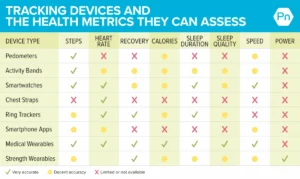
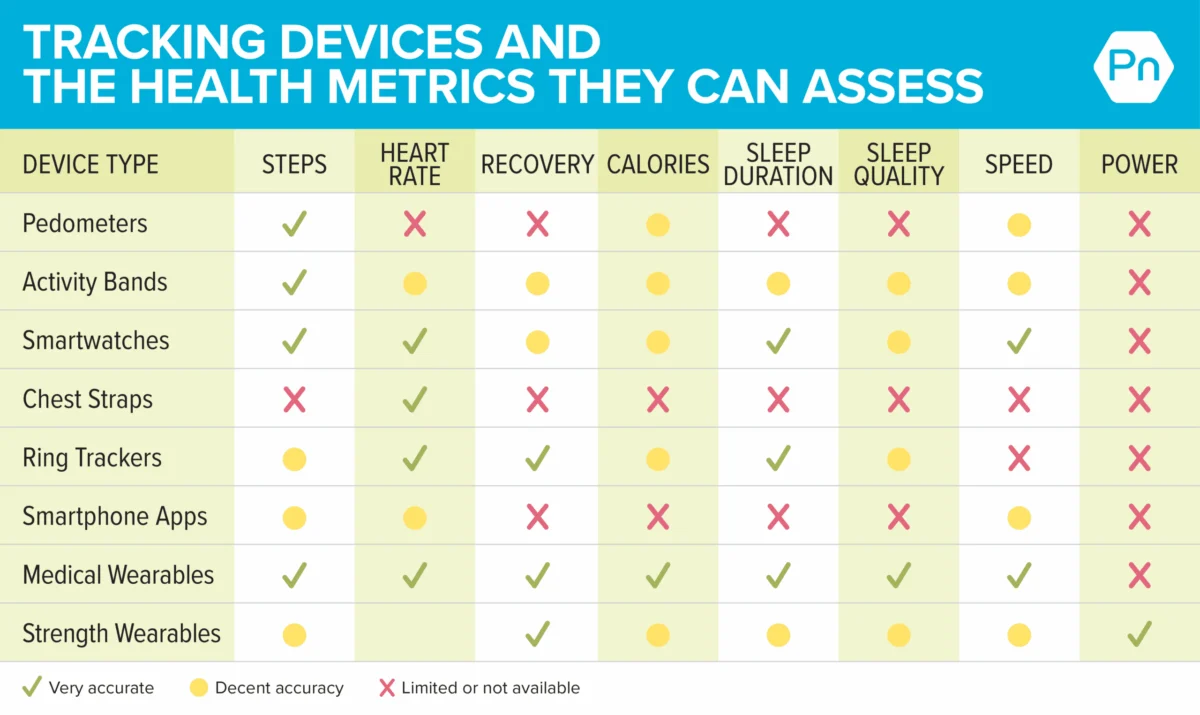
While the proliferation of tracking devices is undeniable, the quality and reliability of the data they produce are not uniform. It is crucial to understand that not all data is created equal, nor are all devices built to the same standards. Brand reputation, the quality of hardware components, and the sophistication of proprietary software algorithms and training datasets all play significant roles in determining accuracy. Generally, metrics such as resting heart rate and step count are considered to be relatively reliable across many contemporary devices. These leverage well-established sensor technologies like photoplethysmography (PPG) for heart rate (measuring blood flow changes) and accelerometers/gyroscopes for movement detection. Numerous studies comparing consumer wearables to gold-standard medical devices (e.g., electrocardiograms for heart rate or polysomnography for sleep) often show acceptable levels of accuracy for general fitness purposes, particularly at rest or during moderate, steady-state activity.

However, the accuracy significantly diminishes for more complex physiological outputs. For instance, estimations of calories burned, precise sleep stage detection (REM, deep sleep), or nuanced recovery metrics often carry substantial margins for error. Calorie expenditure, in particular, is notoriously difficult to measure non-invasively, as it depends on numerous individual factors including basal metabolic rate, body composition, exercise intensity, and even environmental conditions. Most consumer devices rely on generalized algorithms that combine heart rate, movement, and user-provided demographic data, leading to estimates that can be off by 20-30% or more compared to direct calorimetry. Similarly, while sleep duration tracking is generally robust, distinguishing between sleep stages remains a challenge, with consumer devices often struggling to match the precision of laboratory-based polysomnography. Metrics like movement velocity during strength training or stress levels (often inferred from heart rate variability) also present considerable challenges for consistent, high-accuracy measurement in a consumer-grade device. This disparity underscores the importance of a discerning approach to interpreting tracker data, recognizing that some metrics are inherently more reliable and actionable than others.
The Paradox of Information: Navigating the Data Deluge
The advent of widespread tracking presents a profound paradox: while these devices offer unprecedented access to data about our behaviors and bodies, this very abundance can become a liability. Samantha Kleinberg, a computer scientist specializing in decision-making, succinctly observes, "What’s really remarkable is that even a tiny amount of surplus information has a big negative effect on our decision-making." This highlights a critical principle: too little detail can make it difficult to form sound judgments, but an overwhelming flood of data can be equally paralyzing. This relationship is often visualized as an inverted U-curve, where decision-making ability peaks at an optimal amount of relevant information and declines sharply when there is either too little or too much.
In our hyper-connected world, it has become surprisingly easy to accumulate excessive information, leading to "data fatigue" or "quantified self burnout." Consider the common experience of "analysis paralysis" when faced with hundreds of restaurant reviews for a simple meal choice; the quest for the "best" often leads to indecision, frustration, and sometimes, no decision at all. In the health and fitness arena, this phenomenon is amplified, with brands constantly striving to offer more "science," greater "customization," and increased "complexity." When this torrent of information blurs into an indistinct noise without a clear path forward, individuals can become overwhelmed, fostering anxiety rather than empowerment. The psychological impact of constant monitoring can range from obsessive tendencies to disengagement, particularly if the data feels overwhelming or consistently negative. The fundamental question then becomes: Does tracking genuinely enhance my well-being and performance, or does it merely add noise and stress? Answering this requires careful self-reflection and an understanding of specific indicators that signal effective or counterproductive engagement with tracking technology.
When Tracking Empowers: Signs of Beneficial Engagement
For tracking to be genuinely helpful, it must serve a purpose beyond mere data collection. Three key indicators suggest a positive and empowering relationship with wearable technology:
1. Reducing Stress and Validating Methods
One of the most compelling benefits of tracking is its ability to provide external validation, thereby reducing anxiety and building confidence in one’s chosen methods. Take the example of Zak, a dedicated individual whose coach advocated for Zone 2 cardio. Despite the logical rationale, Zak, accustomed to high-intensity training, struggled to trust that something feeling "easy" could be effective. However, consistent data from his heart rate monitor provided irrefutable evidence: his resting heart rate steadily dropped, and his recovery times improved. This objective feedback allowed Zak to relax into the process, leading to further physiological improvements. For coaches, this offers a powerful tool: when working with high-performing clients who may harbor self-doubt despite their achievements, reliable data can shine a spotlight on existing performance, bolstering expert assurance and fostering a sense of capability. This tangible proof of progress can be a powerful antidote to imposter syndrome or self-criticism, empowering individuals to trust their process. Even newer trends, such as the use of continuous glucose monitors (CGMs) for non-diabetic individuals, can, in some cases, validate specific dietary choices by showing stable blood sugar responses, though their utility for general "optimization" without a clinical need remains debated and requires careful consideration to avoid unnecessary anxiety.
2. Enhancing Motivation and Ability Through Clear Feedback
Effective behavioral change, according to psychologist B.J. Fogg’s model, requires three elements: motivation, ability, and a prompt. Fitness trackers excel by providing a clear, consistent prompt when motivation and ability are already present. Consider Margaret, who believed her nightly glass of wine aided her sleep. Once she began using a sleep tracker, she observed a consistent pattern: her sleep quality scores were significantly lower on nights she consumed alcohol. This clear, undeniable prompt—her sleep score—directly informed her decision to adjust her behavior. When crucial data is highlighted, the optimal choices become strikingly clear. This "seeing is believing" phenomenon can be a powerful catalyst for change, providing immediate feedback on the consequences of actions and reinforcing positive habits. The story of PN’s CEO Tim Jones, who leveraged lifestyle trackers to reduce his genetically high cholesterol levels, further illustrates how personalized feedback can drive significant, life-altering behavioral shifts by making abstract health goals concrete and actionable.

3. Deepening Self-Understanding and Personalizing Protocols
The conventional wisdom that "the harder you work, the better your results" is often flawed. Many "grinders" like Zak fall into the trap of over-exertion, inhibiting recovery and performance. Conversely, many chronically underestimate their capacity and could benefit from increased effort. Here, data can offer a more accurate self-assessment of potential, moving beyond generic advice to bio-individuality. For instance, in high-intensity interval training (HIIT), prescribed rest periods are often generalized estimates. Heart rate data, however, can provide an individualized picture of actual recovery needs, which might be faster or slower than anticipated based on personal physiology and current fatigue levels. This objective feedback allows individuals to move beyond rigid protocols, optimizing their training to avoid "junk volume"—the zone where fatigue accumulates without commensurate performance gains. By integrating real-time metrics of output, fatigue, and recovery, both individuals and coaches can cultivate a more nuanced understanding of personal physiology, ensuring efficient, sustainable progress, and preventing overtraining or undertraining.
The Pitfalls of Over-Reliance: Signs of Counterproductive Tracking
While the benefits are clear, an imbalanced relationship with tracking technology can lead to detrimental outcomes:
1. Increasing Stress and Negatively Affecting Performance
Data can become a source of profound stress, especially when it delivers poor scores about factors beyond immediate control. A new parent, for example, receiving consistently low "sleep quality" scores from a tracker during the demanding newborn phase, might experience unnecessary anxiety and guilt over factors they cannot immediately change. In such circumstances, where scores are largely beyond personal influence or where life priorities dictate different focuses, tracking becomes counterproductive. It can transform a helpful tool into an oppressive overseer, potentially leading to anxiety, frustration, or even obsessive tendencies akin to "orthorexia" (an unhealthy obsession with healthy eating) but applied to all health metrics. The solution lies in recognizing these periods and temporarily disengaging from tracking until circumstances or priorities shift, allowing for a more strategic reintroduction later.
2. Diminishing Intrinsic Motivation and Leading to Burnout
When the pursuit of data overtakes the inherent joy of an activity, tracking loses its purpose. Jan, an avid recreational cyclist, initially found motivation in breaking local trail records. However, his relentless focus on speed and numbers gradually eroded his enjoyment of riding. Workouts became a quantitative pursuit, leading to under-recovery, exhaustion, and ultimately, burnout. This shift from intrinsic motivation (