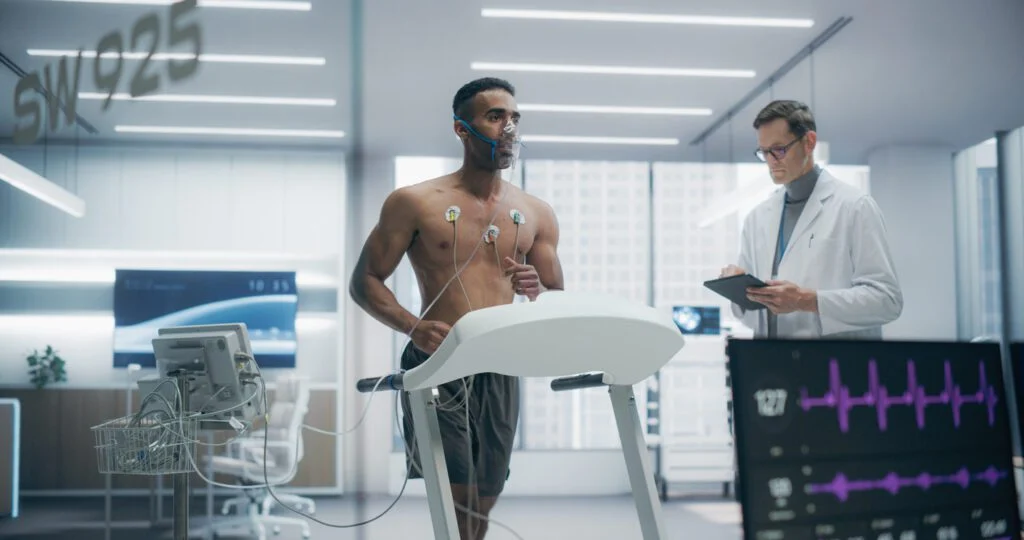

The quest to reverse the aging process has moved from the fringes of science fiction into the mainstream, driven largely by high-profile figures like technology entrepreneur Bryan Johnson. Johnson, the subject of the documentary Don’t Die, has become the face of a growing movement centered on biological age (bio age) optimization. By pouring millions of dollars annually into a rigorous regimen of hyperbaric oxygen therapy, plasma infusions, dietary precision, and dozens of daily supplements, Johnson claims to have shaved 5.1 years off his biological age. This pursuit has ignited a public debate, with some viewing his methods as the future of preventative medicine, while skeptics—including reports from the New York Times—question the accuracy of his metrics, noting that some longitudinal markers may actually suggest an accelerated rate of aging.
At its core, the fascination with bio age testing reflects a broader cultural shift toward proactive health management. As the technology behind these tests becomes more accessible and affordable, the public is increasingly eager to look beyond the chronological date on their birth certificate to assess the actual cellular and systemic function of their bodies.
Understanding Biological Versus Chronological Age
Chronological age is a fixed measurement: the number of years a person has been alive. Biological age, however, is a dynamic reflection of how a person’s cells and organs are performing. It accounts for the cumulative impact of genetics, lifestyle choices, environmental exposures, and stress. Two individuals of the same chronological age may have vastly different biological profiles. A 50-year-old living in a high-pollution environment with poor nutritional habits and chronic stress may exhibit markers of cellular senescence typical of a 65-year-old, whereas a 50-year-old with a consistent routine of strength training, nutrient-dense eating, and low-stress living might present the physiological profile of a 40-year-old.
The surge in popularity for bio age testing is mirrored in the podcasting landscape, where influential voices like Peter Attia, Joe Rogan, and Andrew Huberman frequently discuss the implications of these diagnostics. Mail-order kits now allow consumers to test blood and urine markers from home, promising insights into their "pace of aging." But beneath the marketing, experts advise a cautious approach: distinguishing between actionable medical diagnostics and speculative health metrics is essential.
The Evolution of Biomarker Science
Biomarkers are measurable indicators of a biological state or condition. Traditional medicine has long relied on these to track health—blood pressure, cholesterol levels, and blood glucose are foundational markers for predicting cardiovascular disease risk. Modern "bio age" testing, however, often looks at more granular, experimental metrics.
One prominent method involves analyzing telomeres, the protective caps at the ends of chromosomes. Telomeres naturally shorten as cells divide; once they become critically short, the cell can no longer replicate, leading to cellular senescence. Another common metric is DNA methylation, a chemical process that can alter gene expression. Scientists have developed "epigenetic clocks," such as the Horvath Clock and the DunedinPACE, which analyze methylation patterns to estimate biological age. While these tools are invaluable in research settings for understanding how environmental factors impact longevity, their utility for the average consumer remains a subject of intense scientific scrutiny.
Five Accessible Biomarkers for Everyday Health
One does not need a billionaire’s budget to track markers of aging. Several scientifically validated, low-cost assessments provide a proxy for physical vitality and potential longevity.
The Sitting-Rising Test (SRT) is a simple but powerful indicator of musculoskeletal strength and balance. Participants lower themselves to the floor and rise again without using their hands or knees for leverage. Studies published in the European Journal of Preventive Cardiology indicate that low performance on the SRT is correlated with higher mortality rates, as it reflects a decline in the coordination and core stability necessary to avoid falls in later years.
Grip strength, measured via a handheld dynamometer or even the endurance of squeezing a tennis ball, serves as another critical indicator. Research consistently shows that grip strength is a robust predictor of all-cause mortality, often outperforming blood pressure in its ability to forecast future physical decline.
Standing on one foot—specifically for 10 to 60 seconds depending on age brackets—tests neuromuscular control and the integration of the eyes, inner ear, and skeletal system. An inability to maintain balance is often a warning sign of systemic health degradation, including potential cardiovascular or metabolic issues.
Fatigability is a more subjective but highly informative metric. Using the Pittsburgh Fatigability Scale, individuals can rate their exhaustion after specific activities. Persistent, unexplained fatigue is often a leading indicator of underlying health issues, such as anemia, thyroid dysfunction, or early-stage metabolic disease.
Finally, body composition, specifically the ratio of muscle to fat, is a superior metric to simple body weight. While gold-standard tests like DEXA scans are the most accurate, using a tape measure to track waist-to-hip ratios and overall body circumference provides a practical, cost-effective way to monitor trends in body fat and muscle mass.
Clinical Diagnostics: The Gold Standard
While commercial kits offer intrigue, traditional medical diagnostics remain the most reliable tools for health monitoring. Annual blood panels remain essential. By tracking markers such as Apolipoprotein B (Apo B), C-reactive protein (CRP), and Hemoglobin A1C, individuals can work with their physicians to identify early warning signs of metabolic syndrome or heart disease.
Bone density testing via DEXA scans is another vital practice. As researchers study "super-agers"—individuals who remain healthy into their 90s—strong bone density is consistently identified as a key feature. Bones are not merely structural supports; they are endocrine organs that secrete osteocalcin, a hormone involved in regulating blood sugar and cognitive function. Maintaining bone health through resistance training and appropriate screening is a proven strategy for increasing healthspan.
Commercial Testing: Promises and Pitfalls
When exploring commercial bio age testing, consumers must approach the results with a degree of healthy skepticism. First, biological age is not uniform; different organs may age at different rates. A blood-based DNA methylation test may reflect systemic inflammation but will not necessarily tell you the health status of your kidneys or heart.
Second, there is a danger in over-reliance on a single test result. Biological age can fluctuate due to acute stressors, such as an intense work project or a brief illness. It is more productive to evaluate trends over months or years rather than agonizing over a single data point.
Third, beware of the "upsell." Many commercial testing companies bundle their services with expensive, proprietary supplement protocols. Often, the scientific literature supporting these supplements is thin or non-existent. A better strategy is to bring the test results to a trusted primary care physician who can provide an objective, non-profit-driven interpretation.
The Path to True Longevity
The most effective "anti-aging" interventions remain the ones that have been proven for decades: consistent aerobic exercise, resistance training to maintain muscle mass, a diet rich in whole foods, restorative sleep, and proactive stress management. These "big rock" strategies require significant behavior change, which is why many people find them more difficult than simply purchasing a supplement or a test kit.
Data, in isolation, is meaningless. Its value lies entirely in the behavioral changes it inspires. If an individual learns their VO2 max is declining, the successful application of that data is not to worry, but to increase the frequency of high-intensity interval training. If a lipid panel shows elevated Apo B, the goal is to adjust nutritional intake and exercise volume to bring those numbers into an optimal range.
As the industry of bio age testing continues to expand, the most successful individuals will be those who view these tests as tools for empowerment rather than final verdicts. By integrating data-driven monitoring with fundamental lifestyle habits, one can move beyond the hype and toward a measurable, sustained improvement in healthspan—the number of years lived in good health. Ultimately, the goal of this movement should not be a desperate attempt to avoid the passage of time, but a commitment to maximizing the quality and vitality of the years we have.