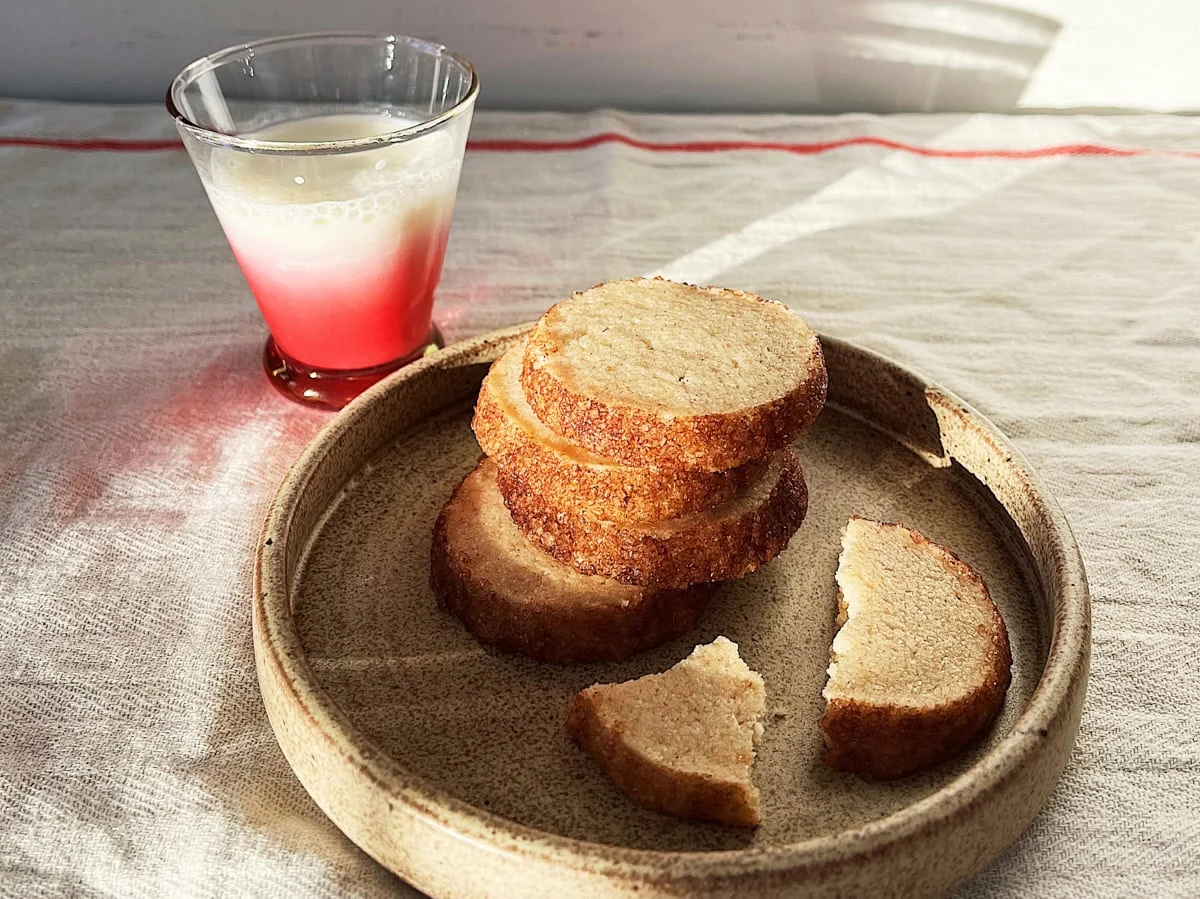

The holiday baking season often presents a logistical challenge for home cooks seeking to produce large quantities of confections without spending hours at a kitchen counter. Addressing this seasonal demand, food writers and culinary experts have increasingly turned to slice-and-bake formats as an efficient method for high-volume cookie production. Among recent seasonal recipes gaining traction among home bakers is a variation of the traditional shortbread profile: vanilla slice-and-bake sourdough discard cookies, marketed as "cinnamon toast" cookies due to their distinctive Demerara sugar and cinnamon exterior.
This recipe exemplifies a broader culinary trend toward repurposing sourdough starter discard—a byproduct of maintaining a live yeast and lactic acid bacteria culture—into everyday baked goods. By integrating unfermented discard into a streamlined dough, home bakers can minimize kitchen waste while achieving a distinct flavor profile that balances buttery richness with a subtle tang.
The Evolution of Sourdough Discard Baking
In recent years, the culture of home bread-baking has expanded beyond traditional hearth loaves into a sub-genre of discard utilization. Bakers who maintain sourdough starters frequently discard a portion of their culture during regular feedings to control the volume and maintain optimal yeast activity. Rather than discarding this flour-and-water mixture, culinary enthusiasts have developed recipes that incorporate the discard for its moisture content, acidity, and unique structural properties.
Traditionally, slice-and-bake cookies—a staple of American holiday baking popularized in the mid-20th century—rely on a standard ingredient ratio. Conventional baking formulas dictate a ratio of one part sugar, two parts butter, and three parts flour by weight. However, professional bakers note that this classic ratio often yields a stiff, flour-dense slice-and-bake cookie, particularly in recipes that lack eggs or significant chemical leavening agents.
To counteract this density, the vanilla sourdough discard cinnamon toast cookie recipe adjusts the standard proportions. By utilizing 250 grams of all-purpose flour supplemented by 35 grams of hydration from the sourdough discard, the resulting ratio shifts to approximately one part sugar, one-and-a-half parts butter, and just under two parts flour. This calculated adjustment accommodates the moisture introduced by the starter discard, producing a softer dough that requires proper chilling to ensure structural integrity during slicing and baking.
Technical Specifications and Formulation
Creating a successful batch of slice-and-bake cookies requires careful attention to ingredient selection and thermal management. Because the dough relies on a minimal ingredient list, culinary instructors emphasize the importance of high-quality components. European-style butter, characterized by a higher fat content and lower water percentage compared to standard American supermarket butters, is frequently recommended to enhance the richness of the final product.
The inclusion of sourdough starter discard introduces a distinct chemical element. Unlike standard shortbread doughs, which are entirely anhydrous aside from minor moisture in extracts or dairy, the introduction of discard adds free water. This elevated hydration level changes the baking dynamics, requiring extended oven times to ensure the interior and bottom structures set correctly. Professional bakers suggest a minimum bake time of 14 minutes, noting that traditional visual cues like golden-brown top crusts are less reliable for this specific formulation.
Furthermore, the exterior coating—comprising coarse Demerara sugar, ground cinnamon, and flaky sea salt—serves both a textural and aesthetic function. The coarse crystals of Demerara sugar mimic the crunchy mouthfeel of traditional cinnamon toast, providing a stark contrast to the tender interior of the cookie.
Logistical Advantages for Holiday Bakers
From a preparation standpoint, the slice-and-bake method offers significant advantages for individuals managing busy holiday schedules. The process is inherently modular, allowing bakers to divide tasks across multiple days. The dough can be mixed in a single bowl using either a hand-held electric mixer or a stand mixer, shaped into cylindrical logs, and wrapped for cold storage.
Refrigeration is a critical step in this methodology. Because the dough features a high butter-to-flour ratio, it remains soft and pliable at room temperature, which can lead to excessive spreading in the oven. Chilling the dough logs for a minimum of two hours allows the butter to resolidify, ensuring that the sliced rounds maintain their geometric shape during baking.
Additionally, the versatility of the dough accommodates long-term storage solutions. Sliced cookie rounds coated in the sugar-and-spice mixture can be frozen on sheet pans, transferred to airtight containers, and stored for up to three months. This capability allows home cooks to prepare holiday treats weeks in advance and bake them on demand, reducing seasonal stress.
Flavor Variations and Adaptability
While the vanilla and cinnamon combination remains a seasonal favorite, the foundational dough serves as a blank canvas for numerous culinary adaptations. Food scientists and recipe developers have outlined several approved modifications to alter the flavor and texture profile of the cookies:
- Citrus Zest: Incorporating up to two tablespoons of finely grated citrus zest—such as lemon, grapefruit, or orange—directly into the granulated sugar before creaming with butter introduces bright, aromatic notes.
- Alternative Extracts: Substituting or supplementing vanilla extract with potent flavorings like rose water, orange flower water, or almond extract allows for regional and experimental flavor profiles. Bakers are advised to use smaller quantities—starting at one-quarter teaspoon—due to the high concentration of these extracts.
- Botanical and Roast Undertones: The addition of one teaspoon of toasted sesame oil, instant espresso powder, finely ground matcha, hojicha, or powdered Earl Grey tea leaves provides earthy, savory, or bitter counterpoints to the sweet dough.
- Structural Additions: Incorporating up to 130 grams of finely chopped chocolate or toasted nuts adds textural complexity, while alternative flours—such as whole wheat, rye, spelt, or buckwheat—can replace a portion of the all-purpose flour for a heartier crumb.
Economic and Environmental Implications
The proliferation of sourdough discard recipes reflects a broader consumer interest in sustainable kitchen practices. Food waste reduction has become a significant focal point in modern home economics, driven by both economic considerations and ecological awareness. By finding practical uses for sourdough starter that would otherwise be discarded down the drain, home bakers can optimize their grocery budgets while engaging in artisanal baking techniques.
Culinary analysts note that recipes specifically designed to consume discard—rather than simply masking its flavor—help demystify sourdough maintenance for novice bakers. The perception that sourdough baking requires rigid adherence to complex artisan bread schedules is gradually being replaced by a more flexible approach that embraces casual, everyday utilization of active cultures.
Industry Outlook and Future Trends
As internet search trends for holiday baking and sourdough utilization continue to peak during the winter months, culinary platforms anticipate sustained interest in efficient, make-ahead recipes. The integration of specialty discard techniques into accessible formats like slice-and-bake cookies bridges the gap between advanced baking methodologies and everyday kitchen convenience.
Experts suggest that the trend toward ingredient repurposing will likely influence future cookbook publications and online food media, with an emphasis on minimizing food waste without sacrificing flavor or presentation quality. For home bakers navigating the demands of the modern holiday season, recipes that combine heritage techniques—such as traditional shortbread formatting—with contemporary sustainability practices offer a reliable pathway to successful culinary execution.