
The pursuit of the perfect cup of coffee is a journey fraught with scientific complexity, where every variable, from the grind size of the bean to the geometry of the brewing apparatus, plays a pivotal role in the final sensory experience. Far from a simple act of steeping grounds in hot water, coffee extraction is a sophisticated chemical process that demands precision and understanding, revealing a fascinating interplay of chemistry and physics at the heart of daily ritual. This complexity is particularly evident in the ongoing debate and innovation surrounding two primary brewing techniques: pour-over and immersion.
The Chemistry of the Cup: Selective Extraction at Play
A single cup of coffee is a veritable chemical soup, containing hundreds of compounds whose concentrations can span an astonishing nine orders of magnitude. These compounds, which include a vast array of acids, sugars, lipids, and aromatic molecules, possess distinct solubilities and extraction rates. This inherent variability is not a flaw but a fundamental feature that allows for the nuanced flavors cherished by coffee enthusiasts. If all compounds were extracted uniformly, the resulting brew would be a one-dimensional reflection of the bean’s soluble mass, leaving little room for the artistry and variation that define specialty coffee.
Instead, the goal for many connoisseurs is often a "selective extraction"—a process where compounds are not extracted to the same degree, leading to a more complex and desirable flavor profile. An "even extraction," where maximum soluble material is extracted (potentially up to 30% yield, akin to a strong Turkish coffee), might produce a potent brew, but not necessarily the most balanced or palatable. The craft lies in manipulating brewing parameters to favor the extraction of desirable compounds while minimizing less pleasant ones. This selective approach is precisely what techniques like pour-over and, to a different extent, immersion brewing aim to achieve.
Pour-Over Brewing: A Multitude of Interconnected Variables
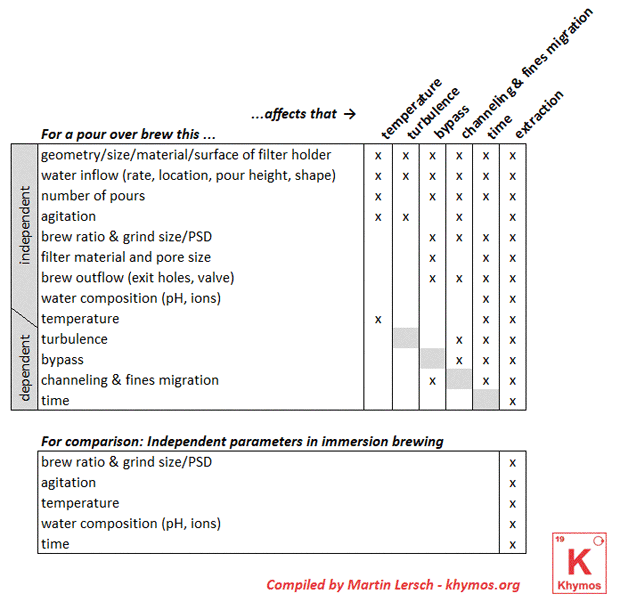
Pour-over brewing, seemingly straightforward in its premise—hot water dripped over ground coffee through a filter—is, in practice, an immensely complex system. Its popularity among professional and home baristas stems from the extensive control it offers over the final outcome, allowing for fine-tuning that can elevate a good coffee to an exceptional one. However, this very control introduces a dizzying array of interconnected parameters, each capable of profoundly influencing the end result.
Key Parameters and Their Interdependencies:
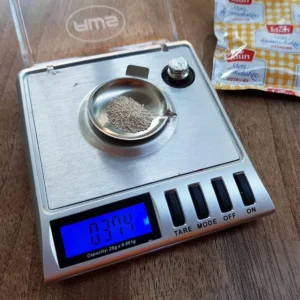
- Brew Ratio: The ratio of coffee grounds to water directly impacts the concentration of dissolved solids and the overall strength of the brew.
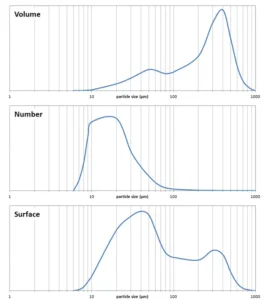
- Grind Size and Particle Size Distribution (PSD): Finer grounds offer a larger surface area for extraction, accelerating the process. However, an excessively fine grind can impede water flow, prolonging contact time and potentially leading to over-extraction and bitterness. A wide PSD can also lead to uneven extraction, with smaller particles over-extracting while larger ones remain under-extracted.
- Water Composition and Temperature: The mineral content and pH of brewing water significantly affect extraction efficiency and flavor perception. Water temperature dictates the kinetics of extraction; higher temperatures generally extract more quickly and thoroughly, but also risk extracting undesirable compounds. The Specialty Coffee Association (SCA) often recommends water temperatures between 90-96°C (195-205°F) for optimal extraction.
- Filter Material and Pore Size: Paper filters are common, retaining fines and oils for a cleaner cup, while metal filters allow more sediment and oils to pass, contributing to a fuller body. The filter’s pore size dictates the rate of flow and the retention of fine particles.
Beyond these fundamental elements, numerous other factors contribute to the pour-over puzzle:
- Flow Rate and Contact Time: How quickly water passes through the coffee bed.
- Turbulence: The agitation of the coffee bed, affecting saturation and extraction uniformity.
- Bed Height and Geometry: The shape and depth of the coffee bed, influencing water pathways and contact efficiency.
- Pre-wetting/Bloom Phase: An initial saturation to degas the coffee, allowing for more even subsequent extraction.
- Brewing Vessel Material and Insulation: Materials like ceramic and plastic retain heat better than metal or thin glass, ensuring stable brew temperatures throughout the process. Vacuum-insulated designs, such as the Fellow Stagg X/XF, prioritize thermal stability.
- Inside Wall Surface of the Dripper: Ridges or patterns prevent the filter paper from clinging too tightly, allowing water to flow along the sides. A smooth surface, as seen in the Chemex, can create a seal, preventing bypass but potentially slowing flow significantly.
- Inflow Control: Gooseneck kettles, like those used by professional baristas, provide precise control over pouring speed and pattern, minimizing disturbance to the coffee bed and ensuring even saturation. Accessories like the Gabi Dripmaster B or Melodrip further refine water distribution, reducing channeling and promoting uniform extraction.
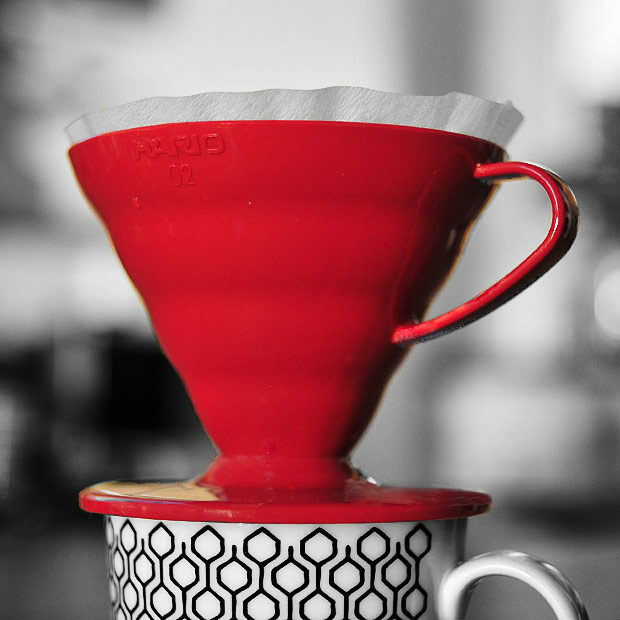
- Exit Holes and Outflow Control: The number and size of holes at the bottom of the dripper dictate the overall flow rate. Designs with a single large hole (e.g., Hario V60) allow for faster flow, while multiple smaller holes (e.g., Kalita Wave) can create a more restricted, even flow. Some drippers, like the Clever or Hario Switch, incorporate a shut-off valve, allowing for a hybrid immersion-percolation approach, enabling greater control over contact time.
- Bypass: Critically, bypass refers to water that circumvents the coffee bed entirely, flowing directly into the brewed coffee without contributing to extraction. This dilutes the brew without adding flavor compounds. Jonathan Gagné, a prominent voice in coffee science, emphasizes minimizing bypass for optimal percolation brewing. Dripper designs with smooth inner walls or those that place the filter entirely below the coffee bed (e.g., Aeropress, Tricolate, Proper, Vietnamese Phin) are engineered to reduce or eliminate bypass, ensuring that all water interacts with the coffee grounds.
The intricate correlations between these parameters mean that adjusting one often necessitates adjusting others. For example, a finer grind size, while increasing surface area, also reduces water flow, extending contact time and risking filter clogging. This complexity fuels countless online tutorials and discussions, reflecting a global community’s relentless quest to master the variables.
A Historical Perspective on Coffee Innovation
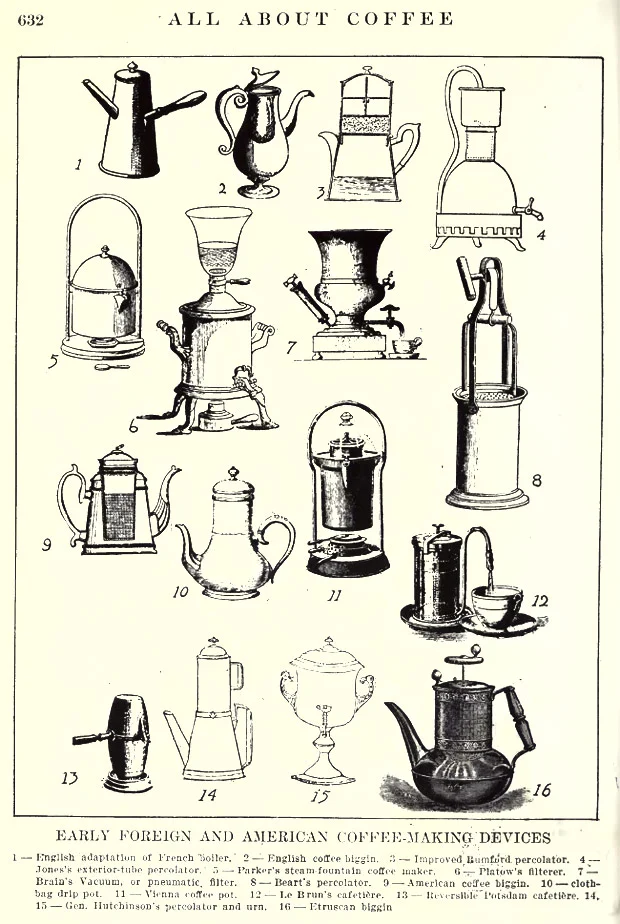
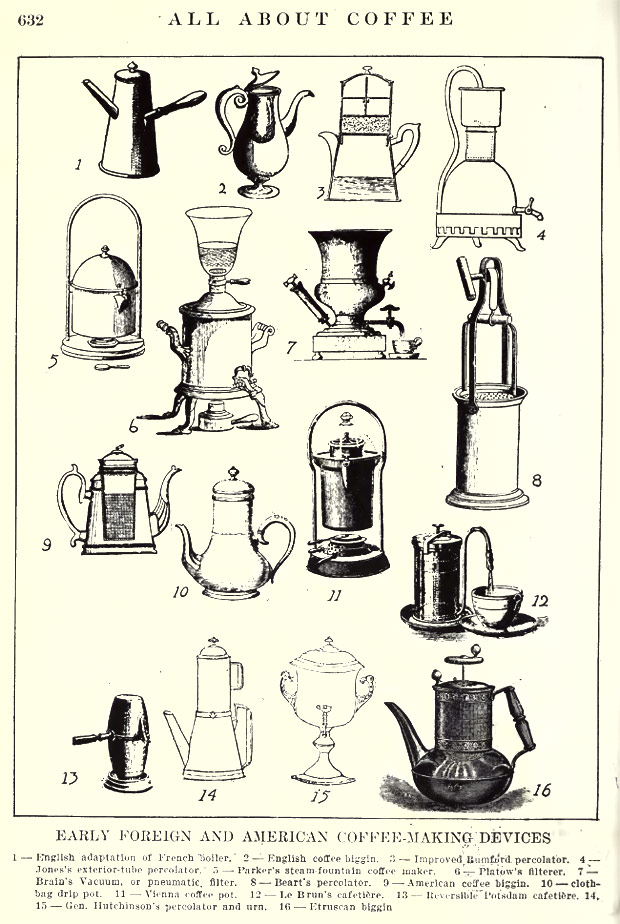
The drive to perfect coffee brewing is not a modern phenomenon. Innovations in coffee makers have been ongoing for centuries. A glimpse into W. A. Ukers’ seminal 1922 book, "All About Coffee," reveals a rich history of inventive brewing devices, many of which sought to address the very challenges of extraction that captivate us today. From early percolators invented over 200 years ago to the popular drip machines of the 1970s, each iteration represented an attempt to "untie the coffee knot" – to balance efficiency, consistency, and flavor.
The modern specialty coffee movement, burgeoning since the late 20th century, has rekindled this spirit of innovation, leading to a proliferation of sophisticated pour-over devices. Each new dripper, from the iconic Hario V60 with its conical shape and spiral ridges to the flat-bottomed Kalita Wave and the smooth-walled Chemex, represents a specific design philosophy aimed at optimizing flow dynamics, temperature stability, and extraction uniformity. The choice of material—be it heat-retaining ceramic, lightweight plastic, or thermally stable double-walled metal—is a deliberate decision influencing thermal loss and user experience.
Immersion Brewing: Robustness and Repeatability
In contrast to the delicate balance required by pour-over, immersion brewing offers a more robust and forgiving approach. In this method, all the coffee grounds are steeped in the full volume of hot water for a predetermined duration, with initial stirring often used to ensure complete saturation and degassing. Following the steeping phase, the brew is separated from the grounds, typically via filtration.
Advantages of Immersion:
- Repeatability: Immersion methods, like the French Press or the inverted Aeropress, tend to produce more consistent results between different users, as the primary variables (brew ratio, time, temperature) are easier to standardize. This makes it a "foolproof" method for many.
- Less Attention Required: Once the grounds are immersed, the process requires less active management compared to the precise pouring techniques of pour-over.
- Fuller Body: Devices like the French Press, with their coarser mesh filters, allow a significant amount of coffee fines and oils to pass into the cup. These particles contribute to a rich body and texture, though they also result in a noticeable sediment.
Considerations for Immersion:
- Flavor Profile: While robust, immersion coffee can sometimes be described as "muted" or less vibrant compared to a well-executed pour-over. This can be attributed to the rapid temperature drop during steeping and a less selective extraction process.
- Sediment: The presence of fines in the cup, particularly with French Press, can be a divisive characteristic. While some appreciate the added body, others find the gritty texture and potential for extended extraction of bitter compounds undesirable. Filtering French Press coffee through a paper filter post-brew is a common experiment to achieve a cleaner cup.
- Extraction Yield (EY) and Total Dissolved Solids (TDS): Immersion brewing typically results in a higher extraction yield compared to pour-over, as all grounds are in contact with water for an extended period, approaching an equilibrium. However, the initial coarser grind and lower overall brew temperature compared to other methods still ensure a selective extraction, yielding a distinct flavor profile.
Hybrid brewers, such as the Clever Dripper and Hario Switch, ingeniously combine aspects of both pour-over and immersion. They allow users to steep coffee for a set period, then release it via a valve for a filtered draw-down, offering the repeatability of immersion with some of the clarity of percolation.
The Broader Implications: From Myth to Mastery
The inherent complexity of coffee extraction, particularly in pour-over methods, contributes to the proliferation of brewing myths and makes it challenging for two individuals to replicate the same "recipe" precisely. Minor, unstated variations in technique or equipment can lead to significantly different results. This underlines the importance of a scientific approach, moving beyond anecdotal methods to understand the underlying principles.
The specialty coffee industry, driven by discerning consumers and passionate baristas, continuously pushes the boundaries of brewing science. The detailed cataloging of brewing equipment, highlighting features like insulation, geometry, filter type, and flow control mechanisms, is not merely an exercise in enumeration but a testament to the ongoing engineering and chemical innovation. Designers are constantly seeking to optimize extraction, minimize bypass, and enhance repeatability, often drawing inspiration from chemical engineering principles, such as those seen in laboratory Büchner funnels.
Ultimately, the quest for the "best cup of coffee" remains a deeply personal and evolving journey. Whether through the precise choreography of pour-over or the steadfast reliability of immersion, a deeper understanding of coffee chemistry and brewing physics empowers enthusiasts to move beyond simple recipes. It transforms the daily ritual into a deliberate, informed act of creation, bringing us closer to that elusive, perfectly extracted cup—a goal famously depicted with almost obsessive scientific rigor in popular culture. As research and innovation continue, future brewing methods may well integrate advanced controls, perhaps even AI-driven adjustments, further bridging the gap between scientific understanding and the sensory delight of coffee.