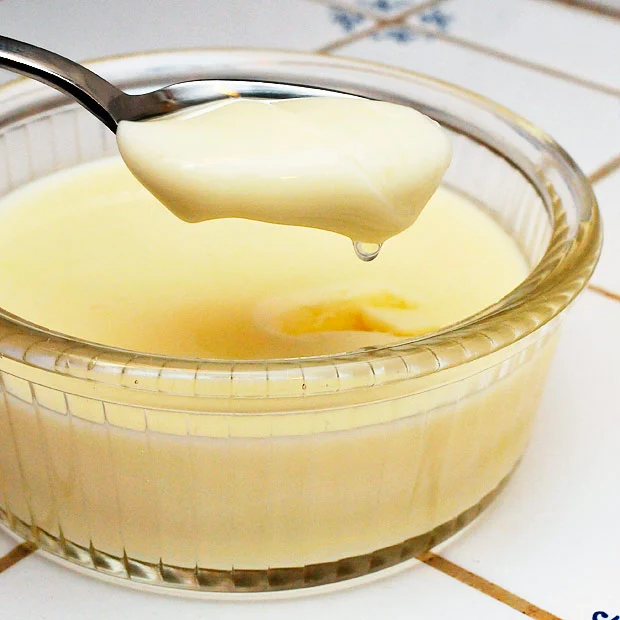

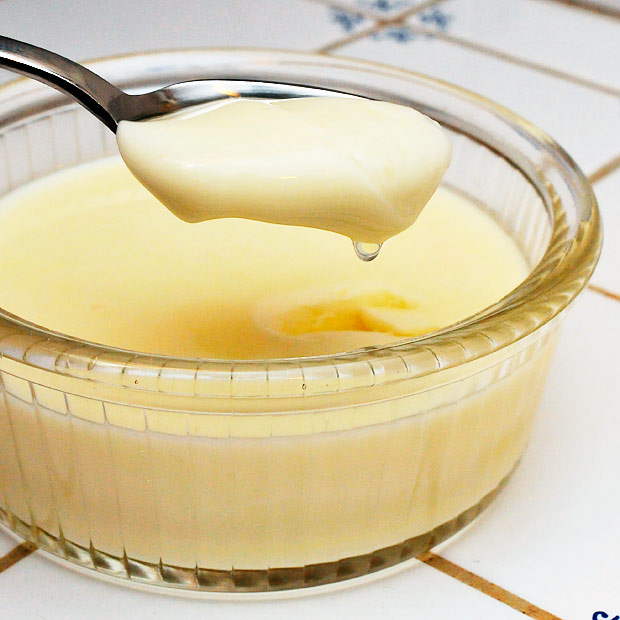
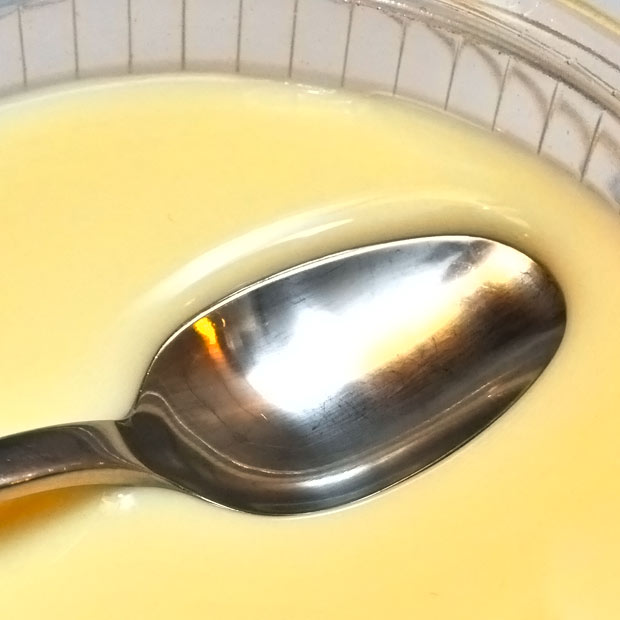
A seemingly simple dessert, ginger milk curd (姜汁撞奶, Jiang Zhi Zhuang Nai in Chinese), has captivated palates for generations with its delicate texture and piquant flavor. However, behind its minimalist ingredient list of just milk, ginger, and sugar lies a fascinating scientific process often fraught with culinary inconsistencies. This traditional Cantonese delicacy, known for forming a tender, fragile gel within minutes, frequently perplexes home cooks, leading to a proliferation of kitchen myths that obscure the precise enzymatic reactions at its core.
A Culinary Conundrum: Simplicity Meets Scientific Intricacy
The allure of ginger milk curd is undeniable. Its preparation, at face value, appears straightforward: combine three common kitchen staples, and a creamy, aromatic gel emerges. Yet, the journey from humble ingredients to a perfectly set curd is often unpredictable. Early attempts by culinary enthusiasts and researchers alike have mirrored a common experience: an initial, surprising success followed by a string of puzzling failures. This inconsistency has historically led cooks to attribute success or failure to a myriad of often irrelevant factors, birthing a rich tapestry of contradictory advice and anecdotal wisdom.
For instance, one might encounter recipes advocating for milk heated to a precise 80°C, while another insists on a gentler 65°C. Some call for vigorous stirring, others for no agitation whatsoever. These conflicting instructions highlight a fundamental lack of understanding regarding the underlying biochemical processes. Reports from home cooks struggling with success rates as low as 50%, or achieving the desired result only after numerous failed attempts, underscore the challenge. Some, resigned to the mystery, resort to adding external gelling agents like egg whites, effectively sidestepping the natural enzymatic magic that defines authentic ginger milk curd. These "kitchen myths" arise from an understandable human tendency to seek causality in random outcomes, often leading to erroneous conclusions that are then propagated as gospel.
Demystifying Kitchen Myths Through Scientific Inquiry
The quest for a "fool-proof" ginger milk curd recipe necessitated a deep dive into food science, moving beyond anecdotal evidence to peer-reviewed research. This investigation revealed that the secret to consistent success lies not in culinary folklore, but in a precise understanding of enzyme kinetics and protein chemistry. The formation of ginger milk curd is a classic example of enzymatic milk clotting, a process akin to traditional cheesemaking, where enzymes act as catalysts to transform liquid milk into a solid gel.
The key players in this transformation are ginger proteases (GP), also known as zingipain (EC 3.4.22.67), a group of enzymes naturally present in fresh ginger. These proteases are responsible for breaking down proteins in the milk, initiating the gelling process. However, unlike the broad-spectrum proteolytic activity often desired in meat tenderization, the specific gelling action in milk is highly dependent on environmental factors, most notably temperature.
Temperature: The Linchpin of Gel Formation
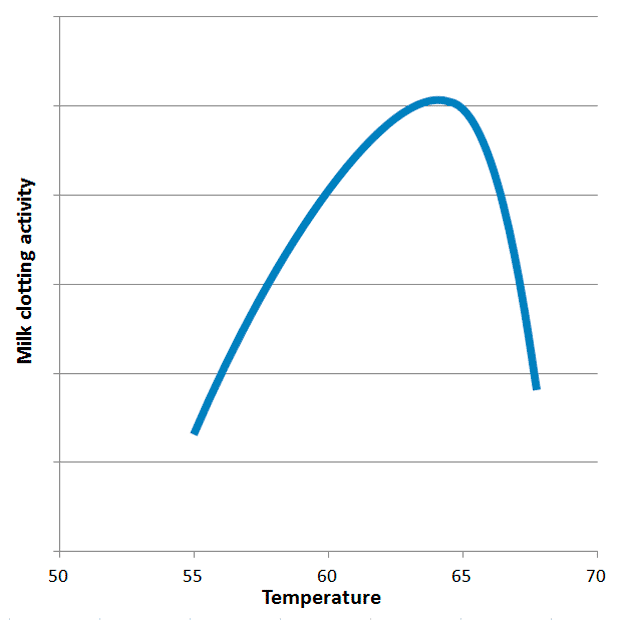
Scientific studies have pinpointed a remarkably narrow temperature window for optimal ginger protease activity. The milk clotting activity (MCA) of ginger proteases peaks sharply around 63°C, exhibiting a rapid decline above 65°C and below 60°C. This means that to achieve a consistently set curd, the milk must be within this critical range when it interacts with the ginger juice. Temperatures exceeding 70°C will rapidly denature and irreversibly destroy the delicate ginger proteases, rendering them inactive and preventing gel formation. Conversely, if the milk is too cool, the enzymes will be sluggish, resulting in a weak or non-existent gel.
This precise temperature requirement immediately clarifies why so many traditional recipes, often relying on imprecise methods like "boiling milk" or "just off the boil," lead to frequent failures. Without a digital kitchen thermometer, achieving the perfect 60-65°C range is largely a matter of luck, explaining the exasperating inconsistency reported by home cooks worldwide. The imperative for a digital thermometer in this recipe is not a mere suggestion but a scientific necessity.
Furthermore, the initial heating of the milk itself plays a role. While the milk must be cooled to the optimal temperature range before mixing with ginger, heating milk significantly above 65°C (even if subsequently cooled) can negatively impact the final gel strength. This is because excessive heat causes whey proteins, particularly lactoglobulins, to denature and aggregate onto the κ-casein micelles (the building blocks of the gel), interfering with their subsequent interaction with the ginger proteases. For the strongest possible gel, skimmed milk is often preferred, as milk fat can also slightly impede gel formation.
Casein: The Architects of the Gel Structure
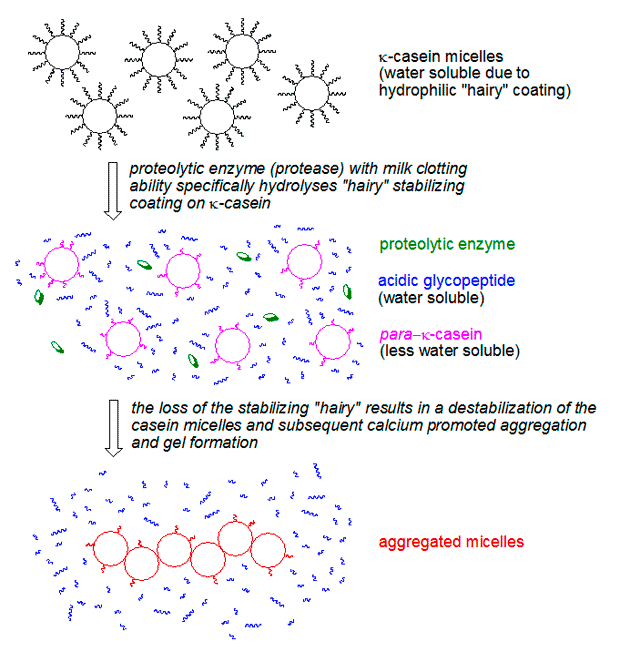
To understand how ginger proteases transform milk, one must appreciate the structure of casein, the primary protein family in milk. Caseins exist as large, spherical structures called micelles, which are stabilized in the milk by a "hairy" outer layer primarily composed of κ-casein. This κ-casein possesses a water-soluble region (an acidic glycopeptide) that extends into the milk serum, creating steric hindrance and an electrostatic repulsion that prevents the micelles from clumping together. This protective layer is why milk remains a stable liquid suspension rather than spontaneously forming a curd.
Ginger proteases, much like rennet (which contains chymosin) used in cheesemaking, act as highly specific molecular scissors. Their primary function in milk clotting is to cleave off this water-soluble "hairy" portion of the κ-casein. Once this protective layer is removed, the now "shaved" casein micelles, primarily composed of para-κ-casein, lose their stability. With the natural repulsive forces diminished, the micelles begin to collide and aggregate, a process significantly aided by the calcium ions naturally present in milk. These aggregated micelles interlink to form a three-dimensional network, which traps water and creates the delicate, tender gel that is ginger milk curd. This entire process unfolds remarkably quickly, often within 5-10 minutes, showcasing the efficiency of enzymatic catalysis. The resulting gel is inherently fragile and prone to syneresis—the expulsion of liquid (whey)—which is often observed as clear drops accumulating at the surface, a natural characteristic of this type of protein gel.
The Fragility of Freshness: Stabilizing Ginger Proteases
Beyond temperature, the freshness of the ginger juice itself is paramount. Research indicates that ginger proteases are surprisingly unstable once extracted from the ginger rhizome. At typical room temperatures (around 30°C), ginger proteases have a half-life of approximately 20 minutes. This means that within 20 minutes of grating and squeezing ginger, half of its enzyme activity is lost. After another 20 minutes, only 25% of the original activity remains. This rapid degradation is another significant contributor to inconsistent results in home kitchens.
The culprit behind this instability is another enzyme present in ginger: polyphenol oxidase (PPO). PPO is notorious for causing enzymatic browning in fruits and vegetables (like apples) when exposed to air. In ginger juice, PPO oxidizes phenolic compounds, producing ortho-quinones. These quinones are highly reactive and can irreversibly bind to and inactivate the ginger proteases. Therefore, freshly prepared ginger juice is not merely a preference but a critical requirement for a successful curd.
However, a scientific solution exists for those who might need to prepare ginger juice slightly in advance. Ascorbic acid, commonly known as Vitamin C, acts as an effective inhibitor of PPO. By adding a small amount (around 0.2%) of ascorbic acid to freshly squeezed ginger juice, the action of PPO is blocked, thereby preserving the activity of the ginger proteases. This simple scientific trick can extend the effective life of the ginger juice, offering greater flexibility without compromising the outcome.
A Fool-Proof Recipe: Precision in Practice
Integrating these scientific insights leads to a consistently reliable method for preparing ginger milk curd. The emphasis shifts from vague instructions to precise measurements and temperature control.
Fool-Proof Ginger Milk Curd Recipe:
-
Ingredients:
- 250 mL skimmed milk (for optimal gel strength)
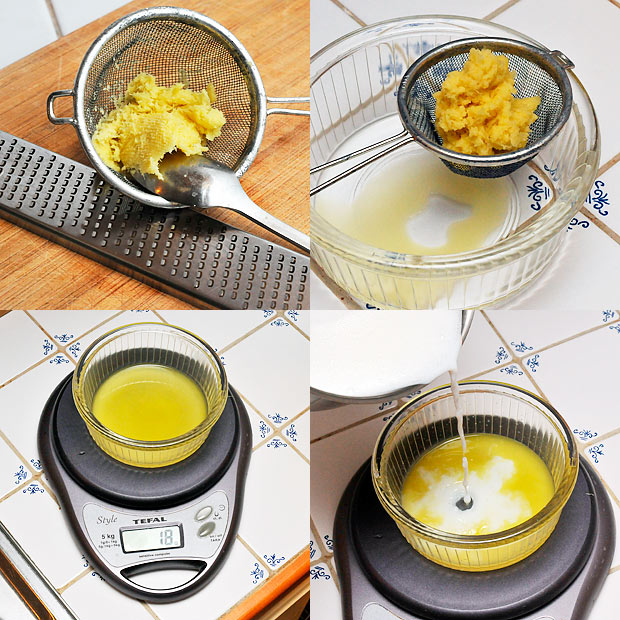
- 18 g fresh ginger juice (approximately 31 g peeled ginger or 43 g raw ginger)
- 20 g sugar (adjust to taste)
-
Equipment:
- Digital kitchen thermometer (essential)
- Microplane or fine grater
- Fine-mesh sieve or cheesecloth for squeezing juice
- Saucepan
- Serving bowl
-
Instructions:
- Prepare Milk: Combine milk and sugar in a saucepan. Heat gently while stirring until the sugar dissolves and the milk reaches precisely 65°C. Remove immediately from heat. Crucially, do not overheat the milk, as temperatures above 65°C can weaken the final gel.
- Prepare Ginger Juice: While the milk is heating, peel and microplane the fresh ginger. Immediately squeeze the grated ginger through a fine-mesh sieve or cheesecloth to extract the juice. Place the required 18 g of ginger juice into your serving bowl. Work quickly, as ginger proteases degrade rapidly upon exposure to air.
- Combine and Set: Once the milk is at 65°C, and the ginger juice is in the bowl, pour the heated milk into the ginger juice from a moderate height (about 15-20 cm). This pouring technique ensures instant, adequate mixing without the need for stirring, which can disrupt the delicate initial aggregation of casein micelles.
- Allow to Curd: Do NOT stir the mixture after pouring. Leave the bowl undisturbed at room temperature. Within 5-10 minutes, a tender gel will have formed. The curd can be served immediately or chilled in the refrigerator for later enjoyment.
This recipe utilizes a milk-to-ginger juice ratio of approximately 14:1. While adjustments can be made for taste preference (more ginger for a stronger flavor), maintaining the scientific principles of temperature and immediate use of fresh juice is paramount.
Broader Implications and Culinary Innovation
The scientific demystification of ginger milk curd has implications far beyond the home kitchen. It serves as a compelling case study in molecular gastronomy, illustrating how traditional culinary practices can be optimized and understood through scientific inquiry. The identification and characterization of ginger proteases, along with similar enzymes found in kiwi and melon, open avenues for developing novel plant-based rennets. This could have significant industrial applications, particularly in the production of vegetarian cheeses and other dairy products, offering alternatives to animal-derived rennet.
Furthermore, this understanding empowers culinary professionals and enthusiasts to experiment with greater confidence. The principles of enzyme activity, temperature control, and protein denaturation are fundamental to many cooking techniques. By understanding the "why" behind a recipe, cooks can adapt, innovate, and troubleshoot with greater precision. Future research could explore the effects of different ginger varieties, milk compositions (e.g., lactose-free milk), or pH adjustments on the gelling process, potentially leading to new textures and flavors.
In conclusion, ginger milk curd, once a tantalizing culinary enigma, has been brought into the light of scientific understanding. What was once perceived as requiring "a lot of skills and a pinch of luck" is now understood as a precise enzymatic reaction governed by specific conditions. This journey from anecdotal kitchen wisdom to scientific clarity underscores the powerful synergy between traditional culinary arts and modern food science, ultimately enriching our understanding and appreciation of the food we eat.