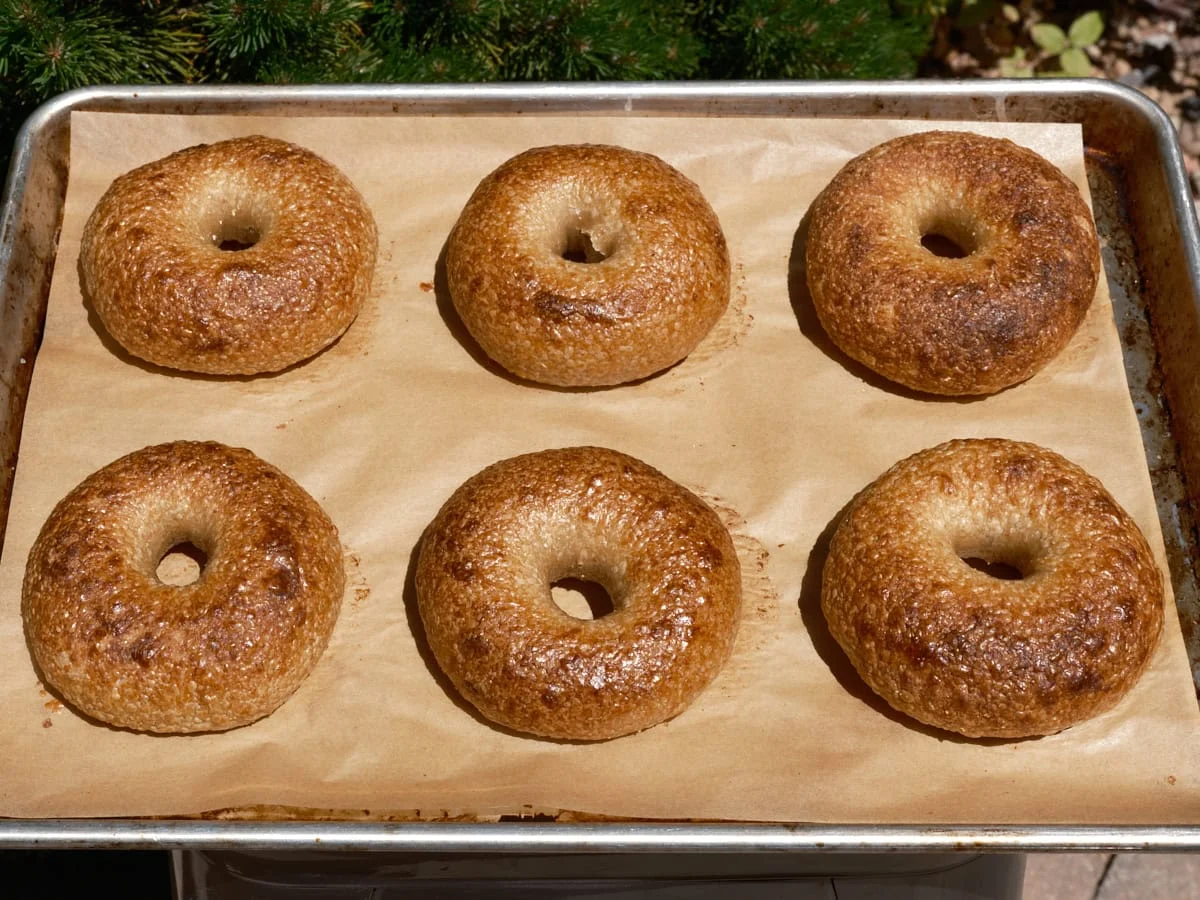

The pursuit of the perfect bagel is a journey that has captivated bakers for generations, a delicate balance of chew, crust, and flavor. For one artisan baker, this quest led to a meticulous refinement of the sourdough bagel, resulting in what they’ve dubbed the "new wave" sourdough bagel. This updated formula, born from countless iterations and a keen eye for detail, offers a distinct departure from traditional New York-style bagels, focusing on a lighter texture, a gloriously blistered crust, and a more open crumb. The process, while seemingly incremental, represents a significant evolution in achieving a truly artisanal bagel at home.
At the heart of this new approach lies a series of intentional adjustments to the fundamental elements of bagel making. The baker’s journey began with a simple yet profound question: could the sourdough starter itself contribute a subtle sweetness, rather than relying solely on added sugars in the final dough? This led to experiments with a "sweet levain," where a small amount of sugar is incorporated into the starter before it’s fed for the final dough. This technique aims to foster a more yeast-dominant culture, thereby minimizing the characteristic sourness often associated with sourdough and allowing the nuanced flavors of the other ingredients to shine.
Further evolution involved a considered shift in the flour blend. Moving away from a single flour, the baker embraced a combination designed to imbue the bagel with more character and a desirable texture. This blend typically incorporates high- and medium-protein white flours for structure and chew, complemented by a judicious amount of whole wheat and whole rye flours. These whole grains, far from being an afterthought, are integral to developing a deeper, more complex flavor profile and contributing to the fermentation process and crust coloration. The inclusion of a slightly lower protein content in some of the white flours also aids in achieving a more tender and open crumb, a hallmark of the "new wave" style.
The shaping technique also underwent a transformation. The traditional method of rolling dough into ropes and forming rings can be challenging, especially with higher hydration doughs. The baker adopted the "poke method," a simpler and more forgiving technique that involves poking a hole through the center of a dough ball and gently stretching it to create the characteristic bagel ring. This method not only simplifies the process but also contributes to a more uniform shape.
Perhaps one of the most impactful changes is the introduction of an overnight cold fermentation, or "retard." This extended rest in the refrigerator, after the initial bulk fermentation and shaping, plays a crucial role in developing the bagel’s complex flavor and textural qualities. The cold environment slows down fermentation, allowing enzymes to break down starches into sugars, which contributes to a richer taste and a more appealing crust. This also offers a significant scheduling advantage, allowing bakers to shape bagels one evening and boil and bake them the following morning, streamlining the often time-intensive bagel-making process.
The final stage of preparation, the boiling process, also sees intentional refinement. Instead of a plain water boil, the "new wave" method calls for boiling in a solution enriched with barley malt syrup and baking soda. Barley malt syrup is a classic ingredient in bagel making, contributing a distinctive malty flavor and promoting a beautiful golden-brown crust. The addition of baking soda increases the alkalinity of the water, further enhancing crust browning and creating that sought-after glossy sheen. The duration of the boil is also carefully controlled; a shorter boil, around 20-30 seconds per side, is favored to achieve a thinner, crispier crust, while a longer boil would result in a chewier, denser skin.
"This version answers all of those questions," the baker explains, referring to the specific adjustments made. "It’s a recipe, much like My Best Sourdough Bread, where all the little parts of the process, when seen from up close, don’t look like a big deal, but when seen as a whole, certainly add up." This philosophy of incremental improvement, where each small change contributes to a greater whole, is evident throughout the development of this refined bagel recipe.
A Shift from Tradition: The "New Wave" vs. Classic Styles
The distinction between this "new wave" sourdough bagel and more traditional styles is significant, offering a distinct experience for the discerning palate. The baker’s first sourdough cookbook features a recipe for a more traditional New York-style bagel. This classic iteration is characterized by its substantial chew, a slightly thicker crust, and a more uniformly closed crumb. It embodies the hearty, satisfying bagel that has been a staple for decades.
In contrast, the "new wave" sourdough bagel, as it is now being recognized, draws inspiration from contemporary artisanal bakeries that are pushing the boundaries of traditional bagel making. Establishments like Courage Bagels in Los Angeles, known for their distinctive approach, exemplify this trend. These newer bagels are typically lighter in texture, boasting a glossy, often blistered crust that offers a delightful crispness. Their shapes can be less uniform, reflecting a more artisanal, handcrafted feel. The crumb, a key differentiator, is more open and airy, providing a tender counterpoint to the crisp exterior. This textural complexity is what sets the "new wave" bagel apart, offering a modern interpretation that appeals to those seeking a lighter yet deeply flavorful experience.
Mastering the Craft: Tips for Shaping, Boiling, and Baking
Achieving the desired texture and appearance of these "new wave" sourdough bagels requires attention to detail at each stage of the process. Several key techniques, honed through extensive experimentation, are crucial for success.
The Poke Method for Shaping: For higher hydration doughs, the poke method of shaping is highly recommended. Instead of rolling the dough into a rope and joining the ends, a hole is poked through the center of a pre-portioned dough ball and then gently stretched. This technique is not only simpler but also more forgiving, particularly with wetter doughs, and helps create a more consistent ring shape.
The Overnight Retard is Key: While a same-day bake is possible by proofing the shaped bagels at room temperature for 2-3 hours, the overnight cold proof significantly enhances the bagel’s flavor and texture. This extended chill allows for deeper flavor development and offers a convenient schedule, enabling bakers to shape one evening and bake the following morning.
Optimizing the Boil Water: The composition of the boiling liquid is critical for crust development. A generous amount of barley malt syrup is essential, providing characteristic flavor and promoting browning. The addition of a teaspoon of baking soda to the water increases alkalinity, further aiding in achieving a deep, glossy crust. The resulting water should appear noticeably dark.
Boil Time and Intensity Matter: The duration of the boil directly influences the crust. A shorter boil, approximately 20-30 seconds per side, results in a thinner, crispier crust. Conversely, a longer boil will yield a chewier texture and a denser skin. For this particular dough, the baker favors the shorter end of this spectrum to maintain a crisp yet pliable crust. It is imperative that the malt syrup water is at a vigorous, rolling boil before bagels are introduced.
Leveraging Direct Heat for Baking: As with many artisanal baked goods, a preheated baking surface is paramount. A baking steel is considered ideal for its superior heat retention and transfer, though a thick baking stone can also be effective. This intense direct heat from below is instrumental in achieving an explosive rise and a perfectly crisp bottom crust. The oven, with the steel or stone inside, should be preheated for at least one hour.
The Role of Steam: Introducing steam into the oven shortly after loading the bagels can further encourage the formation of microblisters on the crust. This technique, commonly used in hearth bread baking, helps to gelatinize the starches on the surface of the dough, contributing to a more delicate and blistered finish.
The baker’s ultimate goal with this refined recipe is to produce a sourdough bagel that is not merely good, but exceptional. The aim is for a bagel that is light yet satisfyingly chewy, with an exterior that is delicately crisp and a flavor profile that is subtly malty. The inclusion of whole grains adds a layer of complexity without making the bagel feel heavy. This is a bagel designed to be enjoyed in its purest form, perhaps with a simple smear of cream cheese, allowing its inherent qualities to take center stage.
The Baking Schedule and Flour Selection: A Detailed Blueprint
The creation of these "new wave" sourdough bagels is a multi-day process, thoughtfully structured to maximize flavor development and manage the workflow. The schedule typically spans three days, beginning with the preparation of the sweet levain the night before the dough mixing.
Day 1 (Evening): The sweet levain is prepared by mixing a small amount of ripe sourdough starter with water and a touch of superfine sugar. This mixture is left to ferment overnight at room temperature, developing a robust yeast population with a minimized sour profile.
Day 2 (Morning): The main dough is mixed using the ripened levain, a carefully curated blend of flours, barley malt syrup, diastatic malt powder, and water. After a period of bulk fermentation, the dough is divided and shaped using the poke method. The shaped bagels are then placed on sheet pans, covered, and refrigerated for an overnight cold proof.
Day 3 (Morning/Afternoon): The cold-proofed bagels are removed from the refrigerator and allowed to proof at room temperature for approximately two hours. While the bagels proof, the oven is preheated with a baking steel. The bagels are then boiled in a barley malt and baking soda solution before being baked to a deep golden brown.
Flour Selection: The choice of flours is critical to the success of this recipe. The blend typically consists of:
- High-protein white flour (12-14% protein): This forms the base, providing the essential chew and structural integrity characteristic of bagels. Brands like King Arthur Bread Flour or Central Milling Great Northern are suitable substitutes.
- Medium-protein white flour: A finely milled bread flour, such as Central Milling Artisan Bakers Craft, constitutes a significant portion of the blend, contributing further to the dough’s strength and texture. If unavailable, a quality medium-protein white flour with at least 11% protein can be used.
- Whole wheat flour: Adds a warm, nutty depth of flavor and contributes to the overall complexity.
- Whole rye flour: Introduces a subtle earthiness, aids in fermentation activity, and helps with crust coloration.
The combination of these flours, with whole grains making up approximately 15% of the total, provides a sophisticated flavor profile without compromising the bagel’s desired lightness.
Sweeteners and Their Roles: A Symphony of Flavor and Function
The "new wave" sourdough bagel recipe employs three distinct sweeteners, each serving a specific purpose in enhancing flavor, texture, and overall performance:
- Barley Malt Syrup: This is the quintessential bagel sweetener, imparting a unique malty, slightly bitter, and deeply savory flavor. It is incorporated both into the final dough and the boiling water, where it contributes significantly to crust color and caramelization.
- Diastatic Malt Powder: Unlike barley malt syrup, diastatic malt powder contains active enzymes. These enzymes break down starches into sugars during fermentation and baking, which actively promotes oven spring, enhances crust coloration, and contributes to a more open crumb. Even a small amount, around 1% of the flour weight, has a noticeable impact.
- Superfine (Caster) Sugar: This is added exclusively to the levain. Its purpose is to encourage vigorous yeast activity, leading to maximum rise with minimal transfer of sourness to the final dough. This "sweet levain" strategy is key to achieving a less tangy sourdough bagel.
Recipe Details: The "New Wave" Sourdough Bagel Formula
This recipe is designed to yield 12 bagels, each weighing approximately 130 grams, with a total dough weight of 1,620 grams to account for minor losses during preparation. The formula is presented using baker’s percentages, allowing for easy scaling.
Vitals:
- Total Dough Weight: 1,620 grams
- Prefermented Flour: 10.0%
- Hydration: 68.0%
- Yield: Twelve 130-gram bagels
Total Formula:
The target final dough temperature is between 76-78°F (24-26°C).
| Weight (g) | Ingredient | Baker’s Percentage |
|---|---|---|
| 406 | High-protein white flour (12-14% protein) | 45.0% |
| 361 | Medium-protein white flour (e.g., Central Milling Artisan Bakers Craft) | 40.0% |
| 90 | Whole wheat flour | 10.0% |
| 45 | Whole rye flour | 5.0% |
| 18 | Fine sea salt | 2.0% |
| 23 | Barley malt syrup (or honey) | 2.5% |
| 18 | Superfine (caster) sugar | 2.0% |
| 9 | Diastatic malt powder | 1.0% |
| 542 | Water 1 (for levain and initial mix) | 60.0% |
| 72 | Water 2 (for bassinage/final mix) | 8.0% |
| 18 | Fine sea salt | 2.0% |
| 36 | Ripe sourdough starter (100% hydration) | 4.0% |
Levain Preparation (Day One, 9:00 p.m.):
- 90g Medium-protein white flour
- 81g Water (90% hydration)
- 18g Superfine (caster) sugar
- 36g Ripe sourdough starter (100% hydration)
Main Dough Ingredients:
- 406g High-protein white flour
- 271g Medium-protein white flour (or bread flour)
- 90g Whole wheat flour
- 45g Whole rye flour
- 23g Barley malt syrup (or honey)
- 9g Diastatic malt powder
- 460g Water 1
- 72g Water 2
- 18g Fine sea salt
- 226g Ripe levain
Boil Water:
- 1 gallon Water
- 1 teaspoon Baking soda
- 5 tablespoons Barley malt syrup
The Method: A Step-by-Step Guide to "New Wave" Bagels
1. Prepare the Levain (Day One, 9:00 p.m.):
In a clean jar, combine the levain ingredients. Stir until the sugar dissolves and the starter is fully incorporated. Cover and let ferment at room temperature (74-76°F / 23-24°C) for 12-14 hours. The levain is ready when it is significantly risen, bubbly, and smells sweet.
2. Mix the Dough (Day Two, 9:00 a.m.):
- By Mixer: Combine flour, levain, barley malt syrup, diastatic malt powder, salt, and Water 1 in a mixer bowl. Mix on low for 1-2 minutes until shaggy. Increase speed to medium (120-130 RPM) and mix for 5 minutes. Rest for 5 minutes. Gradually add Water 2 over 5 minutes, mixing until the dough is smooth, strong, and pulls cleanly from the bowl. It should feel firm and slightly tacky.
- By Hand: Combine dry ingredients and flour in a large bowl. Add levain, barley malt syrup, diastatic malt powder, and Water 1. Mix thoroughly with wet hands or a dough whisk until no dry flour remains. Knead on a lightly floured surface using the slap-and-fold technique for 5-6 minutes. Rest for 5 minutes. Gradually add Water 2 and knead for another 4-5 minutes until smooth and cohesive. Transfer to a bulk fermentation container and cover. Aim for a final dough temperature of 76-78°F (24-26°C).
3. Bulk Fermentation (9:30 a.m. to 12:30 p.m. – 3 hours):
At a warm room temperature (74-76°F / 23-24°C), allow the dough to bulk ferment for approximately 3 hours without any stretches or folds.
4. Divide and Shape (12:30 p.m.):
Lightly dust two sheet pans with medium cornmeal or white flour. Gently turn the dough onto the work surface and divide it into twelve 130g pieces.
- Ball the dough: Form each piece into a tight ball by folding the sides into the center and rolling it down. Pinch the seam closed to create a smooth, round ball.
- Poke and form the ring: Gently flatten a dough ball. Use your index finger to poke through the center, creating a hole. Gently stretch the dough around your hands to form a ring with a hole about 2-2.5 inches in diameter. Place shaped bagels on the prepared sheet pans, leaving space between them.
5. Overnight Retard (1:00 p.m. to 9:00 a.m. – Day Three Morning):
Cover the sheet pans securely and refrigerate overnight.
6. Proof (Day Three, 9:00 a.m.):
Remove the bagels from the refrigerator and let them proof at warm room temperature for two hours. During this time, preheat the oven with a baking steel on the middle rack to 500°F (260°C) on convection (or 525°F/270°C without convection) for at least one hour.
7. Boil (11:00 a.m.):
Prepare the boil water by bringing 1 gallon of water to a rolling boil, adding 1 teaspoon of baking soda and 5 tablespoons of barley malt syrup. Stir until dissolved.
Working in batches of 2-3, gently lower bagels into the boiling water, smooth side down first. Boil for 20-25 seconds per side. Remove with a slotted spoon, drain briefly, and place on a wire rack. If adding toppings, dip the top of the wet bagel into the desired toppings.
8. Bake (11:15 a.m.):
Transfer bagels to the preheated baking steel. Bake for 10 minutes, then rotate the pan and reduce the oven temperature to 450°F (230°C) for an additional 5 minutes, or until deeply golden brown. Avoid underbaking, as a pale bagel is an underbaked bagel.
Allow bagels to cool on a wire rack for at least 15-20 minutes before slicing. This cooling period allows the crumb to set, preventing a gummy texture when cut. Bagels can be stored in a sealed bag on the counter for up to a week or frozen for longer storage.
Sourdough Bagel FAQs: Addressing Common Queries
How can I make my sourdough bagels less sour?
These bagels are designed to be less sour due to the sweet levain. To further reduce sourness, ensure your starter is not overly ripe when making the levain and consider reducing or omitting the whole rye flour.
How can I get an open crumb with my sourdough bagels?
To achieve a more open crumb, you can increase the dough hydration by 3-4%. Be aware that higher hydration doughs can be more challenging to handle during the boiling process.
Why are my bagels flat?
Flat bagels can result from over-fermentation during bulk proofing or in the refrigerator, insufficient shaping tension, or a boil water that is not at a vigorous rolling boil. A strong boil is crucial for the bagels to puff up properly.
Can I bake these the same day without the overnight retard?
Yes, you can skip the overnight retard. After shaping, proof the bagels at room temperature for 2-3 hours until they float when tested in water. While the flavor will be less complex, they will still be delicious.
How long should I boil bagels?
A 20-25 second boil per side results in a thinner, crispier crust. A 30-60 second boil on each side will create a thicker, chewier skin. Experiment to find your preference.
Do I need diastatic malt powder? Can I leave it out?
While not strictly essential, diastatic malt powder significantly aids in oven spring, crust color, and crumb texture. It is a worthwhile ingredient for bakers who frequently make bread.
What toppings work best?
Classic toppings include sesame seeds, poppy seeds, everything seasoning, or coarse salt. Dip the bagels immediately after boiling while they are still wet and tacky for optimal adhesion.
The Future of the Artisanal Bagel
The "new wave" sourdough bagel represents a significant advancement in home baking, proving that exceptional quality can be achieved with meticulous attention to detail and a willingness to innovate. These bagels, with their light yet chewy interior, crisp blistered crust, and complex malty flavor, offer a compelling alternative to traditional styles. They are a testament to the baker’s dedication to refining the craft, providing enthusiasts with a blueprint for creating truly artisanal bagels in their own kitchens. This evolution underscores the dynamic nature of baking, where tradition and innovation coalesce to create new culinary experiences.