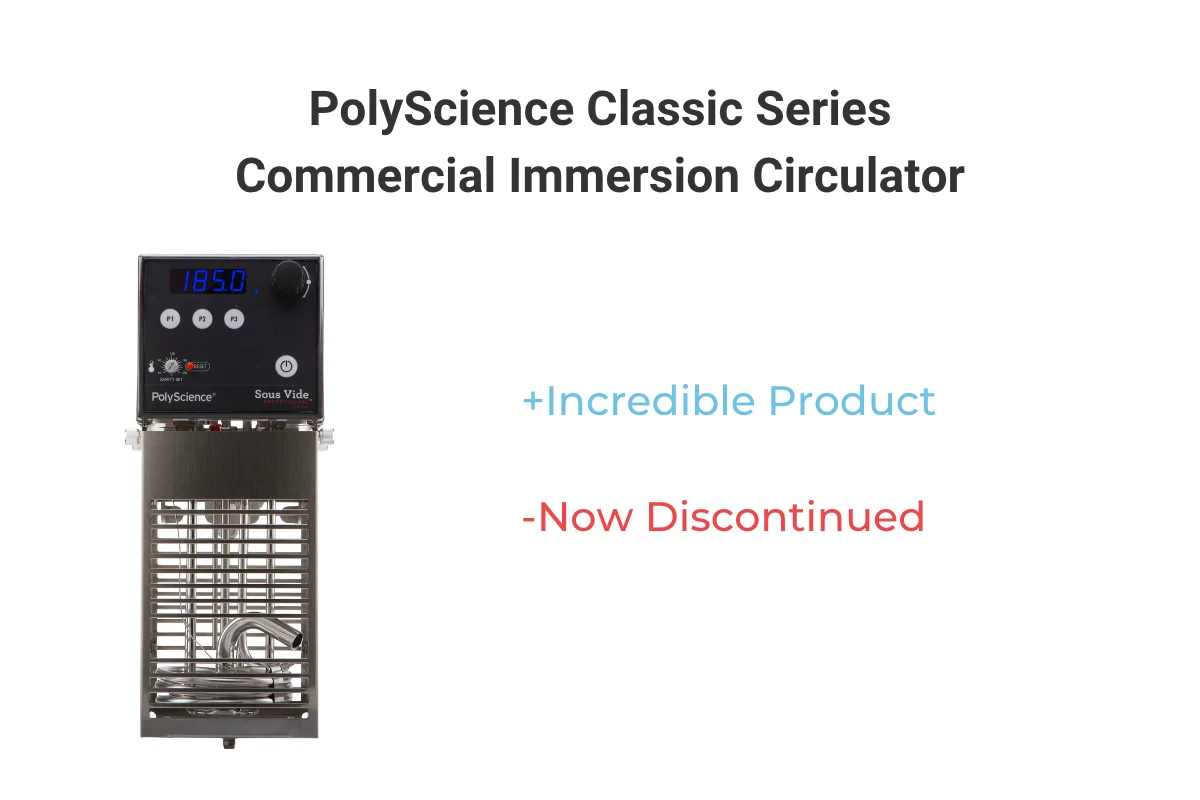

For ten years, the PolyScience Classic Series Immersion Circulator stood as a benchmark in professional kitchens, a testament to precision and durability. This article delves into the history, performance, and lasting impact of a device that, though no longer in production, continues to be revered by chefs and culinary professionals. Its absence leaves a void, but its legacy inspires the evolution of sous vide technology.
The Reign of a Professional Standard
The PolyScience Classic Series Immersion Circulator was not merely a piece of kitchen equipment; it was a workhorse that defined precision cooking for a generation of chefs. Its robust design and unparalleled accuracy made it a staple in some of the world’s most esteemed restaurants. While newer, more compact, and cost-effective models have emerged, the Classic Series remains a point of reference for what commercial-grade sous vide equipment should be.
The decision to discontinue this iconic model, following the acquisition of PolyScience culinary products by Breville, marked the end of an era. This transition, while a natural progression in the corporate landscape, left many professionals lamenting the loss of a trusted tool. However, the availability of this unit on the secondary market, particularly through restaurant closures, offers a potential avenue for those seeking its legendary performance at a reduced cost.
A Deep Dive into Performance and Precision
The Classic Series Immersion Circulator was engineered for demanding professional environments. Its capacity to manage water baths of up to eight gallons made it suitable for high-volume operations. Key features that contributed to its superior performance included an auto-restart function, ensuring uninterrupted cooking cycles in the event of power outages, and a dual-speed water pump. This pump was crucial for achieving consistent and precise circulation, a cornerstone of the sous vide method, which relies on uniform temperature distribution for optimal results.
One of the most lauded aspects of the Classic Series was its exceptional temperature accuracy. It maintained desired temperatures within an astonishing ±0.09°F, a margin slightly tighter than its successor, the Chef Series (now rebranded as the "Creative" series), which achieved ±0.1°F. While this fractional difference might seem negligible in everyday cooking, in the realm of professional gastronomy, where minute variations can impact the final texture and flavor of delicate ingredients, it represented a significant advantage. This level of precision underscored PolyScience’s commitment to delivering the absolute best in temperature control.
Industrial Design Meets Intuitive Control
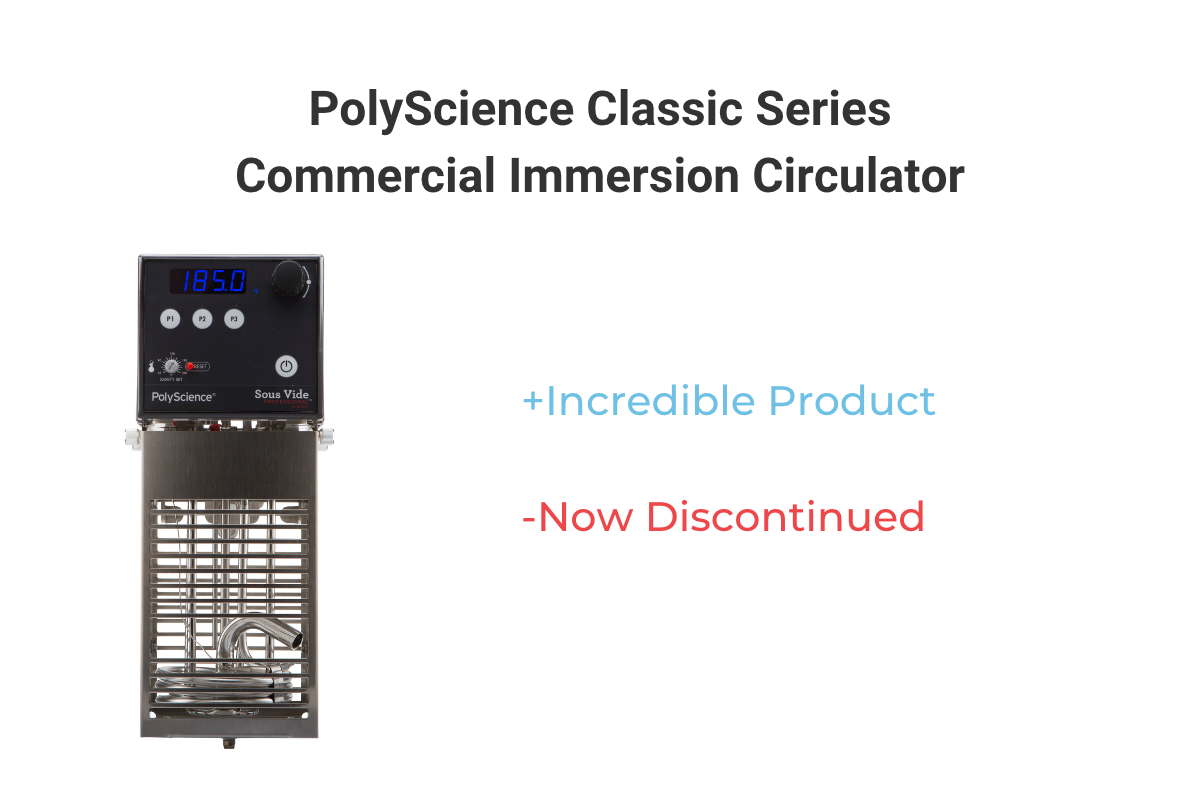
The design of the PolyScience Classic Series was as functional as it was industrial. Its robust construction, featuring an open metal cage that exposed the stainless steel heating coil and pump, allowed for easy visual inspection and maintenance. This cage was also removable, facilitating straightforward cleaning – a critical consideration in any commercial kitchen. The utilitarian aesthetic spoke to its purpose: reliable performance above all else.
Control of the unit was managed through a single, intuitive rotating knob. This minimalist interface allowed for effortless temperature setting and enabled a "lock-out" mode. This feature was invaluable in busy kitchens, preventing accidental adjustments to critical cooking temperatures. Furthermore, the inclusion of three programmable preset functions offered chefs the ability to save and quickly recall frequently used temperature settings, streamlining workflow and enhancing efficiency. These presets could be customized to individual needs, allowing for rapid deployment of specific cooking profiles for various dishes and ingredients.
The Legacy and the Future of Sous Vide
The PolyScience Classic Series Immersion Circulator’s enduring reputation is built on a foundation of consistent, reliable performance. Its unwavering accuracy and robust construction earned it a place of honor in professional kitchens worldwide for many years. The trust placed in this machine by chefs is a testament to its engineering and its ability to deliver exceptional culinary outcomes.
The discontinuation of the Classic Series, however, was not without its consequences. The transition of PolyScience’s culinary division to Breville brought about a shift in product offerings. While the "Creative" series aims to carry the torch, it represents a departure in terms of size and design philosophy. The Classic Series, despite its "industrial" appearance, offered a level of build quality and performance that many feel has yet to be fully replicated in its modern counterparts.
The implications of this discontinuation are multifaceted. For established kitchens that relied on the Classic Series, the search for suitable replacements is ongoing. The market for high-end sous vide equipment is dynamic, with manufacturers continually innovating. While the Classic Series may be out of production, its influence is undeniable. It set a high bar for what users should expect from commercial sous vide devices, pushing the industry forward.
For home cooks and smaller establishments, the evolution of sous vide technology has brought more accessible and powerful options. The current generation of immersion circulators often boasts smaller footprints, enhanced power, and more competitive pricing, making sous vide cooking more attainable than ever before. This democratization of advanced cooking techniques is a direct consequence of the pioneering work done by brands like PolyScience.

Navigating the Market for Alternatives
For those in immediate need of a commercial immersion circulator, the market offers several compelling alternatives. Many contemporary models are designed to be more compact, powerful, and cost-effective than the Classic Series. These newer units often incorporate advanced features and connectivity options, reflecting the broader trend towards smart kitchen appliances.
When evaluating these alternatives, professionals should consider factors such as temperature stability, circulation power, water bath capacity, build quality, and user interface. The goal is to find a device that not only matches the performance of the Classic Series but also integrates seamlessly into modern kitchen workflows.
A Recommended Successor
For chefs and culinary professionals seeking a direct lineage from the PolyScience Classic Series, the Breville Polyscience Creative Series stands out as a logical successor. This line of immersion circulators, while more compact and portable than its predecessor, retains a significant degree of power and precision. It embodies a modern approach to sous vide cooking, balancing advanced functionality with user-friendly design. The Creative Series is a testament to the continued commitment to quality that the PolyScience name represents, albeit within a contemporary framework. Its enhanced portability makes it a versatile option for a wider range of culinary environments, from bustling restaurant kitchens to catering events and even sophisticated home kitchens.
Furthermore, the integration of sous vide cooking often necessitates complementary equipment. For those looking to optimize their sous vide setup, a high-quality commercial vacuum sealer is essential. A reliable vacuum sealer ensures proper food preparation for the sous vide process, protecting ingredients and enhancing cooking results.
The journey of the PolyScience Classic Series Immersion Circulator from a professional kitchen staple to a cherished legacy item highlights the continuous evolution of culinary technology. While its production has ceased, its impact on the sous vide landscape remains profound, influencing the design and performance of the next generation of cooking equipment.