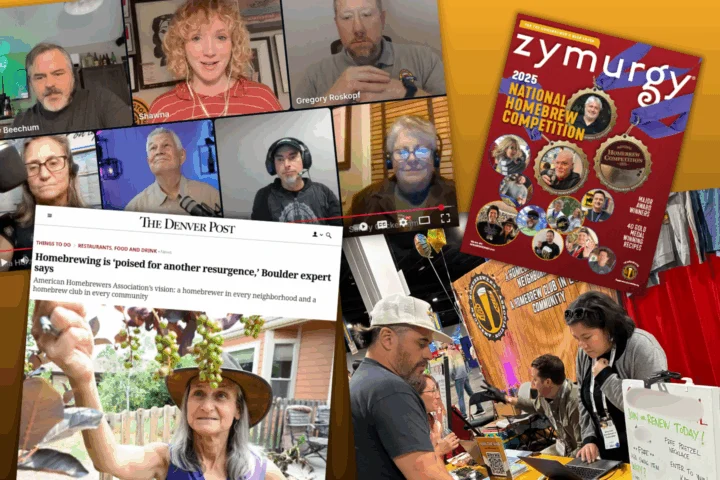

The American Homebrewers Association (AHA) has officially entered a transformative era, marking 2025 as a watershed year defined by its transition into a fully independent, stand-alone nonprofit organization. This structural shift represents the most significant change in the association’s governance since its founding in 1978, moving away from its long-standing integration with the Brewers Association (BA) to become a member-led entity focused exclusively on the needs of the hobbyist brewing community. As the organization navigates this new landscape, it has unveiled a comprehensive strategic plan aimed at revitalizing the hobby of home fermentation across the United States and beyond.
The core of this new direction is encapsulated in a bold vision statement: a homebrewer in every neighborhood and a homebrew club in every community. This objective signals a move toward hyper-localization, acknowledging that the strength of the homebrewing movement lies in grassroots engagement rather than top-down administration. By operating as an independent nonprofit, the AHA is now positioned to reinvest its resources directly into member services, advocacy, and educational programming, free from the competing priorities of the professional brewing industry.
A Chronology of Transformation: From Foundation to Independence
The journey toward independence began in earnest in early 2024, following a period of reflection on the association’s role within the broader craft beer ecosystem. Historically, the AHA served as the consumer-facing arm of the Brewers Association, an arrangement that fostered growth during the craft beer boom of the 2010s. However, as the industry matured and the needs of homebrewers diverged from those of commercial breweries, the AHA leadership identified a need for a dedicated, autonomous structure.
In April 2024, the AHA Board provided a pivotal update outlining the roadmap for separation. Since that time, the association has successfully established its own independent governance, including a founding board composed of dedicated homebrewers and industry veterans. This board has been tasked with overseeing the "unbundling" of services from the Brewers Association, a complex logistical undertaking that includes the migration of member databases, the establishment of independent financial systems, and the restructuring of the National Homebrew Competition (NHC).
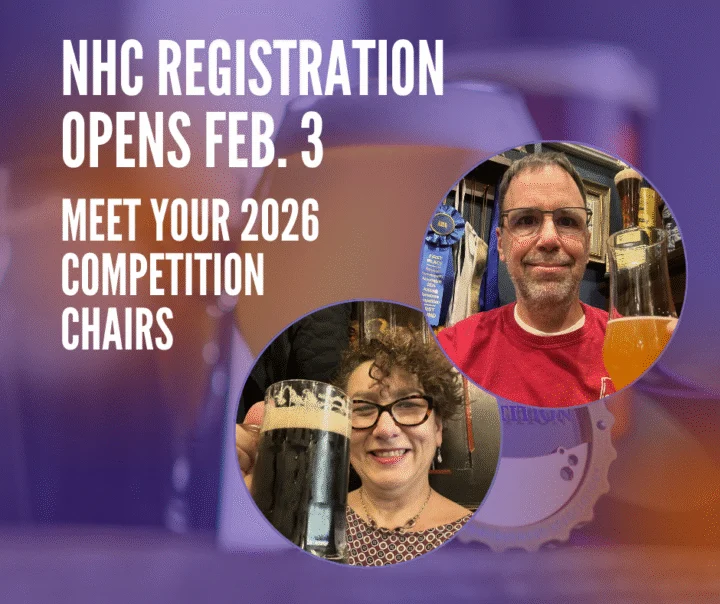
The NHC, which remains the world’s largest and most prestigious homebrewing competition, served as a proof-of-concept for the new independent model. The 2024 competition saw thousands of entries across dozens of categories, judged by certified experts. The successful execution of this event under the new framework provided the necessary momentum to carry the association into its first full year of independence in 2025.
Strategic Objectives and the Neighborhood Initiative
The AHA’s new strategic plan is built upon three primary pillars: advocacy, community building, and educational excellence. By focusing on "a homebrewer in every neighborhood," the association aims to lower the barrier to entry for the hobby. Industry data suggests that while craft beer consumption remains high, the number of active homebrewers has seen fluctuations due to changing lifestyle trends and the accessibility of commercial products.
To counter this, the AHA is doubling down on its support for local homebrew clubs. There are currently over 1,000 registered homebrew clubs in the United States, serving as the primary hubs for education and social interaction. The association’s plan includes providing these clubs with enhanced resources, such as insurance programs, recruitment toolkits, and direct access to brewing experts.
Furthermore, the AHA is revitalizing its digital presence. The "Zymurgy Live" series, which features deep dives into brewing science and technique, has become a cornerstone of the association’s educational outreach. In a move to expand its reach, the AHA scheduled a special Zymurgy Live session for November 5, 2024, opening the event to the general public to showcase the value of membership and the future of the organization.
Financial Autonomy and Member Reinvestment
As an independent nonprofit, the AHA’s financial health is now directly tied to its membership base. This shift creates a more transparent relationship between the association and its constituents. Revenue generated from membership dues, competition entry fees, and sponsorships is now earmarked specifically for homebrewing initiatives.
A significant portion of these funds is being directed toward "Member Service Upgrades." The association has acknowledged that modernizing its digital infrastructure is a priority for 2026. This includes a more intuitive member portal, streamlined renewal processes, and an expanded digital archive of Zymurgy magazine, which has been the journal of record for the hobby since the late 1970s.
The association is also leveraging its independence to forge new partnerships with equipment manufacturers and ingredient suppliers. The "AHA Member Deals" program, which provides discounts at hundreds of homebrew supply shops and breweries nationwide, is slated for expansion. By driving traffic to local homebrew shops (LHBS), the AHA aims to support the retail backbone of the hobby, which has faced significant economic headwinds in recent years.
The Role of Advocacy in a New Era
Advocacy remains a critical component of the AHA’s mission. While homebrewing was legalized federally in 1978 and became legal in all 50 states as of 2013, various local and state-level regulations continue to impact the hobby. These issues range from the legality of transporting homebrew to competitions to the ability of clubs to host public tastings.
The independent AHA is better positioned to lobby for "homebrewer-friendly" legislation without the potential conflicts of interest that can arise when representing commercial interests. The association’s advocacy team works with state guilds and local clubs to monitor legislative sessions and provide expert testimony when brewing rights are challenged. This proactive stance ensures that the legal framework for homebrewing continues to evolve alongside the hobby.
Technical Innovations and Educational Resources
The AHA’s commitment to education is reflected in its rigorous validation of recipes and brewing techniques. The National Homebrew Competition serves not only as a contest but as a massive data-collection effort. Winning recipes are analyzed and shared with the membership, providing a benchmark for quality and innovation.
In the coming year, the AHA plans to introduce more specialized resources, including advanced water chemistry guides, yeast management protocols, and deep dives into ancient and experimental fermentation styles. By maintaining a high standard of technical content, the association ensures that it remains the primary authority for brewers looking to move beyond "kit brewing" and into the realm of professional-grade recipe development.
Looking Ahead to 2026: The Future of Homebrewing
As the AHA prepares for 2026, the focus is on sustainability and growth. The "simmering" projects mentioned in recent board updates include a renewed focus on diversity and inclusion within the brewing community. By reaching out to underrepresented groups in the hobby, the AHA hopes to foster a more vibrant and varied brewing culture.
The association is also exploring ways to integrate new technologies, such as automated brewing systems and digital fermentation tracking, into its educational curriculum. While traditional methods remain popular, the rise of "smart brewing" offers new opportunities for precision and consistency that the AHA intends to champion.
The leadership has expressed profound gratitude for the patience and support of the membership during this transition. "Your patience fuels progress," the founding board stated, acknowledging that the decoupling from the Brewers Association required significant time and effort. The result, however, is a leaner, more focused organization that is uniquely equipped to serve the modern homebrewer.
Conclusion: A Legacy of Fermentation
The American Homebrewers Association has come a long way since Charlie Papazian first published the Home Brewer’s Gazette. From a fringe hobby practiced in shadows to a sophisticated community of enthusiasts who have birthed the modern craft beer industry, homebrewing remains a vital part of American culinary culture.
The independence of the AHA marks a return to its roots—a member-driven organization where the passion for fermentation is the primary motivator. With a clear vision, a dedicated board, and a community of brewers leading the charge, the association is well-positioned to ensure that homebrewing thrives for generations to come. As the fermenters warm up for the winter season, the AHA stands ready to support every brewer, from the novice in their kitchen to the master in their garage, in the pursuit of the perfect pour.