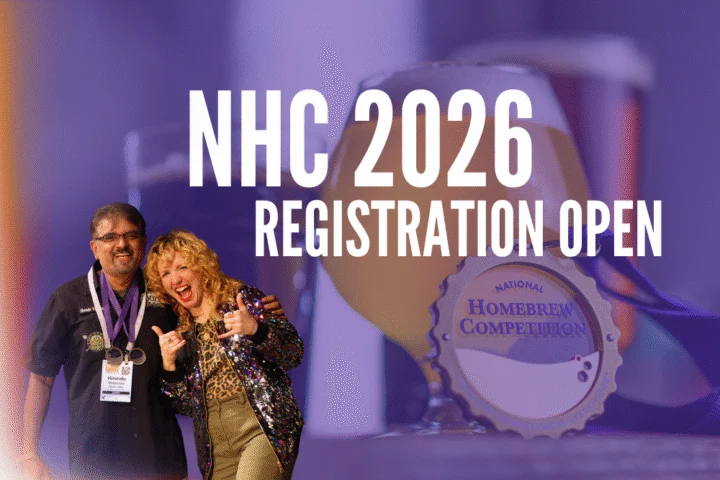

The American Homebrewers Association has officially announced the opening of registration for the 2026 National Homebrew Competition, a milestone event marking nearly half a century of amateur brewing excellence. As the largest and most prestigious competition of its kind globally, the 2026 edition represents the 48th year that the association has sought to identify and celebrate the world’s most talented hobbyist brewers. Since its inception in 1979, the competition has processed and judged more than 170,000 entries, serving as a critical launchpad for thousands of professional brewing careers and a primary driver for the elevation of beer, cider, and mead quality worldwide. This year’s competition cycle will culminate in June at the annual Homebrew Con in Asheville, North Carolina, a city widely recognized as one of the premier craft beer hubs in the United States.
Registration for the event is scheduled to remain open until February 25, 2026, at 8:00 AM Mountain Time. Organizers have emphasized that due to the immense popularity of the competition and the logistical constraints of professional judging, entry caps are strictly enforced. Prospective entrants are encouraged to finalize their submissions early to ensure a place in one of the nine designated first-round judging sites distributed across the country.
A Legacy of Craft and Community
The National Homebrew Competition was founded by Charlie Papazian, a pioneer of the craft beer movement, shortly after the federal legalization of homebrewing in the United States. In the decades since, the event has grown from a small gathering of enthusiasts in Colorado to a massive, multi-stage international operation. The 2026 competition continues this tradition of excellence, operating under the rigorous standards of the Beer Judge Certification Program. The BJCP, which provides the technical framework for the evaluation of entries, ensures that every beer, cider, and mead is judged against specific style guidelines that emphasize technical proficiency, aroma, flavor, and overall balance.
The historical significance of the competition cannot be overstated. It has survived economic shifts, changes in consumer preferences, and the explosive growth of the professional craft brewing industry. Indeed, many of the most successful commercial breweries in the world today, including industry titans like Sierra Nevada Brewing Co. and Dogfish Head Craft Brewery, trace their roots back to the homebrewing culture fostered by the AHA and the NHC. By participating in the 2026 event, modern brewers are connecting with a lineage of innovation that has fundamentally reshaped the global beverage landscape.
Competition Structure and Logistical Framework
The 2026 National Homebrew Competition is organized into a two-tier judging format designed to manage the thousands of expected entries while maintaining the highest levels of scrutiny. The first tier consists of nine regional judging sites. While these sites are geographically dispersed to accommodate brewers across the nation, the AHA allows participants to select their preferred site regardless of their physical location, provided that the site has not reached its capacity.
Each of the nine first-round locations is capped at 750 entries. This limitation is necessary to ensure that the volunteer judges—many of whom are high-ranking BJCP officials and Master Cicerones—can provide the detailed, constructive feedback that is a hallmark of the competition. For many entrants, this written feedback is as valuable as the potential for a medal, as it offers a professional diagnosis of their brewing process and ingredient selection.
The first-round judging dates vary by location, with receiving windows typically opening several weeks prior to the judging events. Once the first-round evaluations are complete, scoresheets are digitized and distributed to entrants via the Brewing Application Portal. Only those entries that secure a Bronze, Silver, or Gold medal in their respective categories at the regional level are eligible to advance to the final round.
The Final Round: Destination Asheville
The final round of the 2026 National Homebrew Competition will be held in conjunction with Homebrew Con, the AHA’s flagship annual conference. For 2026, the event moves to Asheville, North Carolina, a city nestled in the Blue Ridge Mountains that has earned the moniker "Beer City, USA." The selection of Asheville is strategic, reflecting the city’s dense concentration of world-class breweries and its vibrant, educated community of fermentation enthusiasts.
The final round is the ultimate test of a brewer’s skill. At this stage, the winning entries from the nine regional sites are judged head-to-head to determine the best examples of each style on a national level. The awards ceremony, a high-stakes event attended by hundreds of brewers, industry professionals, and media representatives, will see the crowning of category winners as well as the prestigious Homebrewer of the Year, Cidermaker of the Year, and Meadmaker of the Year awards.
In total, the competition and the associated conference comprise eleven distinct events. These include not only the judging sessions and awards gala but also educational seminars, social club nights, and trade shows where the latest in homebrewing technology and ingredients are showcased.
Technical Standards and Judging Excellence
The integrity of the National Homebrew Competition relies heavily on the expertise of its judging panel. The 2026 event will utilize a pool of judges that includes some of the world’s most qualified tasters. This includes BJCP-certified judges, who undergo rigorous training and testing to master the nuances of dozens of distinct beverage styles, as well as Cicerones, who specialize in the service and sensory evaluation of beer.
Judges evaluate entries using a standardized scoring system that looks at five primary components:
- Aroma: Assessment of malt, hops, esters, and other fermentation byproducts.
- Appearance: Evaluation of color, clarity, and head retention.
- Flavor: Analysis of the balance between sweetness, bitterness, and fermentation character.
- Mouthfeel: Consideration of body, carbonation, and warmth.
- Overall Impression: A holistic view of how well the entry represents its declared style.
For 2026, the AHA has continued to update its digital infrastructure, utilizing the Brewing Application Portal (BAP) to streamline the entry process and the delivery of results. This technology allows for faster communication between organizers and participants, ensuring that brewers receive their scores and feedback in a timely manner, which is crucial for those looking to refine their recipes for future competitions.
Participation Requirements and AHA Membership
The National Homebrew Competition is an exclusive benefit for members of the American Homebrewers Association. This requirement ensures that the competition remains a community-focused event dedicated to the advancement of the hobby. Membership in the AHA provides brewers with more than just access to the NHC; it includes a subscription to Zymurgy magazine, access to thousands of recipes, and discounts at breweries and homebrew supply shops across the country.
The AHA has emphasized that the competition is open to all skill levels. While the "Gold Medal" is the ultimate goal, the organization views the NHC as an educational tool. By participating, amateur brewers contribute to a collective data set that helps the AHA and the BJCP track trends in the hobby, such as the rising popularity of non-alcoholic homebrews, the refinement of hazy IPAs, and the resurgence of traditional European lager styles.
Economic and Cultural Impact of Homebrewing
While homebrewing is a hobby, its economic and cultural impact is significant. According to data from the American Homebrewers Association, there are over one million homebrewers in the United States. These individuals support a network of small businesses, from local homebrew supply shops to maltsters and hop farmers. Furthermore, the homebrewing community acts as a primary research and development wing for the broader craft beer industry. Many experimental styles that eventually become commercial hits begin in the kitchens and garages of NHC entrants.
The 2026 competition also highlights the growing diversity within the fermentation community. With categories dedicated to cider and mead, the NHC recognizes the overlapping skills required to produce high-quality fermented beverages beyond traditional beer. This inclusivity helps to broaden the appeal of the competition and fosters a more comprehensive understanding of fermentation science.
Timeline and Key Deadlines
To ensure a successful entry, participants must adhere to a strict chronological schedule:
- Registration Period: Currently open through February 25, 2026 (closing at 8:00 AM MT).
- First Round Shipping/Receiving: Dates vary by site; specific windows will be communicated to registered entrants.
- First Round Judging: Conducted at nine locations across the U.S. in the spring of 2026.
- Advancement Notification: Brewers who qualify for the final round will be notified no later than May 1, 2026.
- Final Round Shipping: Specific dates to be confirmed by May 1, 2026.
- Homebrew Con & Final Judging: June 2026 in Asheville, NC.
- National Awards Ceremony: The concluding event of Homebrew Con in June 2026.
Analysis of Competition Trends
As the 48th year of the competition begins, industry analysts point to several emerging trends that are likely to define the 2026 field. There has been a notable increase in the technical proficiency of amateur brewers, aided by the availability of professional-grade equipment and high-quality lab-grown yeast strains. This "professionalization of the hobby" has made the NHC more competitive than ever, with winning scores often separated by fractions of a point.
Additionally, the focus on sustainability and local ingredients is expected to play a role in the 2026 entries. Many brewers are now utilizing locally malted grains and "wet hops" or experimental varieties, reflecting a broader consumer trend toward regionality and transparency in food and beverage production.
The National Homebrew Competition remains a vital institution in the world of craft beverage production. By providing a platform for rigorous evaluation and national recognition, the AHA continues to foster a culture of excellence that benefits the entire brewing ecosystem. As registration moves forward for the 2026 cycle, the eyes of the fermentation world turn toward Asheville, where the next generation of brewing masters will be recognized.