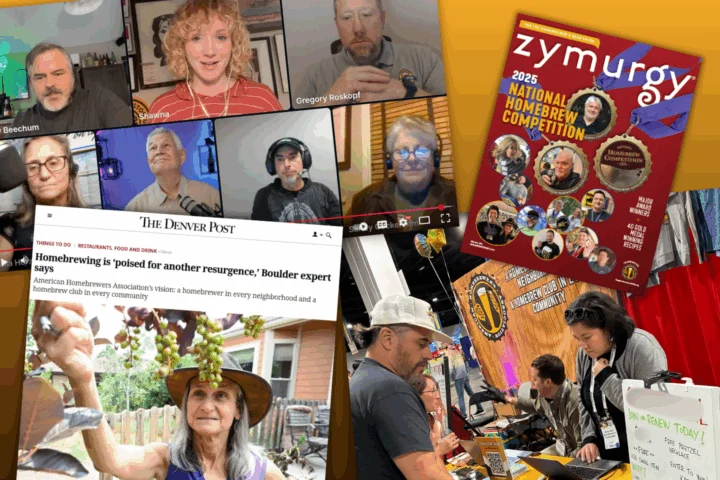

The AHA’s independence comes at a time when the craft beverage landscape is evolving, with homebrewers continuing to serve as the foundational bedrock of the commercial brewing industry. By operating as an independent nonprofit, the association aims to streamline its operations and focus exclusively on the needs of amateur brewers, ranging from novices to competitive experts. The new strategic direction is encapsulated in a bold vision: ensuring a homebrewer exists in every neighborhood and a homebrew club thrives in every community.
Strategic Reorganization and the Path to Independence
The move toward independence began in earnest following an April board update, which outlined the legal and financial frameworks necessary to separate the AHA from its long-standing affiliation with larger industry trade groups. Historically, the AHA was a division of the Brewers Association (BA), an arrangement that provided stability but often tethered the hobbyist wing to the commercial interests of professional craft breweries. The 2025 separation allows the AHA to prioritize hobby-specific advocacy and education without the complexities of commercial industry pressures.
As part of this transition, the AHA has successfully established its own independent nonprofit status. This legal standing enables the association to seek diverse revenue streams, including grants and sponsorships that are specifically tailored to hobbyist education and community building. The founding board of the independent AHA has spent the latter half of 2024 and the beginning of 2025 securing the necessary infrastructure, including independent financial accounts, administrative systems, and a dedicated staff focused solely on the AHA’s strategic plan.
Key Accomplishments and Milestones of 2025
The AHA’s first year of independence has been marked by several high-profile successes that reinforce its role as the premier organization for homebrewers. One of the most significant achievements was the execution of the 2025 National Homebrew Competition (NHC). Known as the world’s largest competition of its kind, the NHC serves as a benchmark for brewing excellence. The independent AHA managed the multi-stage judging process, culminating in an awards ceremony that recognized the top amateur brewers across dozens of style categories.
In addition to the NHC, the association successfully hosted "Homebrew Con," the annual conference that brings together thousands of enthusiasts for educational seminars, social events, and equipment demonstrations. This event remains a cornerstone of the AHA’s community-building efforts, providing a physical space for brewers to exchange ideas and techniques.
The association also reported a successful "Learn to Homebrew Day," an international grassroots effort to introduce newcomers to the hobby. By providing resources and coordinating with local homebrew shops and clubs, the AHA saw a surge in participation, particularly among younger demographics looking to explore the science and art of fermentation. Furthermore, the Great American Beer Festival (GABF) Pro-Am competition continued to flourish under the AHA’s guidance, allowing award-winning homebrewers to scale their recipes for commercial production in collaboration with professional breweries.
Technological Infrastructure and Member Service Upgrades
Recognizing that digital engagement is critical for a modern nonprofit, the AHA has initiated a comprehensive overhaul of its technological platforms. For much of 2024, members utilized legacy systems, but the association has announced that 2026 will see the launch of a new, dedicated website and member portal. This upgrade is intended to provide a more intuitive user experience, allowing members to access the vast archive of Zymurgy Magazine articles, NHC-validated recipes, and educational videos more efficiently.
The planned upgrades include:
- A modernized Customer Relationship Management (CRM) system to better manage memberships and renewals.
- An enhanced mobile application designed to provide "on-the-go" access to brewing calculators, style guidelines, and the AHA Member Deals program.
- Improved digital forums to facilitate communication between homebrew clubs and individual members.
These investments are funded by the association’s new independent budget, reflecting a commitment to returning value directly to the membership. The board has acknowledged the patience of the community during this transition period, noting that building an independent infrastructure from the ground up is a complex undertaking that requires careful financial stewardship.
Timeline of the American Homebrewers Association
To understand the significance of the current transition, it is necessary to examine the chronology of the AHA and the broader homebrewing movement in the United States:
- 1978: President Jimmy Carter signs H.R. 1337 into law, federally legalizing homebrewing for the first time since Prohibition. Shortly thereafter, Charlie Papazian founds the American Homebrewers Association in Boulder, Colorado.
- 1979: The first issue of Zymurgy Magazine is published, providing a dedicated voice for the hobby.
- 1979-2013: The AHA leads advocacy efforts to legalize homebrewing at the state level. The process concludes in 2013 when Alabama and Mississippi become the final states to pass legalization bills.
- 2005: The AHA and the Association of Brewers merge with the Small Brewers Coalition to form the Brewers Association.
- 2024: The AHA board announces a strategic plan for full independence, citing the need for a dedicated focus on the hobbyist community.
- 2025: The AHA officially becomes an independent nonprofit organization, launching its new vision and governance structure.
- 2026 (Planned): Full rollout of new digital platforms and expanded advocacy initiatives.
Advocacy and Economic Impact
Beyond the social and educational aspects of the hobby, the AHA plays a critical role in legislative advocacy. Even with federal legalization, homebrewers often face restrictive local ordinances regarding the transport of homebrew to competitions or the amount of beer that can be produced in a single household. The independent AHA has signaled that it will intensify its efforts to work with state legislatures to modernize these laws.
The economic impact of homebrewing is also a factor in the association’s new strategy. According to industry data, the homebrewing community contributes significantly to the economy through the purchase of ingredients (malt, hops, yeast) and specialized equipment. Local homebrew supply shops, often the first point of contact for new brewers, are vital small businesses that the AHA seeks to support through its "Shop Local" initiatives and club partnership programs.
Official Responses and Community Engagement
The AHA Founding Board has emphasized that the organization’s success is inextricably linked to the active participation of its members. In a statement regarding the transition, the board noted that "independence brings the opportunity to be more agile and more responsive to the specific needs of homebrewers." This sentiment was echoed during a special "Zymurgy Live" event held on November 5, which was opened to the general public to transparently discuss the future of the association.
Industry analysts suggest that the AHA’s independence could lead to a resurgence in homebrewing interest by decoupling the hobby from the corporate and regulatory concerns of the commercial beer industry. By focusing on the "pure" aspect of the craft—the joy of creation and the science of fermentation—the AHA is positioned to appeal to a broader audience, including those interested in sustainability, DIY culture, and culinary experimentation.
Broader Implications for the Global Brewing Community
The transition of the AHA is being watched closely by international homebrewing organizations. As the largest and oldest association of its kind, the AHA often sets the standard for competition guidelines and educational materials. Its shift to an independent model may inspire similar movements in other countries where homebrewing associations are currently under the umbrella of commercial trade groups.
Furthermore, the AHA’s focus on diversity and inclusion within the hobby is a key pillar of its new strategic plan. The association has pledged to lower barriers to entry for underrepresented groups in the brewing community, recognizing that a "homebrewer in every neighborhood" requires a concerted effort to reach demographics that have historically been excluded from the hobby.
As 2026 approaches, the AHA remains focused on its core mission of delivering unmatched resources, including the award-winning Zymurgy Magazine and the world-class National Homebrew Competition. The organization’s leadership maintains that while the legal structure has changed, the passion for brewing remains the driving force. By empowering members to lead the charge, the American Homebrewers Association is not just preserving a tradition but ensuring that the art of homebrewing continues to thrive for future generations.