
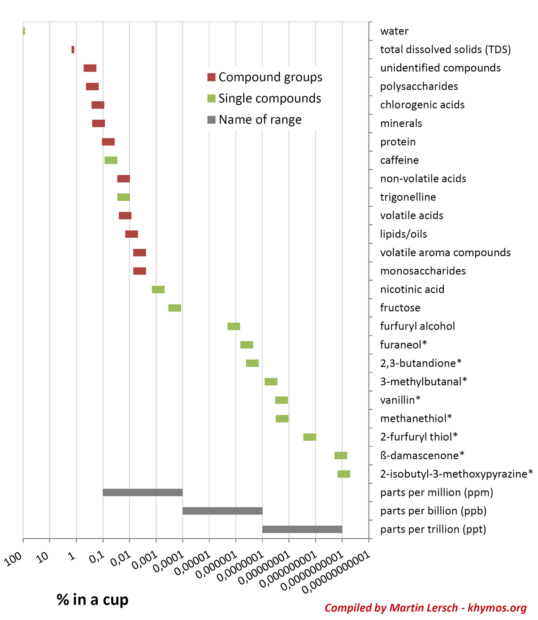
The daily ritual of brewing coffee, seemingly a simple act of combining water and ground beans, masks an astonishingly intricate chemical process that transforms raw ingredients into a beverage of profound complexity. While a typical cup of black coffee consists of more than 98.5% water, the remaining 1.2% to 1.5% of total dissolved solids (TDS) represents a concentrated universe of hundreds, if not thousands, of distinct chemical compounds. These 12-15 grams of solids per liter, extracted from approximately 60 grams of coffee grounds, are the architects of coffee’s characteristic color, taste, and aroma.
A Historical Journey Through Coffee Chemistry
The scientific exploration into coffee’s chemical makeup is a testament to humanity’s enduring fascination with this globally cherished beverage. Early attempts to understand coffee’s properties were largely empirical, focusing on observable changes during roasting and brewing. However, the mid-20th century marked a revolutionary turning point with the advent of sophisticated analytical techniques, particularly gas chromatography-mass spectrometry (GC-MS). These methods allowed scientists to separate, identify, and quantify the myriad volatile and non-volatile compounds present in coffee, moving beyond mere observation to precise molecular deconstruction.
Significant milestones in this journey include landmark studies that began to map the sensory landscape of coffee at a molecular level. A 1996 study, for instance, demonstrated that a carefully selected set of 22 key volatile compounds could produce "model" coffees that assessors described as "clearly coffee-like," mimicking both Arabica and Robusta profiles [2]. While a remarkable achievement, the assessors’ qualification of "clearly coffee-like" rather than "identical" underscored the vast, still-undiscovered complexity. This early work highlighted that even a seemingly comprehensive list of key odorants fell far short of perfectly replicating the complete coffee experience.
Further research continued to peel back the layers of this chemical enigma. An aroma extract dilution analysis (AEDA) from 2002 revealed that a substantial 13 of the 40 key odorants identified in coffee remained unknown [1]. This persistent challenge in identifying all components stems from several factors. Many crucial aroma compounds exist in extraordinarily low concentrations, making their isolation and structural elucidation a formidable task. Additionally, some molecules are large and structurally complex, defying straightforward characterization with current techniques. The ongoing discovery of new compounds, even decades into advanced research, underscores that the scientific understanding of coffee’s full chemical tapestry is a continually evolving frontier.
The Molecular Symphony: Volatiles and Non-Volatiles
The compounds within a cup of coffee are broadly categorized into volatile and non-volatile components, each playing a distinct yet interconnected role in the sensory experience.
Volatile Aroma Compounds: The Breath of Coffee
Volatile compounds are those that readily evaporate and travel into our nasal passages, contributing to coffee’s rich and nuanced aroma. The vast majority of these compounds are formed during the roasting process through complex chemical reactions, primarily the Maillard reaction and Strecker degradation. The Maillard reaction, a non-enzymatic browning reaction between amino acids and reducing sugars, generates a vast array of compounds responsible for roasty, nutty, bready, and caramel notes. Strecker degradation, often occurring concurrently, further contributes to these flavors by breaking down amino acids into aldehydes, which are potent aroma molecules.
Examples of these volatile compounds abound. Pyrazines contribute to the earthy, roasty, and nutty aromas; furans impart caramel, sweet, and nutty notes; aldehydes are responsible for fruity and grassy nuances; and even sulfur-containing compounds, often present in trace amounts, can add savory or umami dimensions. The sheer number and diverse origins of these molecules explain why coffee can exhibit such a broad spectrum of aromatic descriptors, from floral and fruity to smoky and spicy.
Crucially, the impact of these volatile compounds is not solely dictated by their concentration. The concept of Odor Activity Value (OAV), defined as a compound’s concentration divided by its odor threshold, is paramount here. Our olfactory system possesses an extraordinary sensitivity to certain molecules, meaning a compound present at an infinitesimal concentration can have a profound impact on overall flavor. For example, a compound present at 0.0000000001% could be as critical to the overall flavor as another compound present at 0.01%, simply because our nose is orders of magnitude more sensitive to the former. This logarithmic scale of impact, spanning more than nine orders of magnitude in concentration, highlights the delicate balance and potent nature of coffee’s aromatic profile.

A prime example of such a potent odorant is beta-damascenone. Present in coffee at concentrations as low as 1 part per trillion (ppt), it still exerts a significant influence on the overall flavor, consistently ranking among the top five key odorants [1]. Beta-damascenone belongs to a group of compounds known as rose ketones, first identified in rose oil in the 1960s. Its name derives from the Damask rose (Rosa × damascena), a flower renowned for its exquisite fragrance. The flavor and fragrance company Firmenich pioneered the use of rose ketones, with beta-damascenone becoming a pivotal component in iconic perfumes such as Dior’s Poison. Its sensory profile is remarkably complex, often described as possessing fruity (blackcurrant, apple), floral (rose), sweet, honey-like, and even tobacco or woody notes, showcasing its versatility and depth in contributing to coffee’s intricate aroma. The accurate measurement of odor thresholds and quantification of compounds at such minute concentrations remains a challenging yet crucial area of ongoing research, suggesting that additional key odorants in coffee are likely awaiting discovery.
Non-Volatile Taste Compounds: The Foundation of Flavor
In contrast to the volatile compounds that shape aroma, non-volatile compounds primarily interact with taste receptors on the tongue, contributing to the perceived bitterness, sweetness, acidity, and astringency of coffee. These compounds, along with insoluble particles and oils, also influence the body and texture, or mouthfeel, of the beverage.
Among the most significant non-volatile components are acids. Chlorogenic acids (CGAs) are abundant in green coffee beans and undergo significant transformation during roasting. They partially hydrolyze into quinic acid and caffeic acid lactones, which are potent contributors to bitterness. Other organic acids like citric, malic, and acetic acids impart bright, fruity, or wine-like acidity, crucial for balancing coffee’s flavor profile. The specific balance of these acids varies significantly with coffee origin, processing, and roast level.
Sugars, such as sucrose and fructose, are present in green coffee and undergo caramelization during roasting, contributing to sweetness and complex caramel notes. However, most of these simple sugars are consumed during the roasting process, leaving behind more complex carbohydrates and contributing to perceived sweetness rather than direct sugar content in the final brew.
Alkaloids, most notably caffeine, are major contributors to coffee’s characteristic bitterness and its well-known stimulant effects. Theobromine, another alkaloid, is present in smaller quantities. Lipids, or oils, though low in water solubility, are partially extracted and contribute significantly to coffee’s body, viscosity, and ability to retain aroma compounds. Diterpenes like kahweol and cafestol, found in coffee oils, are known for their potential impact on cholesterol levels, particularly in unfiltered brews, and also contribute to the unique mouthfeel. Minerals and salts, present in trace amounts, also play a role, influencing the interaction of other compounds and subtly affecting taste. Proteins and amino acids, though largely precursors for volatile compounds during roasting, can also contribute to the body and potential interactions in the final cup. A significant portion of the non-volatile matter, however, remains broadly categorized as "unidentified compounds," many of which likely contribute to coffee’s distinctive color and underlying bitterness.
The Art and Science of Extraction: Beyond Just Water
Understanding the chemical composition of coffee is inextricably linked to the process of extraction. Water, being a polar solvent, is highly effective at dissolving polar compounds such as acids, minerals, proteins, and carbohydrates. Indeed, typically over 75% of these polar compounds are efficiently extracted during brewing. However, water’s affinity for non-polar compounds, which include many of the volatile aroma compounds and lipids, is considerably lower. As a result, only 10% to 30% of these crucial non-polar components are extracted when brewing with water.
This differential extraction efficiency has profound implications for the final cup. Brewing parameters such as grind size, water temperature, brew time, and turbulence all influence the rate and extent to which various compounds are dissolved. A finer grind, higher temperature, or longer contact time generally increases extraction, but not uniformly across all compound categories. This means that manipulating these parameters allows brewers to selectively emphasize certain aspects of coffee’s flavor profile, highlighting acidity, sweetness, or bitterness by altering the balance of extracted polar and non-polar compounds.
The concept of using less polar solvents, such as ethanol, for coffee extraction offers a fascinating glimpse into potential future innovations or specialized applications. While not a typical home brewing method, solvent extraction is utilized in industrial decaffeination processes and could theoretically be explored for creating unique coffee concentrates or flavor extracts, further pushing the boundaries of what is possible in coffee processing.
This complex interplay also underscores the limitations of Total Dissolved Solids (TDS) measurements. While TDS is an excellent quantitative metric for coffee strength, indicating the total mass of dissolved solids, it is a poor predictor of aroma and flavor quality. A high TDS might indicate a strong brew, but it offers no insight into the specific composition of those dissolved solids. Since compounds present in minute quantities can have a disproportionately large impact on flavor due to low odor thresholds, and given the vast differences in extraction rates between polar and non-polar compounds, TDS alone cannot capture the nuanced sensory experience. Relying solely on TDS would be akin to judging a symphony by its volume without considering the harmony, melody, or timbre of individual instruments. For the vast majority of coffee enthusiasts and professionals, the most sophisticated analytical detector remains the human nose and palate, an experimental approach that continues to guide the exploration into the wonders of coffee extraction.
Expert Perspectives on Coffee’s Chemical Enigma
The intricate chemistry of coffee is a subject of continuous fascination and practical application across the industry. Dr. Elara Vance, a lead food chemist at the Global Flavor Institute, articulates this complexity: "The sheer diversity of molecules in a single coffee bean is astounding. Each roasting profile and brewing method acts as a unique filter, selectively unlocking different facets of this chemical tapestry. Our work is akin to deciphering a complex organic code, revealing how these compounds interact to create the beloved sensory experience."
For those on the front lines of coffee production, this understanding is paramount. Maria Rodriguez, owner and head roaster at "Artisan Brews," emphasizes the practical implications: "We’re not just roasting beans; we’re orchestrating chemical reactions. Every subtle adjustment in temperature or airflow can shift the balance of acids, sugars, and volatile aromatics, defining the coffee’s unique character. Our craft is deeply informed by the science of these transformations."
Educating the public about coffee’s profound complexity is also a growing imperative. David Chen, a prominent coffee educator and consultant, notes, "Many people perceive coffee as just ‘bitter’ or ‘strong.’ By highlighting the nuances, from the floral notes imparted by beta-damascenone to the bright acidity from specific organic acids, we empower consumers to appreciate coffee as a gourmet experience, akin to fine wine or craft spirits. This deeper understanding enriches their daily ritual."
Brewing the Future: Implications for Industry, Consumers, and Research
The ongoing unraveling of coffee’s chemical composition carries significant implications for various stakeholders. For the coffee industry, this scientific understanding is crucial for ensuring quality control and consistency across vast production scales. Large producers leverage analytical chemistry to monitor roast profiles, identify defects, and maintain brand flavor integrity. For specialty coffee, it drives innovation in processing methods, from experimental fermentations to precise roasting techniques aimed at optimizing specific flavor precursors. Furthermore, knowledge of these compounds fuels product development, leading to new coffee-based beverages, flavorings, and even functional food ingredients. The pursuit of sustainable practices is also intertwined, as understanding how agricultural practices and processing methods influence chemical profiles can guide more environmentally friendly and economically viable approaches.
For consumers, this growing body of knowledge fosters a deeper appreciation for the beverage they consume daily. An informed understanding of what contributes to coffee’s diverse flavors empowers them to make more discerning choices, whether selecting beans, brewing equipment, or adjusting their home brewing parameters to achieve their preferred taste profile. It transforms coffee from a mere caffeine delivery system into a rich, sensory journey.
From a scientific perspective, the journey is far from over. Future research will undoubtedly continue to identify the remaining unknown odorants, potentially unlocking entirely new dimensions of coffee flavor. Investigating the correlation between specific genetic markers in coffee plants and their resulting chemical profiles holds promise for developing new, disease-resistant, and flavor-optimized coffee varieties. The impact of climate change on coffee chemistry, particularly how environmental stressors affect the development of flavor precursors in the bean, is another critical area of study. Moreover, the integration of artificial intelligence and machine learning could revolutionize quality assessment and flavor prediction, allowing for rapid analysis and optimization based on vast chemical datasets. As science continues to probe the depths of this complex beverage, the cup of coffee on our table promises to reveal even more of its remarkable wonders.
References
[1] Sanz, C.; Czerny, M.; Cid, C.; Schieberle, P. Eur. Food. Res. Technol., 2002, 214, 299 (DOI: 10.1007/s00217-001-0459-9)
[2] Semmelroch, P.; Grosch, W. J. Agric. Food Chem. 1996, 44, 537 (DOI: 10.1021/jf9505988)
[3] Belitz, H.-D.; Grosch, W.; Schieberle, P. (ed.), 2004, Food Chemistry (3rd edition) Springer.
[4] Amanpour, A.; Selli, S. J. Food Proc. Pres. 2016, 40, 1116 (DOI: 10.1111/jfpp.12692)
[5] Batali, M. E.; Frost, S. C.; Lebrilla, C. B.; Ristenpart, W. D.; Guinard, J.-X. J. Sci. Food Agric. 2020, 7, 2953 (DOI: 10.1002/jsfa.10323)