
The landscape of the quick-service restaurant (QSR) industry is undergoing a seismic shift as artificial intelligence moves from the realm of science fiction into the core of daily operations. In response to this rapid evolution, the QSR Evolution Conference, produced by Arrowfly and the editorial teams behind QSR and FSR magazines, has announced the launch of QSR AI Connect. This new executive-level initiative is designed to provide restaurant leaders with a structured framework for navigating the complexities of AI adoption, moving beyond the initial phase of experimentation toward a model of sustainable, value-driven implementation.
As the hospitality sector grapples with rising labor costs, fluctuating supply chains, and evolving consumer expectations, AI has emerged as a critical tool for maintaining competitive advantage. However, the sheer volume of available technologies has left many executives questioning where to focus their capital and human resources. QSR AI Connect seeks to address these concerns by fostering an environment of education and collaboration, specifically tailored for decision-makers who must balance technological innovation with bottom-line realities.
A Strategic Shift in Restaurant Technology Leadership
The central philosophy of QSR AI Connect is rooted in the belief that the success of artificial intelligence within an organization is not dictated by the sophistication of the software purchased, but by the strategic integration of that technology into the existing business fabric. For years, the restaurant industry has adopted technology in silos—implementing a new Point of Sale (POS) system here or a third-party delivery integration there. QSR AI Connect advocates for a more holistic approach, where AI serves as the connective tissue between marketing, operations, labor management, and the guest experience.
The initiative is a collaborative effort between industry media leaders and NexChapter, a specialized advisory firm. By combining the editorial reach and industry insights of QSR magazine with the strategic expertise of NexChapter, the program aims to demystify AI. It focuses on how leaders can connect business strategy and operational priorities with the right technological tools to create measurable outcomes, such as increased throughput, improved order accuracy, and enhanced employee retention.
Chronology of the QSR AI Connect Rollout
The rollout of QSR AI Connect is structured as a multi-stage journey, beginning with digital engagement and culminating in high-level in-person workshops. This chronological approach ensures that participants can build their knowledge base before engaging in deep-dive strategic planning.
- Phase One: The Foundational Webinar (August 18): The journey begins this summer with a complimentary webinar titled "Turning AI Strategy into Real Restaurant Results." Scheduled for Tuesday, August 18, this session serves as an introduction to the QSR AI Connect framework. It is designed to help restaurant organizations prepare for the next era of innovation by exploring emerging use cases and executive considerations.
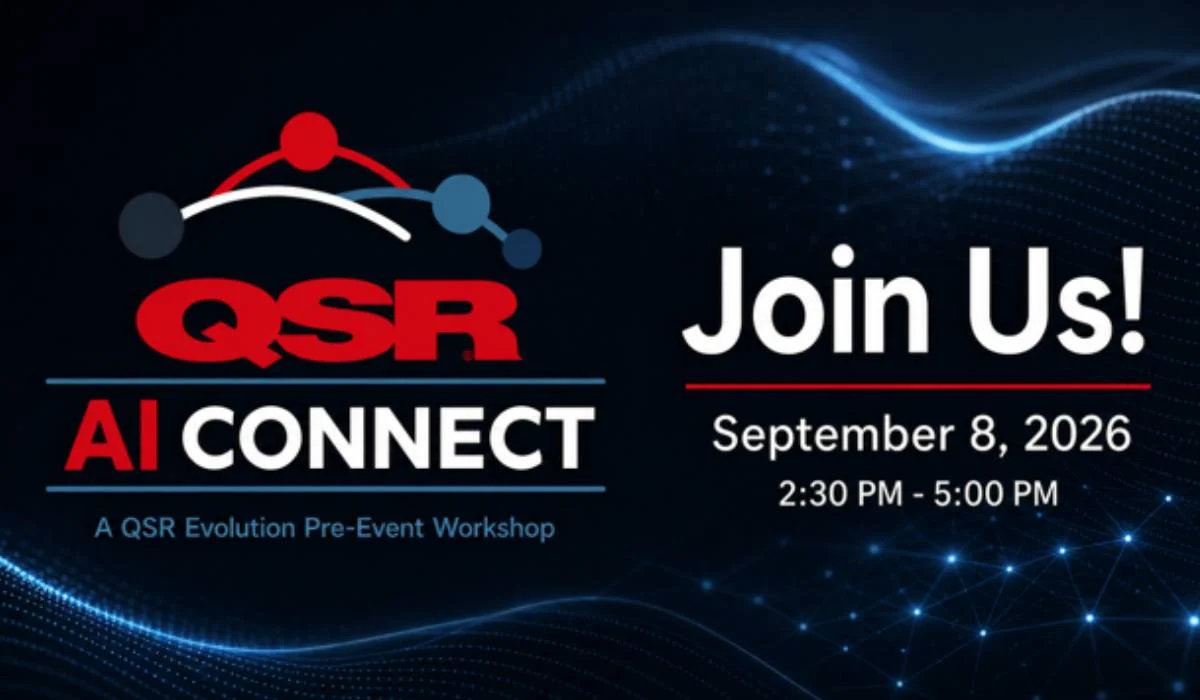
- Phase Two: The Executive Workshop (September 8): The initiative moves into a physical space at the QSR Evolution Conference in Columbus, Ohio. On September 8, prior to the conference’s opening general session, the inaugural executive workshop, "Leading Through the AI Era: An Executive Workshop for Restaurant Leaders," will take place.
- Phase Three: The Main Conference Integration (September 8–10): Following the workshop, the themes of AI integration will permeate the broader QSR Evolution Conference, allowing leaders to continue the conversation with a wider array of vendors, peers, and subject matter experts.
The State of AI in the Restaurant Industry: Supporting Data and Trends
The launch of QSR AI Connect comes at a pivotal moment. According to recent industry reports, nearly 60% of restaurant operators plan to integrate some form of AI or automation into their kitchens or front-of-house operations by the end of 2025. The drivers for this adoption are multifaceted. Labor remains the primary concern; with turnover rates in the fast-food sector often exceeding 100%, AI-driven scheduling and automated voice-ordering systems are no longer luxuries but necessities for operational stability.
Data from the National Restaurant Association indicates that 16% of operators already use AI for menu pricing and inventory management, a number expected to double within the next 24 months. Furthermore, guest experience data suggests that consumers are becoming increasingly comfortable with AI interactions, provided they lead to faster service and higher accuracy. However, a significant gap remains: while 75% of restaurant executives believe AI is "essential" to their future, only about 12% report having a fully realized AI roadmap. QSR AI Connect is specifically designed to close this "execution gap."
Leadership Perspectives on the AI Mandate
The initiative has garnered significant support from industry veterans who recognize the high stakes of the current technological climate. Danny Klein, Vice President of Editorial at Arrowfly’s Foodservice, Retail, and Hospitality group, emphasizes that the conversation has shifted from "if" to "how."
"Restaurant leaders are no longer asking whether AI matters," Klein stated. "They’re asking where to begin, what deserves investment, and how to lead their organizations through change. QSR AI Connect was created to answer those questions through practical discussion, executive collaboration, and real-world application."

Art Sebastian, Founder and CEO of NexChapter, will lead the workshop sessions. Sebastian, who has a storied career advising major brands on digital commerce and loyalty, views AI as a leadership imperative rather than a mere IT project.
"Every restaurant executive is asking some version of the same question: ‘Where should we invest, and how do we make sure we’re solving the right problems?’" Sebastian noted. "AI isn’t simply another technology initiative. The organizations that succeed won’t be the ones adopting the most AI. They’ll be the ones making the smartest decisions about where AI creates value for guests, employees, and the business."
A New Model for Executive Education
The QSR AI Connect workshop departs from the traditional conference format of passive listening. Instead of a series of standard presentations or sales pitches, the workshop is designed as a facilitated working session. This approach ensures that participants leave with more than just notes; they leave with a tangible plan.
The workshop features several unique components:
- Executive Polling: Real-time data collection from attendees to benchmark where their peers are in the AI journey.
- Collaborative Exercises: Peer-to-peer problem-solving sessions where executives can discuss shared challenges such as data privacy, integration with legacy systems, and employee sentiment.
- The Executive AI Workbook: Every participant will receive a specialized workbook and planning tools designed to help prioritize investments over the next 12 to 36 months.
- Curated Strategic Partners: To maintain the integrity of the discussion, technology partners participate as contributors rather than vendors, focusing on business outcomes rather than product features.
Broader Impact and Industry Implications
The implications of QSR AI Connect extend far beyond the three-day conference in September. By establishing a standard for how restaurant executives evaluate and implement AI, the initiative could lead to a more disciplined and effective use of capital across the industry.
One of the most significant impacts will likely be seen in the "Middle Market" of the restaurant world—brands that have the scale to benefit from AI but lack the massive R&D budgets of global giants like McDonald’s or Starbucks. By providing these leaders with a roadmap, QSR AI Connect levels the playing field, allowing smaller and mid-sized chains to compete more effectively through smarter data utilization and operational efficiency.
Furthermore, the focus on "Leading Through the AI Era" suggests a growing recognition of the human element in technology. As AI takes over routine tasks, the role of the restaurant manager and the front-line worker will change. The initiative’s emphasis on people ensures that as organizations become more automated, they do not lose the hospitality that defines the industry.
Preparing for the Future of Foodservice
As the August 18 webinar approaches, the industry is watching closely. The success of QSR AI Connect will likely be measured by the quality of the "Executive AI Roadmaps" developed during the September workshop. In an era where "AI fatigue" is a real risk due to the constant barrage of new tools, a structured, strategy-first approach is a welcome change for the executive suite.
The QSR Evolution Conference continues to position itself as a vital hub for the industry’s future. By integrating QSR AI Connect, the event moves from being a venue for discussion to a laboratory for the next generation of restaurant leadership. For executives looking to move past the hype and into the realm of real-world results, the path forward appears to be one of collaboration, education, and strategic alignment.
To participate in the upcoming webinar or to register for the executive workshop, leaders are encouraged to visit the QSR Evolution Conference website. With attendance for the workshop intentionally limited to maximize collaboration, early registration is expected to be a priority for brands looking to secure their place in the AI-driven future of foodservice.