
Topgolf has officially announced the launch of Topgolf Media Networks, a dedicated sponsorship, media, and licensing division designed to transform the global sports-entertainment brand into a sophisticated, multi-channel platform for advertisers. This strategic evolution marks a significant departure from the company’s traditional business model, shifting its primary value proposition from a destination for recreational golf to a powerful media ecosystem capable of reaching tens of millions of consumers. By integrating its expansive physical footprint with a robust digital infrastructure, Topgolf aims to offer brands an unprecedented level of engagement through a "connected platform" that spans the entire consumer journey, from pre-visit planning to post-game digital interaction.
The new division is built upon the premise that Topgolf is no longer merely a venue but a high-traffic media environment. According to Chief Executive Officer David McKillips, the company’s massive scale—serving more than 42 million guests and golfers annually—provides a unique opportunity for brands to embed themselves within the social and competitive experiences of a highly desirable demographic. Unlike traditional advertising environments where audiences are often passive or distracted, Topgolf guests spend an average of two hours per visit, creating a high-dwell-time environment that is increasingly rare in the modern media landscape.
A Unified Ecosystem for Brand Engagement
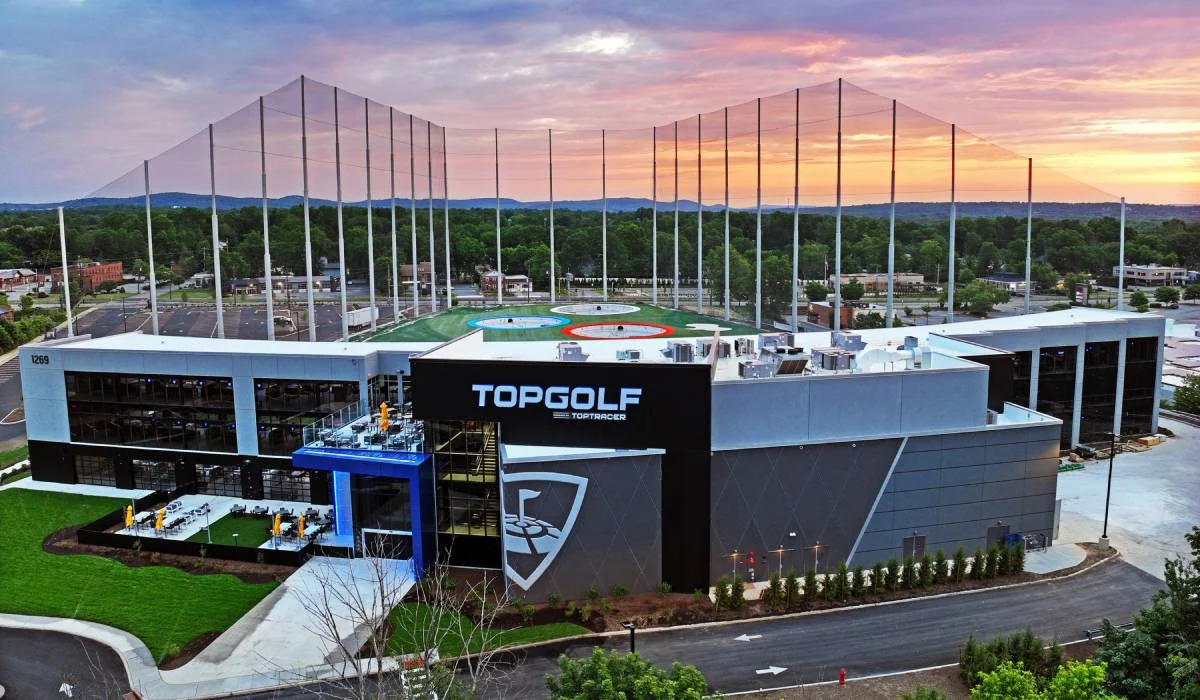
The core of Topgolf Media Networks lies in its ability to move beyond conventional sponsorship packages, which typically involve static signage or localized branding. Instead, the division is focused on creating customized, holistic partnerships that leverage the company’s diverse array of assets. These assets include more than 100 physical venues across the United States, a network of over 28,000 high-definition digital screens, and a suite of owned digital channels including mobile apps and online booking platforms.
Furthermore, the company is opening up its original content and licensing opportunities to partners, allowing brands to co-create experiences or sponsor specific game modes and digital features. A critical component of this new offering is the utilization of first-party consumer data. By analyzing the behaviors, preferences, and demographics of its millions of guests, Topgolf can provide advertisers with measurable insights and targeted campaign opportunities that rival the precision of major social media platforms and digital ad networks.
The strategy is designed to capture consumer attention at every touchpoint. Before a guest even arrives at a venue, they may interact with Topgolf’s digital ecosystem through reservation systems or social media. During the visit, they are surrounded by integrated media on bay screens and venue-wide displays. After the visit, the engagement continues through performance tracking, digital leaderboards, and follow-up communications, ensuring that a brand’s message is not confined to a single moment in time.
Corporate Restructuring and the Leonard Green & Partners Era
The launch of Topgolf Media Networks is a direct consequence of a broader corporate transformation that has redefined the company’s financial and operational trajectory. In late 2024, a landmark transaction was announced in which private equity firm Leonard Green & Partners agreed to acquire a 60 percent majority stake in Topgolf for approximately $1.1 billion. This transaction, which reached full completion in early 2026, resulted in the formal separation of Topgolf from its former parent company, Topgolf Callaway Brands.
The divestiture allowed Topgolf to operate as an independent entity, freeing it to pursue a more aggressive growth strategy centered on technology and media rather than just equipment manufacturing and retail. Prior to this transition, Topgolf had already begun showing signs of strong operational health, reporting a return to positive same-store sales growth. This recovery was fueled by a focus on repeat visitation, the introduction of successful value-based initiatives, and significant capital investments in venue technology, such as the Toptracer ball-tracking system.
Under the new ownership structure, the company has undergone a comprehensive leadership overhaul to align with its media-centric goals. The appointment of David McKillips as CEO was a pivotal move; McKillips previously served as the head of CEC Entertainment (the parent company of Chuck E. Cheese), bringing extensive experience in managing large-scale, family-oriented entertainment venues with complex operational requirements.
Joining McKillips is a refreshed executive team featuring Jay Spears as Chief Information Officer and Jason Weatherford as Vice President of In-Venue Services. Spears, also formerly of CEC Entertainment, is tasked with modernizing the company’s digital backbone to support the new media network’s data requirements. Meanwhile, Erin Chamberlin, who played a key role in the ownership transition, was promoted to President and Chief Operating Officer, providing continuity and operational expertise as the company scales its new business units.
Market Reach and the Power of Physical Presence
One of the most compelling arguments for the viability of Topgolf Media Networks is the sheer scale of the company’s geographic and demographic reach. Topgolf currently maintains a presence in 24 of the 25 largest media markets in the United States. This national footprint allows the company to compete directly with established sports leagues and national television networks for advertising budgets.
The demographic profile of the Topgolf guest is another major draw for advertisers. While traditional golf has often struggled to attract younger and more diverse audiences, Topgolf has successfully bridged that gap. Its venues attract a mix of "non-golfers," casual players, and serious athletes, with a significant portion of its audience falling into the Millennial and Gen Z categories. These groups are notoriously difficult to reach through traditional cable television or print media, making Topgolf’s interactive, tech-forward environment an ideal alternative.
The "dwell time" factor cannot be overstated. In an era of skippable ads and short-form video content, the ability to engage a consumer for nearly 120 minutes is a significant competitive advantage. During this time, guests are actively participating in games, eating, and socializing, which creates a positive emotional association with the environment—and, by extension, the brands present within that environment.
Strategic Implications for the "Eatertainment" Industry
The move into media and licensing positions Topgolf as a leader in the burgeoning "eatertainment" sector—a category of hospitality that combines high-quality food and beverage service with interactive gaming. By formalizing its media operations, Topgolf is essentially creating a "Retail Media Network" (RMN) equivalent for the entertainment industry. Just as major retailers like Amazon and Walmart have built multi-billion dollar businesses by selling ad space on their websites and in their stores, Topgolf is monetizing its physical and digital traffic.
Industry analysts suggest that this move could trigger a wave of similar initiatives among other large-scale entertainment providers. Competitors in the space, such as Bowlero or emerging golf-sim entertainment brands, may find themselves pressured to develop their own sophisticated media arms to remain competitive in the eyes of corporate sponsors.
However, Topgolf’s integration of the Toptracer technology gives it a distinct edge. Because Toptracer is used not only in Topgolf venues but also on professional golf broadcasts and at thousands of independent driving ranges globally, the company has a unique opportunity to create a unified global advertising network that transcends its own physical locations.
Future Outlook and Measurable Impact
As Topgolf Media Networks begins to roll out its first wave of customized partnerships, the company will likely focus on proving the "measurability" of its platform. In his statement, CEO David McKillips emphasized that these partnerships are built around real consumer engagement that can be tracked and analyzed. This focus on data-driven results is essential for attracting high-level CMOs who demand transparency and a clear return on investment.
The broader implications for Topgolf’s valuation are also significant. By diversifying its revenue streams away from a pure reliance on food, beverage, and bay fees, and toward high-margin media and licensing income, Topgolf is positioning itself for a potentially higher market valuation in the future. The $1.1 billion valuation established during the Leonard Green & Partners acquisition may prove to be a floor if the media network achieves its projected scale.
In the coming months, the industry can expect to see the announcement of major "anchor" partners—brands from sectors such as automotive, beverage, financial services, and technology—that will serve as the foundation for the Topgolf Media Networks ecosystem. These partnerships will likely include a mix of on-screen advertising, physical product placement, and integrated digital challenges within the Topgolf gameplay experience.
The launch of Topgolf Media Networks represents a bold bet on the future of integrated media. By successfully merging the physical joy of a social outing with the precision of digital advertising, Topgolf is attempting to write a new playbook for how brands interact with consumers in the real world. If successful, the company will have evolved from a popular weekend destination into a cornerstone of the modern advertising landscape, proving that in the digital age, the most valuable "real estate" is often where people are having the most fun.