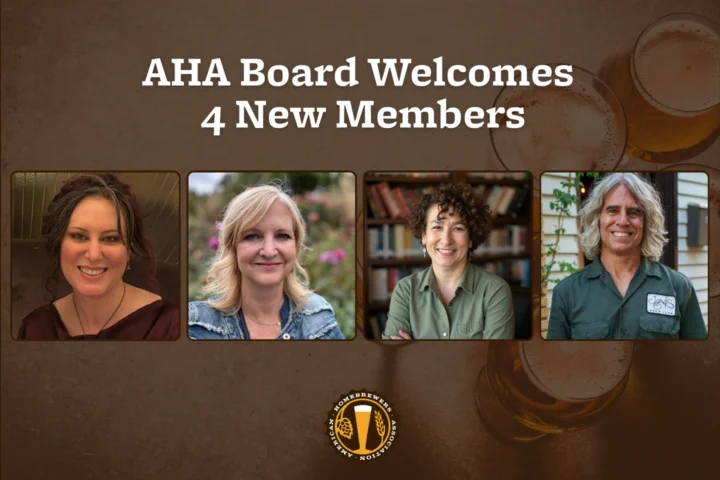

The American Homebrewers Association (AHA) has officially announced the results of its historic first board of directors election, a landmark event that signifies the organization’s complete transition into a newly independent entity. In a move that formalizes its separation from its previous parent organization and establishes a self-governing structure, the AHA membership has elected four new leaders to guide the association’s future. Following a month-long voting period in March, Jen Blair, Stephanie Butler, Jen Pereira, and Jeff Whelpley emerged as the successful candidates from a competitive field. This election represents a pivotal moment for the AHA, which now operates under a dual-structure legal framework as both a 501(c)(6) membership organization and a 501(c)(3) non-profit foundation.
The newly elected board members are scheduled to be officially seated on June 20, 2026, during the AHA’s annual meeting at Homebrew Con in Asheville, North Carolina. Their arrival marks the beginning of a three-year term during which they will collaborate with continuing board members Shawna Cormier, Drew Beechum, and Gregory Roskopf. The election process was characterized by a high level of engagement from the homebrewing community, beginning with an initial pool of 28 nominees that was narrowed down to a final slate of 10 candidates before the general membership cast their deciding votes.
The Evolution of the American Homebrewers Association
To understand the significance of this election, one must look at the trajectory of the AHA since its founding in 1978 by Charlie Papazian. For decades, the AHA operated as a division of the Brewers Association (BA), the trade group representing small and independent American craft brewers. While this partnership was fruitful, providing the AHA with substantial resources and a direct link to the professional brewing world, the landscape of the hobby has shifted significantly over the last decade.
In recent years, the decision was made to transition the AHA into an independent organization. This move was designed to grant the association greater autonomy over its financial resources, advocacy efforts, and strategic vision. By establishing itself as a standalone 501(c)(6) and 501(c)(3), the AHA can now focus exclusively on the needs of the homebrewer without the competing interests of a commercial trade association. The 501(c)(6) status allows the AHA to function as a business league, providing benefits and advocacy for its members, while the 501(c)(3) arm, known as the A-HA Foundation, focuses on the educational and charitable aspects of the hobby, such as scholarships and historical preservation.
A Rigorous Selection Process
The 2026 election was not merely a formality but a rigorous democratic process intended to ensure that the diverse voices within the homebrewing community were represented. The transition from 28 nominees to 10 finalists involved a thorough vetting process by the AHA’s nominating committee. Candidates were evaluated based on their contributions to the hobby, their professional expertise in areas such as non-profit management, legal affairs, and education, and their vision for the future of the association.
The final four winners represent a cross-section of the modern homebrewing movement:
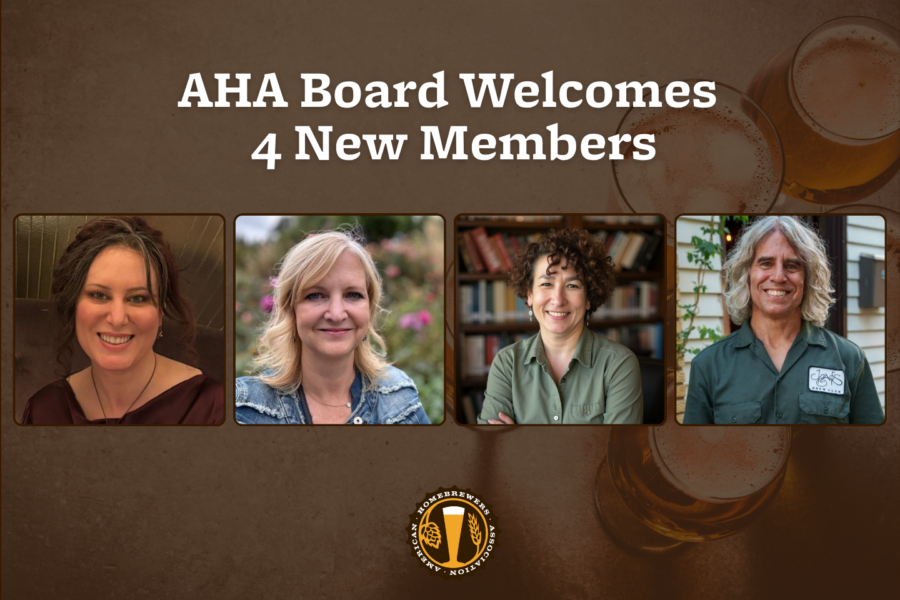
- Jen Blair: A recognized figure in beer education and sensory analysis, Blair brings a wealth of knowledge regarding the technical aspects of brewing and judging. Her election signals a continued commitment to the educational pillars that have defined the AHA for nearly half a century.
- Stephanie Butler: Known for her work in community outreach and club organization, Butler’s presence on the board is expected to bolster the AHA’s "neighborhood" initiative, focusing on grassroots growth and local club support.
- Jen Pereira: With a background that bridges the gap between enthusiast brewing and organizational strategy, Pereira is poised to assist the board in navigating the complexities of the AHA’s new independent financial structure.
- Jeff Whelpley: An experienced homebrewer with a focus on the technological and logistical advancements of the hobby, Whelpley’s expertise will be vital as the AHA seeks to modernize its digital resources and member services.
Honoring the Founding Board and Outgoing Leadership
As the association prepares to welcome its new directors, it also pauses to recognize the instrumental work of the departing board members, Sandy Cockerham and Gary Glass. Cockerham and Glass served as members of the Founding Board during the critical transition period toward independence.
Gary Glass, in particular, has been a synonymous figure with the AHA for nearly twenty years, having previously served as the association’s Director. His transition to the board during the independence phase provided a necessary bridge between the organization’s past and its future. Sandy Cockerham, a Master-level judge and a prominent figure in the Beer Judge Certification Program (BJCP), provided the board with essential insights into the competitive and evaluative side of homebrewing.
Shawna Cormier, the current AHA Board Chair, emphasized the importance of their contributions, stating that the work started by the Founding Board was "impressive to say the least." She noted that their efforts laid the groundwork for a future where the AHA is positioned for multi-generational growth.
The Road to Asheville: Homebrew Con 2026
The official seating of the board in Asheville is a symbolic choice for the association. Asheville, often referred to as "Beer City USA," boasts one of the highest concentrations of breweries per capita in the United States and has a deeply rooted culture of fermentation and craft. Homebrew Con serves as the primary gathering for the AHA membership, featuring the final round of the National Homebrew Competition (NHC), the world’s largest international homebrew competition.
The 2026 conference is expected to draw thousands of attendees, ranging from novice brewers to industry veterans. The seating of the first elected board will be a central event of the conference, representing the "new era" of the AHA. During this meeting, the board is expected to outline its strategic plan for the 2026–2029 term, which will likely include initiatives to increase membership diversity, enhance the digital archives of Zymurgy magazine, and expand the AHA Member Deals program.
Implications of Independence and the Dual-Entity Model
The shift to a dual 501(c)(6) and 501(c)(3) model is a sophisticated move that mirrors the structure of many large-scale professional organizations.
- The 501(c)(6) Arm: This entity will handle the "business" of the association. It allows the AHA to engage in legislative advocacy, such as lobbying for homebrewing rights at the state and federal levels. This is particularly relevant as homebrewers continue to seek legal clarity on issues like the transportation of homebrew to competitions and the ability to serve homebrewed beverages at organized events.
- The 501(c)(3) Arm (A-HA Foundation): This entity is dedicated to the public good. It allows the AHA to accept tax-deductible donations, which can be used to fund research into brewing science, preserve the history of the craft, and provide educational resources to the public. By separating these functions, the AHA can more effectively manage its mission-driven goals while maintaining a robust membership service model.
Strategic Vision: "A Homebrewer in Every Neighborhood"
The overarching goal of the new board is to realize the AHA’s vision of having "a homebrewer in every neighborhood and a homebrew club in every community." This vision is a response to the changing demographics of the hobby. While homebrewing saw a massive surge in the late 2000s and early 2010s, the rise of ubiquitous high-quality craft beer in taprooms across the country has changed the motivation for many hobbyists.
Today, the AHA is focusing less on brewing as a way to access "better beer" and more on brewing as a creative outlet, a scientific pursuit, and a community-building activity. The new board will be tasked with reaching younger demographics and underrepresented groups in the brewing community to ensure the hobby’s longevity. This includes leveraging social media, modernizing the National Homebrew Competition’s entry systems, and fostering a more inclusive environment within local homebrew clubs.
Data and Industry Context
Recent industry data suggests that while the total number of homebrewers in the U.S. has stabilized at approximately 1.1 million, the way these individuals engage with the hobby is evolving. There is a marked increase in "small-batch" brewing and all-grain brewing, indicating a move toward more specialized and technical interests.
The AHA’s independence allows it to pivot more quickly to these trends. For example, the association can now direct its resources toward developing mobile-friendly recipe calculators, high-definition educational video content, and targeted advocacy for home-distilling rights, which is a growing area of interest for many fermentation enthusiasts.
Conclusion and Future Outlook
The election of Jen Blair, Stephanie Butler, Jen Pereira, and Jeff Whelpley is more than just a change in leadership; it is a validation of the AHA’s new path as a self-governing body. As the organization moves toward its 50th anniversary in 2028, the foundation laid by this historic election will determine the association’s ability to adapt to a rapidly changing beverage landscape.
With a dedicated board, a clear legal structure, and a passionate membership base, the American Homebrewers Association is well-equipped to continue its mission of promoting the joy of brewing. The eyes of the homebrewing world will now turn to Asheville this June, as the new board takes the helm and begins the work of shaping the next chapter of American fermentation history. Membership in the AHA remains open to all, providing access to Zymurgy magazine, exclusive recipes, and a nationwide network of enthusiasts dedicated to the craft of the home-raised pint.