
The American Homebrewers Association (AHA) has officially released the July/August 2026 edition of Zymurgy magazine, a seminal publication that has served as the primary resource for the fermentation community since its inception in 1978. This latest issue arrives at a pivotal moment for the hobby, documenting a period of significant transition characterized by the return of large-scale physical gatherings, a leadership change in the world’s most prestigious amateur brewing competition, and a renewed focus on the historical lineages of modern beer styles. The issue serves both as a technical manual, featuring 15 curated recipes, and a cultural touchstone for a community that continues to bridge the gap between ancient tradition and modern innovation.
Central to this issue is the formal announcement regarding the return of Homebrew Con, the AHA’s national conference that serves as the premier educational and social event for homebrewers. Following a period of logistical shifts and digital-first initiatives, the return to a physical format marks a significant milestone in the post-pandemic recovery of the hobbyist sector. The magazine provides a comprehensive roadmap for the event, highlighting the synergy between amateur enthusiasts and the professional craft brewing industry, which frequently draws its inspiration and talent from the homebrewing ranks.
New Leadership at the National Homebrew Competition
A major feature in the July/August 2026 issue introduces the new leadership tasked with overseeing the National Homebrew Competition (NHC). Veteran competition organizers Charlie Harr and Jen Pereira have been appointed to lead the event, which is widely recognized as the largest and most influential amateur brewing competition globally. The NHC has historically served as the proving ground for many of the industry’s most celebrated professional brewers, and the appointment of Harr and Pereira signals a commitment to maintaining the rigorous standards of the Beer Judge Certification Program (BJCP) while modernizing the competition’s logistical framework.
Harr and Pereira bring decades of combined experience in volunteer management and sensory analysis. Their leadership comes at a time when the NHC is expanding its categories to include emerging hybrid styles and non-traditional fermentations. The magazine details their vision for the competition, focusing on increasing accessibility for international participants and enhancing the feedback loop between judges and entrants to ensure the competition remains an educational tool rather than merely a trophy chase.
Historical Lineage: From Stock Ale to the Modern IPA
In a deep dive into brewing history, the issue explores the evolution of the American Stock Ale. This historical style, which flourished in the United States prior to the Prohibition era, is analyzed as a direct ancestor to the contemporary West Coast IPA and the more recent "Cold IPA" trend. The article provides a technical breakdown of how these high-gravity, highly hopped ales were traditionally aged, often in wood, to develop a complex profile that balances malt backbone with assertive bitterness.

By examining archival brewing logs, the publication illustrates how the technical parameters of the 19th-century Stock Ale—specifically its emphasis on high attenuation and significant late-addition hopping—laid the groundwork for the hop-forward revolution of the late 20th century. This analysis provides homebrewers with the historical context necessary to recreate these "lost" styles while applying modern fermentation control techniques to achieve cleaner, more consistent results.
Global Perspectives: Tradition and Technology at Schlenkerla
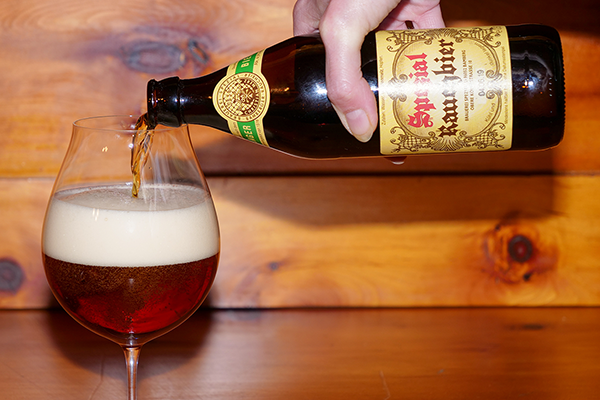
The July/August issue also takes readers to Bamberg, Germany, for an interview with Matthias Trum, the sixth-generation owner and brewer at Heller-Bräu Trum, better known as Schlenkerla. As the guardian of a 500-year-old tradition of Rauchbier (smoke beer), Trum discusses the delicate balance between preserving ancient methods and adopting modern brewing technologies.
Schlenkerla remains one of the few breweries in the world that continues to malt its own barley over open beechwood fires, a process that defines the brewery’s signature smoky profile. Trum’s insights into the "realities of the modern world" touch upon the challenges of sustainability, rising energy costs, and the need for precision in an era where consumers demand both authenticity and technical perfection. This feature serves as a case study for homebrewers on the importance of process consistency and the value of specialized ingredients.
The Shift Toward Regenerative Agriculture and Fresh Hops
Reflecting the broader agricultural trends of 2026, Zymurgy highlights the growing movement toward regenerative organic hop farming. As climate volatility affects traditional hop-growing regions in the Pacific Northwest and Europe, a new wave of farmers is focusing on soil health and biodiversity to ensure the long-term viability of the crop.
The issue emphasizes the use of "wet hops"—hops that are harvested and used in the kettle within 24 hours without being dried or pelletized. This practice, once a niche seasonal activity, has become a cornerstone of the late-summer brewing calendar. The magazine provides data on how regenerative practices not only improve carbon sequestration but also influence the essential oil profiles of the hops, potentially offering brewers a more nuanced palette of flavors and aromas.
Celebrating the Community: The Kathy Ireland Cover Contest
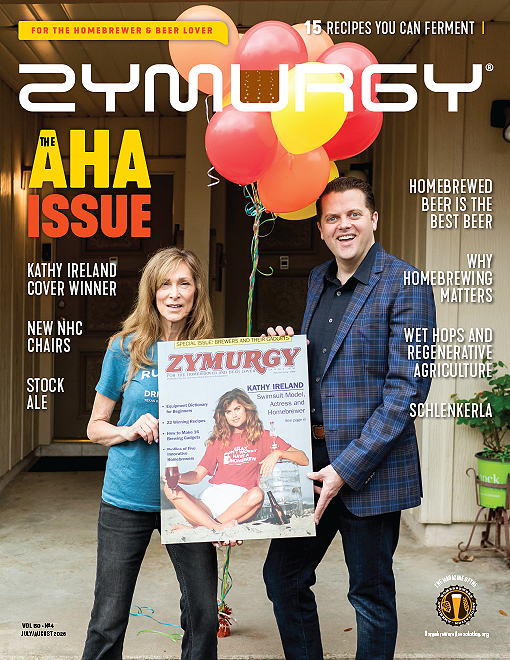
The human element of homebrewing is celebrated through the story of Janet Anderson, the winner of the Kathy Ireland Cover Contest. The contest, which was launched at the 2025 Great American Beer Festival (GABF), invited members to engage with the magazine’s visual history. The 2026 issue features a profile of Anderson and the iconic poster raffle that highlighted one of the most recognizable covers in the publication’s nearly five-decade run.
This focus on the "AHA lifestyle" is further bolstered by a contribution from Jim Spaulding, a member with 37 years of experience in the hobby. Spaulding’s retrospective offers a "masterclass" in brewing wisdom, distilled from nearly four decades of trial and error. His narrative reinforces the magazine’s central thesis: that homebrewed beer remains the "best beer" because of the personal connection, creative freedom, and community stewardship inherent in the process.
Technical Resources and Editorial Vision
Under the guidance of Editor-in-Chief Dave Carpenter, who has led the publication since 2019, the July/August 2026 issue continues to prioritize technical accuracy and accessibility. Carpenter, a brewer since 2009, has steered the magazine through a period of digital expansion while maintaining the high-quality print aesthetic that members value.
The inclusion of 15 fermentable recipes provides a practical application for the theories discussed in the feature articles. These recipes range from clones of historical Stock Ales to modern, sustainable "wet hop" pilsners, catering to a diverse spectrum of skill levels. Each recipe is validated through the AHA’s rigorous testing process, ensuring that homebrewers can replicate professional-quality results in a domestic setting.
Broader Implications for the Fermentation Industry
The release of this issue of Zymurgy reflects a broader stabilization in the craft beverage sector. After years of rapid expansion followed by market consolidation, the "home-to-pro" pipeline remains a vital component of the industry’s ecosystem. By documenting the future of the hobby, the AHA is essentially documenting the future of craft beer itself.
The focus on regenerative agriculture and historical preservation suggests that the next generation of brewers will be defined by a "back-to-basics" approach, albeit one supported by advanced scientific understanding. The July/August 2026 issue stands as a comprehensive record of this transition, offering a blend of nostalgia for the hobby’s roots and an optimistic outlook for its technological and social evolution.
For the American Homebrewers Association, which operates as a division of the Brewers Association, Zymurgy remains the primary vehicle for advocacy and education. As the organization continues to navigate the complexities of a changing beverage landscape, this latest issue reinforces the enduring appeal of fermentation as both a science and a communal art form. Through its detailed reporting on competitions, historical styles, and sustainable farming, the magazine ensures that its readers remain at the forefront of the global craft beer conversation.