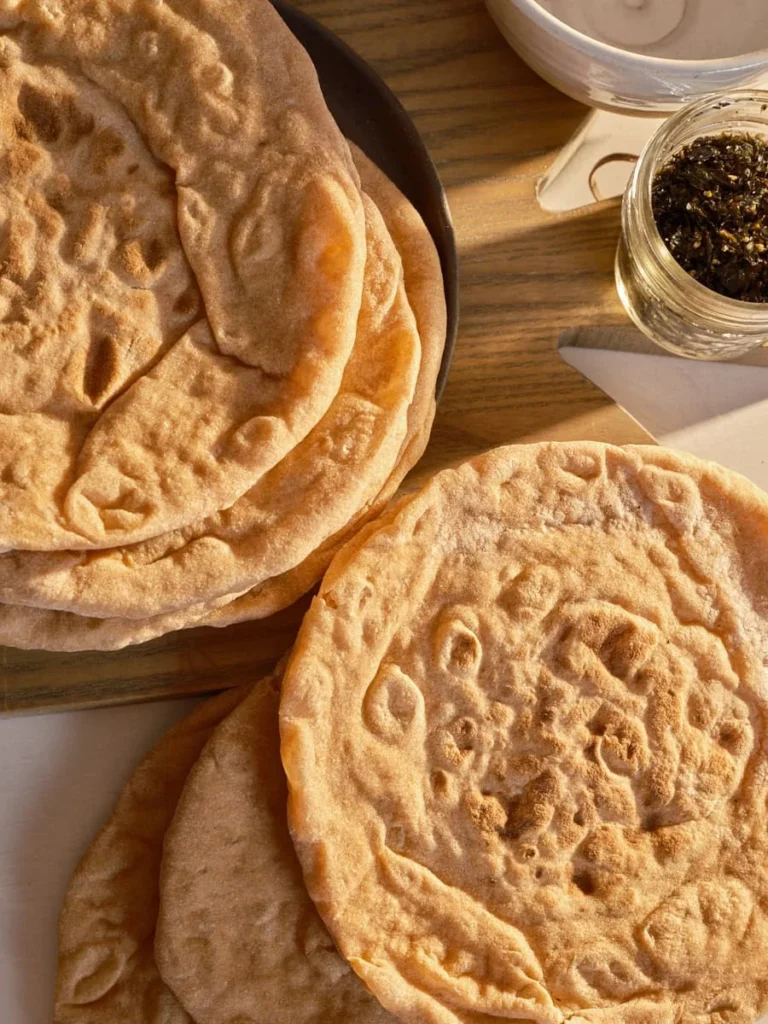

The year marked by the unprecedented global spread of the SARS-CoV-2 virus brought into sharp focus the often-counterintuitive nature of exponential growth, a concept predominantly discussed in the context of viral transmission but paradoxically mirrored in the sudden surge of home baking and the silent, powerful proliferation of yeast. As societies worldwide grappled with lockdowns and restricted movement, a significant and unexpected consequence was a dramatic increase in culinary activities, particularly baking, leading to widespread shortages of staple ingredients, most notably baker’s yeast. This phenomenon underscored not only shifts in consumer behavior but also highlighted fundamental scientific principles, revealing how a microscopic organism’s exponential growth could both sustain a global hobby and illustrate a core mathematical concept governing everything from disease spread to financial markets.
The Global Baking Phenomenon Amidst Lockdowns
Beginning in early 2020, as the COVID-19 pandemic swept across continents, governments implemented stringent measures, including national lockdowns, stay-at-home orders, and social distancing protocols, to curb the virus’s spread. These restrictions dramatically altered daily routines, confining billions to their homes and inadvertently fostering a resurgence in domestic pursuits. For many, the kitchen became a sanctuary, a creative outlet, and a source of comfort amidst uncertainty. The act of baking, in particular, experienced an astonishing renaissance. Reports from various regions, including Europe, North America, and Australia, consistently documented a significant uptick in the purchase of baking ingredients. Major grocery chains and food industry analysts observed sales spikes for flour, sugar, and crucially, yeast, reaching levels typically only seen during major holiday seasons, but sustained for months on end. This widespread return to home baking was driven by a confluence of factors: newfound leisure time, a desire for comforting foods, the therapeutic nature of the baking process, and a growing interest in self-sufficiency amidst concerns about food supply chains.
The Unprecedented Yeast Shortage
The sudden, sustained surge in demand for baking ingredients placed immense pressure on supply chains that were not designed for such rapid, widespread shifts. Yeast, a seemingly humble but essential component for most baked goods, quickly became a scarce commodity. In countries like Norway, as the original account details, instant dry yeast vanished from shelves for weeks and even months. Similar reports emerged from the United States, the United Kingdom, and Canada, where consumers often faced empty aisles where yeast products once resided. Yeast manufacturers, though accustomed to fluctuating demand, struggled to keep pace. Industry giants like Lesaffre and AB Mauri, major global yeast producers, reported unprecedented order volumes. While production facilities operated at maximum capacity, increasing output takes time, often involving fermentation cycles and packaging logistics that cannot be scaled up instantaneously. Retailers, for their part, implemented purchase limits to manage stock, yet the persistent demand often outstripped supply, leading to a collective consumer frustration and a renewed appreciation for this unassuming microorganism.
Understanding Exponential Growth: From Viruses to Yeast
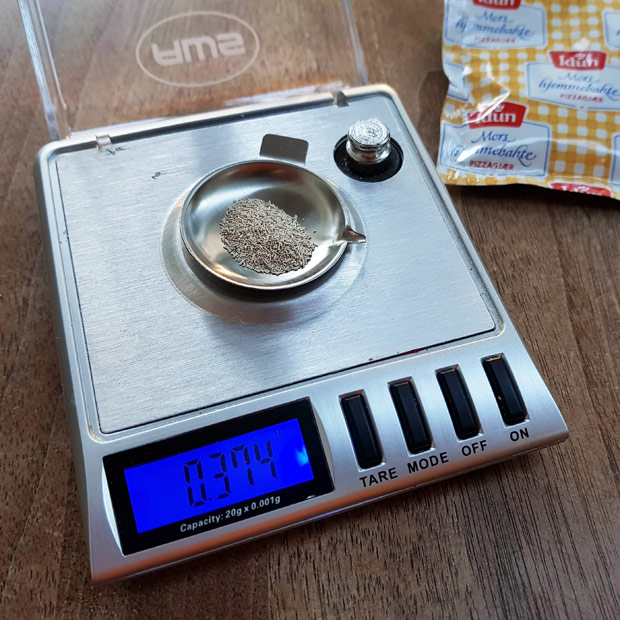
At the heart of both the pandemic’s spread and the yeast’s efficacy lies the principle of exponential growth, a concept often misunderstood due to its counterintuitive nature. Exponential growth occurs when a quantity increases by a fixed percentage over a given period. Initially, the growth appears slow, almost imperceptible. However, as the base quantity increases, the absolute increment in each subsequent period becomes larger, leading to a dramatic, rapid acceleration. This phenomenon is famously illustrated by the "wheat and chessboard problem," where placing one grain of wheat on the first square, two on the second, four on the third, and so on, quickly leads to an astronomically large number of grains by the final squares, far exceeding the world’s total wheat supply.
During the COVID-19 pandemic, this principle was starkly evident in the trajectory of infection rates. A small number of initial cases could double every few days, leading to what appeared to be a sudden "skyrocketing" of infections from seemingly nowhere, overwhelming healthcare systems. Conversely, yeast demonstrates this same powerful principle in a beneficial context. When provided with optimal conditions – nutrients (sugars), warmth, and moisture – a single Saccharomyces cerevisiae cell initiates a remarkable reproductive cycle. It buds, creating a new daughter cell, typically completing this entire life cycle in approximately 100 minutes. This means that after just 100 minutes, one cell becomes two; after another 100 minutes, these two become four; and so forth.
The speed of this proliferation is staggering:
- Initial: 1 cell
- After ~1.5 hours: 2 cells
- After ~3.5 hours: 4 cells
- After 24 hours: Approximately 16,000 cells
- After 48 hours: Roughly 268 million cells
- Before 72 hours (3 days): An astonishing 1 trillion (1,000,000,000,000) yeast cells
To put this into perspective, a typical 50-gram block of compressed fresh yeast contains approximately a trillion active yeast cells. This incredible reproductive capacity explains why even a small amount of yeast can eventually leaven a large quantity of dough, given sufficient time and the right environment. While such ideal conditions for rapid growth are primarily achieved in commercial yeast production bioreactors, the underlying principle holds true, albeit at a slower rate, within the complex matrix of a bread dough.
The Microscopic Powerhouse: Saccharomyces Cerevisiae
Saccharomyces cerevisiae, commonly known as baker’s yeast or brewer’s yeast, is a single-celled eukaryotic microorganism classified as a fungus. Its metabolic capabilities are central to its utility in baking and brewing. In an anaerobic (oxygen-deprived) environment, yeast performs alcoholic fermentation, converting sugars (primarily glucose and fructose derived from flour starches) into ethanol and carbon dioxide. It is the carbon dioxide gas that gets trapped within the gluten network of the dough, causing it to rise and creating the characteristic airy texture of bread. In an aerobic (oxygen-rich) environment, yeast respires, converting sugars into carbon dioxide and water, producing more energy for growth and reproduction. This dual metabolic pathway allows yeast to thrive in various conditions, adapting its activity to the availability of oxygen.
Optimal conditions for yeast activity are crucial for successful baking. Temperature plays a significant role; yeast is most active in a range of 25°C to 35°C (77°F to 95°F). Temperatures too low will significantly slow down fermentation, while excessively high temperatures can kill the yeast. Hydration is also essential, as yeast needs water to activate and transport nutrients. Furthermore, the availability of nutrients, primarily simple sugars, fuels its metabolic processes. The flour itself provides complex carbohydrates that yeast enzymes break down into simpler sugars, but additional sugars can be added to the dough to give the yeast a quick start.
Mastering Dough Fermentation: Less Yeast, More Time
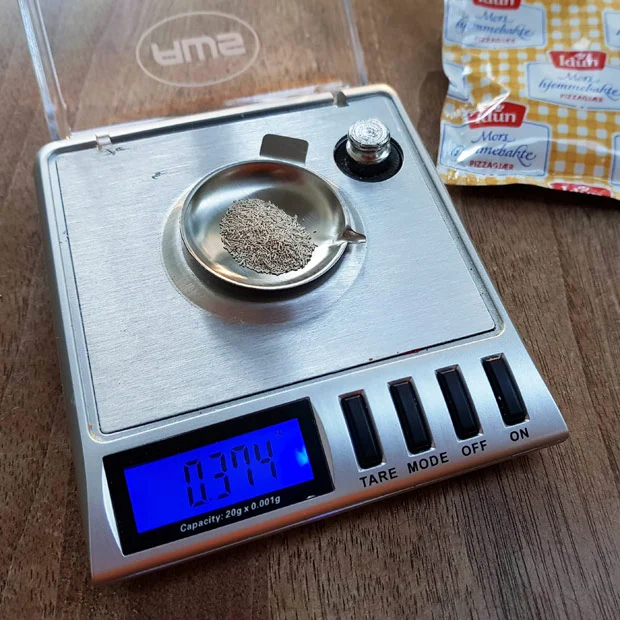
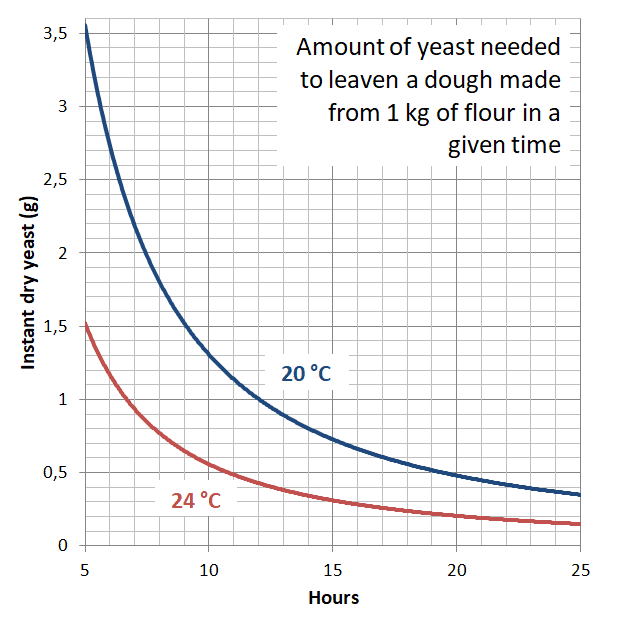
The yeast shortages during the pandemic compelled many home bakers to adapt their methods, leading to a widespread adoption of techniques that prioritize time over quantity of yeast. This approach, often favored by professional bakers for flavor development, involves using significantly smaller amounts of yeast and allowing for extended fermentation periods. For instance, a direct dough (one made without a preferment like a poolish or biga) for 1 kilogram of wheat flour might traditionally call for 5-10 grams of instant dry yeast for a rise of 1-2 hours. However, by embracing longer bulk fermentation, this quantity can be drastically reduced. As noted in the source material, an advanced pizza baking application suggests that a dough made with 1 kg of flour requires only 0.48 grams of instant dry yeast if allowed to rise for 20 hours at a moderate temperature of 20°C (68°F).
This "less yeast, more time" philosophy offers several advantages beyond merely conserving yeast. A longer, slower fermentation allows for a more complex development of flavors. Beyond the primary yeast fermentation, lactic acid bacteria (LAB), naturally present in flour, also become active. These bacteria produce lactic and acetic acids, which contribute to the characteristic tangy notes and improved aroma often associated with artisanal breads. This process is similar to what occurs in sourdough, albeit with a commercial yeast starter providing the initial lift. The resulting bread often boasts a more nuanced crumb structure, a richer aroma, and enhanced keeping qualities, transforming a simple loaf into a more sophisticated culinary experience.
Precision in the Home Kitchen: The Role of Digital Tools and Micro-Balances
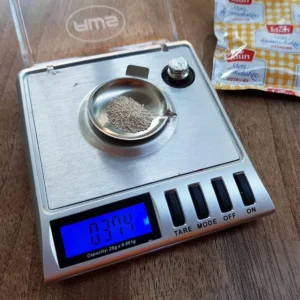
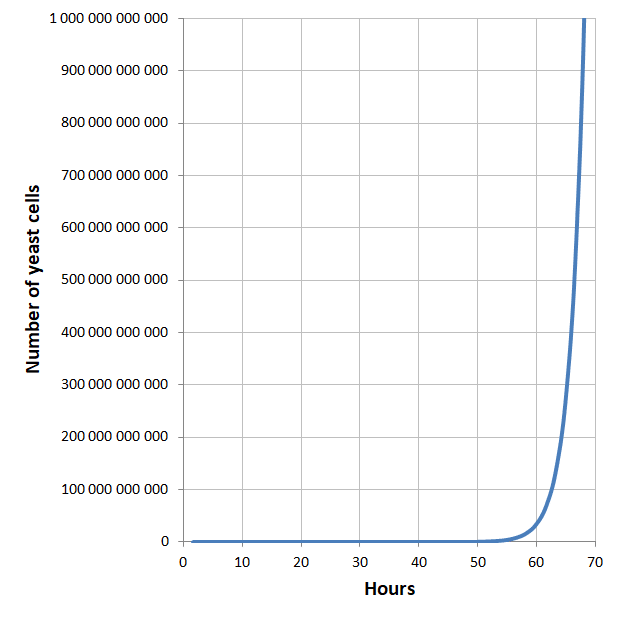
The shift towards using minute quantities of yeast highlighted a practical challenge for many home bakers: accurate measurement. Standard kitchen measuring spoons are notoriously imprecise for quantities less than a gram. This spurred a demand for more precise tools, specifically digital scales capable of measuring down to 0.01g or even 0.001g. These "jeweler’s scales," once considered specialty equipment, became invaluable for home bakers aiming for consistency and optimal results with minimal yeast. While not laboratory-grade, these consumer-friendly balances are readily available and sufficiently accurate for culinary applications, ensuring that the tiny fractions of a gram specified in recipes are met with precision.
Alongside physical tools, digital applications emerged as crucial aids. The PizzApp+ (for Android, and similar tools on other platforms) exemplifies this trend, providing a sophisticated calculator for dough formulations. This app allows users to input variables such as flour weight, desired hydration, fermentation time, and temperature, then calculates the precise amount of various yeast types needed, including fresh compressed yeast, active dry yeast, instant dry yeast, and even liquid or firm sourdough starters. Such tools demystify the complex interplay of ingredients and environmental factors, empowering home bakers to experiment with longer fermentation times and explore different dough types with greater confidence and accuracy. They transform the intuitive art of baking into a more scientific, data-driven process, making advanced techniques accessible to a broader audience.
Beyond the Pandemic: Lasting Impacts on Baking Culture
While the immediate yeast shortages and baking boom were largely a consequence of the pandemic’s unique circumstances, their broader impact on culinary culture may prove to be more enduring. The period fostered a renewed appreciation for homemade food, the craft of baking, and an understanding of the science behind it. Many who picked up baking as a lockdown hobby have continued, maintaining their interest in producing quality bread, pastries, and other fermented goods. This could lead to a sustained increase in demand for premium baking ingredients and specialized equipment.
Furthermore, the experience educated a generation of home cooks about the power of microbial activity and the benefits of patient fermentation. The "less yeast, more time" approach, once a niche technique, became a widely adopted strategy, leading to a greater understanding of flavor development and dough rheology. This shift has also blurred the lines between commercial yeast baking and sourdough baking, as more bakers appreciate the nuances of both. The convenience of instant dry yeast remains undeniably alluring for its speed and reliability, but the enhanced flavor and texture achieved through longer fermentation periods, often associated with sourdough, are now more accessible to those using commercial yeast.
The pandemic period served as a global culinary experiment, highlighting human adaptability, the critical role of often-overlooked scientific principles, and the profound connection between crisis and creativity. From the exponential spread of a virus to the exponential growth of a microscopic fungus, the events of the past few years have woven together seemingly disparate narratives, culminating in a richer, more informed, and perhaps more patient, home baking culture.