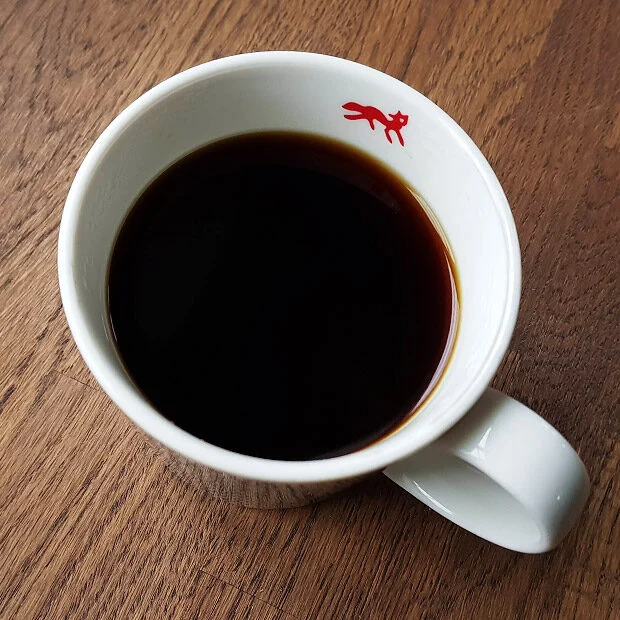

Beneath the seemingly simple surface of a daily brew lies an extraordinary chemical universe, a complex interplay of hundreds, if not thousands, of molecules that define coffee’s captivating aroma, nuanced taste, and distinctive body. Far from being a mere hot beverage, a typical cup of black coffee is a meticulously crafted solution, primarily composed of water—over 98.5% of its volume. The remaining 1.2 to 1.5% consists of total dissolved solids (TDS), translating to approximately 12 to 15 grams of extracted compounds per liter of brewed coffee, derived from about 60 grams of ground beans. This minute fraction holds the secret to coffee’s profound sensory impact, making it one of the most chemically intricate and beloved beverages worldwide.
Unveiling the Chemical Tapestry: Solids and Solvents
The journey from a roasted bean to a fragrant cup is one of extraction, where water, acting as a powerful solvent, meticulously draws out a diverse array of compounds. These extracted substances are the architects of coffee’s characteristic color, its broad spectrum of tastes, and its intoxicating aroma. Through advanced chromatographic techniques, scientists can separate and identify individual chemical components, revealing a vast molecular landscape. This extensive analysis has identified countless molecules, yet a significant portion remains elusive. For instance, an aroma extract dilution analysis (AEDA) conducted in 2002 strikingly revealed that 13 of the 40 key odorants in coffee were, at the time, still unknown to science.
The persistent challenge in fully characterizing these compounds stems from several factors. Many are present in exceptionally low concentrations, making isolation and structural elucidation a formidable task. Others are large, complex molecules, further complicating their precise identification. Early attempts to mimic coffee flavor synthetically, such as a 1996 study that created "model" Arabica and Robusta coffees using 22 key volatile compounds, yielded beverages described merely as "clearly coffee-like." This observation underscores the immense complexity of coffee’s flavor profile, suggesting that even a substantial number of identified compounds are insufficient to perfectly replicate the natural product’s depth and richness. The prospect of truly "synthetic" coffee achieving the same sensory quality as traditionally brewed coffee remains a distant one, highlighting the irreplaceable role of nature’s intricate chemistry.
The Aroma Symphony: Volatiles and Their Potency
The compounds within coffee can be broadly categorized into volatile and non-volatile groups, each contributing distinctly to the overall sensory experience. Volatile compounds, characterized by their ability to readily vaporize and travel through the air, are responsible for coffee’s complex aroma, reaching the olfactory receptors in the nose. Non-volatile compounds, conversely, primarily interact with taste receptors on the tongue, contributing to fundamental tastes such as bitterness, sweetness, acidity, and astringency, as well as influencing the coffee’s body and texture through components like oils and tiny insoluble particles. While some molecules may influence both aroma and taste, their odor thresholds are typically far lower than their taste thresholds, meaning they can be detected by smell at much lower concentrations than by taste.
A detailed examination of coffee’s soluble components reveals a rich mixture including carbohydrates (sugars and soluble oligosaccharides), various acids (such as chlorogenic acids, quinic acid, and citric acid), minerals/salts, proteins, lipids, and the well-known stimulant, caffeine. Alongside these, a significant portion consists of volatile aroma compounds and a substantial fraction of unidentified substances, many of which likely contribute to the beverage’s color and bitterness.
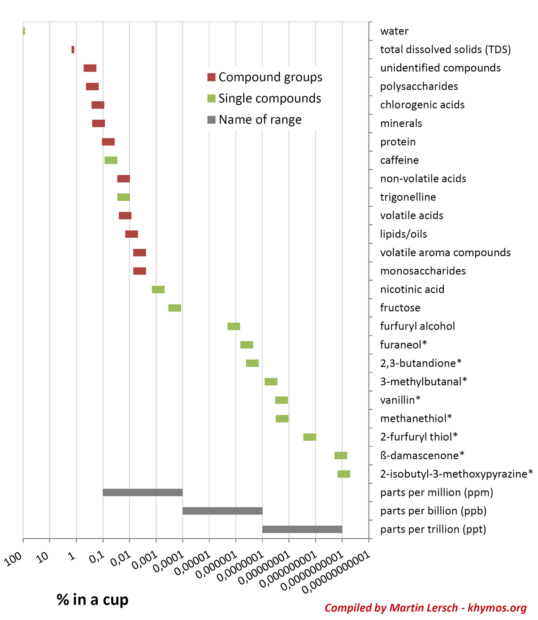
The sheer range of concentrations of these compounds is remarkable, spanning over nine orders of magnitude. Contrary to intuitive belief, a lower concentration does not necessarily equate to a lesser impact on flavor. This principle is governed by the concept of Odor Activity Value (OAV), defined as the concentration of a compound divided by its specific odor threshold. The human nose possesses an astonishing and unique sensitivity to individual compounds. Consequently, a compound present at an infinitesimal concentration, perhaps 0.0000000001%, could be as critically important to the overall flavor as another present at 0.01%, if the former has an exceptionally low odor threshold. This logarithmic scale of impact underscores the profound complexity of coffee’s flavor architecture.

Beta-Damascenone: A Potent Player
Among the pantheon of coffee’s key odorants, $beta$-damascenone stands out as a prime example of a compound with an extraordinarily low odor threshold and, consequently, a significant impact on flavor despite its minute concentration. Present in coffee at concentrations as low as 1 part per trillion (ppt), $beta$-damascenone is consistently ranked among the top five most impactful odorants. This compound belongs to a class known as rose ketones, first identified in rose oil in the 1960s. Its name is derived from the Damask rose (Rosa $times$ damascena), a flower renowned for its intense fragrance. The flavor and fragrance industry quickly recognized the potential of rose ketones; Firmenich, a leading company, notably incorporated $beta$-damascenone and other rose ketones into Dior’s iconic perfume, Poison. The olfactory profile of $beta$-damascenone is incredibly diverse, encompassing notes described as fruity, flowery, blackcurrant, woody, tobacco, spicy, green, honey, plum, raspberry, rum, wine, tea, and apricot. This versatility highlights its crucial role in contributing to the multifaceted aroma of coffee.
The precise measurement of odor thresholds and the quantification of compounds at such incredibly low concentrations represent significant analytical challenges. Despite advancements, ongoing research continues to uncover new insights, making it plausible that additional key odorants in coffee will be discovered and characterized in the years to come, further deepening our understanding of this complex beverage.
The Palate’s Journey: Non-Volatiles and Taste
Beyond the volatile aromatics that delight the nose, the non-volatile compounds shape coffee’s taste and texture. This group includes a wide array of chemical entities, each contributing to the rich sensory profile perceived on the tongue.
Acids, Sugars, and Bitterness
Acids, such as chlorogenic acids, quinic acid, citric acid, and acetic acid, are fundamental to coffee’s characteristic acidity, ranging from bright and lively to subtle and mellow. Chlorogenic acids, abundant in green coffee beans, undergo transformation during roasting, contributing to both bitterness and astringency, and also yielding quinic acid. Sugars, primarily sucrose in green beans, caramelize during roasting, contributing sweetness and a myriad of new aromatic compounds. The Maillard reaction, a non-enzymatic browning process between amino acids and reducing sugars, is also a critical flavor-generating pathway during roasting, producing melanoidins that contribute to coffee’s color, body, and bitterness. Caffeine, while primarily known for its stimulant properties, is also a significant contributor to coffee’s bitterness, particularly in higher concentrations.
The Role of Polar and Non-Polar Compounds
The chemical compounds in coffee can also be categorized by their polarity. Polar compounds, including acids, minerals, proteins, and carbohydrates, exhibit high solubility in water. Water, being a highly polar solvent, efficiently extracts over 75% of these compounds during brewing. Conversely, non-polar compounds, which include many volatile aroma compounds and lipids, have low water solubility. Consequently, brewing with water typically extracts only 10-30% of these non-polar constituents. This differential extraction efficiency is a crucial factor in understanding how various brewing parameters influence the final cup. Exploring less polar solvents, such as ethanol, could potentially unlock different dimensions of coffee extraction, yielding novel flavor profiles.
The Roasting Alchemy: Creating Complexity
The roasting process is arguably the most transformative step in coffee production, an alchemical conversion of green beans into aromatic treasures. During roasting, the intense heat triggers thousands of chemical reactions, most notably the Maillard reaction and caramelization. These reactions break down complex molecules, create new ones, and release volatile compounds responsible for the characteristic aroma of roasted coffee. The degree and profile of roasting profoundly influence the final chemical composition, impacting everything from acidity and sweetness to bitterness and body. A lighter roast might preserve more of the delicate, floral, and fruity notes derived from certain acids and sugars, while a darker roast will emphasize smoky, nutty, and chocolatey notes, often accompanied by increased bitterness from the breakdown of chlorogenic acids into quinic acid and lactones. This controlled chaos of chemistry during roasting is a testament to the scientific and artistic skill required to develop specific flavor profiles.
Advancements in Analytical Chemistry: Peering Deeper
The journey to understand coffee’s chemical makeup has mirrored the advancements in analytical chemistry itself. Early investigations relied on basic gravimetric and titrimetric methods, providing broad compositional data. The mid-20th century saw a revolution with the advent of chromatography, particularly gas chromatography (GC) coupled with mass spectrometry (MS), allowing for the separation and identification of volatile compounds with unprecedented precision. This enabled researchers to move beyond simple categorization to identifying specific molecular structures.
The studies cited in the original blog post, from 1996 and 2002, represent significant milestones in this ongoing quest. The 1996 study, which attempted to create "model" coffees, showcased the capabilities of GC-MS in identifying key volatile compounds. The 2002 AEDA study, which revealed the existence of unknown key odorants, pushed the boundaries further, highlighting the limitations even of advanced techniques and the persistent mysteries within coffee’s aroma. More recently, techniques like two-dimensional gas chromatography (GCxGC) and advanced liquid chromatography-mass spectrometry (LC-MS) have allowed scientists to identify even more trace compounds and non-volatiles, pushing the total number of identified coffee constituents well over a thousand. This continuous evolution of analytical tools brings researchers closer to a complete understanding of the beverage’s chemical blueprint.
The Limits of Measurement: Why TDS Isn’t Enough
While Total Dissolved Solids (TDS) measurements offer a convenient metric for coffee strength, they provide an incomplete picture of a cup’s overall quality and flavor profile. By examining the vast concentration ranges of coffee compounds, it becomes evident that only a handful of compound groups are present in sufficient quantities to significantly influence the TDS reading. This poses a critical limitation: TDS measurements cannot accurately predict aroma and flavor because they do not account for the differential extraction rates of various compounds or the profound impact of compounds with high Odor Activity Values present at minute concentrations.
For instance, the significant disparity in extraction yields between polar and non-polar compounds—water efficiently extracts polar substances but only a fraction of non-polar ones—means that a high TDS reading might indicate strong extraction of bitter acids and carbohydrates, but not necessarily a rich or desirable aromatic profile. A compound like $beta$-damascenone, present in parts per trillion, will not register on a TDS meter, yet it is a critical determinant of coffee’s character. Therefore, while TDS remains the easiest and most accessible way to gauge coffee strength, it is a poor predictor of the nuanced aroma and complex flavor. For coffee enthusiasts, professional baristas, and flavor scientists alike, the most sophisticated analytical instrument remains the human nose and palate—a "superb analytical detector" whose sensitivity and interpretive capacity continue to be unparalleled in exploring the wonders of coffee extraction.
Implications for Industry and Consumer: The Quest for the Perfect Brew
The deepening scientific understanding of coffee’s chemical complexity carries significant implications across the entire coffee value chain, from cultivation to consumption. For growers, this knowledge informs decisions on cultivar selection and agricultural practices, potentially leading to beans with enhanced desirable precursors for flavor. Roasters leverage this understanding to refine roasting profiles, precisely controlling temperature and time to unlock specific flavor notes and mitigate unwanted characteristics. Baristas, armed with insights into extraction dynamics, can fine-tune brewing parameters—grind size, water temperature, brew ratio—to optimize the extraction of target compounds and craft a cup that perfectly balances strength, aroma, and taste.
In the broader food and beverage industry, the detailed chemical fingerprint of coffee influences the development of natural and artificial flavors, though the challenge of replicating coffee’s full spectrum remains immense. For consumers, this scientific exploration enriches the appreciation of coffee, transforming it from a simple morning ritual into a sensory journey of discovery. The ongoing quest to fully understand, and perhaps someday perfectly replicate, the intricate chemistry of coffee continues to drive innovation, promising an even more flavorful future for this globally cherished beverage.
References
[1] Sanz, C.; Czerny, M.; Cid, C.; Schieberle, P. Eur. Food. Res. Technol., 2002, 214, 299 (DOI: 10.1007/s00217-001-0459-9)
[2] Semmelroch, P.; Grosch, W. J. Agric. Food Chem. 1996, 44, 537 (DOI: 10.1021/jf9505988)
[3] Belitz, H.-D.; Grosch, W.; Schieberle, P. (ed.), 2004, Food Chemistry (3rd edition) Springer.
[4] Amanpour, A.; Selli, S. J. Food Proc. Pres. 2016, 40, 1116 (DOI: 10.1111/jfpp.12692)
[5] Batali, M. E.; Frost, S. C.; Lebrilla, C. B.; Ristenpart, W. D.; Guinard, J.-X. J. Sci. Food Agric. 2020, 7, 2953 (DOI: 10.1002/jsfa.10323)