
The Levantine region of the Eastern Mediterranean, encompassing modern-day Lebanon, Syria, Jordan, Palestine, Israel, and Cyprus, has long been celebrated for a culinary tradition that prioritizes fresh produce, aromatic herbs, and the efficient use of pantry staples. Among the most enduring exports of this gastronomic heritage is Fattoush, a "bread salad" that historically served as a pragmatic solution for utilizing stale flatbread. In a modern pivot toward efficiency and accessibility, a new iteration of this classic dish has emerged: a one-bowl, 20-minute version designed to meet the demands of contemporary weeknight schedules while maintaining the structural integrity and flavor profile of the original Levantine recipe.
The Historical and Cultural Origins of Fattoush
The word "Fattoush" is derived from the Arabic "fatteh," which translates literally to "crumbs" or "fragments." This etymological root underscores the dish’s origin as a "peasant salad," born from a cultural ethos of resourcefulness. In traditional Levantine households, wasting bread—a sacred staple of the diet—was considered unacceptable. To repurpose pita that had lost its freshness, it was toasted or fried in olive oil and tossed with whatever greens and vegetables were available in the family garden.
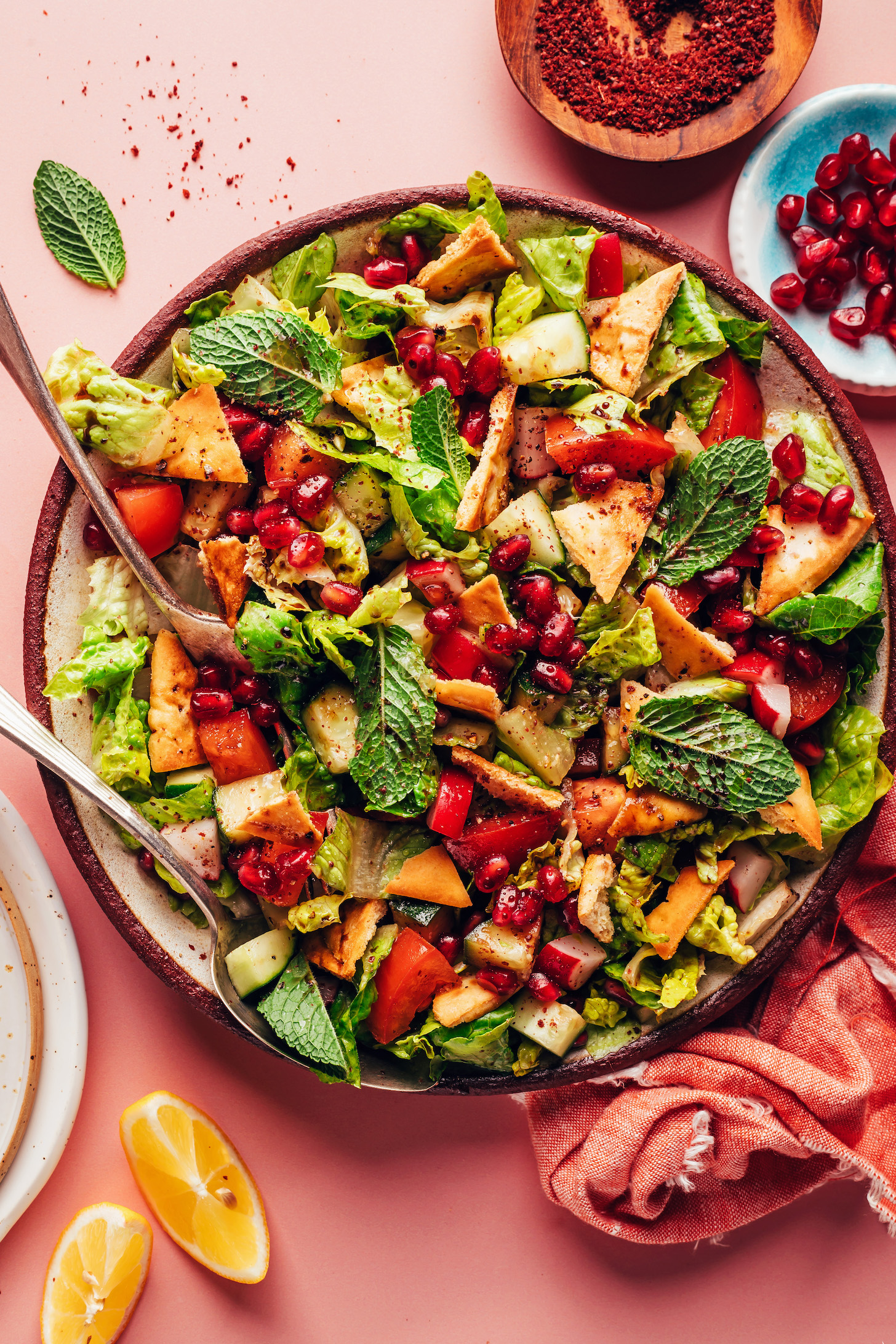
Unlike the Tabbouleh salad, which relies heavily on finely chopped parsley and bulgur wheat, Fattoush is characterized by its rustic, larger-cut vegetables and its signature tanginess. This tartness is traditionally achieved through the use of sumac, a spice made from the ground berries of the Rhus coriaria shrub, and pomegranate molasses, a thick syrup produced by reducing pomegranate juice. The introduction of a "weeknight-friendly" version represents a broader trend in global cuisine: the distillation of complex, culturally significant recipes into streamlined processes that do not require specialized equipment or extensive preparation time.
Component Analysis: The Anatomy of the Modern Fattoush
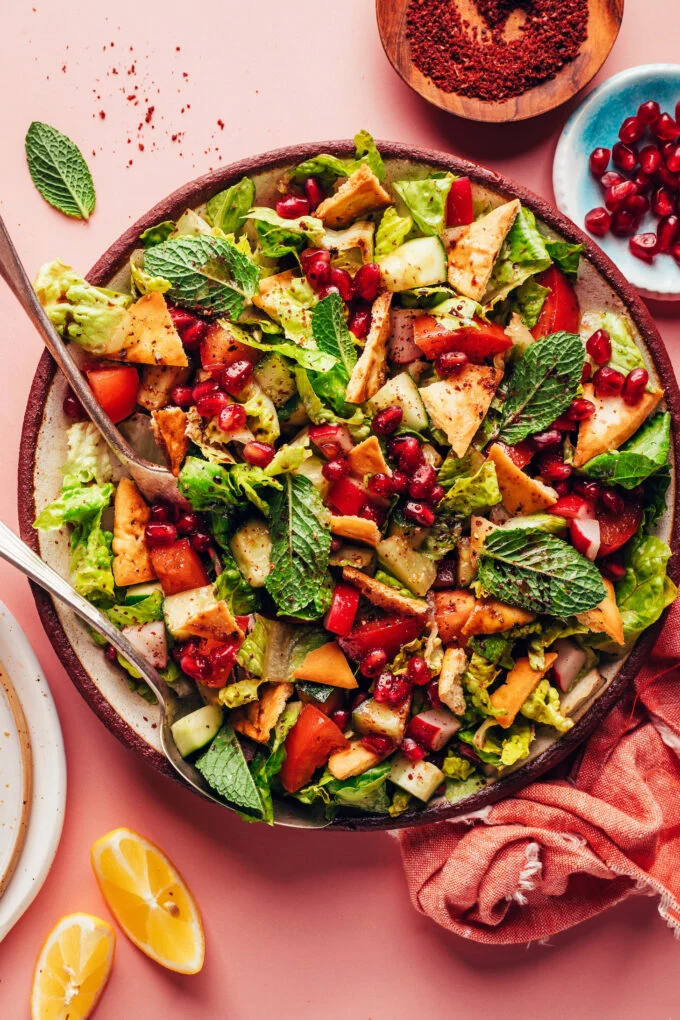
The simplified 1-bowl Fattoush is built upon a foundation of structural contrasts—crunchy versus soft, and tart versus sweet. The modern adaptation utilizes specific ingredients that are now widely available in global supermarkets, reflecting the internationalization of Middle Eastern flavors.
The Base and Garden Elements
The primary volume of the salad is provided by chopped romaine lettuce. While traditional versions may use purslane or other wild greens, romaine is selected in modern iterations for its neutral flavor and high water content, which provides a crisp substrate for the heavier dressing. This is supplemented by a trio of essential vegetables:
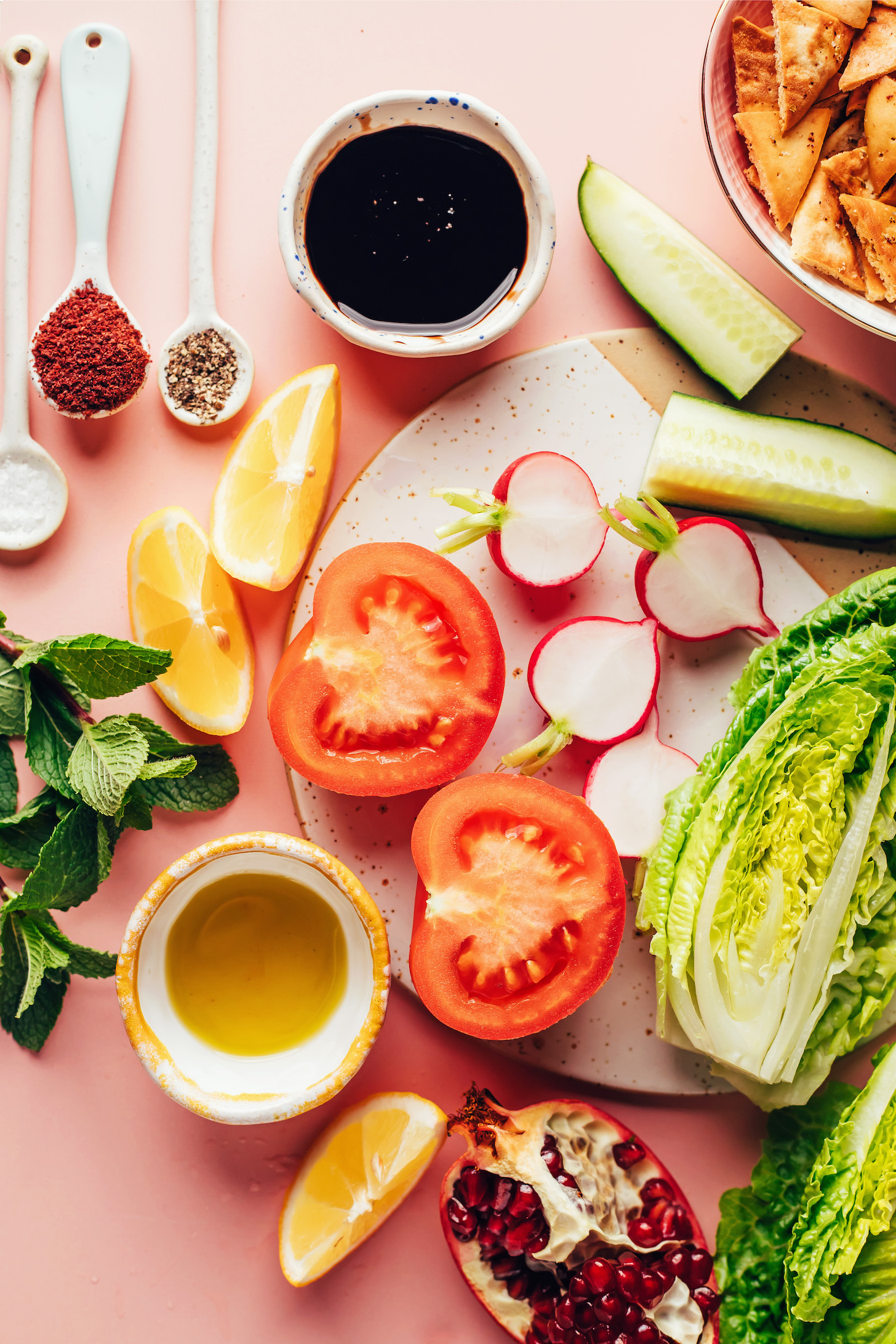
- Cucumbers: Ideally of the Persian or Lebanese variety, which possess thinner skins and fewer seeds, contributing to a more concentrated flavor.
- Tomatoes: These provide acidity and juiciness, acting as a natural bridge between the dry pita and the liquid dressing.
- Radishes: These offer a peppery bite and a distinct crunch that persists even after the salad has been dressed.
The Signature Aromatics and Toppings
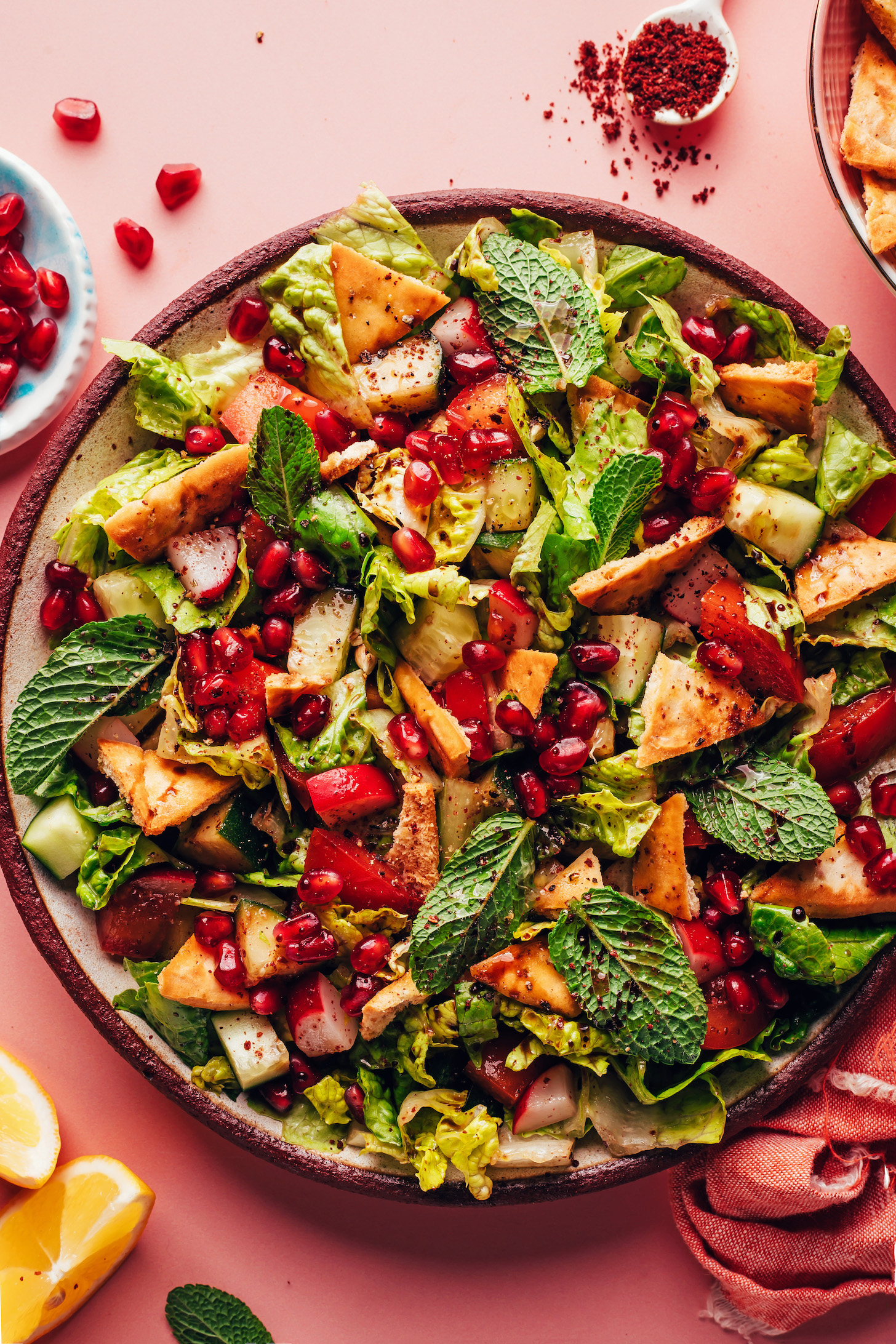
Fresh mint leaves are a non-negotiable component of the Fattoush profile. In the streamlined version, leaves are often kept whole or roughly torn to preserve their essential oils and provide visual appeal. The addition of pomegranate arils (seeds) is a contemporary refinement that adds bursts of sweetness and a jewel-like aesthetic, reinforcing the pomegranate theme established by the dressing.
The "Crouton" Element
The defining feature of any Fattoush is the pita. While traditional methods involve deep-frying pieces of old flatbread, the modern, health-conscious, and time-efficient approach favors toasted pita chips. For those with dietary restrictions, the substitution of gluten-free pita crackers or stone-baked gluten-free flatbread has become a standard modification, allowing the dish to fit within the expanding "free-from" market segment.
The 20-Minute Preparation Chronology
The efficiency of the one-bowl method lies in its sequential assembly, which eliminates the need for separate emulsification vessels. The process follows a strict timeline to ensure maximum freshness:
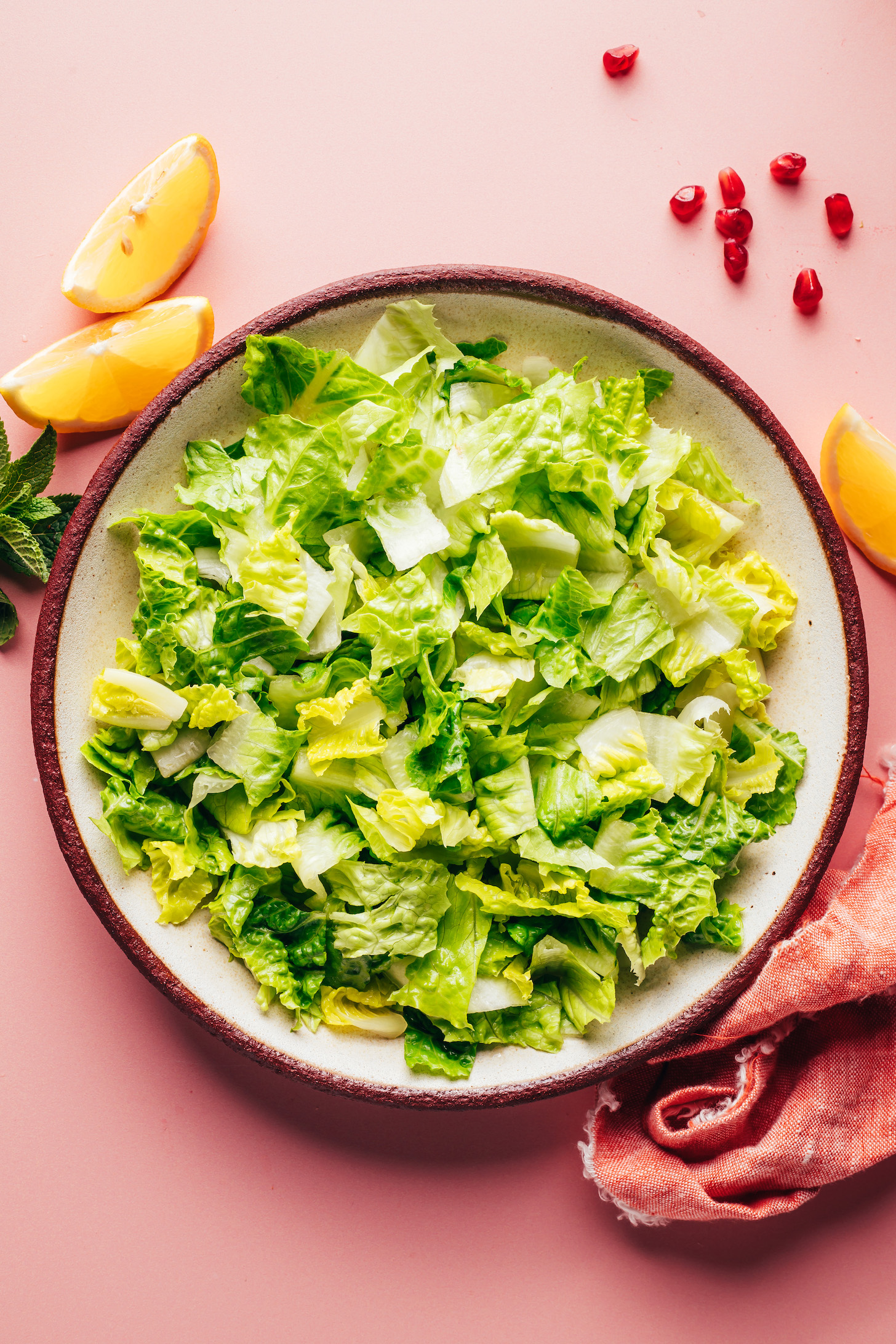
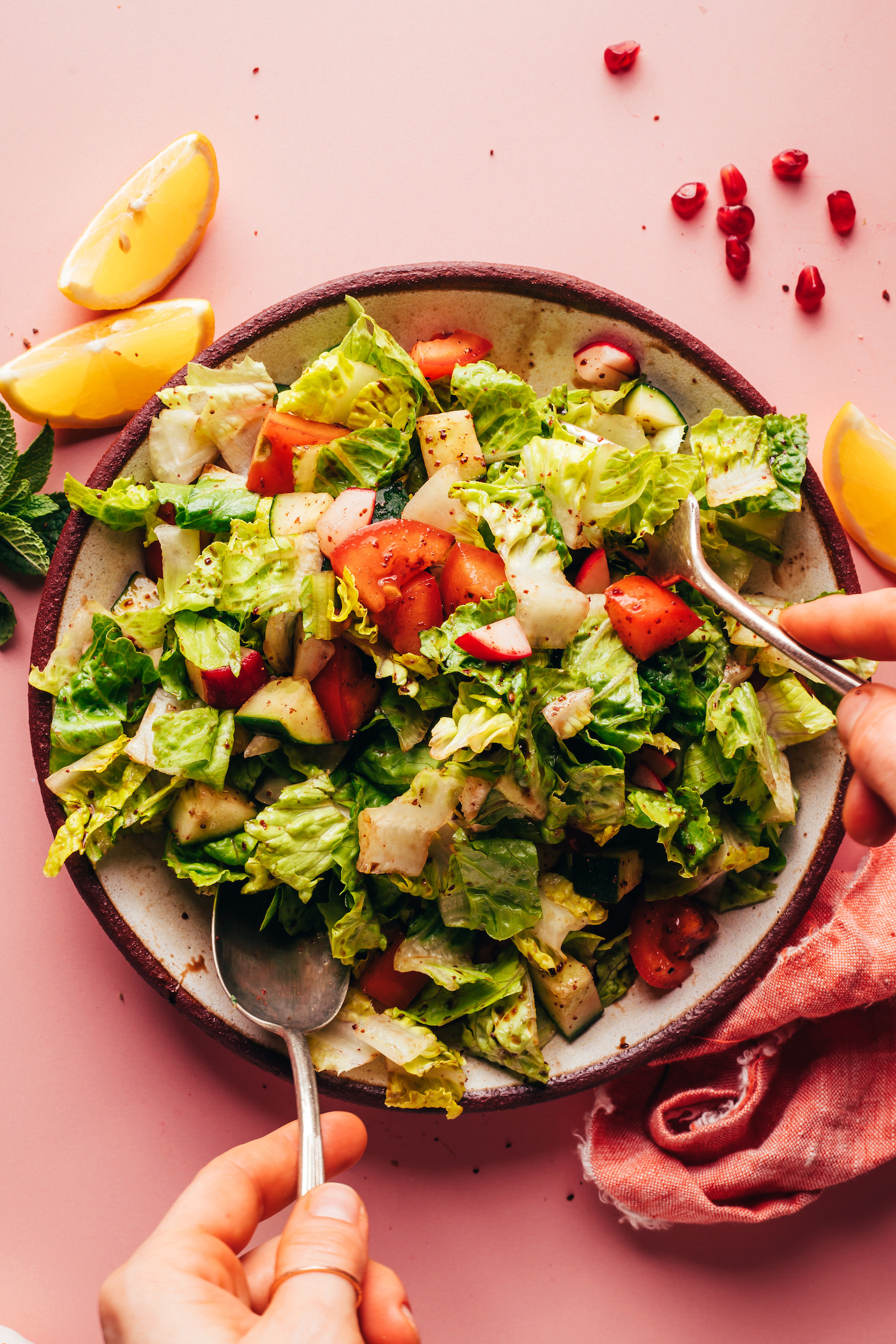
- Minutes 0-10: Vegetable Preparation. The romaine, cucumbers, tomatoes, and radishes are chopped into bite-sized pieces. Consistency in size is crucial for ensuring that every forkful contains a balanced distribution of ingredients.
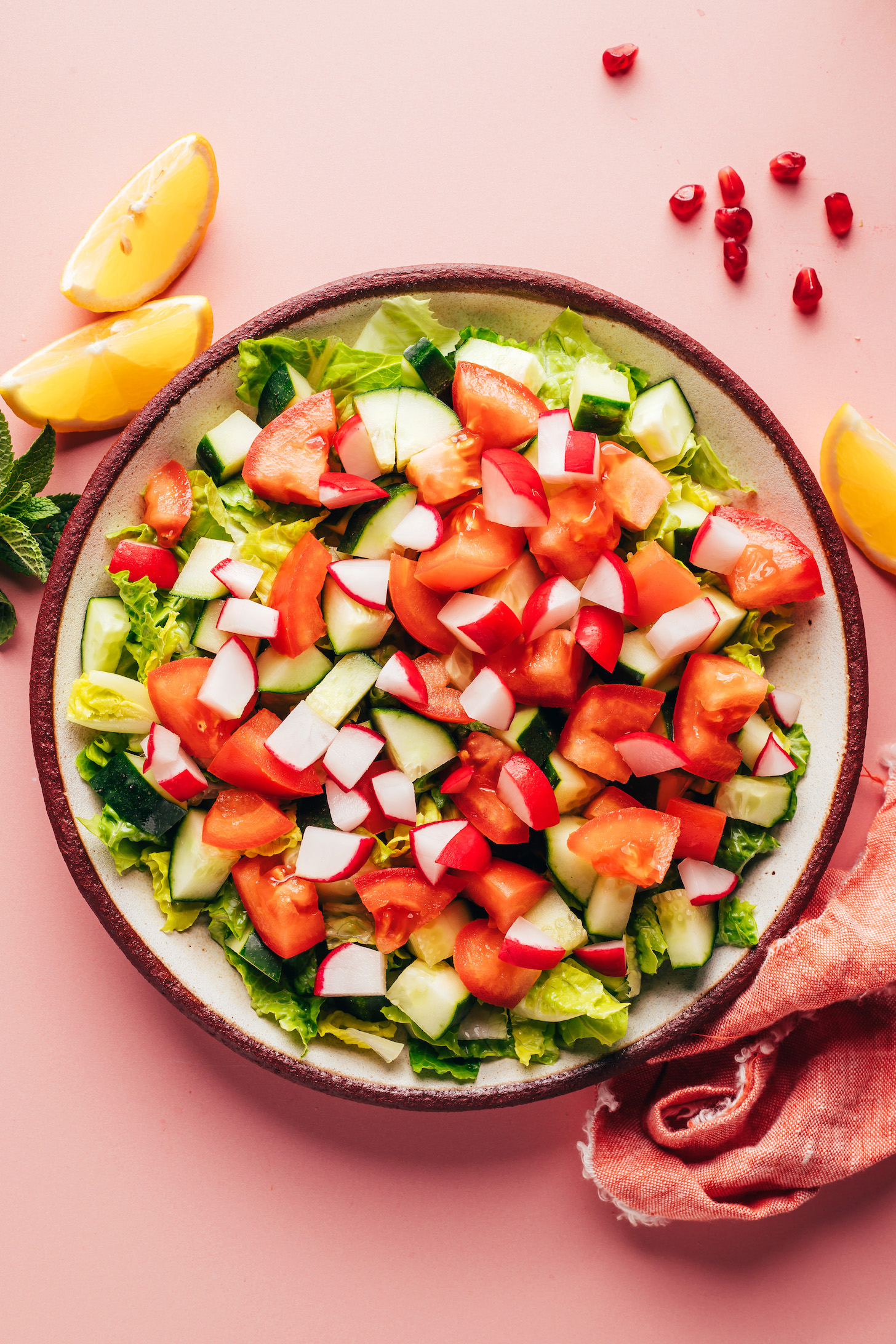
- Minutes 10-15: Dressing Integration. Instead of whisking a vinaigrette in a separate jar, the seasoning agents—lemon juice, pomegranate molasses, sumac, dried oregano, salt, and black pepper—are added directly to the vegetables. If the pomegranate molasses is particularly tart, a small amount of maple syrup or olive oil is introduced at this stage to balance the pH and mouthfeel.
- Minutes 15-20: Assembly and Serving. The fresh mint, pomegranate arils, and pita chips are folded in at the final moment. This prevents the pita from becoming prematurely soggy, a common pitfall in bread-based salads.
Nutritional Profile and Health Implications
From a clinical nutrition perspective, the Fattoush salad aligns closely with the Mediterranean Diet, which is frequently cited by health organizations like the American Heart Association for its cardiovascular benefits.
A standard side serving of the 1-bowl Fattoush (approximately one-quarter of the recipe) contains roughly 127 calories. The macronutrient breakdown is as follows:
- Carbohydrates: 21.6g (primarily from complex sources in the pita and fiber in the vegetables).
- Fiber: 4g, supporting digestive health.
- Protein: 2.8g (which can be increased by adding chickpeas).
- Fat: 4.1g, with a focus on monounsaturated fats if olive oil is utilized.
The micronutrient density is particularly high. The inclusion of sumac provides a significant dose of antioxidants, specifically tannins and flavonoids. Romaine lettuce and radishes contribute Vitamin A (562 IU) and Vitamin C (14 mg), which are essential for immune function and skin health. Furthermore, the use of pomegranate molasses provides a source of potassium (446 mg) and iron (1.8 mg), making it a nutrient-dense alternative to traditional cream-based dressings.
Market Trends: The Rise of Minimalist and Plant-Based Cooking
The emergence of the 1-bowl Fattoush is symptomatic of two major shifts in the global food industry: the "Minimalist" movement and the surge in plant-based (vegan) eating.
Data from market research firms indicates that since 2020, there has been a 35% increase in consumer searches for "one-pot" or "one-bowl" recipes. This trend is driven by "time-poverty" among urban professionals and a desire to reduce the labor associated with post-meal cleanup. By condensing the preparation of a complex Levantine salad into a single bowl, the recipe appeals to a demographic that values both culinary authenticity and domestic efficiency.
Furthermore, the naturally vegan nature of Fattoush makes it a staple in the plant-based community. Unlike many Western salads that require the removal of cheese or creamy dressings to meet vegan standards, Fattoush is inherently dairy-free. This has led to its increased presence on the menus of "fast-casual" healthy food chains across North America and Europe, where it is often marketed as a "Superfood Salad."
Expert Analysis: Implications for Culinary Authenticity
The simplification of traditional recipes often sparks debate among culinary purists regarding "authenticity." However, food historians argue that Fattoush, by its very nature, is a flexible and evolving dish.
"Fattoush was never meant to be a static recipe," notes one culinary analyst specializing in Middle Eastern cuisine. "It was a dish of the moment, dictated by the garden and the larder. By creating a 20-minute version that uses store-bought pita chips or pomegranate molasses, we aren’t losing the essence of the dish; we are ensuring its survival in a world where people no longer have three hours to prepare a midday meal."
The inclusion of sumac is perhaps the most critical link to authenticity. As a spice that is difficult to substitute, its presence in the 1-bowl recipe ensures that the "soul" of the Levantine flavor remains intact, even if the preparation method has been modernized.
Broader Impact and Global Reach
The "Easy Fattoush" movement has significant implications for food waste reduction. By providing a framework for using leftover vegetables and bread, the recipe encourages a more sustainable approach to home cooking. In a global economy where food prices are rising, the ability to turn humble ingredients—a head of lettuce, a few radishes, and some dry bread—into a gourmet-standard meal is a vital skill.
As Mediterranean and Middle Eastern flavors continue to dominate the global palate, the 1-bowl Fattoush serves as an entry point for home cooks who might otherwise be intimidated by international cuisines. It acts as a "gateway recipe," introducing consumers to essential ingredients like sumac and pomegranate molasses, which they may then go on to use in more complex dishes such as Fesenjān (a Persian pomegranate and walnut stew) or various falafel preparations.
In conclusion, the Easy Fattoush Salad (1 Bowl!) is more than a convenient recipe; it is a bridge between ancient Levantine tradition and the fast-paced reality of the 21st-century kitchen. It proves that nutritional density, cultural heritage, and culinary excellence do not have to be sacrificed for the sake of a 20-minute timer. As home cooks continue to seek balance in their lives, dishes that offer "maximum flavor with minimum friction" are poised to remain at the forefront of the global culinary landscape.