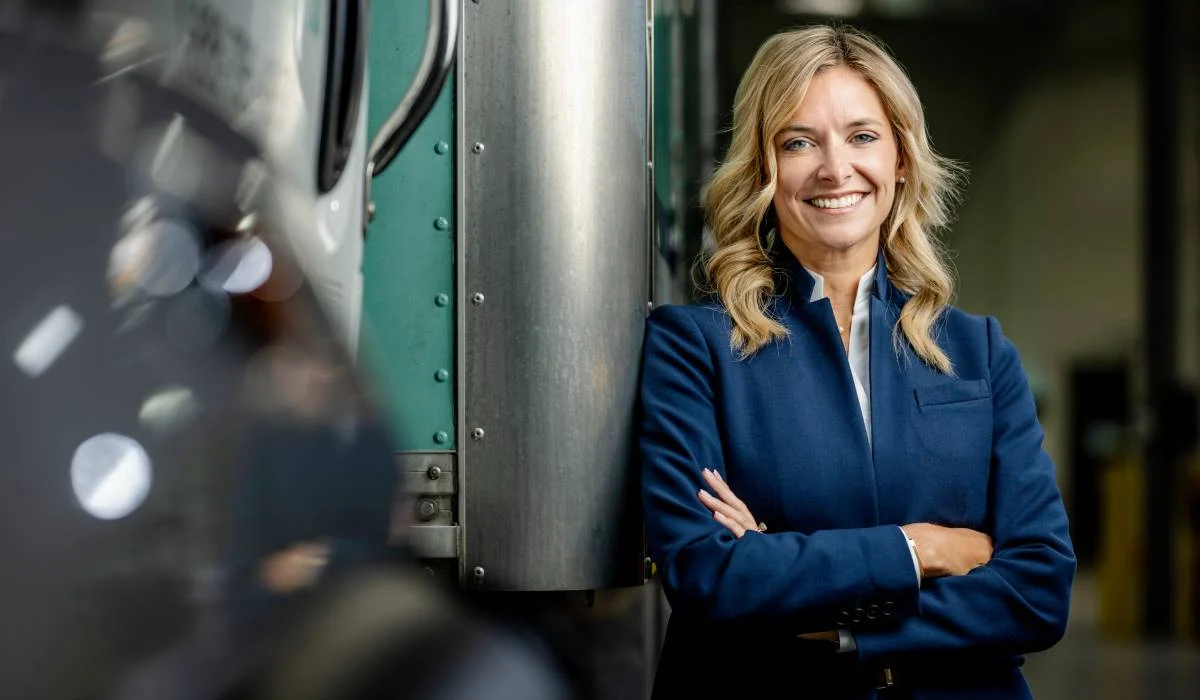

The appointment of Alissa Partee as Chief Executive Officer of Restaurant Technologies marks a significant shift in leadership paradigms within the foodservice B2B sector. Partee, who transitioned through the ranks of Chief People Officer and Chief Operating Officer before assuming the helm, brings a non-traditional background to the executive suite. Her ascent comes at a critical juncture for the industry, as restaurant operators nationwide grapple with labor shortages, volatile supply chains, and an increasing need for automated operational efficiency. By prioritizing a philosophy centered on "love and clarity," Partee is redefining how a logistics and technology-heavy organization manages its workforce of 1,200 employees and its network of 41 distribution depots.
A Strategic Ascension: From People Operations to Enterprise Leadership
Alissa Partee’s journey to the CEO role was not a linear progression through traditional finance or sales tracks. Instead, it was built on a foundation of human capital management and operational discipline. When Partee joined Restaurant Technologies in 2020 as Chief People Officer, the organization was navigating the early stages of a global pandemic that threatened the very existence of its primary customer base: the restaurant industry. Her role initially focused on culture, alignment, and talent retention—elements that proved vital as the company sought to maintain its service standards during a period of unprecedented disruption.
The transition from Chief People Officer (CPO) to Chief Operating Officer (COO), and finally to CEO, allowed Partee to develop what she describes as a "tip-to-tip" view of the business. By first understanding the internal culture and the needs of the workforce, she was able to more effectively manage the operational complexities of the company’s 41 depots. This end-to-end perspective is rare in executive leadership, where silos often exist between "people functions" and "operational functions." Partee’s leadership suggests that the two are inextricably linked; the efficiency of a depot is directly proportional to the clarity and support provided to the employees running it.
Chronology of a Career Built on Diverse Industry Experience
Partee’s career trajectory provided a diverse toolkit that prepared her for the complexities of B2B leadership. Before joining Restaurant Technologies, she held influential roles at several high-profile organizations:
- Buffalo Wild Wings: Here, Partee gained deep insights into the high-volume casual dining sector. Understanding the pressures of a kitchen—from grease management to food safety—provided the "customer lens" she uses today.
- Caribou Coffee: Her time in the coffee and quick-service restaurant (QSR) space emphasized the importance of consistency and speed in service delivery.
- Marvin Windows and Doors: Transitioning into the manufacturing sector allowed Partee to see how large-scale logistics and product quality control operate outside of the food industry, a perspective that is highly relevant to Restaurant Technologies’ hardware-and-service model.
- Restaurant Technologies (2020–Present): Joining as CPO, then moving to COO, Partee focused on standardizing best practices across all 41 depots, eventually leading to her appointment as CEO.
This timeline illustrates a deliberate broadening of perspective. By moving across industries and business models, Partee avoided the narrow specialization that can sometimes limit executive vision. She notes that her restaurant background serves as a form of "empathy-driven leadership," allowing her to understand that for her customers, reliability is not just a metric—it is the difference between a successful dinner service and an operational catastrophe.
The Philosophy of Love and Clarity
At the core of Partee’s leadership is a two-pronged philosophy: love and clarity. In a professional journalistic context, these terms translate to high-stakes talent investment and rigorous operational transparency.
Love as a Business Metric
In Partee’s framework, "love" is not a soft sentiment but a commitment to the growth and support of the individual. This involves providing the resources necessary for success while maintaining the "tough love" required to challenge teams to reach higher standards. From a corporate strategy standpoint, this focus on "love" acts as a retention mechanism. In an industry where labor turnover is notoriously high, a culture that makes employees feel invested in can become a significant competitive advantage.
Clarity as an Operational Tool
Clarity, the second pillar, addresses the inherent complexity of a nationwide logistics operation. Partee asserts that as organizations scale, they naturally accumulate "organizational debt" in the form of redundant processes, unnecessary meetings, and convoluted reporting structures. Her mandate is to simplify. By providing clear expectations and a singular vision, she aims to remove the "noise" that prevents depot managers and frontline workers from focusing on customer satisfaction.
Simplifying Complexity: The "Cancel as Much as You Create" Rule
One of Partee’s most notable strategic initiatives is the principle of "canceling as much as you create." This approach is designed to combat the bureaucratic bloat that often accompanies growth. As CEO, she has championed the idea that for every new initiative or report added to the workload, an existing, less-effective one should be retired.
To facilitate this, Restaurant Technologies established an Operations Excellence Team. Unlike traditional oversight departments, this team’s goal is to standardize best practices and improve change management. By creating a disciplined operating model, the company can ensure that a technician in a depot in Florida is following the same high-efficiency protocols as one in Washington state. This level of consistency is crucial for a B2B company that serves national accounts, where a brand like McDonald’s or Buffalo Wild Wings expects uniform service quality across all their locations.
Market Context and Supporting Data
The food service industry is currently undergoing a period of rapid technological adoption. According to industry reports, the global restaurant management software and services market is expected to grow at a compound annual growth rate (CAGR) of over 10% through 2030. Restaurant Technologies occupies a vital niche in this market by automating one of the most dangerous and "dirty" jobs in a kitchen: oil management.
Data suggests that manual oil handling is a leading cause of workplace injuries in kitchens, including burns and slip-and-fall accidents. By providing automated systems for oil delivery, filtration, and recycling, Restaurant Technologies directly impacts the safety and insurance costs of its clients. Under Partee’s leadership, the company is positioned to capitalize on the increasing regulatory focus on workplace safety and environmental sustainability. The recycling of used cooking oil into biodiesel—a key component of the company’s business model—aligns with the broader ESG (Environmental, Social, and Governance) goals of major corporate restaurant groups.
Implications for Talent Development and Succession
Partee’s appointment also signals a change in how the company views talent development. Having come from an HR background, she is a vocal advocate for "stretching" leaders before they feel fully ready. This philosophy of early-stage trust is intended to build a robust leadership pipeline.
"Some of the most important growth moments in my own career came from leaders who trusted me with bigger challenges," Partee noted during a recent Q&A. This approach to succession planning is more holistic than traditional methods. It focuses on building "enterprise-level thinkers"—leaders who understand how a decision in the HR department affects the logistics of a 41-depot network.
Broader Impact: Women in Executive Leadership
Partee’s role as CEO is also a significant milestone for female representation in the B2B and industrial tech sectors. Historically, these fields have been male-dominated, particularly at the C-suite level. Partee acknowledges that being the only woman in the room or being perceived as "too young" earlier in her career fueled her drive to deliver results.
Her leadership serves as a case study for the value of "breadth over linearity." By proving that a Chief People Officer can successfully transition into the CEO role of a logistics-heavy organization, she is helping to dismantle the "glass wall" that often prevents HR professionals from moving into general management.
Future Outlook and Strategic Vision
As Restaurant Technologies moves forward under Partee’s guidance, the vision is one of sustainable, disciplined growth. The goal is not merely to increase the number of depots or customers but to deepen the value provided to existing operators. This includes exploring further automation in kitchen operations and leveraging data to provide customers with better insights into their own operational efficiencies.
The "unconventional path" taken by Alissa Partee has resulted in a leader who is uniquely equipped to handle the human and operational challenges of the modern foodservice industry. By balancing the "soul" of the organization with the "discipline" of its operations, Partee is steering Restaurant Technologies toward a future where simplicity and clarity are the primary drivers of scale. Her tenure will likely be watched closely by other B2B firms considering how to evolve their leadership structures in an increasingly complex global market.