
While our ancestors relied on their senses to assess how they were doing, increasingly, we rely on gadgets, a fundamental shift that underscores a new era in personal health management. This transition from purely subjective self-perception to data-driven insights marks a significant evolution in how individuals monitor and understand their physical and mental well-being. Today, an array of sleek devices allows users to meticulously track metrics such as heart rate, step count, exercise intensity, and sleep quality, often consolidating multiple functions into a single, convenient wearable.
The Rise of Wearable Technology and its Market Impact
The proliferation of wearable technology has been nothing short of revolutionary. What began with simple pedometers has evolved into sophisticated ecosystems of smartwatches, fitness bands, ring trackers, and even smart clothing, all designed to capture an unprecedented volume of personal health data. The global wearable technology market was valued at approximately $61.3 billion in 2023 and is projected to grow significantly, reaching an estimated $186.1 billion by 2030, driven by increasing consumer health awareness, technological advancements, and the integration of AI and machine learning into these devices. Major players like Apple, Samsung, Garmin, and Fitbit continue to innovate, offering increasingly precise and comprehensive tracking capabilities. This market expansion reflects a societal embrace of the "quantified self" movement, where individuals leverage technology to gather data about their lives to improve physical, mental, and emotional performance.
These devices, at their best, serve as a crucial bridge between what an individual subjectively feels and what can be objectively measured. This capability is widely regarded as a profound advancement, offering tangible evidence to support or challenge personal perceptions. Human beings, while capable of remarkable feats of intuition, are not inherently skilled at quantifying their experiences and behaviors with cold precision. Our subjective assessments, though vital for personal understanding, are frequently prone to biases and inaccuracies. Consider, for example, the common scenario of someone underestimating their caloric intake. A real-world instance involved a colleague who firmly believed he was adhering to a strict caloric window, only to discover, after meticulous tracking, that he was inadvertently consuming an additional 500 calories daily, largely attributable to barbecue sauce. This anecdote highlights the substantial gap that can exist between perception and reality. While outliers like the Canadian sprinter Ben Johnson, who reportedly could call out his 100-meter time within a tenth of a second, demonstrate exceptional self-assessment abilities, such precision is rare. For the vast majority, the question remains: How accurate are we at assessing ourselves, and how can technology, such as fitness trackers, be wisely utilized to enhance this accuracy and inform better health decisions?
Accuracy and Limitations: Discerning Reliable Data
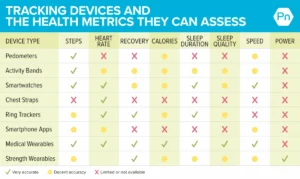
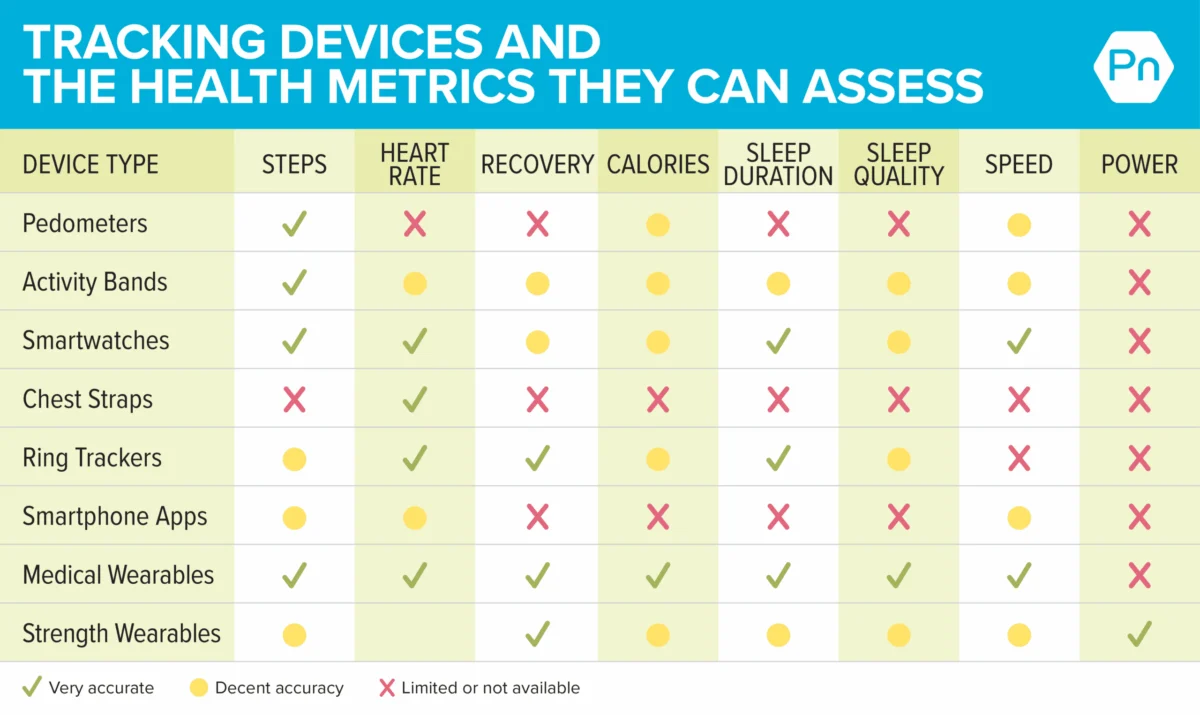
The utility of fitness trackers hinges significantly on the accuracy of the data they collect. It is crucial to understand that not all data generated by these devices is created equal. The reliability of tracking varies considerably depending on the brand, the quality of its hardware and software, and the specific metric being measured. For instance, widely available research indicates that metrics like heart rate and step count are generally reliable across many reputable devices. These measurements often rely on well-established technologies: photoplethysmography (PPG) for heart rate, which detects blood volume changes, and accelerometers for step counting, which sense movement.
However, other outputs, such as calories burned, movement velocity, or precise sleep stage analysis, often come with substantial margins for error. Calorie expenditure, for example, is notoriously difficult to measure accurately outside of controlled laboratory settings. Devices typically use algorithms that combine personal data (age, weight, height) with activity data, but these are often generalized and may not account for individual metabolic differences, leading to discrepancies of 20-30% or more. Similarly, while devices can track sleep duration with reasonable accuracy, distinguishing between various sleep stages (REM, deep sleep) relies on more complex algorithms and biometric data that can be less precise in a wrist-worn device compared to polysomnography, the gold standard for sleep studies. This disparity in accuracy necessitates a critical approach to interpreting data, understanding that certain metrics provide a more definitive picture than others. Consumers are advised to consult detailed reviews and scientific validations of specific devices and metrics to gauge their trustworthiness.
The Human Element: Bridging Subjectivity and Objectivity
The true power of wearable technology lies in its capacity to complement, rather than replace, human intuition. Our subjective feelings and assessments, despite their occasional unreliability, are indispensable. They provide context, emotional resonance, and a holistic understanding that raw data alone cannot capture. The challenge lies in harmonizing this internal wisdom with external, objective measurements.

Consider the psychological aspect: human perception is influenced by mood, expectations, and cognitive biases. For instance, an individual feeling particularly tired might overestimate the intensity of their workout, or conversely, someone highly motivated might underestimate their fatigue. Wearable devices offer an external, unbiased reference point, allowing individuals to calibrate their internal sensations. For example, a runner might feel like they are pushing hard, but their heart rate monitor might reveal they are still within a moderate zone, prompting them to increase effort. Conversely, someone feeling good might discover their recovery metrics suggest they need more rest. This ongoing calibration process can gradually refine an individual’s interoception—their ability to sense internal bodily states—making them more attuned to their own physiological signals over time.
The Paradox of Information: Navigating Data Overload
While data can be immensely helpful, there exists a delicate balance in its application. As computer scientist Samantha Kleinberg observes, "even a tiny amount of surplus information has a big negative effect on our decision-making." This statement highlights the paradox of tracking: insufficient detail makes informed decisions challenging, yet an overwhelming flood of data can be equally paralyzing. This phenomenon is often depicted as an inverted U-curve, where decision-making ability peaks at an optimal amount of relevant information, declining sharply with either too little or too much.
In today’s data-rich environment, falling into the trap of information overload is surprisingly easy. The analogy of "analysis paralysis" from scanning hundreds of restaurant reviews perfectly illustrates this point; what begins as a quest for a good taco can quickly devolve into indecision. The health and fitness industry, with its constant drive for "more science, more customization, and more complexity," frequently contributes to this issue. When faced with a deluge of metrics, graphs, and notifications, individuals can feel overwhelmed, losing sight of clear actionable steps.
To combat this, individuals should ask a fundamental question: "Does tracking genuinely increase my well-being and performance?" A clear "yes" or "no" provides an immediate directive. If the answer is ambiguous, specific indicators can help discern the utility of tracking.
Strategic Integration: When and How Tracking Truly Helps
Tracking devices are most beneficial when they either decrease stress by validating methods, enhance motivation and ability through clear feedback, or deepen self-understanding.
-
Decreasing Stress and Validating Methods: Data can provide reassurance and build confidence. Take the example of "Zak," a high-performing individual who struggled to trust that "Zone 2 cardio," which felt easy, could be effective. His heart rate monitor provided objective validation, showing a steady decrease in his resting heart rate and improved recovery times. This data-driven reassurance allowed Zak to relax into the process, further enhancing his physiological responses. For coaches, this means using reliable data to spotlight existing performance, reducing client anxiety about not being "good enough." Conversely, tracking can be detrimental if it increases stress without any tangible upside, particularly when monitoring aspects beyond one’s immediate control, such as a new parent’s low sleep score. In such scenarios, tracking becomes counterproductive and should be paused until circumstances change.
-
Enhancing Motivation and Ability: According to behavioral science, for a behavior to occur, three elements are needed: motivation, ability, and a prompt. Fitness trackers excel at providing that crucial prompt when motivation and ability are already present. Margaret, for instance, believed a nightly glass of wine aided her sleep. Her sleep tracker, however, objectively revealed poorer sleep quality on nights she drank. This clear, undeniable feedback—the "prompt" of a low sleep score—motivated her to adjust her behavior. When important data is highlighted, the path to healthier choices becomes clearer. This "seeing is believing" principle can be a powerful catalyst for change. However, tracking can also decrease motivation if it transforms an enjoyable activity into a rigid pursuit of numbers. An avid cyclist, Jan, initially found motivation in breaking local trail records, but his relentless focus on speed eventually led to burnout, diminishing his enjoyment of cycling. When the numbers overshadow the experience, tracking loses its beneficial edge.
-
Deepening Self-Understanding: The common belief that "the harder you work, the better your results" is often misleading. Some individuals, "grinders," push themselves too hard, inhibiting performance and recovery, while others consistently underestimate their capacity. Data can provide a more accurate picture of one’s potential. In high-intensity interval training (HIIT), for example, fixed rest periods are often estimates. Heart rate data can individualize recovery needs, revealing whether one is recovering faster or slower than expected. This allows for more efficient training, avoiding "junk volume" where fatigue accumulates without performance improvement. By analyzing real-time metrics of output, fatigue, and recovery, individuals and their coaches can foster a deeper understanding of personal physiology, optimizing training and recovery. Yet, an over-reliance on data risks disconnecting individuals from their own internal signals—hunger, fullness, energy levels. The "My Fitness Pal Blackout" incident, where users felt adrift without their calorie-tracking app, illustrates this risk. True self-mastery involves integrating external data with an acute awareness of internal sensations.

Cultivating Self-Awareness: Beyond the Numbers
To truly leverage fitness trackers for more accurate self-assessments, it is essential to actively cultivate and integrate one’s own sensory experiences. While objective data provides invaluable feedback, the enduring benefits of any health practice—including enjoyment and resilience—stem from maintaining a strong connection with one’s felt experience.
-
Prioritize Internal Check-ins: Before consulting any device, pause and tune into your body. Ask yourself: How do I feel? How far do I think I ran? What was my heart rate during that activity? This practice strengthens your brain’s prediction-making abilities. Only after this subjective assessment should you compare it with the tracker’s data. Over time, this consistent calibration can significantly narrow the gap between your internal perception and objective reality. Regularly updating device software and algorithms is also crucial, as these improvements enhance predictive accuracy.
-
Develop Mental Shortcuts and Calibrate with RPE: Coaches often ask clients to estimate their strength boundaries or perceived effort. While novices may be significantly off, consistent calibration with objective data can dramatically reduce this margin of error. The Rate of Perceived Exertion (RPE) scale, a scientifically validated sensory-driven approach, helps individuals quantify how hard they are working. By periodically cross-referencing RPE with objective metrics like heart rate or power output, individuals can develop a refined internal gauge of effort that can be reliably used even without a device.
-
Continually Hone Sensory Awareness: Humans possess an incredibly rich and complex network of sensory information—proprioception (sense of body position), interoception (sense of internal states), nociception (sense of pain), and more. This internal intelligence is far more nuanced than anything technology can currently replicate. Regularly checking in with these senses—how your muscles feel, your breath, your energy levels—allows you to tap into this deep well of information. When you learn to calibrate your intricate sensory feedback with the precise insights from wearable technology, you unlock a powerful synergy, placing your personal experience at the forefront while still benefiting from cutting-edge advancements.
Ethical Considerations and the Future of Quantified Self
The increasing ubiquity of wearable technology also brings forth important ethical considerations, particularly concerning data privacy and security. These devices collect highly sensitive personal health information, raising questions about data ownership, storage, and potential misuse by third parties, including advertisers, insurance companies, or even employers. Regulations such as GDPR and HIPAA provide some protections, but the landscape is constantly evolving, necessitating vigilance from both users and developers.
Looking ahead, the future of personal health assessment promises even greater integration and intelligence. Advances in artificial intelligence and machine learning will enable trackers to offer more personalized insights, predictive analytics, and proactive health interventions. Devices may become more seamlessly integrated into everyday life, perhaps embedded in clothing or even as temporary epidermal sensors. The trend points towards a future where health data is not just passively collected but actively analyzed to provide real-time, actionable coaching, further blurring the lines between subjective feeling and objective measurement.
Conclusion: Harmonizing Technology and Intuition
The journey from ancestral reliance on raw senses to modern dependence on sophisticated gadgets for self-assessment represents a profound evolution. Wearable technology offers an unparalleled opportunity to bridge the gap between subjective feeling and objective measurement, providing valuable insights that can inform better health decisions. However, the true mastery of personal health lies not in blind adherence to data, but in a harmonious integration of technological insights with an awakened sense of one’s own body. By critically evaluating data accuracy, managing information overload, and consistently calibrating external metrics with internal sensations, individuals can navigate the "quantified self" landscape effectively. Ultimately, the most powerful tool for self-assessment remains the human being itself, enhanced and refined by the wise application of technology, leading to a more informed, intuitive, and resilient approach to well-being.