
Lena Brands, the parent organization currently overseeing the remaining vestiges of the iconic Shari’s and Coco’s Bakery restaurant chains, has officially sought Chapter 11 bankruptcy protection, citing a catastrophic convergence of inherited liabilities, aggressive high-interest debt, and a liquidity crisis exacerbated by the freezing of third-party delivery revenue. The filing, submitted in early November, marks a critical and potentially final chapter for two brands that once defined the family-dining landscape across the Western United States. The company’s leadership, headed by industry veteran Sam Borgese, maintains that while the remaining 11 locations continue to generate revenue, the weight of Merchant Cash Advance (MCA) obligations and legal disputes over payment processing have rendered normal operations impossible without court intervention.
The Financial Crisis and the MCA Debt Trap
At the heart of the Lena Brands bankruptcy is a heavy reliance on Merchant Cash Advance (MCA) financing, a high-cost alternative to traditional bank loans that has become increasingly prevalent—and controversial—within the distressed restaurant sector. According to court documents, Lena Brands is currently grappling with approximately $5.16 million in MCA-related obligations spread across 10 different funding entities.
Unlike traditional loans, which are repaid via fixed monthly installments over several years, MCAs involve the sale of a percentage of a business’s future credit card sales or daily revenue. For Lena Brands, these agreements proved fatal to liquidity. As the company struggled to maintain operations, several lenders began exercising their rights to seize daily receipts directly from payment processors. The situation reached a breaking point when two specific MCA lenders filed claims against Stripe, the payment processor responsible for handling transactions from delivery giants DoorDash and Grubhub.
The result of these legal maneuvers was the freezing of approximately $650,000 in cash—funds that Lena Brands identifies as essential for daily operations, including payroll and inventory. Sam Borgese, in his declaration to the court, noted that this move restricted a critical cash-flow stream, effectively paralyzing the company’s ability to pay its 235 employees and its primary food distributor, US Foods, to whom it owes an estimated $715,000.
A Legacy of Inherited Liabilities
The financial distress of Lena Brands did not begin with its current management. The company acquired the operations of Shari’s and Coco’s in October 2024 from the previous owner, Gather Intermediate Holdco, through a creditor-led restructuring process. However, the acquisition came with a massive tail of "legacy" debt that the new entity was ill-equipped to handle.
Upon taking control, Lena Brands assumed approximately $1.5 million in past-due rent obligations across its various properties. Additionally, the company was saddled with roughly $1.45 million in unpaid sales tax liabilities. These figures were compounded by existing obligations to Libertas Funding, the company’s primary secured lender, which is currently owed approximately $1.66 million.
Borgese, whose professional history includes leadership tenures at Logan’s Roadhouse, Max Brenner, Charlie Brown’s Steakhouse, and Catalina Restaurant Group (the former parent of Coco’s), stated that the company entered the acquisition already burdened by these significant liabilities. The strategy was to stabilize the remaining profitable units, but the constant pressure of collection efforts and the immediate demands of MCA lenders diverted management’s focus from operational improvements to mere survival.
Operational Footprint and Employee Impact
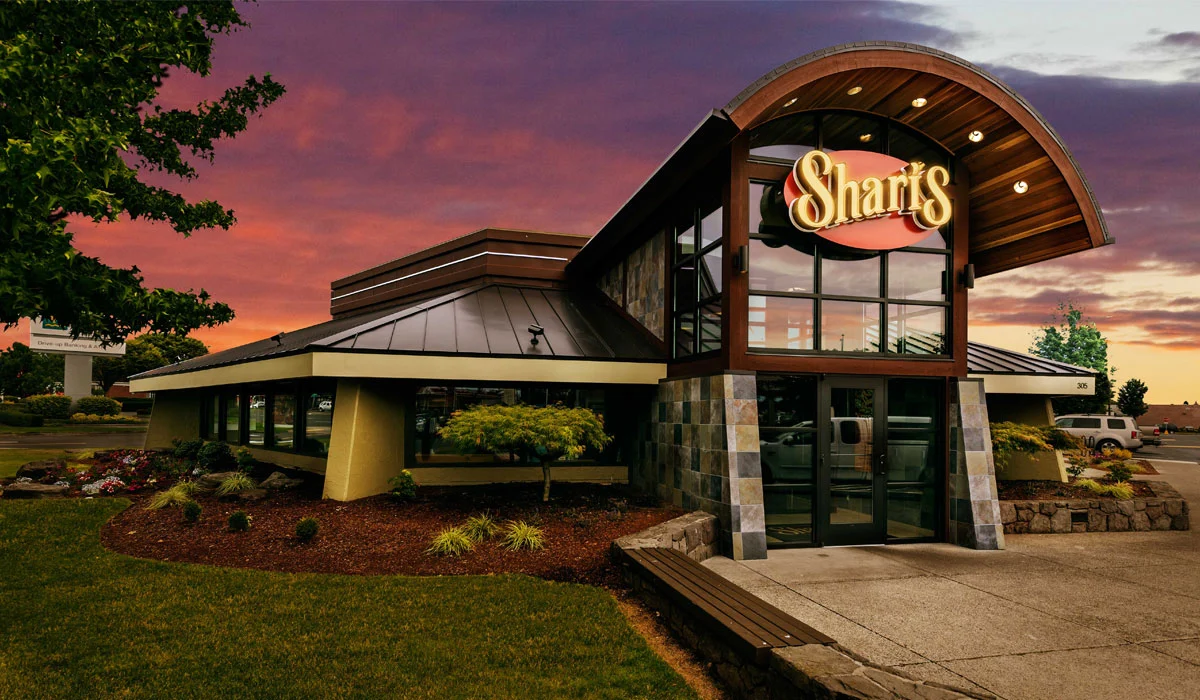
The bankruptcy filing provides a stark look at the diminished footprint of these once-expansive brands. Lena Brands currently operates just 11 locations: a mix of Shari’s and Coco’s Bakery restaurants situated in California, Washington, and Idaho. This is a dramatic reduction from the brands’ peak years. At one point, Shari’s Cafe & Pies operated over 100 locations across the Pacific Northwest, known for its distinctive hexagonal buildings and 24-hour service. Similarly, Coco’s Bakery was a staple of the California dining scene for decades.
The current workforce consists of roughly 235 employees. One of the primary motivations for the "expedited" bankruptcy filing, according to the company, is to obtain court approval to use "cash collateral" to ensure that these workers are paid and that the restaurants can continue to receive supplies. Without the protection of the bankruptcy court, the company argued that the remaining restaurants would be forced into a chaotic liquidation that would leave employees and vendors with no recourse.
Timeline of the Shari’s and Coco’s Decline
To understand the current state of Lena Brands, one must look at the broader timeline of the family-dining sector’s struggle.
- 2018–2019: Both Shari’s and Coco’s began seeing a contraction in their footprints as consumer preferences shifted toward fast-casual dining and away from traditional sit-down family restaurants.
- 2020–2021: The COVID-19 pandemic caused unprecedented disruptions. While many restaurants pivoted to delivery, the high overhead of large, full-service locations like Shari’s made the transition difficult.
- 2022–2023: Rising labor costs and historic food price inflation hit the family-dining segment particularly hard. Margins, already thin, began to disappear.
- October 2024: Lena Brands acquires the remaining assets from Gather Intermediate Holdco in an attempt to salvage the brands through restructuring.
- November 2024: Faced with $5.16 million in MCA debt and $650,000 in frozen funds, Lena Brands files for Chapter 11 bankruptcy.
The Growing Trend of MCA-Driven Bankruptcies
The Lena Brands case is not an isolated incident but rather part of a troubling trend within the franchise and restaurant industry. Industry analysts point out that as traditional bank credit tightened following the pandemic, many distressed operators turned to MCAs for "quick cash." However, the high daily or weekly repayment structures of these products often create a "death spiral" where operators must take out new MCAs to pay off old ones.
Recent filings by a 43-unit Subway franchisee, a multi-unit Farmer Boys franchisee, and a 22-unit Del Taco franchisee all cited similar pressures from MCA lenders. The specific issue of frozen delivery-platform funds is also becoming a recurring theme. As more revenue flows through digital intermediaries like DoorDash and Stripe, lenders have found new "choke points" to intercept cash, often bypassing the traditional protections that businesses might have with a standard bank account.
The legal battle over the $650,000 held by Stripe will be a focal point of the Lena Brands proceedings. The company argues that these funds are "property of the estate" under bankruptcy law and should be released to fund the restructuring. MCA lenders, conversely, often argue that the funds were "purchased" and thus no longer belong to the debtor.
The Path Forward: Restructuring and Survival
Despite the dire financial metrics, Sam Borgese remains optimistic that a leaner, more focused version of the company can survive. The restructuring plan involves several key pillars:
- DIP Financing: The company is currently in negotiations for a $400,000 debtor-in-possession (DIP) financing facility. This new credit would provide the immediate liquidity needed to keep the 11 locations open during the legal process.
- Operational Streamlining: Management has identified opportunities to reduce insurance premiums and improve payroll controls. By centralizing operations and cutting the overhead associated with the previous ownership structure, the company believes the 11 sites can return to profitability.
- Personal Capital: Borgese has indicated a willingness to personally contribute capital if necessary to bridge the gap during the restructuring process, signaling a high level of commitment to the brands’ survival.
- Lease Negotiations: Chapter 11 will allow the company to reject burdensome leases at closed locations and renegotiate terms for the remaining 11, addressing the $1.5 million in rent arrears.
Implications for the Family-Dining Sector
The bankruptcy of Lena Brands serves as a cautionary tale for the mid-tier dining sector. The "family dining" category, characterized by large menus and table service, faces an identity crisis in an era of 15-minute delivery and premium fast-casual options. For Shari’s and Coco’s, the challenge is twofold: they must not only fix a broken balance sheet but also convince a younger generation of diners that their brands remain relevant.
Furthermore, the case highlights the systemic risks of the MCA market. While these products provide a lifeline for businesses that cannot qualify for traditional loans, their lack of regulation and aggressive collection tactics can turn a temporary cash crunch into a terminal event.
As Lena Brands moves through the court system, the priority will be stabilizing the 11 remaining restaurants to preserve the jobs of the 235 employees. Whether Shari’s and Coco’s can emerge from this process as viable entities remains to be seen, but the filing makes one thing clear: the era of high-leverage, rapid-expansion family dining is being replaced by a brutal focus on liquidity and operational efficiency. The coming months will determine if these decades-old brands can adapt to this new reality or if they will join the list of storied American restaurant chains that ultimately succumbed to the weight of their own debt.