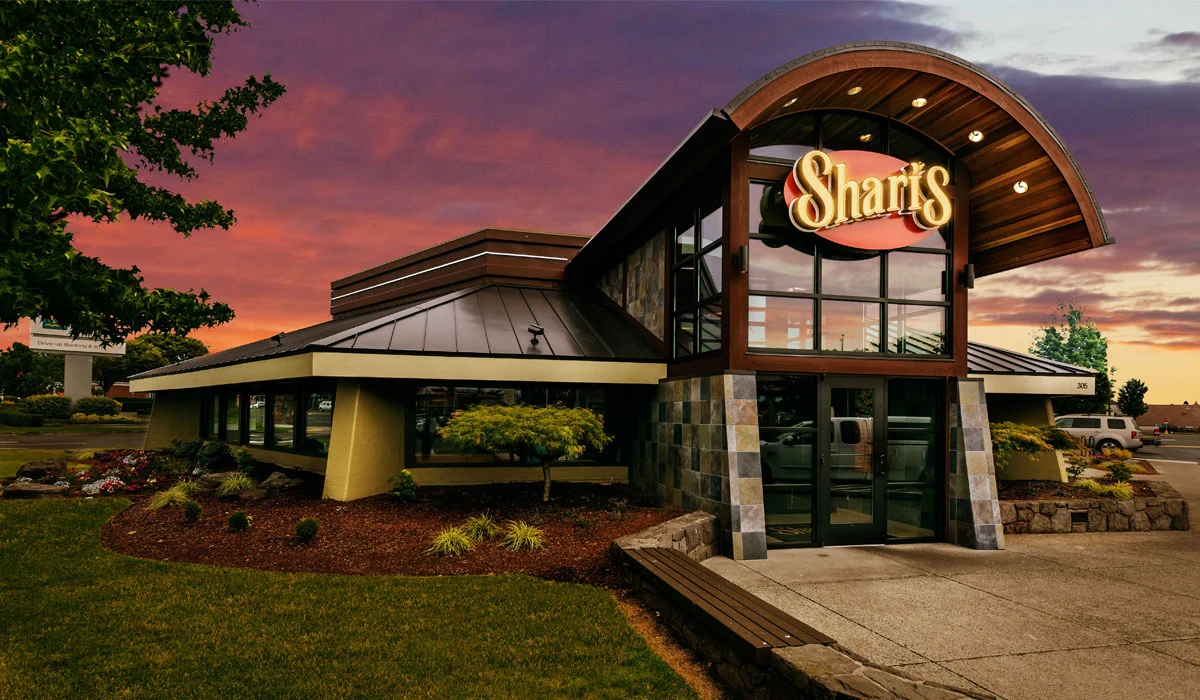

Lena Brands, the parent company overseeing the remaining operations of the storied West Coast restaurant chains Shari’s and Coco’s Bakery, has officially filed for Chapter 11 bankruptcy protection. The filing, submitted earlier this month, reveals a complex web of financial distress characterized by an unsustainable debt load, the freezing of essential operational funds by payment processors, and a heavy reliance on high-interest merchant cash advance (MCA) financing. The move marks a critical turning point for two brands that were once ubiquitous across the Western United States but have seen their footprints dramatically retract in recent years.
According to the bankruptcy petition, the company’s downfall was accelerated by a liquidity crisis that saw nearly $650,000 in delivery-platform revenue frozen by the payment processor Stripe. This freeze, triggered by competing claims from aggressive MCA lenders, effectively severed a primary cash-flow artery for the business, leaving management with no choice but to seek court-supervised restructuring. At the time of the filing, Lena Brands operates only 11 remaining locations across California, Washington, and Idaho, employing approximately 235 workers.
The Architecture of a Financial Crisis
The financial instability of Lena Brands is rooted in its recent acquisition of the restaurant operations. In October 2024, Lena Brands took over the Shari’s and Coco’s brands from the previous owner, Gather Intermediate Holdco, through a creditor-led restructuring process. However, the transition did not provide the fresh start the brands required. Instead, Lena Brands inherited a mountain of past-due obligations that immediately hampered its ability to stabilize the business.
Sam Borgese, the owner of Lena Brands and a veteran executive with a history of leading major restaurant groups such as Logan’s Roadhouse and Catalina Restaurant Group, noted that the company entered the acquisition already burdened by significant liabilities. These included approximately $1.5 million in unpaid rent, $1.45 million in delinquent sales tax liabilities, and substantial debts owed to Libertas Funding.
In an effort to maintain daily operations and address these inherited debts, the company turned to merchant cash advances. Unlike traditional bank loans, MCAs are high-cost financial products where a lender provides an upfront sum in exchange for a percentage of the business’s future daily sales. While these products offer quick liquidity, they often carry effective annual percentage rates (APRs) that far exceed traditional financing, creating a cycle of debt that can be difficult for struggling operators to break.
The Merchant Cash Advance Death Spiral
The reliance on MCA financing proved to be the undoing of Lena Brands’ operational stability. The company eventually accumulated approximately $5.16 million in debt across roughly 10 different MCA funders. These agreements were particularly invasive, granting lenders direct claims over revenue flowing through third-party delivery platforms such as DoorDash and Grubhub.
The situation reached a breaking point when two of these lenders filed legal claims not only against Lena Brands but also against Stripe, the payment processor responsible for handling the company’s digital transactions. Fearing legal exposure and conflicting claims over the ownership of the funds, Stripe froze approximately $650,000 in payments.
In his declaration to the court, Borgese emphasized that this freeze restricted a "critical cash-flow stream," which directly necessitated the expedited bankruptcy filing. The company is currently petitioning the court to release these funds, arguing that the frozen capital belongs to the estate and is essential for maintaining the "going concern" value of the remaining restaurants.
A Chronology of Decline
The bankruptcy of Lena Brands is the latest chapter in a long-term decline for Shari’s and Coco’s Bakery. To understand the current crisis, one must look at the timeline of the brands’ contraction:
- 1948 & 1978: Coco’s Bakery (founded in California) and Shari’s (founded in Oregon) establish themselves as dominant forces in the family-dining segment, known for their pies and 24-hour service.
- 2010s: Both brands begin to face stiff competition from fast-casual competitors and changing consumer habits. Shari’s, once operating nearly 100 locations, begins a slow process of closing underperforming units.
- 2020–2022: The COVID-19 pandemic severely impacts the family-dining sector. Labor shortages and food-cost inflation begin to erode margins.
- Early 2024: Reports of mass closures surface. Shari’s abruptly closes all its remaining locations in Oregon, a state where it was once a cultural icon, amid reports of unpaid taxes and rent.
- October 2024: Lena Brands acquires the remaining 11 units from Gather Intermediate Holdco in a desperate bid to save the brands.
- November 2024: Following the freezing of funds by Stripe and mounting pressure from MCA lenders, Lena Brands files for Chapter 11 bankruptcy.
Detailed Financial Obligations
The bankruptcy filings provide a stark look at the company’s balance sheet. The debt is categorized into secured claims, tax liabilities, and unsecured trade debt:
- Secured MCA Debt: Libertas Funding remains the primary secured lender, with a claim of approximately $1.66 million. Nine other MCA lenders hold collective claims totaling $3.03 million.
- Tax Liabilities: The company owes an estimated $1.45 million in sales taxes, a debt that often carries personal liability for corporate officers and is rarely dischargeable.
- Real Estate Obligations: Approximately $1.5 million is owed in past-due rent to various landlords across the three-state footprint.
- Trade Debt: US Foods, the company’s primary food distributor, is owed roughly $715,000. Maintaining a relationship with distributors is vital for the continued operation of the restaurants during the restructuring process.
Operational Strategy and the Path Forward
Despite the dire financial situation, Sam Borgese remains optimistic that a leaner version of the company can survive. He informed the court that the remaining 11 restaurants still generate "meaningful revenue" and possess a loyal customer base. The primary obstacle to profitability, according to management, has not been a lack of customers, but rather the "constant collection pressure" and the diversion of management attention toward managing the debt crisis rather than improving the guest experience.
The company’s restructuring plan includes several key initiatives:
- Insurance and Payroll Controls: Management has identified immediate opportunities to reduce insurance premiums and implement more stringent payroll controls to reduce overhead.
- Debtor-in-Possession (DIP) Financing: Lena Brands is currently in negotiations for a $400,000 DIP loan, which would provide the necessary liquidity to keep the doors open during the bankruptcy proceedings.
- Personal Capital Infusion: Borgese has indicated a willingness to personally contribute capital to the business if necessary to ensure its survival.
- Lease Renegotiation: The Chapter 11 process allows the company to reject burdensome leases and renegotiate terms for the remaining 11 sites.
Broader Industry Implications: The MCA Risk
The Lena Brands case serves as a cautionary tale for the broader restaurant industry, particularly regarding the use of "shadow banking" products like merchant cash advances. While these products are marketed as a lifeline for distressed businesses, they often act as a catalyst for insolvency.
In recent months, the restaurant sector has seen a surge in bankruptcy filings where MCA debt played a central role. Notable examples include a 43-unit Subway franchisee, a multi-unit Farmer Boys operator, and a 22-unit Del Taco franchisee. In each of these cases, the daily or weekly withdrawal of funds by MCA lenders stripped the businesses of the working capital needed to pay staff and vendors, leading to a rapid operational collapse.
Industry analysts point out that the family-dining segment is particularly vulnerable. Unlike quick-service restaurants (QSRs), family-dining establishments like Shari’s and Coco’s have higher labor costs due to table service and larger footprints that result in higher rent and utility expenses. When inflationary pressures on food costs are added to the mix, the thin margins of family dining are easily obliterated by the high interest rates associated with MCA financing.
The Future of Shari’s and Coco’s
For the 235 employees currently working at the remaining locations, the bankruptcy filing provides a temporary shield against immediate closure. Lena Brands has sought court approval to use its cash collateral to continue meeting payroll and paying utilities.
However, the road ahead is fraught with challenges. The company must convince the bankruptcy court that it has a viable path to long-term profitability in an environment where consumer spending is tightening and operational costs remain high. The loss of the brands’ Oregon footprint—formerly their heartland—has already diminished their economies of scale, making logistics and distribution more expensive.
The legal battle over the $650,000 held by Stripe will be a pivotal moment in the case. If the court rules in favor of Lena Brands, the immediate infusion of liquidity could provide the breathing room needed to implement Borgese’s turnaround plan. If the funds remain tied up in litigation between the MCA lenders, the remaining 11 locations of Shari’s and Coco’s may face the same fate as the hundreds of units that came before them.
As the case progresses in the coming months, the restaurant industry will be watching closely. The outcome will not only determine the survival of two iconic West Coast names but will also highlight the legal and operational risks of the merchant cash advance industry, which continues to play an increasingly prominent—and controversial—role in the financing of American small and mid-sized businesses.