
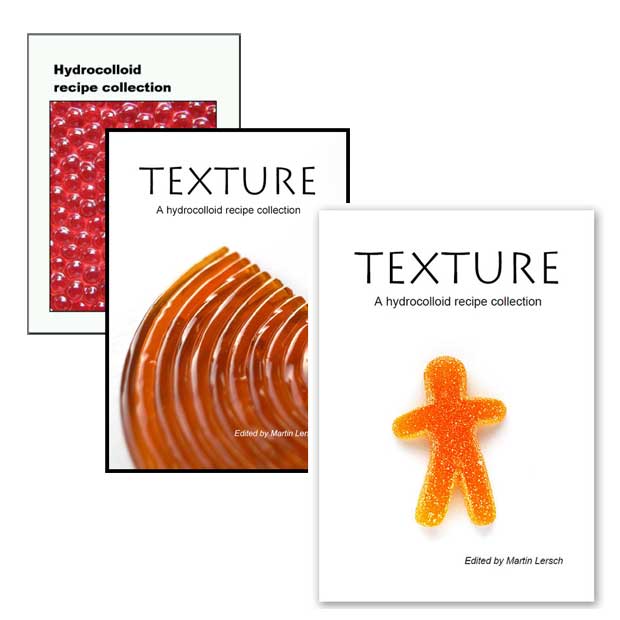
After a six-year hiatus since its last significant revision, "Texture – A hydrocolloid recipe collection," a seminal resource in the culinary science community, is slated for an incremental update to version 3.1. The announcement, made by the collection’s author via Khymos.org, signals a renewed commitment to refining and expanding this widely referenced compendium of food textures and the ingredients that create them. The forthcoming update, described as a v.3.1 to primarily address "wrinkles" and minor corrections rather than a complete overhaul, underscores the dynamic nature of culinary science and the ongoing need for accurate, accessible information.
A Pillar of Modern Gastronomy: The Legacy of "Texture"
First published in 2007 as v.1.0, "Texture – A hydrocolloid recipe collection" quickly established itself as an indispensable guide for professional chefs, food scientists, and enthusiastic home cooks delving into the world of molecular gastronomy and innovative food preparation. Its initial release provided a foundational understanding of hydrocolloids – substances that form gels, thicken, and stabilize food products – and their practical application in the kitchen. The collection demystified complex ingredients like agar-agar, xanthan gum, and gellan gum, offering practical recipes and insights into their functional properties.
The subsequent v.2.0, released in 2008, built upon this foundation, incorporating new research and expanding the range of covered hydrocolloids and techniques. The most recent major update, v.3.0, arrived in 2014, further solidifying its status as a comprehensive reference. This progression reflects the rapid evolution of culinary techniques and the increasing accessibility of specialized ingredients to a broader audience. The collection’s open-source nature and reliance on community feedback have been central to its growth and accuracy, fostering a collaborative environment where knowledge is shared and refined.
Chronology of a Culinary Resource:
- 2007: "Texture – A hydrocolloid recipe collection" v.1.0 is first published, introducing a systematic approach to understanding and utilizing hydrocolloids in cooking. This marked a significant moment for enthusiasts and professionals alike, offering practical recipes and scientific explanations.
- 2008: "Texture" v.2.0 is released, incorporating early feedback and expanding the scope of hydrocolloids and techniques. This iteration demonstrated the author’s commitment to continuous improvement.
- 2010: An early call for community contributions, particularly photographic evidence of successful recipes, is issued, highlighting the collaborative ethos behind the project.
- 2014: "Texture" v.3.0 sees its release, representing the most comprehensive update prior to the current announcement. This version integrated years of feedback, new ingredients, and refined methodologies, cementing its position as a leading reference.
- October 2020: The current announcement regarding the upcoming v.3.1 update is made, signaling a new phase of refinement and expansion after a six-year interval. This update aims to consolidate feedback and address emerging culinary trends.
The Community-Driven Revision: A Call for Collaboration
A cornerstone of the "Texture" project has always been its reliance on a global community of users for feedback and contributions. The author explicitly extended "a big thank you to all who have provided feedback, pointed out typos and errors and submitted pictures." This ongoing dialogue ensures the collection remains accurate and relevant. For v.3.1, this collaborative spirit is more vital than ever. The author has issued a renewed call for community engagement, urging users to submit any unshared pictures of successful recipes. Photographic evidence is not merely aesthetic; it serves as a critical indicator that a recipe has been tested and yielded a positive outcome, lending credibility and reliability to the instructions. Detailed instructions for photo submission are available on the Khymos.org blog or within page 8 of the existing "Texture" document. Furthermore, the author specifically requested feedback on any recipes that proved unsuccessful, emphasizing that identifying non-working formulations is as crucial as celebrating successes for the integrity of the collection.
Targeting Underrepresented Hydrocolloids: Expanding the Repertoire
One of the key objectives for the v.3.1 update is to enrich sections dedicated to several underrepresented hydrocolloids. These include guar gum, gum arabic, konjac, locust bean gum, and tara gum. While these ingredients are well-known in industrial food production for their specific thickening, gelling, and stabilizing properties, their application in home and professional kitchens can sometimes be less explored or documented.
- Guar Gum: Derived from guar beans, it’s a potent thickener and stabilizer, often used in gluten-free baking and dairy products. Its cold-soluble nature makes it versatile.
- Gum Arabic: An exudate from acacia trees, known for its emulsifying properties and ability to create thin, brittle films. It’s common in confectionery and beverage stabilization.
- Konjac: Extracted from the konjac plant, it forms elastic, firm gels, particularly popular in Asian cuisine for noodles and jellies. Its unique texture profile is highly sought after.
- Locust Bean Gum (Carob Gum): Sourced from the carob tree, it acts as a thickener and stabilizer, often used synergistically with other gums to create unique textures.
- Tara Gum: Similar in structure to locust bean and guar gum, tara gum offers good thickening and stabilizing properties, and is gaining traction as a cost-effective alternative.
The call for recipes highlighting the "range of foods each of these hydrocolloids can be used for" is a strategic move to broaden the collection’s utility. By showcasing diverse applications, the update aims to inspire culinary innovation and provide practical guidance for ingredients that might otherwise be overlooked by those unfamiliar with their full potential. Contributions can be submitted via comments on the blog post or directly to [email protected].
Navigating Omissions: Proprietary Products vs. Fundamental Ingredients
The "Texture" collection is also designed to be a curated resource, meaning certain ingredients are intentionally omitted. The author clarified that proprietary products, such as Ultra-Tex and Pure Cote (both modified starches), and Trisol (a wheat fiber), are deliberately excluded. This decision likely stems from a commitment to focusing on fundamental, widely available hydrocolloids and avoiding ingredients whose specific formulations or availability might be restricted by intellectual property or commercial agreements. The philosophy appears to be one of providing foundational knowledge that empowers users to understand and experiment with core ingredients, rather than relying on brand-specific solutions. However, the author also acknowledged the possibility of accidental omissions of rare or novel hydrocolloids, inviting comments and suggestions from the community to ensure comprehensive coverage where appropriate. This open invitation reinforces the collection’s ambition to be an evolving, living document reflecting the latest developments in food science.
Expanding Beyond Traditional Hydrocolloids: The Realm of Natural Gels and Foams
Perhaps one of the most exciting developments planned for v.3.1 is the significant expansion of the "non-hydrocolloid recipes" category. This section delves into the fascinating world of gels from regional kitchens around the globe where no traditional, purified hydrocolloid is explicitly added. Instead, these dishes achieve their unique textures through inherent gelling mechanisms present in their natural ingredients or traditional preparation methods.
Examples already included or slated for inclusion highlight this diversity:
- Junket and Cuajada: Traditional dairy desserts, often relying on rennet or similar enzymes to coagulate milk proteins and form a delicate gel.
- Ginger Milk Custard: A classic Chinese dessert where the proteolytic enzymes in fresh ginger juice cause milk proteins to curdle and set into a silken custard.
- Aiyu Jelly and Grass Jelly: Popular East Asian desserts derived from plant extracts (fig seeds for Aiyu, specific herbs for Grass Jelly) that naturally form gels.
- Gelled Seafood Sauce: Often found in various cuisines, where natural gelatin from bones, skin, or connective tissues of seafood sets upon cooling.
- Tofu: A staple in many Asian diets, produced by coagulating soy milk, typically with calcium sulfate or magnesium chloride, to form curds that are then pressed into blocks.
- Hominy: Nixtamalized corn kernels that, through the processing with an alkaline solution, develop a unique texture and sometimes a slight gelatinous quality.
This expansion demonstrates a broader appreciation for the science of texture, moving beyond isolated ingredients to encompass the rich tapestry of global culinary heritage. It acknowledges that sophisticated textural manipulation is not solely a modern invention but a practice deeply embedded in traditional foodways worldwide. The author’s explicit request for help in identifying "more examples of gels (or foams!) that should be included in this section" underscores a desire to create a truly inclusive and culturally sensitive compendium of textural phenomena.
The Dalgona Coffee Phenomenon: A Timely Inclusion
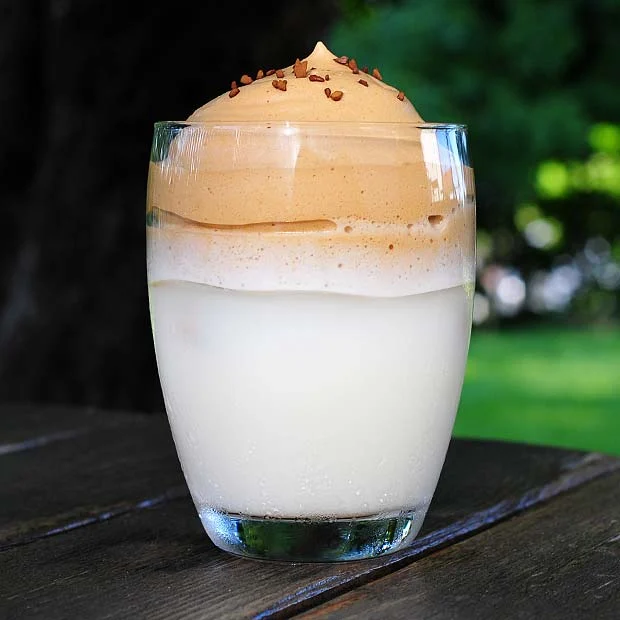
A prominent example of a "foam" that will undoubtedly feature in v.3.1 is the Dalgona coffee foam. This particular inclusion is remarkably timely, reflecting its meteoric rise to global popularity in the spring of 2020. During widespread lockdowns and an increased reliance on social media for connection and entertainment, Dalgona coffee became a viral sensation. Its appeal lay in its simplicity – equal parts instant coffee, sugar, and hot water whipped into a thick, frothy topping for cold milk – and its visually appealing, photogenic quality.
From a textural science perspective, Dalgona coffee foam is a perfect fit for the "non-hydrocolloid" section. It achieves its stable foam structure not through the addition of gelling agents or stabilizers, but through the mechanical incorporation of air into a concentrated solution of coffee and sugar, forming a stable emulsion and foam matrix. Its inclusion highlights how everyday ingredients, combined with specific techniques, can yield impressive and robust textures, making it a compelling case study for the collection. This demonstrates the collection’s responsiveness to contemporary culinary trends and its commitment to analyzing the science behind both ancient traditions and modern fads.
Broader Impact and Future Implications
The ongoing evolution of "Texture – A hydrocolloid recipe collection" holds significant implications for the culinary landscape. Firstly, it continues to democratize access to advanced culinary science. By providing clear, tested recipes and explanations, it empowers chefs and home cooks to confidently experiment with ingredients and techniques that were once the exclusive domain of molecular gastronomy pioneers. This fosters innovation and creativity across all levels of cooking.
Secondly, the emphasis on underrepresented hydrocolloids and traditional non-hydrocolloid gels serves to broaden culinary horizons. It encourages exploration of diverse ingredients and techniques, potentially leading to new product development in areas such as plant-based foods, texture-modified diets, and culturally inspired dishes. For instance, a deeper understanding of konjac could spur more widespread adoption of its unique gelling properties in vegan alternatives.
Finally, as a living document that actively solicits and integrates community feedback, "Texture" exemplifies a collaborative model for knowledge dissemination in the digital age. This continuous refinement ensures its relevance and accuracy, solidifying its role as an invaluable educational resource for culinary students, food scientists, and anyone passionate about the science of food. The v.3.1 update is not merely an incremental revision; it is a testament to the enduring curiosity and collective effort driving the frontiers of culinary exploration. The call for contributions remains open, inviting anyone with insights or recipes to participate in shaping the next iteration of this essential guide.