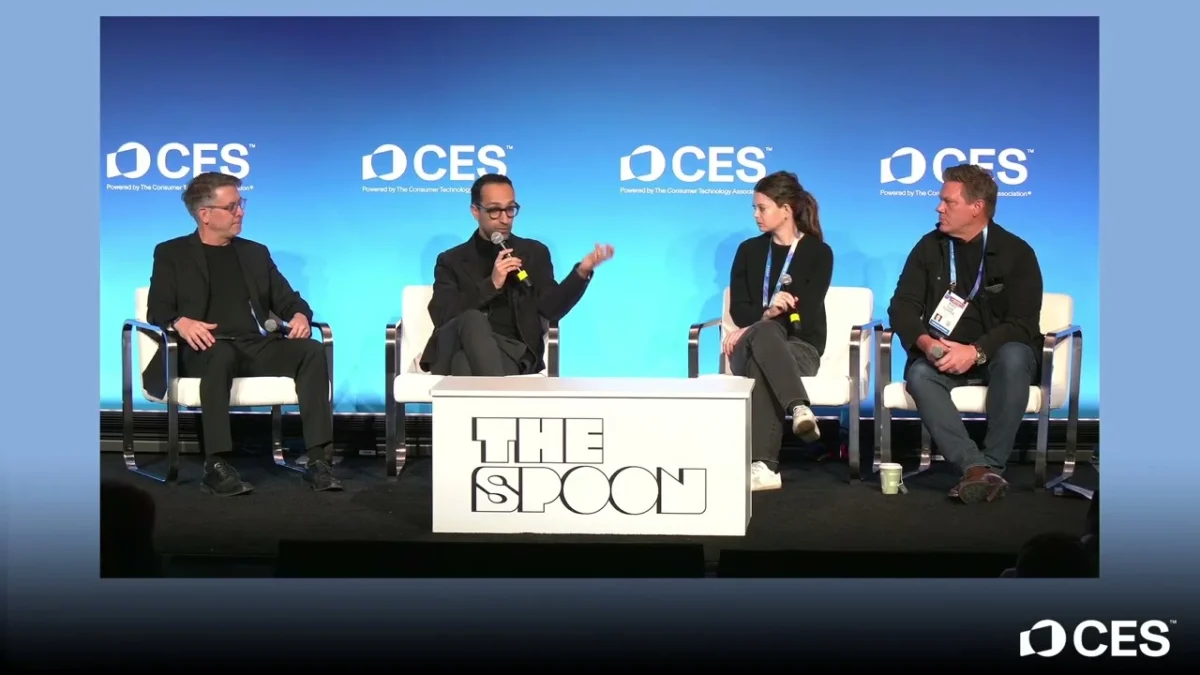

Las Vegas, NV – January 10, 2026 – The Consumer Electronics Show (CES) 2026, a global stage for technological innovation, is poised to be remembered as the year robotics truly captured the imagination of attendees, with humanoids demonstrating a wide array of capabilities from folding laundry to complex assembly tasks. Against this backdrop of advanced automation, a pivotal discussion unfolded on the food tech stage, exploring the profound implications of artificial intelligence and robotics within the culinary world. Titled "Robot vs. Chef: Will AI Augment or Replace the Cook?", the session brought together a distinguished panel: renowned television chef Tyler Florence, Nicole Maffeo, a leading robotics engineer from Gambit Robotics, and Ali Kashani, co-founder of Serve Robotics. The conversation, moderated by the author, delved into the future of food preparation, with the consensus leaning heavily towards augmentation rather than outright replacement of human roles in the kitchen.
The Shifting Landscape of Culinary Automation
The sheer volume of robotic demonstrations at CES 2026 presented a compelling narrative of technological advancement. From intricate manipulation tasks to conversational AI, the show floor buzzed with possibilities. However, the food tech panel sought to ground these futuristic visions in practical application, questioning what robots should be doing, rather than just what they could do.
Chef Tyler Florence, a familiar face in kitchens worldwide, immediately set a critical tone regarding AI’s current capabilities. He emphasized that AI, in its present form, is fundamentally a responsive technology, its output directly tied to the quality and specificity of human input. "As great as AI is right now," Florence stated, "it’s really all about the prompts. It’s not going to do anything if it’s just sitting there by itself." This perspective underscores the notion that AI, while powerful, lacks inherent creativity and initiative, serving instead as a sophisticated tool guided by human intention.
This sentiment was echoed by the robotics experts. Both Maffeo and Kashani concurred that the primary role of AI and robotics in both home and professional kitchens will be to collaborate with, rather than supplant, human chefs and cooks. Their focus is on alleviating the burdens of repetitive, physically demanding, and often undesirable tasks that consume valuable time and energy in a culinary environment.
Addressing the Unseen Labor in Food Service
The discussion highlighted a critical aspect of the food industry: the prevalence of tasks that are not only unfulfilling but also pose significant risks of injury. Ali Kashani of Serve Robotics offered a pragmatic view, pointing out that automation is already stepping in to address these "not great jobs." He cited the example of coring avocados, a task that, while seemingly simple, can lead to hand injuries. "If you have that job, like coring an avocado, that’s not a great job," Kashani explained. "It’s actually dangerous. People cut their fingers." By automating such hazardous and monotonous tasks, robots can demonstrably reduce workplace accidents and, crucially, free up human staff to concentrate on more creative endeavors and direct guest interaction.
This focus on task-specific, functional robots stood in stark contrast to the prevalent humanoid robots showcased throughout CES. When questioned about the appeal of human-like robotic forms in kitchens, the panelists were unanimous in their rejection of such a paradigm, at least for the foreseeable future. "No one wants a man coming out of their closet to come and cook them dinner and then going back in," Kashani quipped, illustrating the awkward and impractical nature of humanoids for domestic or professional culinary service.
Nicole Maffeo further elaborated on this point, advocating for a more distributed and specialized approach to kitchen robotics. She believes that dedicated, single-purpose robots are not only more cost-effective but also significantly more practical than generalized humanoids for the next decade. "We don’t need someone coming out and doing all these things for us," Maffeo stated. "Just help us solve these simple pain points that waste so much of our time." This perspective suggests a future where robots are integrated discreetly into kitchen workflows, performing specific functions without requiring a human-like interface or presence.
The Evolving Value of Human Craftsmanship
The rapid advancements in robotics and AI across the food system raise questions about the future role of culinary professionals who have built their careers on human touch and traditional skills, such as Tyler Florence. Florence articulated a fascinating counter-trend: as automation becomes more pervasive, the intrinsic value of human-made food is likely to increase. He posited that the scarcity of human judgment, taste, and personal presence will elevate these qualities to a premium. "Human-made will become the new luxury item," Florence predicted. "Things that feel like this is made by a human being, thought of by a human being, produced by a human being."

This shift suggests that in high-end dining establishments, automation will likely remain largely behind the scenes, ensuring operational efficiency. Simultaneously, the human element—the chef’s artistry, the server’s attentiveness, the overall dining experience—will become an even more sought-after and premium aspect that consumers are willing to pay for. This is a logical extension of existing trends where personalized service and artisanal products command higher prices.
The Smart Home Kitchen of Tomorrow
While the focus on professional kitchens is significant, the panel also addressed the role of automation and AI in the home, where the vast majority of meals are prepared and consumed. Ali Kashani anticipates a future where everyday kitchen appliances will be imbued with intelligence, leveraging technologies like computer vision, the Internet of Things (IoT), and advanced automation. These integrated systems will assist households with a range of tasks, from optimizing meal planning and reducing food waste to simplifying food preparation processes. "Every step of that process, we can be assisting people with the help of AI and robots," Kashani remarked.
Beyond general meal preparation, Kashani and Maffeo highlighted the potential of these technologies to significantly enhance aging-in-place scenarios. As populations age, the integration of smart kitchen technology, including AI-powered pantry and refrigerator systems, could play a crucial role in enabling individuals to maintain independence by providing robust meal planning support and reminders. This aligns with broader societal trends towards leveraging technology to support independent living for seniors, reducing the burden on caregivers and healthcare systems.
Societal and Cultural Implications
As the panel discussion drew to a close, the conversation broadened to encompass the long-term societal and cultural implications of robots and AI in the food industry. Despite the potential for disruption, the overall sentiment from the panelists was one of cautious optimism. Kashani drew parallels with historical technological advancements, arguing that increased productivity historically leads to the creation of new job categories rather than widespread unemployment. "Every such prediction in the past has been wrong," he stated, referencing the consistent growth of employment alongside technological evolution.
While acknowledging the potential for job displacement in certain sectors, the author raised the counterpoint that specific roles will undoubtedly be affected, a topic for further in-depth discussion, potentially involving concepts like universal basic income.
Tyler Florence introduced a significant cultural dimension, emphasizing the deep connection between food, memory, and identity. He argued that culinary traditions are passed down through generations, shaping personal and communal identities. "We’re all defined by what our grandparents cooked," Florence reflected. "And that really defines us as people." This raises a crucial question: as food preparation becomes increasingly automated, how will we preserve these vital cultural touchstones and the human connection they represent? The implication is that while efficiency and convenience may increase, the potential loss of this intergenerational food heritage warrants careful consideration.
The discussion at CES 2026 offered a nuanced perspective on the integration of robots and AI into the culinary landscape. It moved beyond the sensationalism of a robotic takeover to explore practical applications, the evolving value of human skills, and the potential for technology to enhance, rather than replace, the human experience in food. The session concluded by emphasizing that while the show floor showcased the potential of robotics, the real conversation lies in how these technologies will be thoughtfully and practically implemented to serve human needs and aspirations in kitchens worldwide.
The full session, "CES 2026: Robot vs Chef: Will AI Augment or Replace the Cook?", is available for viewing, offering deeper insights into this critical dialogue.