
While our ancestors relied on their innate senses to gauge their physical state and overall well-being, the contemporary landscape of health management is increasingly dominated by technological advancements. Today, a multitude of sleek, sophisticated devices empower individuals to meticulously track metrics such as heart rate, step count, exercise intensity, and sleep quality—often consolidating these diverse data points into a single, user-friendly interface. This proliferation of wearable technology marks a significant paradigm shift, offering a compelling bridge between what individuals subjectively feel and what can be objectively measured.
This convergence of internal perception and external data represents a truly remarkable evolution in personal health monitoring. While our subjective feelings and self-assessments are invaluable, they are not always the most reliable indicators of physiological reality. Human cognition is inherently prone to biases and inaccuracies, making us less than perfectly skilled at quantifying our experiences and behaviors with cold, objective precision. Consider the common scenario of an individual who confidently believes they are adhering to a strict caloric intake, only to discover, through careful tracking, a significant daily surplus—perhaps a hidden 500 calories lurking in a seemingly innocuous condiment. Such anecdotes underscore the pervasive challenge of accurate self-assessment.
However, the spectrum of human self-awareness is broad. Elite athletes, for instance, sometimes demonstrate an extraordinary capacity for internal calibration. Canadian sprinter Ben Johnson was famously reported to be able to predict his 100-meter sprint time within a tenth of a second of the official stopwatch readout. While such outlier performance highlights the latent potential for human self-assessment, it also begs a broader question for the general population: How adept are individuals at truly assessing themselves, and how can technology, particularly fitness trackers, be judiciously employed to enhance this accuracy and inform better health decisions? This article delves into these critical questions, exploring the reliability of modern tracking devices, identifying scenarios where they prove most beneficial, and outlining strategies to integrate objective data with heightened self-awareness for optimal health outcomes.
The Evolution of Self-Perception: From Instinct to Algorithm
For millennia, human survival and well-being hinged on a finely tuned connection to internal and external cues. Hunger, fatigue, pain, and environmental shifts were interpreted through a complex interplay of instinct and learned experience. Early forms of self-assessment involved observing bodily changes, responding to physical sensations, and adapting behaviors based on immediate feedback. The advent of scientific inquiry gradually introduced more objective methods, from pulse-taking to basic measurements, but these were largely confined to medical professionals. The true democratization of health data began with the miniaturization of technology and the rise of personal computing, culminating in today’s wearable revolution.
The market for fitness trackers and smart wearables has exploded, driven by increasing health consciousness and technological innovation. From simple pedometers of the late 20th century to multi-sensor smartwatches and ring trackers, these devices have become ubiquitous, promising unprecedented insights into our bodies. This background context is vital to understanding the current discussion, as it highlights a societal shift towards external validation of internal states, moving from a reliance on ancestral intuition to a dependence on digital metrics.
Demystifying Data: The Accuracy of Tracking Devices
The efficacy of leveraging technology for self-assessment fundamentally rests on the accuracy of the data it provides. It is crucial to acknowledge that not all data is created equal; the reliability of fitness trackers varies significantly, influenced by factors such as brand reputation, hardware quality, and the sophistication of their underlying software algorithms and datasets.
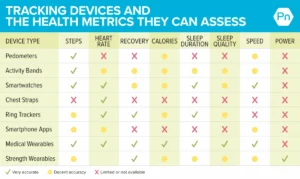
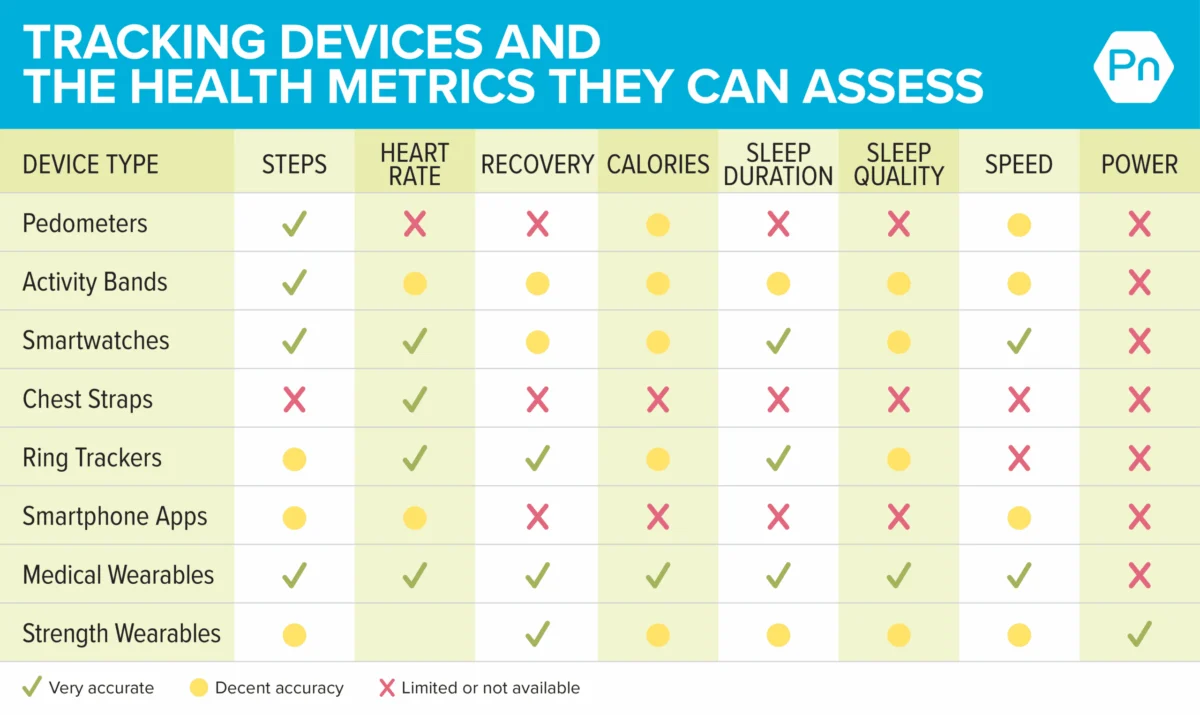
Beyond device-specific variations, the nature of the metric itself plays a significant role in accuracy. Core measurements like heart rate and step count are generally considered highly reliable across a range of devices. Optical heart rate sensors, utilizing photoplethysmography (PPG), and accelerometers for step counting have matured considerably, offering data that often correlates well with medical-grade instruments, especially during steady-state activities. For instance, numerous studies have indicated that many commercially available smartwatches achieve heart rate accuracy within a few beats per minute of an electrocardiogram (ECG) during rest and moderate exercise. Step counts, similarly, have been shown to be within a 5-10% margin of error compared to direct observation.
However, other types of outputs, such as calories burned, sleep stage analysis, or movement velocity, often come with substantial margins for error. Calorie expenditure estimations, for example, typically rely on generalized algorithms that struggle to account for individual metabolic variations, body composition, and specific exercise biomechanics, leading to reported inaccuracies of 20% or more in some cases. Sleep stage tracking, while improving, still faces challenges in reliably differentiating between deep, light, and REM sleep when compared to the gold standard of polysomnography, often yielding concordance rates in the 60-80% range for specific stages. The complexity of these physiological processes means that even advanced devices are making educated guesses rather than precise measurements.
(Figure 1: Infographic showing the reliability of various tracking devices for different metrics – Image placeholder for the chart provided in the original content).
This disparity in accuracy underscores the need for users to understand the limitations of their chosen devices. While a detailed analysis of individual device accuracy is beyond the scope of this article (and covered extensively elsewhere, such as in "Are Fitness Trackers Worth It?"), the general principle holds: simple, direct physiological measurements tend to be more reliable than complex, inferred ones.
The Paradox of Information: Navigating Data Overload
The advent of widespread tracking technology presents a curious paradox: while more data often equates to better understanding, an excessive influx of information can actually impede effective decision-making. As computer scientist Samantha Kleinberg, who specializes in decision-making, notes, "What’s really remarkable is that even a tiny amount of surplus information has a big negative effect on our decision-making." This observation highlights the existence of an optimal "sweet spot" for information—a point where sufficient data empowers informed choices without overwhelming cognitive processes.
(Figure 2: Graph showing "The Effect of Information on Decision Making" with an inverted U-shaped curve – Image placeholder for the graph provided in the original content).

This concept can be visualized as an inverted U-shaped curve, where decision-making ability initially improves with more relevant information, peaks at an optimal level, and then declines as information becomes excessive or irrelevant. In today’s data-rich environment, it is surprisingly easy to cross this threshold into information overload, leading to "analysis paralysis." Consider the modern consumer’s struggle to choose a restaurant after sifting through hundreds of reviews, or a health enthusiast overwhelmed by the myriad data points offered by their smartwatch. The desire for "more science, more customization, and more complexity" in the health and fitness industry, while well-intentioned, often contributes to this problem.
When confronted with a deluge of data that blurs together without a clear path forward, a simple guiding question emerges: "Does tracking genuinely increase my well-being and performance?" A clear "yes" or "no" provides immediate direction. However, if the answer is ambiguous, examining specific indicators can help discern whether tracking is a beneficial tool or a counterproductive distraction.
When Tracking Empowers: Three Indicators of Beneficial Use
The judicious application of fitness tracking technology can be profoundly empowering, offering insights that refine self-assessment and drive positive behavioral change.
1. Validation and Stress Reduction: Building Confidence Through Data
One of the most powerful benefits of tracking is its ability to validate subjective feelings and reinforce beneficial health strategies, thereby reducing stress and anxiety. Take the example of Zak, a dedicated individual whose coach advocated for Zone 2 cardio—a low-intensity exercise protocol. Despite the logical reasoning, Zak, accustomed to pushing himself, found it challenging to trust that something feeling "easy" could be effective. His internal skepticism created a psychological barrier.
However, consistent use of a heart rate monitor provided undeniable objective evidence. Over several weeks, Zak observed a measurable decrease in his resting heart rate and a quicker recovery time from his more intense runs. This concrete data served as powerful validation, aligning his subjective experience with objective physiological improvements. As his trust in the process grew, so did his relaxation, paradoxically leading to further improvements in his resting heart rate. In this scenario, the tracking device acted as a critical calibrator, helping Zak develop a more accurate and realistic perception of his body’s responses and capabilities.
For coaches working with high-performing clients who may underestimate their own progress, data tracking can be instrumental in building confidence and alleviating "not good enough" anxieties. Expert assurance, when bolstered by reliable data, creates a robust foundation for sustained progress.
Counterpoint: When Data Creates Distress
While validation is beneficial, data can also be a source of undue stress, particularly when it highlights aspects beyond an individual’s immediate control. Consider a new parent grappling with the demands of a newborn, who receives consistently poor sleep quality scores from their tracker. In this context, where priorities are necessarily shifted and sleep disruption is largely unavoidable, such data can exacerbate stress and feelings of inadequacy without offering actionable solutions. Tracking has its time and place; when scores are beyond one’s control or priorities lie elsewhere, it can become counterproductive.
The recent trend of non-diabetic individuals using Continuous Glucose Monitors (CGMs) offers another case in point. While CGMs can provide valuable insights into glycemic responses to food, helping "validate" certain dietary choices for some, for others, it can lead to obsessive tracking, food anxiety, and unnecessary dietary restrictions, transforming a tool for insight into a source of psychological burden.
2. Enhanced Motivation and Behavioral Change: The Power of Clear Feedback
For any behavior to manifest, three key elements are typically required: motivation, ability, and a prompt. Fitness trackers excel by providing potent prompts and clear feedback loops, particularly when an individual already possesses sufficient motivation and ability. This aligns with B.J. Fogg’s Behavior Model, which posits that behavior happens when motivation, ability, and a prompt converge at the same moment.
Take Margaret, a client who habitually enjoyed a glass of wine most evenings, believing it aided her sleep. Upon wearing a sleep tracker, she received objective feedback: her sleep quality scores were consistently poorer on nights she consumed alcohol. This clear, undeniable prompt—her sleep score—directly informed her, leading her to adjust her evening routine. The data highlighted an important correlation, making the "right" choice clearer. As the saying goes, "Once you see it, you can’t un-see it." This immediate, personalized feedback loop is a powerful catalyst for behavioral modification. The integration of behavioral science principles into the design of modern health apps often leverages such feedback to nudge users towards healthier habits.
Counterpoint: The Dark Side of Gamification and Burnout
The pursuit of objective data can, paradoxically, undermine intrinsic motivation and lead to burnout. Jan, an avid recreational cyclist, initially found motivation in demolishing local trail records, meticulously tracking his speed and performance. However, his singular focus on numbers gradually overshadowed the inherent joy of cycling. The relentless drive for faster times left him chronically under-recovered, eventually leading to exhaustion and a diminished capacity for enjoyment. When workouts become solely about metrics rather than technique, experience, or pleasure, tracking is likely no longer serving a helpful purpose. This highlights the delicate balance between using external motivators and preserving the intrinsic satisfaction derived from an activity.
3. Deepened Self-Understanding and Optimized Performance
A common misconception is that simply working "harder" inevitably leads to better results. This belief often traps individuals, particularly those prone to "grinding," into counterproductive cycles where they accrue fatigue without proportional improvements in performance or recovery. Conversely, many individuals chronically underestimate their effort and capacity, missing opportunities to push themselves appropriately. In both scenarios, objective data can provide crucial insights, helping individuals more accurately understand their potential and optimize their training.

Consider high-intensity interval training (HIIT), which typically involves fixed periods of intense effort followed by fixed periods of rest. These rest periods are often generalized estimates. However, heart rate data can personalize this, offering a real-time, individualized picture of actual recovery needs. A tracker might reveal that an individual recovers faster or slower than the prescribed interval, allowing for more precise adjustments. Sometimes, the mind might say "yes, I’m ready," but the heart rate data objectively indicates "not quite yet."
Effective coaching extends beyond merely pushing clients for "more"; it involves guiding them away from "junk volume"—effort that accumulates fatigue without improving performance, and may even worsen it. By analyzing real-time metrics of output, fatigue, and recovery, coaches and individuals can gain a deeper understanding of unique physiological responses, ensuring efficient training and recovery.
Counterpoint: Over-reliance and Disconnecting from Inner Wisdom
An excessive reliance on external data carries the risk of disconnecting from one’s own internal sensory landscape—be it hunger and fullness cues, energy levels, or subtle signs of fatigue. A memorable example of this potential disconnect is "The Great My Fitness Pal Blackout" in January 2019. The popular calorie-tracking app, used by millions, experienced a day-long outage. For those who relied heavily on the app to dictate their daily macro and caloric intake, its absence triggered a mild panic. This incident highlighted how an over-reliance on external digital tools can diminish one’s ability to tune into internal physiological signals, leaving individuals feeling adrift without their digital crutch. This phenomenon, often linked to "nomophobia" (the fear of being without a mobile phone), underscores the need to cultivate a healthier, more balanced relationship with technology, one that prioritizes internal awareness.
Cultivating Intuition in the Digital Age: Three Strategies for Mindful Tracking
While objective data provides essential feedback, the full benefits of any health practice—encompassing both enjoyment and results—are only realized when a strong connection to one’s "felt experience" is maintained. This is particularly crucial during plateaus, when objective progress (e.g., scale weight, lifting capacity, race times) diminishes. During such periods, motivation purely based on extrinsic goals tends to wane. However, individuals who cultivate a focus on feelings of mindfulness, mastery, meaning, and success in their practice develop greater resilience and sustained enjoyment, whether running, lifting, winding down for sleep, or savoring a meal.
The good news is that fitness trackers can actually be used to calibrate and improve one’s ability to accurately sense internal bodily states.
1. Check In with Yourself Before Consulting the Data.
Imagine asking someone about their vacation and waiting for them to scroll through photos before they can answer. This analogy highlights the potential pitfall of relying solely on external data for self-perception. Whether the metric is distance biked, calories consumed, or heart rate, the most mindful approach to using tracker data is to pause, breathe, and first tune into your own internal predictions and perceptions. After this internal check-in, you can then calibrate your self-assessment by comparing it with the detailed (though not always perfectly accurate) outputs of your fitness tracker. Over time, this consistent practice can significantly narrow the gap between your subjective feeling and the objective measurement, enhancing your interoceptive awareness. It’s also worth noting that regularly updating your device’s app ensures that algorithms and datasets are current, leading to better predictive accuracy.
2. Develop Mental Shortcuts That Can Occasionally Stand in for Objective Measures.
Coaches frequently ask clients to estimate their strength boundaries, such as how many more repetitions they could perform at a given weight before failure. Novices often struggle with this, misjudging by five or more reps. However, consistent use of objective trackers can help calibrate this understanding, dramatically reducing the margin of error. While sophisticated tools like accelerometers or blood lactate measurements exist, simpler prompts can be equally effective. For example, coaches might ask, "For a million dollars a rep, how many more reps do you think you could do?" While purely subjective, this question leverages the Rate of Perceived Exertion (RPE), a scientifically validated sensory-driven approach, as a shortcut to understand maximal effort. Not everyone is inherently skilled at estimating RPE, but most individuals can significantly improve this skill by mapping their felt experience against occasional calibration with objective data. The Borg RPE scale, for instance, provides a structured framework for this subjective-objective integration.
3. Continuously Enhance Your Ability to Dial Into Your Senses.
While trackers rely on components like accelerometers, GPS, and gyroscopes to sense data about speed and distance, the human body possesses an infinitely richer and more complex network of sensory information. This includes:
- Interoception: The sense of the internal state of the body (e.g., hunger, thirst, heart rate, respiration).
- Proprioception: The sense of the relative position of body parts and strength of effort being employed in movement.
- Kinesthesia: The sense of movement.
- Touch (Tactile): Pressure, temperature, texture.
- Sight (Visual): Environmental cues, bodily changes in a mirror.
- Sound (Auditory): Breathing patterns, heart sounds.
- Smell (Olfactory): Body odor changes indicating exertion.
- Taste (Gustatory): How food feels and tastes.
This partial list merely scratches the surface of the vast sensory information constantly fed into the powerful pattern-recognition machinery of your nervous system. Technology, despite its advances, cannot replicate this holistic, integrated sensory experience. To continue honing your ability to utilize this rich internal network, regularly check in with what and how you are feeling. By learning to calibrate your own senses with objective data, you can harness the cutting-edge advances in wearable technology while steadfastly keeping your unique, lived experience at the forefront of your health journey.
Conclusion: A Synergistic Future for Health and Well-being
The journey from ancestral intuition to digital metrics represents a profound evolution in human self-assessment. Modern fitness trackers offer unprecedented opportunities to bridge the gap between subjective feeling and objective reality, providing valuable data that can reduce stress, enhance motivation, and deepen self-understanding. However, this technological empowerment comes with caveats: the need to discern accurate data from unreliable metrics, to avoid information overload, and crucially, to prevent an over-reliance that disconnects us from our own innate bodily wisdom.
The most effective approach lies in a synergistic integration of technology and self-awareness. By actively engaging in practices that cultivate interoception and proprioception, such as mindful check-ins before consulting data, developing intuitive mental shortcuts like RPE, and continuously honing our sensory perception, individuals can leverage the power of wearable tech not as a replacement for, but as a sophisticated complement to, their inherent capacity for self-assessment. This balanced perspective ensures that the pursuit of objective health metrics remains rooted in a rich, felt experience of well-being, paving the way for a more resilient, enjoyable, and truly personalized health journey.
References
- [Placeholder for original reference 1]
- [Placeholder for original reference 2]
- [Placeholder for original reference 3]
- [Placeholder for original reference 4]
- [Placeholder for original reference 5]
- [Placeholder for original reference 6]
- [Placeholder for original reference 7]
- [Placeholder for original reference 8]
- [Placeholder for original reference 9]
If you’re a coach, or you want to be…
You can help people build sustainable nutrition and lifestyle habits that will significantly improve their physical and mental health—while you make a great living doing what you love. We’ll show you how.
If you’d like to learn more, consider the PN Level 1 Nutrition Coaching Certification. (You can enroll now at a big discount.)