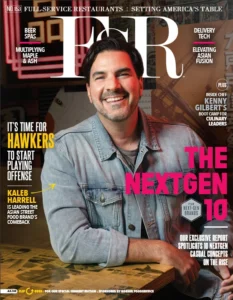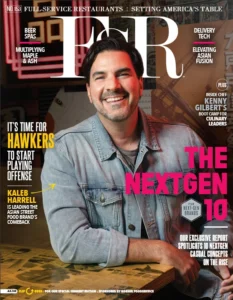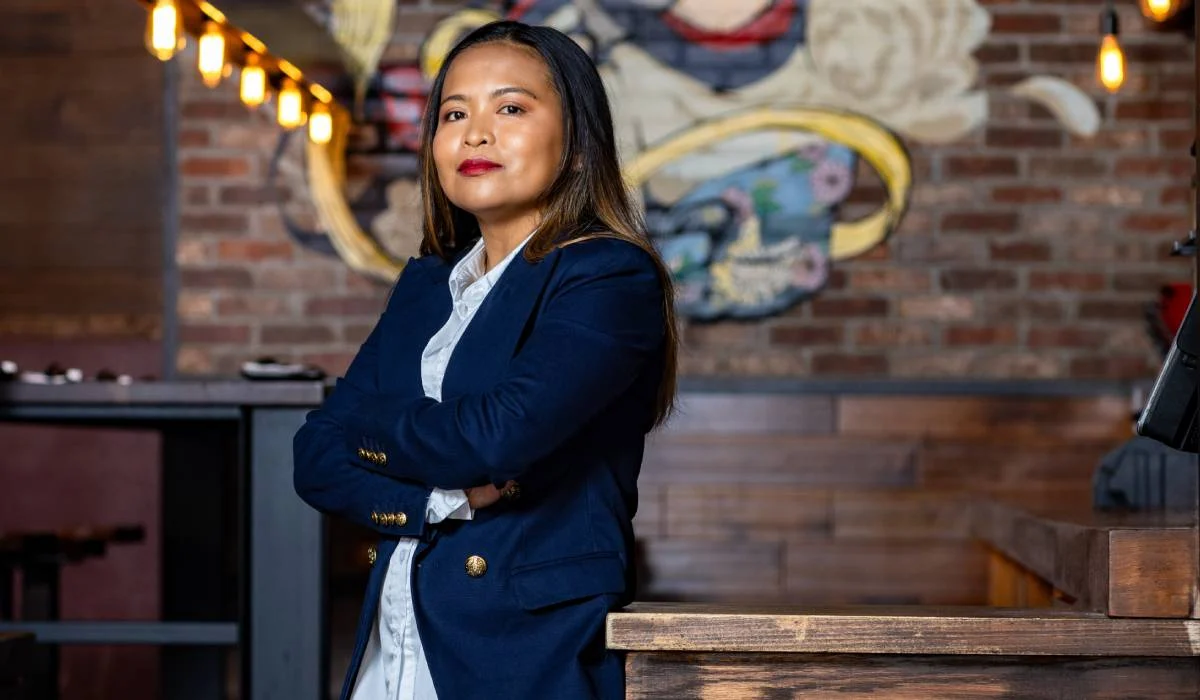

The landscape of the American restaurant industry is undergoing a profound transformation, moving away from isolated brand management toward the sophisticated integration of multi-concept portfolios. At the forefront of this shift is Cai Palmiter, a marketing executive whose career trajectory reflects the broader trends of scale, operational efficiency, and localized authenticity. Since her recognition as a "NextGen Casual" breakout leader and her appearance on the cover of FSR magazine in January 2024, Palmiter has transitioned from a single-brand focus at JINYA Ramen Bar to a more complex role as the Head of Marketing for JW Concepts. This multi-unit franchise operator manages a high-growth portfolio that includes JINYA Ramen Bar, Paris Baguette, Kung Fu Tea, Koyo Hand Roll Bar, Angry Chickz, Gen Korean BBQ, and The Baked Bear.
Palmiter’s evolution from brand building to what she terms "ecosystem building" provides a blueprint for how modern hospitality groups can balance the need for corporate efficiency with the guest’s demand for an authentic, individualized dining experience. Her strategy emphasizes a departure from the "noise" of traditional industry metrics, focusing instead on intentional leadership, operational groundedness, and the rejection of "Fear Of Missing Out" (FOMO) as a driver of professional growth.
The Shift from Brand Building to Ecosystem Management
When Palmiter was featured in early 2024, her primary objective was the "meteoric rise" of JINYA Ramen Bar. At that time, the challenge was singular: how to tell one brand’s story with enough resonance to fuel national expansion. In her current capacity at JW Concepts, the complexity has multiplied. The task is no longer just about one narrative; it is about managing a diverse "ecosystem" where concepts ranging from high-end Japanese hand rolls to casual dessert shops must coexist and thrive under a unified operational umbrella.
In a portfolio that includes established international names like Paris Baguette and Kung Fu Tea alongside emerging concepts like Angry Chickz, the marketing strategy must be bifurcated. Palmiter oversees rebrands and optimizes digital platforms to ensure each brand maintains its unique equity. However, the "ecosystem" approach allows for back-end efficiencies that single-unit operators cannot match. By streamlining vendor partnerships and sharing strategic data across brands, JW Concepts can scale more rapidly while ensuring that each unit remains financially viable.
This strategy is supported by industry data suggesting that multi-concept operators (MCOs) are better positioned to weather economic volatility. According to recent hospitality market analyses, MCOs can reduce overhead costs by 15–20% through centralized procurement and shared administrative services. For Palmiter, the goal is to ensure these efficiencies never dilute the guest experience. "The guest should always feel a clear, authentic difference between brands," Palmiter notes, emphasizing that while the back-end is unified, the front-facing identity must remain distinct to maintain consumer trust.
Chronology of a Career Built on Operational Roots
Palmiter’s rise in the marketing world is notably rooted in her history as a General Manager (GM). This operational background serves as a critical filter for every marketing decision she makes today. The chronology of her career—from the restaurant floor to the C-suite—has informed a "execution-first" mindset that is often missing in purely creative marketing roles.
- The Operational Foundation: Years spent as a GM provided Palmiter with an intimate understanding of the friction between corporate marketing campaigns and restaurant-level execution. This period established her belief that a campaign is only successful if the "boots on the ground" can deliver it without compromising service quality.
- The JINYA Era (2022–2023): As the marketing lead for JINYA, Palmiter focused on aggressive brand building, helping the concept achieve "Breakout Brand of the Year" status. This era was defined by rapid growth and the establishment of a high-energy brand identity.
- The JW Concepts Transition (2024–Present): Moving to JW Concepts, Palmiter embraced a multi-brand strategy. This shift also coincided with a personal move toward remote leadership, allowing for a "slower, more intentional pace" that prioritizes deep strategic thinking over reactive management.
Strategic Innovation: The Koyo Hand Roll Bar Case Study
One of the most significant developments during Palmiter’s tenure at JW Concepts has been the launch of Koyo Hand Roll Bar. Unlike the other brands in the portfolio, which are franchise acquisitions, Koyo was developed internally by JW Concepts founder Jim Wang. The launch of this brand serves as a masterclass in market testing and consumer psychology.
Rather than debuting Koyo in a high-traffic, "trendy" urban foodie district, the team chose a suburban location. This counterintuitive strategy was based on the premise that if a high-quality Japanese concept could thrive in a family-oriented suburb—where dining out is often a deliberate, planned event—it would inevitably dominate in a high-traffic urban environment. This "suburban-first" model relies on understanding human behavior and community loyalty rather than purely relying on algorithmic data or urban foot traffic trends.
The success of Koyo highlights a broader trend in the hospitality industry: the "democratization" of premium dining. By making high-quality hand rolls accessible in residential areas, JW Concepts is tapping into a market segment that values quality but seeks convenience and local accessibility.
Authenticity Over Impressions: A New Marketing ROI
In an era dominated by digital metrics, Palmiter has become a vocal advocate for prioritizing "real traffic" over "impressions." She argues that the industry’s obsession with social media reach often results in "noise" that does not translate to the bottom line.
At the unit level, Palmiter’s strategy revolves around local store marketing and micro-influencer activations. Data from marketing research firms suggests that micro-influencers (those with 10,000 to 50,000 followers) often see engagement rates up to 60% higher than "macro-influencers" or celebrities. Palmiter leverages this by partnering with individuals who have a genuine affinity for the brand.
"Impressions are great, but if they don’t drive someone to walk in, it’s just noise," Palmiter asserts. This focus on "conversion to foot traffic" requires a more localized, granular approach to marketing, where limited-time offers (LTOs) and experiential events are tailored to the specific demographics of each neighborhood.
Human Capital and the High Cost of Turnover
Perhaps the most critical aspect of Palmiter’s leadership philosophy is her focus on "emerging leaders." The restaurant industry is currently facing a labor crisis, with turnover rates for front-line employees often exceeding 100% annually. The cost of this turnover is staggering; industry estimates suggest that replacing a single hourly employee costs a business roughly $5,864, while replacing a mid-level manager can cost upwards of $15,000.
Palmiter advocates for a radical shift in how the industry treats its junior staff. She suggests that instead of only sending C-suite executives to high-level industry conferences, brands should invest in sending line cooks, marketing assistants, and junior analysts. By providing these "rising stars" with a seat at the table, the industry can create a clearer path for advancement and foster long-term loyalty.
At JW Concepts, this philosophy is put into practice through a policy of promoting from within. Founder Jim Wang has retained key staff for over two decades by offering them actual ownership stakes in the business. This model—turning a dishwasher into an operating partner—is, in Palmiter’s view, the only sustainable way to retain talent in a competitive market.
The "Anti-FOMO" Leadership Model: A Fact-Based Analysis
The most personal and perhaps most impactful lesson Palmiter has shared in her post-cover-star era is the necessity of letting go of industry FOMO. In a high-stakes, 24/7 industry like hospitality, there is a pervasive pressure to be constantly "on" and to measure one’s worth by titles and visibility.
Palmiter’s shift to a remote, more intentional leadership style serves as a case study in executive sustainability. By "decluttering the noise," she has found that she is able to learn more deeply about each brand in the JW Concepts portfolio. This "slow leadership" allows for proactive strategy rather than the reactive "firefighting" that often characterizes open-floor corporate offices.
From a psychological perspective, the rejection of FOMO leads to higher levels of "cognitive clarity," a state where leaders can make more objective, data-driven decisions. For Palmiter, this has meant being fully present for her family while simultaneously becoming a "sharper version" of herself professionally.
Broader Impact and Industry Implications
Cai Palmiter’s journey from a single-brand marketer to a multi-unit strategist reflects the maturing of the fast-casual and casual dining sectors. The implications of her approach are severalfold for the broader industry:
- The Rise of the Professional Operator: As the cost of real estate and labor continues to rise, the industry will see more consolidation under sophisticated operators like JW Concepts who can leverage "ecosystem" efficiencies.
- The Valuation of Authenticity: As consumers become more adept at filtering out manufactured marketing, brands that prioritize genuine local connections and micro-influencer partnerships will likely see higher ROI on their marketing spend.
- A Shift in Corporate Culture: Palmiter’s success with remote leadership and her focus on junior-level empowerment suggests that the traditional, high-burnout model of hospitality management is being challenged by a more sustainable, human-centric approach.
In conclusion, the two years following Palmiter’s FSR cover feature have been defined by a transition from the "what" of brand growth to the "how" of sustainable leadership. By focusing on operational integrity, human capital, and the strategic rejection of industry noise, Palmiter is helping to define a new era of intentionality in the hospitality world. Her experience suggests that the best way to lead an ecosystem is not by being the loudest voice in the room, but by being the most grounded one.