
In the historic heart of New Orleans, where centuries of trade, culture, and revelry converge, the city’s legendary bars and restaurants face a unique operational paradox. These venerated establishments are simultaneously tasked with preserving sacred culinary and cocktail traditions that date back to the antebellum era and evolving rapidly enough to satisfy the sophisticated, highly discerning palates of modern consumers. Rather than viewing this tension as an obstacle, premier operators across the Crescent City are leveraging their rich heritage as a springboard for creative, forward-thinking hospitality.
This dynamic interplay between antiquity and innovation is defining a new era for the city’s storied hospitality sector. From the opulent, Art Deco confines of The Roosevelt New Orleans to the venerable French Quarter dining rooms of Tujague’s, industry leaders are proving that longevity in the modern landscape requires a delicate balance of reverence and reinvention.
The Living Museum: Preserving the Sazerac Legacy
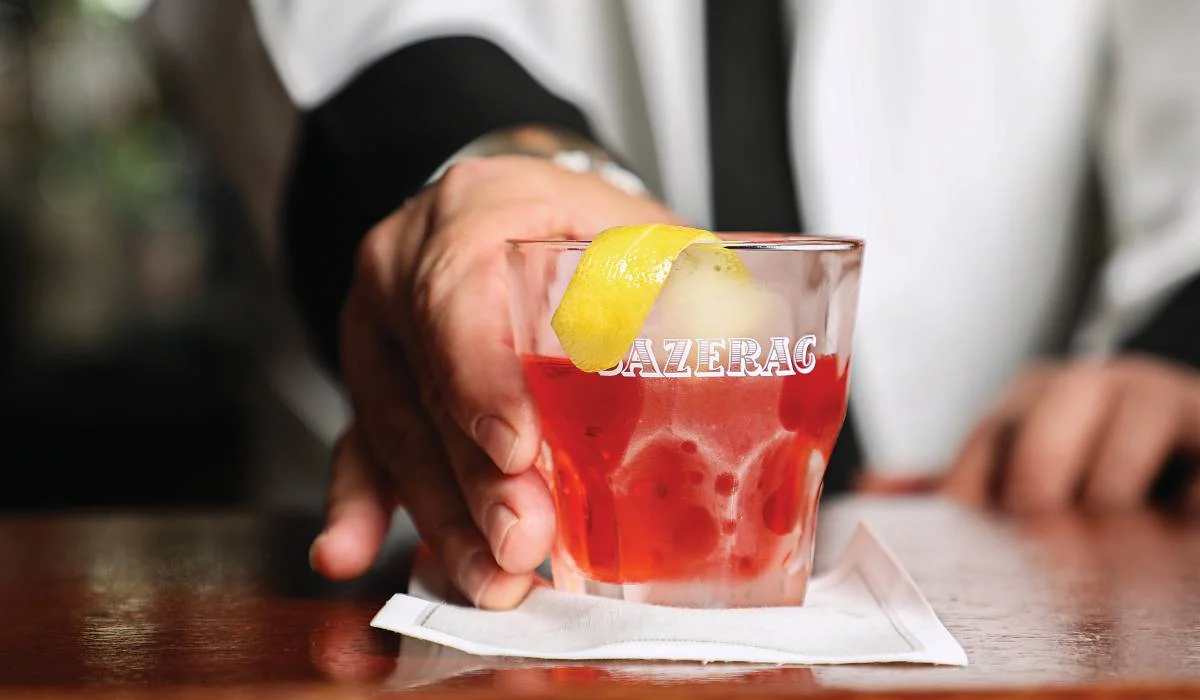
At The Sazerac Bar inside The Roosevelt New Orleans, history is not preserved behind museum glass or relegated to dusty archives. Instead, it pulses through the room’s African walnut bar, gleams off the polished silver service pieces, and is shaken, stirred, and poured nightly into heavy-bottomed glasses. The eponymous drink—a meticulous combination of rye whiskey, sugar, Peychaud’s bitters, an absinthe rinse, and a final expression of lemon oil—remains an enduring anchor of the city’s drinking culture.
The roots of this iconic libation stretch back to the 1850s at the original Sazerac Coffee House. It was there that proprietor Aaron Bird pioneered the practice of importing Sazerac-de-Forge et Fils cognac and marrying it with Antoine A. Peychaud’s proprietary aromatic bitters. Though the original coffee house eventually shuttered, the lineage was reborn in 1938 when The Sazerac Bar opened its doors at The Roosevelt, permanently cementing the cocktail’s status in local lore.
For Matt Schulte, assistant food and beverage director at The Roosevelt New Orleans, stepping up to the bar carries immense cultural weight, but it also demands daily pragmatism.
"For many guests, having a Sazerac at the Sazerac Bar is almost like a pilgrimage," Schulte observes. "What I love is that after all these years, the drink itself remains remarkably simple. There aren’t many places for a bartender to hide. Technique matters."
Schulte is quick to clarify that while the venue celebrates its storied past, management actively resists stagnation. "We’re not a museum," he asserts, outlining a philosophy designed to honor institutional history without becoming intellectually or operationally trapped by it.
Tujague’s: 170 Years of Culinary and Cocktail Evolution
This same tightrope walk between heritage and innovation defines Tujague’s, a French Quarter institution founded in 1856. As New Orleans’ second-oldest restaurant and the third-oldest continuously operating restaurant in the United States, Tujague’s carries a legacy that commands immense respect. Mark Latter, founder and CEO of Latter Hospitality, took the reins of the landmark in 2013, continuing a family stewardship that began when his father and uncle purchased the property in 1982.
Tujague’s holds a revered place in cocktail history as the birthplace of the Grasshopper. Introduced in 1918 by Philip Guichet—then a member of the owning family—the mint- and chocolate-forward after-dinner drink was created following a cocktail competition in New York City. Composed of green crème de menthe, white crème de cacao, and heavy cream, the rich concoction defies modern mixology trends favoring low-calorie or spirit-forward minimalism, yet it stubbornly remains a top seller.
"It’s still our leading-selling cocktail, which is surprising because it has a lot of cream and it’s a little heavier," Latter notes.
To celebrate the restaurant’s 170th milestone, Latter Hospitality introduced targeted initiatives to engage both nostalgic purists and curious newcomers. The restaurant offered promotional mini Grasshoppers priced at $1.70, lowering the barrier to entry for first-time visitors looking to sample a piece of history. Concurrently, the culinary team experimented with Grasshopper-inspired desserts, translating the beverage profile into pies, panna cottas, and cheesecakes.
Yet, Latter emphasizes that Tujague’s is fundamentally a dining establishment rather than a historical preservation project. The broader beverage program relies on nuanced riffs on familiar classics, designed explicitly to complement the dinner menu. For instance, the restaurant’s Iris 75 reinvents the classic French 75 by incorporating purple Empress Gin—a deliberate tribute to the Krewe of Iris room, which honors the city’s oldest all-female Mardi Gras parade.
Knowing When to Hold Firm and When to Pivot
Navigating the expectations of contemporary patrons requires operators to draw a sharp line between drinks that demand strict preservation and those ripe for creative reinvention. At The Sazerac Bar, Schulte applies a strict qualitative filter to the cocktail menu. Classics that have achieved perfection, such as the traditional Sazerac and the labor-intensive Ramos Gin Fizz, are intentionally left untouched. Their primary value lies in offering guests an authentic sensory bridge to previous generations.
"When a classic is already extraordinary, we leave it alone and focus on executing it exceptionally well," Schulte explains. "When we see an opportunity to take the DNA of a classic and tell a new story with it, that’s where our signatures come in."
To maintain creative integrity, Schulte insists that modern innovations must be grounded in context. Signature drinks at The Sazerac Bar typically reference historical recipes, indigenous Louisiana ingredients, local folklore, or established threads of cocktail heritage rather than fleeting digital trends.
This philosophy permits the simultaneous menu placement of the heritage Ramos Gin Fizz and cutting-edge signatures like the Butterfly Effect. The latter fuses Mijenta Reposado Tequila, mezcal, Calpico, hibiscus, lemon, and rosemary, crowned with an edible Electricdust butterfly designed to impart a physical tingling sensation across the palate. Together, these divergent offerings illustrate a dual-track strategy: one path invites guests to experience historical preservation, while the other maps the future trajectory of local mixology.
Broader Industry Trends and Consumer Shifts
The strategic evolution seen at venues like The Sazerac Bar and Tujague’s mirrors broader structural transformations across the American hospitality sector. Industry analysts note a noticeable decline in overall wine consumption, countered by surging consumer demand for tequila, artisanal mezcal, and other agave-based spirits. Furthermore, modern operators must account for the pervasive influence of experiential dining, where dishes and drinks are frequently evaluated through their visual appeal and potential for social media engagement.
However, veteran operators point out that consumer sophistication represents the most profound operational shift of the decade. Patrons increasingly arrive at historic bars with advanced knowledge of specific distillation producers, additive-free tequila certifications, single-barrel whiskey programs, and obscure amaro categories. Today’s drinker expects transparency and is deeply invested in understanding the exact provenance of the ingredients in their glass.
Simultaneously, the pendulum of mixology is swinging away from the hyper-complex, theatrical preparations that dominated the craft cocktail boom of the 2010s. The industry is recalibrating toward a philosophy rooted in simplicity, pristine quality, and clear intentionality.
The Imperative of Continuous Adaptation
Despite these shifts toward streamlined preparation, operators warn that historic programs cannot afford to stand still. Sustained success in a competitive culinary market demands perpetual adaptation.
"Your menu has to constantly evolve," Latter emphasizes. "All the historic restaurants in New Orleans have done this."
For Schulte, that evolution begins with a comprehensive understanding of historical context. Operators must protect the foundational elements that genuinely define a venue—established recipes, ritualistic preparation, high-end craftsmanship, rigorous service standards, and compelling storytelling—while shedding institutional complacency.
"Don’t confuse tradition with refusing to change," Schulte advises.
Ultimately, the trailblazers who formulated the iconic New Orleans cocktails and establishments of the 19th and early 20th centuries were not consciously trying to manufacture museum pieces or historical artifacts. Their primary objective was simply to craft exceptional hospitality experiences that brought joy to their patrons. In an evolving culinary landscape, that foundational mission remains the uncompromised standard for New Orleans’ historic operators.