
The global lockdowns of recent years triggered an unprecedented surge in home baking, leaving supermarket shelves stripped of baking supplies, particularly yeast and flour. In countries such as Norway, yeast inventories vanished for weeks and months at a time, forcing home cooks to rethink traditional recipes and adopt microscopic measurement techniques. Behind this domestic phenomenon lies a profound biological concept that has dominated public discourse: exponential growth. While the term has most frequently been associated with the harrowing spread of the SARS-CoV-2 virus, the microscopic world of baking offers a fascinating, positive demonstration of the exact same mathematical principles. By understanding the rapid, compounding nature of yeast cell division, bakers have learned to maximize meager supplies, turning a pinch of instant dry yeast into a fully leavened loaf through the simple power of time.
The Chronology of the Baking Boom
The widespread resurgence of home baking did not happen overnight; it evolved in distinct phases alongside the progression of global health restrictions.
In the initial weeks of lockdowns, panic-buying dominated consumer behavior. Alongside toilet paper and canned goods, long-shelf-life baking essentials disappeared from retail shelves. Supermarket supply chains, accustomed to steady, predictable commercial demand, were suddenly overwhelmed by millions of isolated citizens seeking comfort, productivity, and self-sufficiency in the kitchen.
As restrictions extended into months, the nature of the baking trend shifted. With yeast remaining scarce or entirely unavailable in many regions, home cooks moved past casual weekend projects and began experimenting with advanced techniques. Those who managed to secure even a single sachet of instant dry yeast had to learn how to conserve it. This scarcity acted as a catalyst for culinary education, driving a widespread shift toward long-fermentation doughs, precision kitchen scales, and sourdough maintenance. What began as a panic-driven hobby matured into a refined appreciation for the biochemistry of bread and pizza making.
The Science of Exponential Multiplication in Sarcina
To appreciate how a minuscule amount of yeast can leaven a substantial loaf of bread, one must examine the mathematics of cell division. Exponential growth is fundamentally counterintuitive. As demonstrated by classic thought experiments like the wheat and chessboard problem, exponential processes appear stagnant for an extended duration before suddenly accelerating into massive numbers.
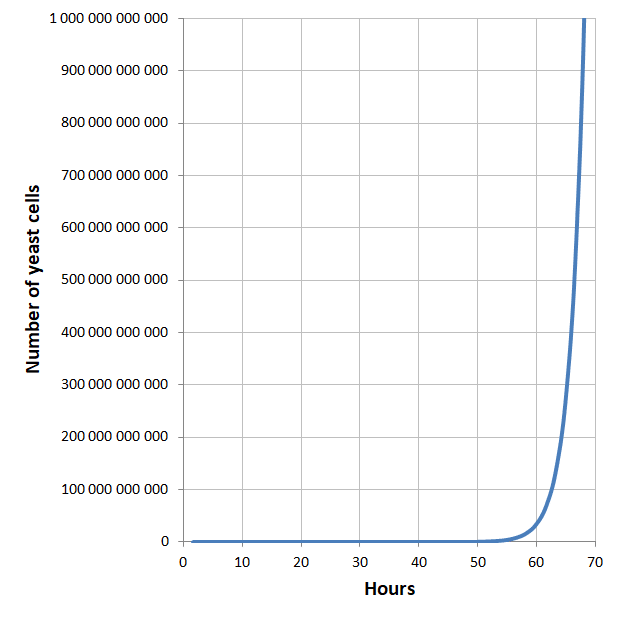
Under ideal laboratory conditions—characterized by abundant nutrients, optimal temperature, and adequate oxygen—a single Saccharomyces cerevisiae (yeast) cell undergoes budding, splitting into two distinct cells in approximately 100 minutes. This constitutes an entire generational life cycle in under two hours.
Following this trajectory, the math compounds rapidly:
- After 100 minutes: 2 cells
- After 200 minutes: 4 cells
- After 24 hours: ~16,000 cells
- After 48 hours: ~268 million cells
- Before 72 hours: ~1 trillion cells
A trillion yeast cells equate roughly to the cell count found in a standard 50-gram block of commercial compressed yeast. While such ideal, unrestricted growth is generally limited to commercial propagation facilities and cannot be fully replicated inside a dense, gluten-bound bread dough, the underlying principle remains. Yeast actively multiplies and produces carbon dioxide as long as fermentable sugars and appropriate temperatures are maintained.
Data-Driven Baking: Precision and Proportions
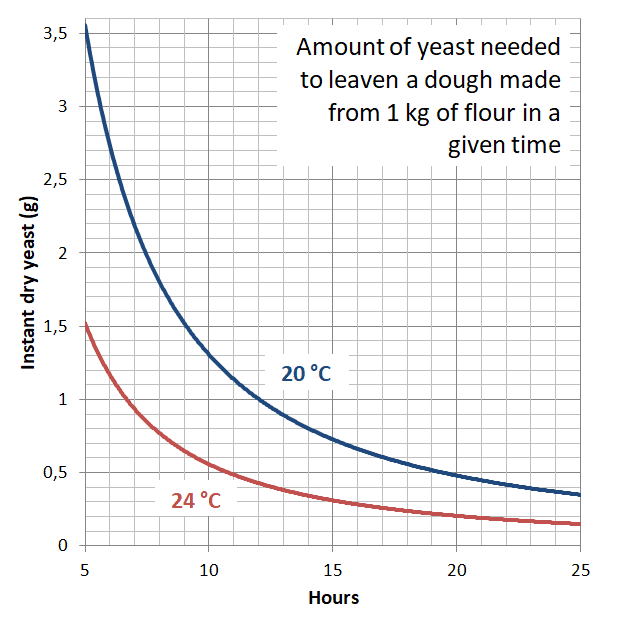
Faced with persistent shortages, resourceful bakers turned to digital tools designed for commercial and artisanal pizzerias to optimize their ingredient ratios. Specialized mobile applications, such as PizzApp+, allow users to calculate exact quantities of yeast based on flour weight, ambient room temperature, and desired bulk fermentation time.
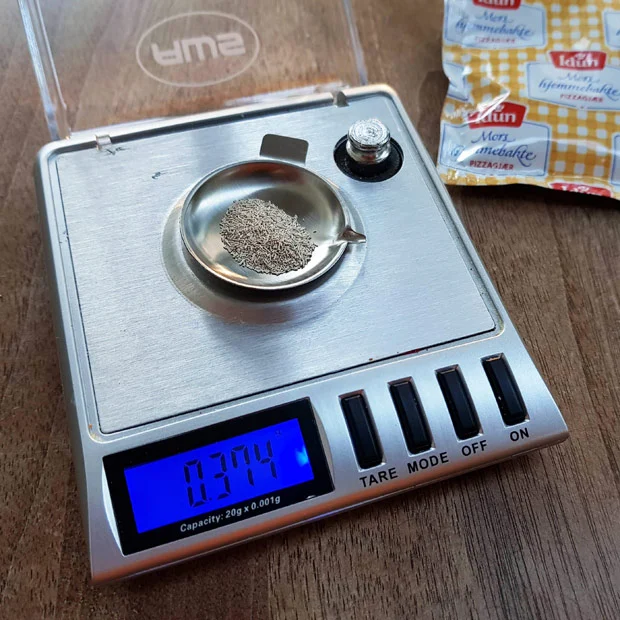
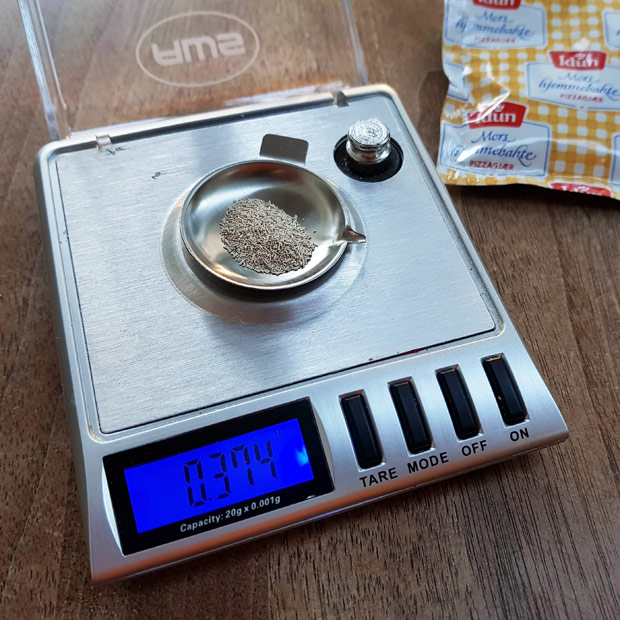
Data extracted from these formulations reveals striking efficiency. For instance, a traditional direct dough utilizing one kilogram of wheat flour requires a mere 0.48 grams of instant dry yeast when subjected to a 20-hour bulk fermentation at 20°C. Measuring fractions of a gram requires specialized equipment, leading to a surge in consumer purchases of micro-balances capable of reading down to 0.001 grams. These instruments, traditionally reserved for jewelry or laboratory work, have become commonplace kitchen accessories.
Culinary and Flavor Implications of Low-Yeast Fermentation
The transition toward using minimal yeast combined with extended fermentation times offers distinct culinary advantages beyond mere resource conservation. Traditional rapid-rise recipes—which utilize high quantities of yeast to force a dough to double in size within an hour—often yield bread lacking in complex flavor profiles.
When fermentation is slowed down significantly through the reduction of yeast inoculation, secondary biochemical processes are given time to occur. Wild lactic acid bacteria naturally present in flour or introduced via the environment begin to multiply and metabolize starches. This metabolic activity produces organic acids, primarily lactic and acetic acid, which impart a nuanced, artisanal depth of flavor to the crumb and crust. Furthermore, extended enzymatic breakdown of complex carbohydrates improves digestibility and crumb texture.
While the sourdough revival offered an alternative escape from commercial yeast dependencies—relying entirely on symbiotic cultures of wild yeasts and bacteria—the convenience of instant dry yeast remains undeniably attractive. By pairing micro-dosing techniques with temperature control, home bakers have successfully captured the complex flavor benefits of artisanal sourdough while retaining the predictability of commercial strains.
Economic and Retail Sector Responses
The unexpected surge in home baking created significant ripples throughout the agricultural and retail sectors. Major flour millers and yeast manufacturers reported historic spikes in retail demand, contrasting sharply with a temporary drop in commercial restaurant and bakery sales due to widespread lockdowns.
Food science and consumer behavior analysts noted that the baking boom signaled a broader psychological shift among consumers during times of crisis. Baking functions as a tactile, comforting, and scientifically grounded activity that provides a tangible sense of control. Retailers quickly adapted by repackaging bulk commercial-grade flour and yeast into smaller consumer units, while kitchen gadget manufacturers experienced unprecedented demand for Dutch ovens, digital scales, and proofing baskets.
Broader Impact and Permanent Culinary Shifts
The intersection of mathematics, microbiology, and culinary arts observed during the global lockdowns has left a lasting legacy on modern home cooking. Consumers who once relied entirely on pre-packaged, highly processed commercial breads have gained a foundational understanding of yeast kinetics, hydration percentages, and fermentation timelines.
As supply chains have normalized and supermarket shelves have restocked, many of these newly acquired habits have persisted. The realization that a single 12-gram sachet of instant dry yeast can produce dozens of loaves of exceptional bread—provided one understands the exponential nature of microbial growth and the value of patience—has permanently changed modern domestic gastronomy. The baking trends born out of necessity have matured into an enduring appreciation for kitchen science, proving that complex mathematics and everyday cooking are inextricably linked.