
The modern artisanal bread movement has long focused on the final stages of production: hydration percentages, fermentation lengths, and the physics of oven spring. However, a fundamental shift is occurring across the Pacific Northwest’s agricultural corridors, bringing the conversation backward from the artisan’s counter to the agronomist’s test plot. From July 19 to July 21, the Washington State University (WSU) Breadlab, in collaboration with the Washington State Department of Agriculture (WSDA), hosted the Grain Gathering in Washington’s Skagit Valley. Marking the event’s first iteration in eight years, the three-day symposium convened farmers, plant breeders, millers, bakers, and home enthusiasts under the overarching theme of Nourishing Communities.
Main Facts of the Event
The Grain Gathering functioned as an intensive educational and collaborative summit rather than a conventional trade show. Held in the agriculturally rich Skagit Valley—a region internationally recognized for its maritime climate and fertile alluvial soils—the event drew hundreds of participants from across North America. The programming integrated academic research with applied kitchen craft, featuring masterclasses, field tours of experimental wheat populations, and collaborative baking sessions.
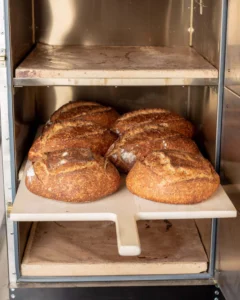
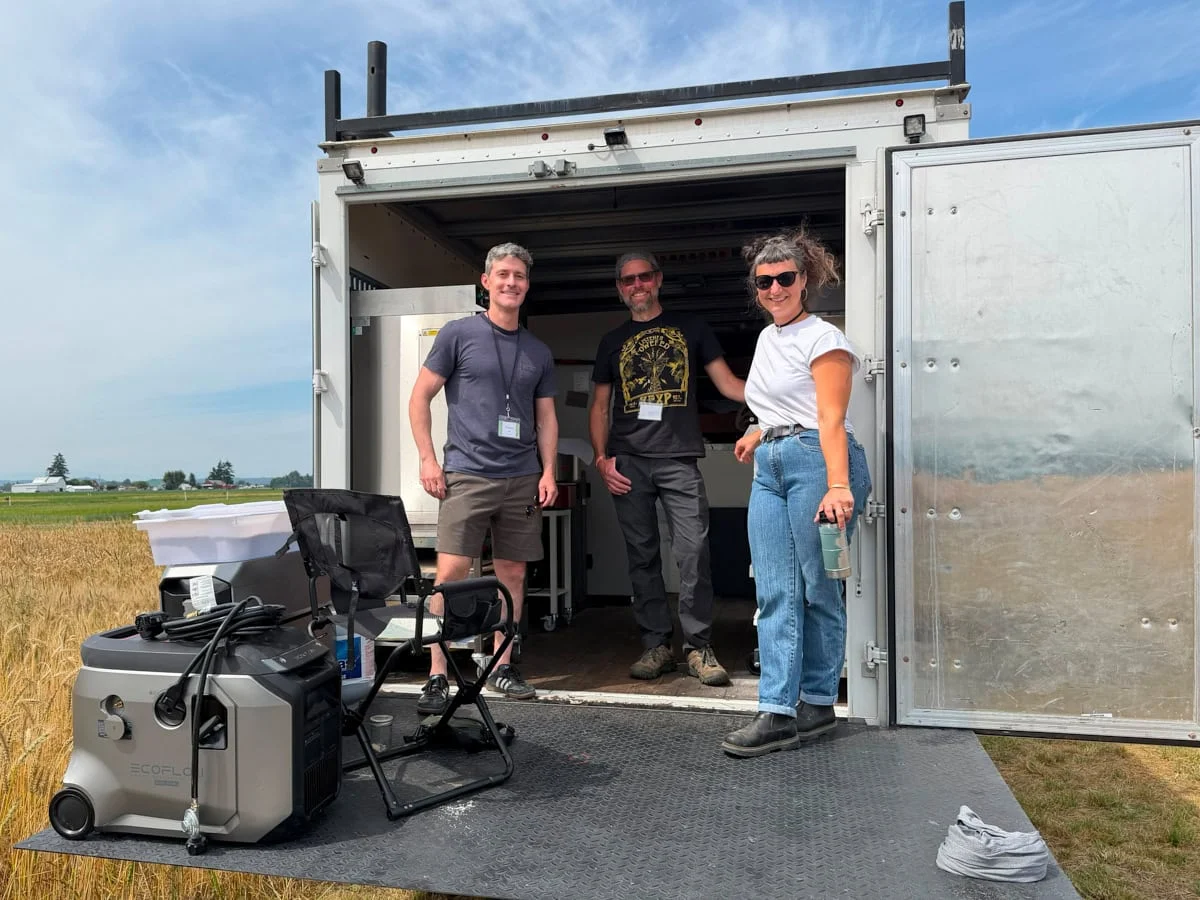
Central to the physical operations of the gathering was a custom-built mobile bakery and mill constructed by baker Marc Benoit. Powered by a roof-mounted solar array, the trailer housed a stone mill, a dough mixer, a workbench, and a commercial-grade RackMaster bread oven. Operating within this mobile infrastructure, Benoit and fellow bakers Baylin Speidel and Thomas Vroom produced dozens of sourdough country loaves, large-format focaccia, baguettes, and specialty bialys. The ingredients utilized during the weekend directly reflected the event’s ethos, incorporating identity-preserved grains such as Hollis, Chimacum Confluence, Palouse Heritage Elwha River Spelt, and WSU-bred varieties like Salish Blue.
Chronology and Background Context
The genesis of the Grain Gathering traces back to the founding mission of the WSU Breadlab, directed by Dr. Stephen Jones. Established to decentralize grain systems and breed wheat varieties specifically for regional performance, flavor, and nutrition rather than industrial uniformity, the Breadlab has spent over a decade challenging the commodity wheat paradigm.
The first Grain Gatherings established a precedent for cross-disciplinary dialogue, uniting sectors of the grain economy that typically operate in isolation. However, supply chain disruptions, shifts in agricultural funding, and broader institutional pauses led to an eight-year hiatus following the previous conference. The 2026 resumption signaled a renewed urgency within the craft baking community. As consumer demand for regionally sourced, stone-milled flour continues to outpace industrial supply, the event served as a critical nexus for scaling up farm-to-loaf infrastructure.
The schedule over the three days followed a deliberate arc. Opening panels addressed the genetics of wheat breeding and the economics of regional agriculture. Subsequent sessions moved participants directly into the test fields managed by the Breadlab, where agronomists detailed the multi-year process of selecting for disease resistance, yield, and culinary performance. The afternoons transitioned into practical application, with professional and home bakers testing newly harvested varietals in mobile and stationary ovens.
Supporting Data and Economic Implications
At the heart of the gathering’s economic discussions was the stark contrast between the commodity grain market and identity-preserved supply chains. In the traditional commodity system, grain is pooled, anonymized, and priced according to generalized protein content and volume. While this system efficiently feeds millions globally, it effectively erases the agricultural stewardship, soil health practices, and varietal distinctions championed by small-scale farmers.
An artisanal loaf of sourdough typically retails between $6 and $12. Proponents of regional grain systems argue that within the commodity framework, the farmer receives a negligible fraction of this final retail price, absorbing the financial risks of sustainable agriculture without capturing the added value of the finished product.
Events like the Grain Gathering highlight alternative models, such as mobile milling and localized supply chains. By processing grain directly on-farm or through regional micro-mills, operators bypass traditional layers of distribution, milling, and retail margins. This retention of capital allows farmers to receive equitable compensation for specific wheat varieties—such as Skagit 1109 or Ruth—while providing bakers and consumers with absolute transparency regarding origin. Furthermore, recent data from regional grain economies suggest that localized milling operations stimulate rural economic development by keeping agricultural dollars within the immediate watershed.
Agronomic Priorities: Flavor, Nutrition, and Genetics
For decades, industrial wheat breeding has prioritized traits optimized for mass manufacturing: high gluten elasticity for high-speed industrial mixers, visual uniformity, and maximum resistance to lodging during mechanized harvest. Flavor and nutritional density have historically occupied low priorities on the breeder’s scorecard.
The WSU Breadlab and its partnering agricultural scientists are actively working to reverse this hierarchy. By breeding populations that thrive under specific regional conditions—rather than forcing a single high-input variety to grow nationwide—researchers are developing wheats that offer distinct flavor profiles and superior nutritional availability without sacrificing the agronomic viability required by farmers.
The evaluation process implemented at the Breadlab involves a rigorous feedback loop: agronomists harvest experimental lines, local millers process them into flour, and bakers test their fermentation and baking performance. Varieties such as Salish Blue and Skagit 1109 represent the fruit of this methodology, offering unique baking characteristics that distinguish them from generic all-purpose grocery flours.
Broader Impact on Industry and Home Baking
The implications of the 2026 Grain Gathering extend far beyond the borders of Washington State. By bridging the disconnect between agricultural production and the end consumer, the event underscored a broader cultural shift in how staple foods are valued.
For professional bakers operating community-supported bakeries, access to transparently sourced, regionally adapted grains allows for product differentiation and a deeper connection to regional food security. For home bakers—who increasingly utilize countertop stone mills to process whole grains at home—the availability of identity-preserved, farmer-specific wheat represents a democratization of the grain supply chain.
As participants returned to their respective kitchens and farms across the country, the consensus from the Skagit Valley was clear: the future of sustainable baking relies not on specialized techniques alone, but on the systematic reintegration of every link in the agricultural chain. By bringing breeders, farmers, millers, and bakers under a single tent, the Grain Gathering demonstrated that the path to a better loaf begins long before the dough is mixed—starting instead in the soil, with the deliberate choice of what seed to plant.