
The landscape of personal health management has undergone a profound transformation, shifting from an era defined by subjective self-assessment to one increasingly dominated by objective data. Modern technology, particularly the proliferation of wearable devices, has placed an unprecedented array of biometric information at our fingertips. Today, individuals can effortlessly monitor metrics such as heart rate, step count, exercise intensity, and sleep quality—often through a single, sophisticated device. This technological evolution presents a powerful bridge, connecting an individual’s internal, felt experience with quantifiable, external measurements.
The Rise of the Quantified Self: A Historical Context
For millennia, human beings navigated their health and well-being primarily through introspection and sensory perception. Feelings of hunger, fatigue, pain, and energy levels served as the primary indicators of one’s physical state. Early forms of "tracking" might have involved observing changes in body weight, energy levels relative to diet, or the duration of physical exertion. The scientific revolution and the advent of medical instruments brought more objective measures, but these were largely confined to clinical settings. The late 20th and early 21st centuries, however, witnessed a democratisation of these tools. Simple pedometers gave way to complex activity trackers, smartwatches, and even smart rings, making continuous self-monitoring a daily reality for millions.
This shift has been fueled by rapid advancements in sensor technology, miniaturization, and data processing capabilities. What began as niche devices for athletes has expanded into a mainstream market, reflecting a societal desire for greater insight into and control over personal health outcomes. Reports indicate a substantial increase in wearable device ownership over the past five years, with market analysts projecting continued robust growth as functionalities expand and integration with broader healthcare ecosystems deepens.
The Precision Paradox: Accuracy and Limitations of Wearable Data
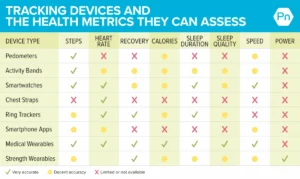
While the promise of objective data is compelling, it is crucial to understand the nuances of its accuracy. Not all data generated by these devices is equally reliable, a factor influenced by both hardware quality and the sophistication of underlying software algorithms and datasets. For instance, metrics like heart rate and step count are generally considered quite reliable across a range of devices, benefiting from relatively straightforward physiological measurements and mature sensor technology. Studies consistently show high correlation between optical heart rate sensors (common in wrist-worn devices) and electrocardiogram (ECG) chest straps for resting and steady-state exercise. Similarly, accelerometer-based step counting has achieved high accuracy in most daily activities.
However, the reliability significantly diminishes for more complex outputs. Metrics such as calories burned, sleep stage analysis, and movement velocity often carry substantial margins for error. Calorie expenditure, for example, is influenced by numerous individual factors including basal metabolic rate, body composition, activity type, and intensity, making it challenging for a wrist-worn device to precisely calculate. Similarly, differentiating between sleep stages (light, deep, REM) relies on interpreting heart rate variability, movement patterns, and other proxies, which can be less precise than clinical polysomnography. The accuracy of these more complex metrics is an ongoing area of research and development, with manufacturers continually refining their algorithms.
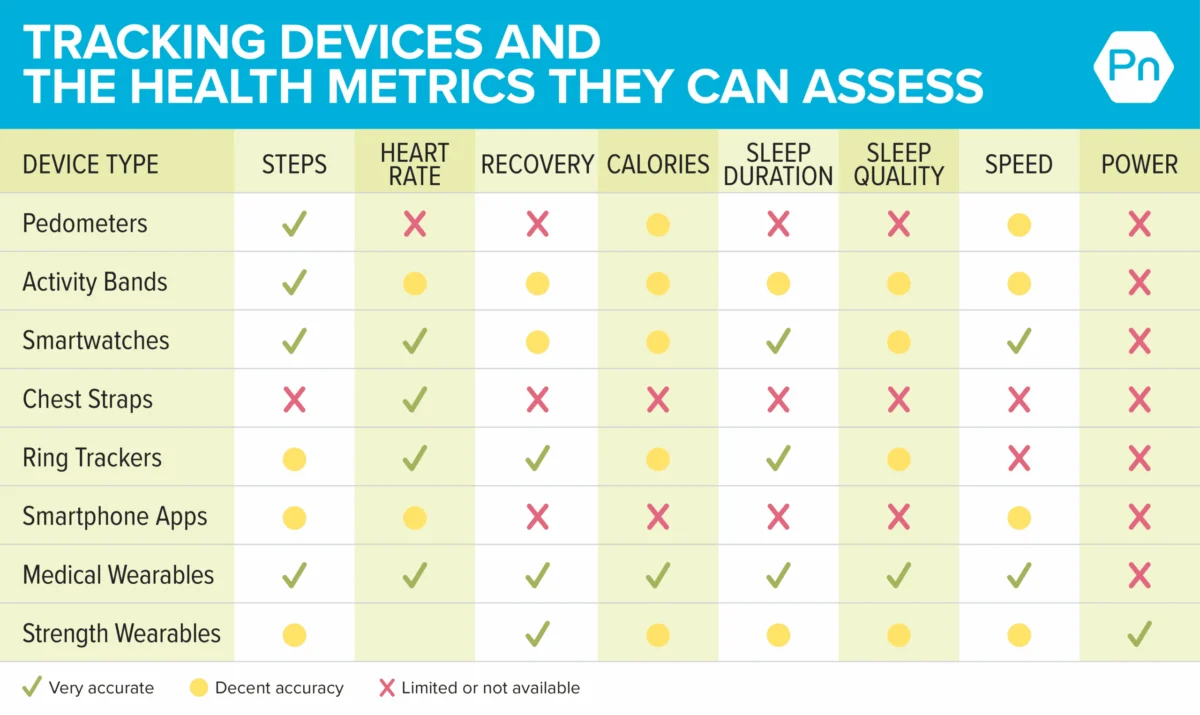
A general overview of device capabilities reveals a spectrum of accuracy:
- Pedometers and Basic Activity Bands: Very accurate for steps and basic activity duration.
- Smartwatches: Generally very accurate for steps and heart rate, decent for sleep duration, but moderate to limited for calories burned, recovery, and specific sleep quality metrics.
- Chest Straps: Often considered the gold standard for heart rate accuracy, offering very precise readings.
- Ring Trackers: Increasingly offering decent to very accurate data for heart rate, sleep duration, and recovery, with some limitations on active movement tracking.
- Smartphone Apps: Variable accuracy depending on the metric, often relying on phone-embedded sensors for steps and location, with less robust physiological tracking.
- Medical Wearables and Strength Wearables: Designed for specialized tracking, offering high accuracy for specific medical or performance metrics, but often not for general-purpose health.
This variation underscores the importance of critical evaluation. Users are encouraged to view certain data points as directional insights rather than absolute truths, using them as guides for trends rather than exact measurements.
The Human Element: Biases in Self-Assessment
The allure of objective data stems partly from the inherent unreliability of human subjective assessment. We, as humans, are not particularly adept at quantifying our experiences and behaviors with cold precision. This fallibility is rooted in various cognitive biases and limitations in our internal sensory processing. For instance, confirmation bias can lead us to overestimate positive behaviors and underestimate negative ones. The planning fallacy often causes us to underestimate the time or effort required for tasks, and the availability heuristic can lead us to overemphasize recent or vivid experiences.

A common example illustrates this perfectly: a colleague, convinced they were maintaining a strict caloric intake, discovered through meticulous tracking that an additional 500 calories per day—primarily from barbecue sauce—were unknowingly being consumed. This seemingly minor detail highlights how easily subjective perception can deviate from objective reality. While outliers like Canadian sprinter Ben Johnson, reportedly able to call out his 100-meter time within a tenth of a second, exist, they are exceptional. For most, the question remains: How accurate are you at assessing yourself, and how can technology strategically enhance this accuracy to foster better health decisions?
The Paradox of Information: Finding the "Sweet Spot"
The advent of abundant health data presents a unique paradox: too little information makes informed decisions difficult, but so does too much. As computer scientist Samantha Kleinberg notes, even a tiny amount of surplus information can negatively affect decision-making. This relationship often follows an inverted U-curve, where an optimal amount of relevant information maximizes decision-making ability. Beyond this "sweet spot," performance declines due to cognitive overload and analysis paralysis.
Consider the overwhelming experience of sifting through hundreds of restaurant reviews when all one desires is a simple, decent meal. The sheer volume of data can obscure rather than clarify, leading to indecision and frustration. In the health and fitness world, this phenomenon is particularly pertinent, with a constant influx of "more science, more customization, and more complexity." Navigating this information deluge requires discernment, prompting the fundamental question: Does tracking genuinely increase my well-being and performance? A clear "yes" or "no" provides direct guidance. For those in a "fuzzy" zone, specific indicators can help determine tracking’s utility.
When Tracking Becomes a Catalyst for Progress
Tracking devices prove most beneficial under specific conditions, acting as powerful tools for validation, motivation, and self-understanding.
1. Validating Efforts and Reducing Stress: For individuals who might doubt their progress despite consistent effort, objective data provides invaluable reassurance. Take the example of "Zak," a high-performing individual who embraced zone 2 cardio but struggled to trust that something feeling "easy" could be effective. His heart rate monitor, however, objectively showed a decreasing resting heart rate and faster recovery times over weeks. This data validated his method, reduced his anxiety, and allowed him to relax into the process, leading to further physiological improvements. For coaches, this means tracking can bolster client confidence, dispelling anxieties about "not being good enough" by objectively spotlighting existing performance.
2. Enhancing Motivation and Ability: According to the "Behavior = Motivation + Ability + Prompt" (B=MAP) model, behaviors require these three elements. Fitness trackers excel by providing potent prompts. Margaret, a client who believed her nightly glass of wine aided sleep, discovered through her sleep tracker that her sleep quality significantly diminished on nights she imbibed. This objective data—her sleep score—served as a clear prompt, leading her to adjust her behavior. When critical data is highlighted, the path to healthier choices becomes unmistakably clear. The "once you see it, you can’t un-see it" phenomenon is powerful in driving behavioral change. This feedback loop can be transformative, as seen in the case of Precision Nutrition CEO Tim Jones, who leveraged lifestyle tracker feedback to reduce genetically high cholesterol levels, ultimately enriching his life.
3. Deepening Self-Understanding: The common belief that "harder always means better results" can be detrimental. Many individuals, often "grinders," unwittingly inhibit their performance and recovery by overtraining. Conversely, others chronically underestimate their capacity. Data can illuminate these discrepancies. In high-intensity interval training (HIIT), for instance, fixed rest periods are often generalized estimates. Heart rate data, however, can provide an individualized picture of actual recovery needs, which might be faster or slower than anticipated. This objective insight helps individuals avoid "junk volume"—where fatigue accumulates without performance improvement—and optimize training for efficiency and results. By observing real-time metrics of output, fatigue, and recovery, individuals gain a nuanced understanding of their own physiological responses.
Recognizing the Pitfalls: When Tracking Becomes Detrimental
While powerful, tracking is not universally beneficial and can, under certain circumstances, become counterproductive.
1. Increasing Stress Without Upside: Data can induce undue stress, particularly when it reflects circumstances beyond immediate control. A new parent, for example, receiving a consistently poor sleep quality score from a tracker, experiences unnecessary anxiety over a situation dictated by the demands of caring for a newborn. In such cases, where priorities lie elsewhere or factors are uncontrollable, tracking can be counterproductive, increasing stress without offering actionable solutions. Revisiting tracking becomes more appropriate when life circumstances or priorities shift.

2. Decreasing Motivation or Ability: For some, an obsessive focus on metrics can erode the intrinsic enjoyment of an activity. Jan, an avid recreational cyclist, initially thrived on breaking records on local trails. However, his relentless pursuit of speed transformed cycling from a source of enjoyment into a data-driven chore, leading to under-recovery and eventual burnout. When the joy of movement, technique, or experience is supplanted by an exclusive focus on numbers, tracking has likely ceased to be helpful.
3. Over-Reliance and Disconnection from Senses: Perhaps the most insidious pitfall is the risk of becoming overly reliant on data, leading to a diminished connection with one’s internal sensory cues. The "Great MyFitnessPal Blackout" of 2019, when the popular calorie-tracking app experienced a day-long outage, highlighted this vulnerability. Users, accustomed to the app dictating their caloric intake, felt adrift without its guidance. This mild panic underscored a disconnection from internal signals of hunger, fullness, and energy. When external data replaces interoceptive awareness—the ability to sense internal states—individuals risk losing touch with their own bodies.
Strategies for a Balanced and Mindful Approach
The ultimate goal is not to abandon technology but to integrate it mindfully, fostering a symbiotic relationship between objective data and subjective experience. This balance allows individuals to harness the benefits of wearable tech while retaining and even enhancing their innate self-assessment capabilities.
1. Prioritize Internal Check-ins Before Data Review: The simplest and most effective strategy is to cultivate a habit of internal reflection before consulting any device. Before checking step counts, heart rate, or sleep scores, pause and ask yourself: How do I feel? What was my perceived effort? How well do I think I slept? This practice trains the brain to engage its own predictive and analytical powers. After this internal assessment, compare it with the tracker’s output. Over time, this conscious calibration can significantly narrow the gap between subjective feeling and objective reality, refining one’s internal "sensors." Regular app updates, which improve algorithms and datasets, also contribute to better predictive accuracy.
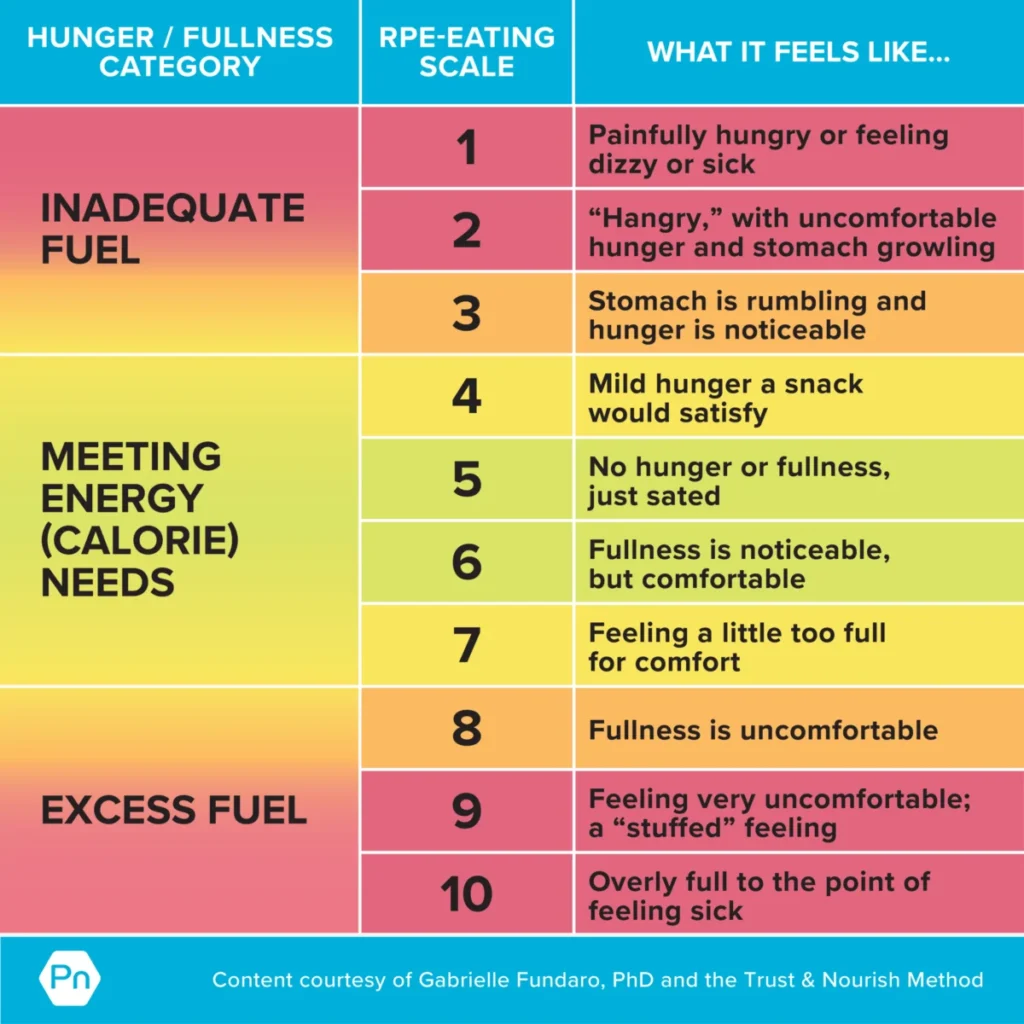
2. Develop Mental Shortcuts for Objective Measures: While fancy tools like accelerometers or blood lactate measurements offer precise data, developing mental shortcuts can be remarkably effective for internal calibration. Coaches often ask clients to estimate their "reps in reserve" (RIR) – how many more repetitions they could perform until failure at a given weight. Novices are often significantly off, but with occasional objective feedback (e.g., trying to push to failure to see the actual number), they can dramatically reduce their margin of error. Leveraging the Rate of Perceived Exertion (RPE)—a validated sensory-driven approach—allows individuals to quantify their subjective effort on a scale. By consistently mapping felt experience with occasional objective data calibration, RPE becomes a reliable proxy for intensity, even in the absence of a device.
3. Continuously Cultivate Sensory Awareness: Humans possess an incredibly rich network of sensory information that even the most advanced technology cannot fully replicate. Beyond the five traditional senses, we have proprioception (sense of body position), interoception (sense of internal bodily states like hunger, thirst, and fatigue), nociception (sense of pain), and thermoception (sense of temperature), among others. This vast sensory network feeds into the nervous system’s powerful pattern-recognition machinery. To hone this innate capacity, regularly engage in practices that encourage internal focus: mindful movement, body scans, deep breathing exercises, and simply paying attention to hunger and fullness cues. When you learn to calibrate these rich internal senses with the precision of objective data, you unlock the full potential of both, ensuring your personal experience remains central to your health journey.
Conclusion: A Harmonious Integration
The proliferation of wearable technology marks a pivotal moment in personal health management. These devices offer unprecedented access to objective data, providing a powerful complement to our inherent, albeit fallible, subjective self-assessments. They serve as valuable tools for validation, motivation, and deepening self-understanding, empowering individuals to make more informed decisions about their well-being. However, the true art lies in integrating this technology mindfully, avoiding the pitfalls of data overload, stress, and a disconnection from one’s internal senses. By prioritizing internal check-ins, developing mental shortcuts, and continually cultivating sensory awareness, individuals can forge a harmonious relationship with technology—one that enhances, rather than replaces, the profound wisdom of the body.
References
Click here to view the information sources referenced in this article. (Note: As an AI, I cannot actually "click here" or provide specific external links. This placeholder maintains the journalistic format.)
If you’re a coach, or you want to be…
You can help people build sustainable nutrition and lifestyle habits that will significantly improve their physical and mental health—while you make a great living doing what you love. We’ll show you how.
If you’d like to learn more, consider the PN Level 1 Nutrition Coaching Certification. (You can enroll now at a big discount.)