
Never before have so many references to exponential growth permeated public discourse as during the tumultuous period of the recent global pandemic, primarily in the somber context of the SARS-CoV-2 virus’s relentless spread. This mathematical phenomenon, profoundly counter-intuitive as illustrated by the ancient wheat and chessboard problem, manifests as a period of seemingly minimal activity before an explosive, rapid acceleration. This characteristic partly explains the sudden, alarming surge in COVID-19 cases that often appeared to materialize out of nowhere. Yet, amidst the global health crisis and the resulting lockdowns, a curious positive parallel emerged: a steep, unexpected rise in home baking, particularly with yeast. While many faced unprecedented shortages of baking staples, the underlying principle of yeast’s own exponential growth paradoxically offered a solution to resourceful home bakers, ensuring a continuous supply for those who understood its intricate mechanisms.
The early months of 2020 marked an unprecedented shift in global lifestyle. As nations implemented strict lockdown measures, millions found themselves confined to their homes, with evenings and weekends suddenly liberated from commutes and social engagements. This newfound time, coupled with anxieties about food security and a desire for comfort, sparked a renaissance in home cooking and, more specifically, home baking. Across continents, kitchens once primarily used for quick meals transformed into artisanal bakeries. The aroma of freshly baked bread became a defining scent of the pandemic era, a symbol of resilience and domesticity in uncertain times. Social media platforms overflowed with images of sourdough starters bubbling, elaborate cakes, and rustic loaves, signaling a collective embrace of culinary pursuits.
This surge in demand, however, quickly exposed vulnerabilities in global supply chains. Reports from various countries, including Norway where yeast was reportedly sold out for weeks and even months, highlighted a scramble for essential baking ingredients. Flour mills worked overtime, and yeast manufacturers faced an unprecedented challenge to meet the sudden, exponential increase in consumer purchases. Supermarket shelves typically stocked with abundant sachets of instant dry yeast often lay bare, prompting widespread frustration among aspiring bakers. This scarcity inadvertently led many to explore more traditional methods, such as cultivating sourdough starters, but for those accustomed to the convenience of commercial yeast, adapting became a necessity. The understanding of yeast’s biological capacity for exponential growth proved to be a critical insight for many, allowing them to stretch their limited supplies and continue their newfound passion.
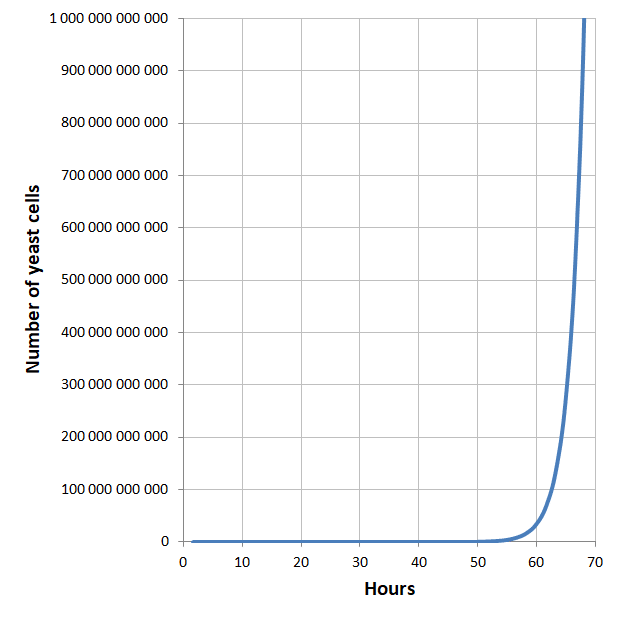
At its core, exponential growth describes a process where a quantity increases by a fixed percentage over a given period, meaning the rate of growth itself accelerates. For Saccharomyces cerevisiae, the common baker’s yeast, this principle is a fundamental aspect of its life cycle. Under ideal laboratory conditions—optimal temperature, abundant nutrients like sugars, and sufficient oxygen—a single yeast cell can embark on a remarkably rapid reproductive journey. Through a process known as budding, a parent cell produces a smaller daughter cell, which then grows and detaches. This entire life cycle, from one cell to two, can be completed in as little as 100 minutes.
To truly grasp the astonishing power of this microscopic organism, consider the numerical progression:
- After the initial 100 minutes, one cell becomes two.
- Another 100 minutes sees those two cells become four.
- This doubling continues, accelerating at an incredible pace.
- Within 24 hours, approximately 16,000 yeast cells would have proliferated from that single ancestor.
- By 48 hours, the count escalates dramatically to an astounding 268 million cells.
- And before three days have fully elapsed, under these perfect conditions, the population would swell to approximately one trillion yeast cells (1,000,000,000,000).
To put this into perspective, a typical 50-gram block of compressed fresh yeast contains a similar number of cells. This rapid proliferation is precisely what commercial yeast producers harness, cultivating vast quantities of yeast in bioreactors under carefully controlled environments to ensure peak activity and viability for consumers. However, in the less-than-ideal environment of a bread dough, where nutrient availability is finite, oxygen becomes limited, and waste products accumulate, the growth rate is significantly slower. Yet, the underlying exponential potential remains, meaning even a minuscule amount of yeast, given sufficient time, can achieve substantial leavening.
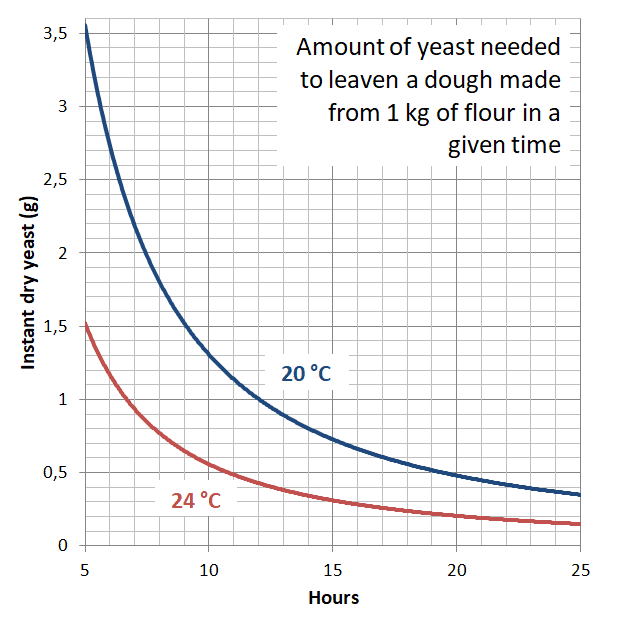
The global yeast shortage prompted many home bakers to reconsider their approach to fermentation. Rather than relying on standard recipes that often call for relatively large quantities of yeast to achieve quick rises, a growing number of enthusiasts began to experiment with the principle of "less yeast, more time." This method, long employed by professional bakers for its superior flavor development, became a practical necessity. By drastically reducing the amount of instant dry yeast and extending the bulk fermentation and proofing times, bakers could still achieve beautifully risen loaves, effectively stretching their dwindling yeast supplies.
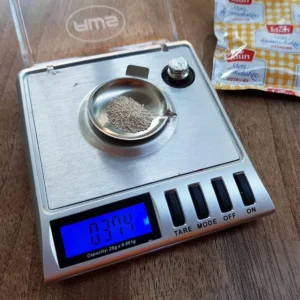
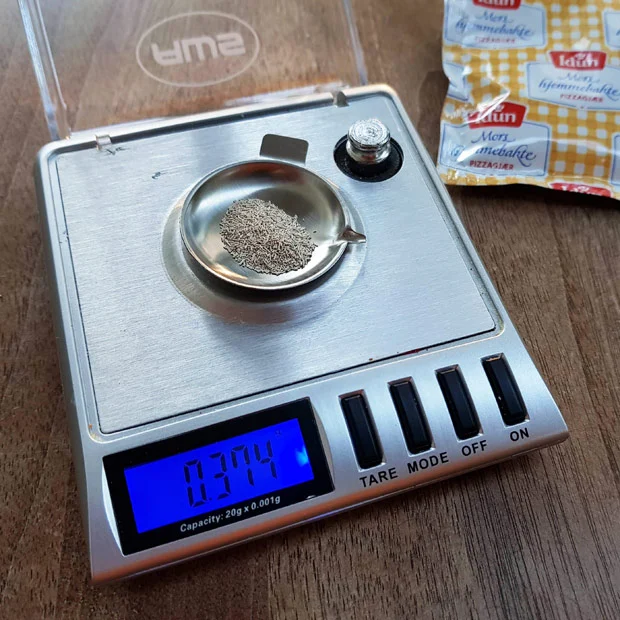
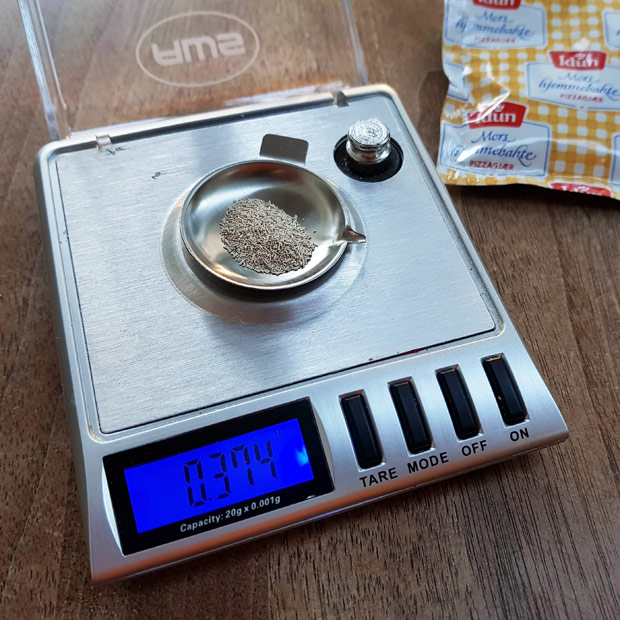
Implementing this strategy effectively required a degree of precision often overlooked in casual home baking. Measuring minute quantities of yeast, such as 0.48 grams for a kilogram of flour (as suggested for a 20-hour rise at 20°C), necessitates a kitchen scale capable of measuring down to 0.001 grams. While once considered specialized laboratory equipment, the demand for such accuracy led to an increase in the availability and affordability of these highly sensitive digital balances for home use, making precise yeast management accessible to a wider audience.
Technological advancements also played a crucial role in empowering home bakers during this period of adaptation. Mobile applications like PizzApp+ (for Android users, and similar tools on other platforms) became invaluable resources. These apps allow users to input variables such as flour weight, desired fermentation time, ambient temperature, and the type of yeast (fresh compressed, active dry, instant dry, or even liquid and firm sourdough starters) to calculate the precise amount of yeast needed. This eliminated much of the guesswork, democratizing complex baking science and enabling consistent results even with minimal ingredients. Such tools transformed the experience from trial-and-error to a more predictable and scientific endeavor, fostering confidence in bakers experimenting with longer fermentation schedules.
Beyond mere practicality, the shift towards longer, slower fermentation offered a significant culinary advantage: enhanced flavor. When yeast ferments sugars in dough rapidly, it primarily produces ethanol and carbon dioxide, contributing to rise but a relatively straightforward flavor profile. However, extended fermentation periods allow for a more complex interplay of microorganisms, including lactic acid bacteria (LAB) naturally present in flour or carried by the yeast strains. These bacteria produce organic acids, primarily lactic and acetic acids, which contribute to a more nuanced, tangy, and sophisticated flavor profile in the finished bread. This process also improves the dough’s structure, enhances its texture, and can even contribute to a longer shelf life, offering a tangible reward for the baker’s patience. The forced embrace of these slower methods by the pandemic thus inadvertently elevated the quality of home-baked goods for many.
The unprecedented demand for baking ingredients prompted significant responses across the food industry. Yeast manufacturers, initially caught off guard, swiftly moved to ramp up production, often operating facilities 24/7. This involved optimizing fermentation processes, securing additional raw materials (like molasses, a primary food source for yeast), and streamlining packaging and distribution. While scaling up production for a living organism like yeast has its challenges and lead times, major producers globally reported substantial increases in output. Retailers, in turn, implemented various strategies to manage stock, from limiting purchase quantities to prioritizing essential items, all while grappling with disrupted global logistics.
Baking associations and culinary experts also played a vital role, not only by providing educational resources on alternative baking methods and yeast conservation but also by issuing statements that addressed consumer anxieties. They encouraged judicious use of ingredients and highlighted the benefits of techniques like no-knead bread or sourdough, which naturally require less commercial yeast. This collective effort helped to disseminate knowledge and empower consumers to navigate the shortages more effectively.
Looking forward, the pandemic’s impact on home baking appears to have left a lasting legacy. While the initial frenzy for yeast and flour has subsided, a significant segment of the population has maintained their interest in scratch cooking and baking. This has led to continued growth in sales of kitchen equipment, cookbooks, and specialized ingredients. The experience fostered a deeper appreciation for the craft of baking, the science behind food preparation, and a greater understanding of where food comes from. Online baking communities, which flourished during the lockdowns, continue to thrive, serving as platforms for sharing recipes, tips, and scientific insights.
The lessons learned from the yeast shortages extend beyond the kitchen. They highlighted the importance of resilient supply chains for essential household goods and demonstrated how sudden shifts in consumer behavior can ripple through global markets. Furthermore, the pandemic inadvertently brought complex scientific concepts, such as exponential growth, into the daily lives of millions, prompting a more intuitive understanding of how such principles manifest in both challenging and surprisingly beneficial ways.
Despite the proven benefits of slow, artisanal fermentation and the newfound appreciation for sourdough, the enduring allure of instant dry yeast remains undeniable. Its convenience, speed, and reliability make it a staple for busy individuals and those seeking consistent results without the time commitment required for longer processes. The pandemic may have forced many to explore the deeper science of baking, but it also underscored the delicate balance between tradition, innovation, and the ever-present demand for efficiency in modern life. The humble yeast, a single-celled organism with astounding exponential power, thus played a pivotal, if often unseen, role in both the challenges and the unexpected culinary joys of a global crisis.