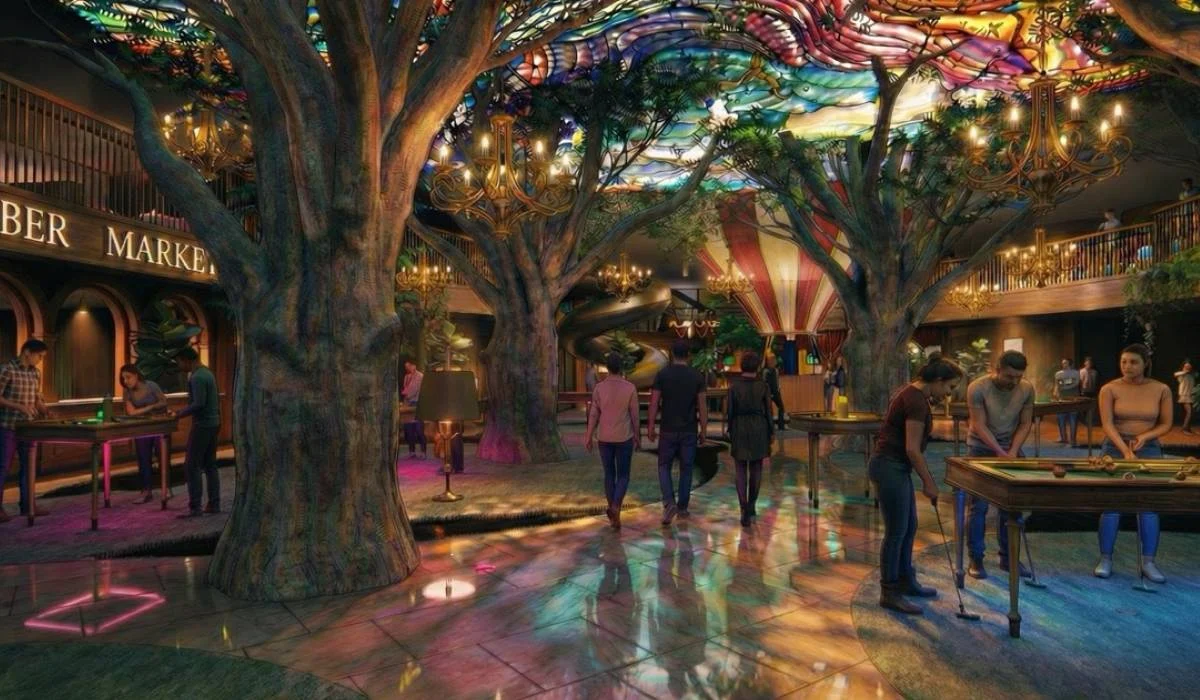

The landscape of downtown Atlanta is poised for a significant transformation as AMP Up1 Hospitality, the visionary team behind the award-winning social destination Your 3rd Spot, announces its most ambitious project to date: The Looking Glass. Slated for a 2027 debut within the iconic CNN Center—now being rebranded and revitalized as The CTR—The Looking Glass is envisioned as a 1,000-guest "social playground" designed to merge high-end hospitality with immersive storytelling and interactive technology. Led by Josh Rossmeisl, Founder and Chief Vision Officer of AMP Up1 Hospitality, the project represents a multi-million dollar bet on the enduring power of physical connection and "eatertainment" in an increasingly digital world.
The announcement comes at a pivotal moment for Atlanta’s central business district, which is currently undergoing a multi-billion dollar revitalization ahead of major global events, including the 2026 FIFA World Cup. The Looking Glass will occupy a prominent footprint in the historic building, offering a sprawling environment where guests move through a "living world" of games, illusions, and discovery. According to Rossmeisl, the concept is not a literal retelling of classic literature but an original universe centered on the themes of inversion and curiosity, rewarding guests for exploring the deeper layers of the venue.
A New Anchor for the Revitalized CNN Center
The selection of the CNN Center as the home for The Looking Glass is a strategic move that leverages both historical prestige and geographical advantage. For decades, the building served as the global headquarters for CNN and a primary tourist hub. Following the network’s relocation to Techwood Drive, the property’s owners, CP Group, have embarked on a massive renovation to transform the site into a world-class destination for food, culture, and entertainment.
"The CTR is one of the most recognizable buildings in Atlanta, and it sits in the heart of downtown," Rossmeisl noted regarding the location choice. The venue’s proximity to the Georgia World Congress Center (GWCC), State Farm Arena, and Mercedes-Benz Stadium positions it as a primary beneficiary of the city’s massive convention and sports traffic. With Atlanta hosting more than 50 million visitors annually, the demand for high-capacity, high-quality social spaces has never been higher. The Looking Glass aims to fill a gap in the market for a venue that can accommodate large-scale corporate buyouts while maintaining the intimacy and "vibe" of a boutique social club.
The Mechanics of Curiosity: Technology and Experience
At the heart of the guest experience is the "Curiosity Card," a signature piece of proprietary technology that serves as the key to the venue. Rather than a simple payment method, the card is used to unlock interactive experiences throughout the space. This includes elevated gaming stations, immersive art installations, and hidden surprises tucked away in the venue’s architecture.
A central feature of the programming is "The Curiosity Quest," a venue-wide scavenger hunt that encourages movement and social interaction. By gamifying the environment, AMP Up1 Hospitality aims to keep guests engaged for longer durations than a traditional restaurant or bar. This "analog-plus" approach—using technology to facilitate real-world human connection rather than replace it—is a response to the "digital fatigue" observed in modern consumers. Rossmeisl emphasizes that while technology supports the framework, the human connection remains the primary product being sold.

Culinary Innovation: From Tea Time to Ember Market
Recognizing the need for a versatile revenue model, The Looking Glass will feature distinct culinary programs designed to cater to different demographics and times of day. This includes "Ember Market," a high-energy marketplace offering craft beverages, handcrafted sodas, sweets, and quick bites, and a modernized "Tea Time" ritual.
The "Tea Time" concept is a strategic pivot toward the daytime and early evening market. Designed for groups ranging from two to twenty people, it offers a sophisticated blend of savory and sweet items paired with specialized teas and spirits. This program is specifically intended to attract families, celebration groups, and daytime convention attendees.
The venue will operate with a flexible age policy to maximize its reach. During the day, The Looking Glass will welcome families and visitors of all ages (with minors accompanied by guardians). However, as the sun sets, the environment will transition into a 21-and-older nightlife destination. This shift will be managed through sophisticated changes in lighting, soundscapes, and beverage menus, ensuring the venue remains relevant from 11:00 AM to 2:00 AM.
Strategic Timing and the "World Cup Effect"
The timeline for The Looking Glass is inextricably linked to the broader development of downtown Atlanta. Construction is scheduled to commence shortly after the conclusion of the 2026 FIFA World Cup. This timing allows the city to clear the logistical hurdles of the global tournament while ensuring that The Looking Glass opens during the subsequent wave of post-World Cup tourism and investment.
The project is expected to open its doors in the second quarter of 2027. This deliberate pace reflects a philosophy of "delayed gratification" that Rossmeisl has championed within AMP Up1 Hospitality. By spending years refining the blueprint and building a robust leadership team, the company aims to avoid the pitfalls of rapid, uncalculated expansion. The success of their flagship location, Your 3rd Spot at The Works in Atlanta’s Upper Westside, has served as a laboratory for the systems and culture being scaled up for The Looking Glass.
Economic Implications and the Eatertainment Market
The launch of The Looking Glass coincides with a massive surge in the global "eatertainment" sector. Industry analysts project that the market for experiential dining and social entertainment will grow at a compound annual growth rate (CAGR) of over 10% through 2030. Consumers, particularly Millennials and Gen Z, are increasingly prioritizing "experiences over things," leading to the rapid growth of concepts like Topgolf, Puttshack, and Flight Club.
However, The Looking Glass distinguishes itself through its scale and the complexity of its design. Managing a 1,000-person capacity requires a rigorous focus on operational math. "Premium design has to earn its keep operationally," Rossmeisl stated. The layout of the venue is designed for "throughput," ensuring that high-traffic areas move efficiently while "impact areas" provide the visual spectacle required for social media and brand identity. This balance is critical for maintaining a high return on investment (ROI) in a space that requires significant capital expenditure for its immersive elements.

Impact on Atlanta’s Convention and Tourism Industry
The Georgia World Congress Center, located just steps from the CNN Center, is one of the largest convention centers in the United States. Convention organizers often struggle to find venues that can host 500 to 1,000 guests for private events without resorting to sterile hotel ballrooms. The Looking Glass is positioned to become the premier choice for these high-value corporate buyouts.
By offering a turnkey solution for entertainment, catering, and social engagement, the venue reduces the logistical burden for event planners. Furthermore, the inclusion of employee-ownership models within AMP Up1 Hospitality—a core tenet of their business philosophy—is expected to result in higher service standards, a critical factor in the competitive hospitality industry.
Analysis: A Paradigm Shift in Social Spaces
The Looking Glass represents more than just a new bar or gaming center; it is a case study in the evolution of the "Third Spot"—the place between home and work where community is built. In a post-pandemic era where remote work has blurred the lines between professional and personal life, the need for physical spaces that offer "transportive" experiences has intensified.
The project’s success will likely hinge on its ability to maintain the "magic" of its immersive world while operating with the precision of a high-volume hospitality engine. If successful, The Looking Glass could serve as a blueprint for the future of urban retail and entertainment centers, proving that historic buildings like the CNN Center can be successfully repurposed for the next generation of consumers.
As Atlanta prepares for its moment on the world stage in 2026, the development of The Looking Glass serves as a signal of confidence in the city’s downtown core. It is a testament to the idea that with enough patience, capital discipline, and creative vision, the "heart of the city" can beat with a new kind of energy—one rooted in curiosity and the timeless human desire to discover something unexpected.