
The practice of home food preservation has undergone a significant transformation in the 21st century, moving from a survival necessity to a culinary craft centered on flavor profile customization and food security. At the forefront of this movement is the adaptation of standardized safety protocols to create diverse condiments, such as the increasingly popular green jalapeno hot sauce. By utilizing the foundational framework provided by the United States Department of Agriculture (USDA) for cayenne pepper sauce, home canners are now successfully substituting ingredients like tomatillos and jalapenos to produce a thick, spoonable condiment that meets rigorous safety standards for shelf-stable storage.
The Scientific Foundation of Ingredient Substitution
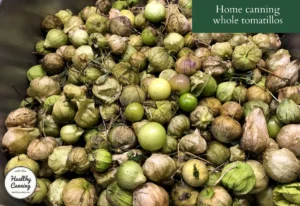
The transition from a traditional red cayenne sauce to a green jalapeno-based sauce is not merely an aesthetic choice but a calculated application of food science. The original USDA recipe, which serves as the benchmark for this preservation method, calls for a specific ratio of acid to low-acid vegetables to prevent the growth of Clostridium botulinum. In this adaptation, tomatillos are used as a direct substitute for tomatoes.
From a pH perspective, tomatillos are generally more acidic than many modern tomato cultivars, typically ranging between 3.76 and 3.92 on the pH scale. This inherent acidity makes them an ideal candidate for canning, as they maintain the necessary equilibrium required for water-bath processing. Similarly, the swap of green jalapenos for cayenne peppers or other hot varieties is considered a safe modification by the National Center for Home Food Preservation (NCHFP), provided the total volume of peppers remains constant. This flexibility allows enthusiasts to manage the Scoville Heat Units (SHU) of their final product while adhering to tested thermal death times for spoilage organisms.
Technical Specifications and Processing Chronology
Successful preservation of jalapeno hot sauce requires a disciplined adherence to a specific chronology of preparation and processing. The preparation phase typically spans approximately one hour, involving the cleaning, seeding (if desired), and chopping of the peppers and tomatillos. Given the volatile oils present in jalapenos—specifically capsaicin—safety experts recommend the use of gloves during this phase to prevent skin irritation or accidental contact with mucous membranes.

The cooking phase is the most time-intensive, often requiring up to three hours of simmering. This extended cooking time serves a dual purpose: it softens the cellular structure of the peppers and tomatillos to achieve a "spoonable" thickness and facilitates the concentration of flavors. Unlike commercial hot sauces that are often thin and vinegar-forward, this home-canned version is characterized by its density and texture.
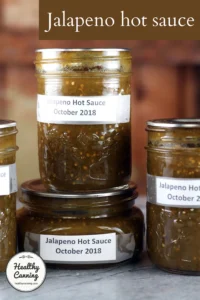
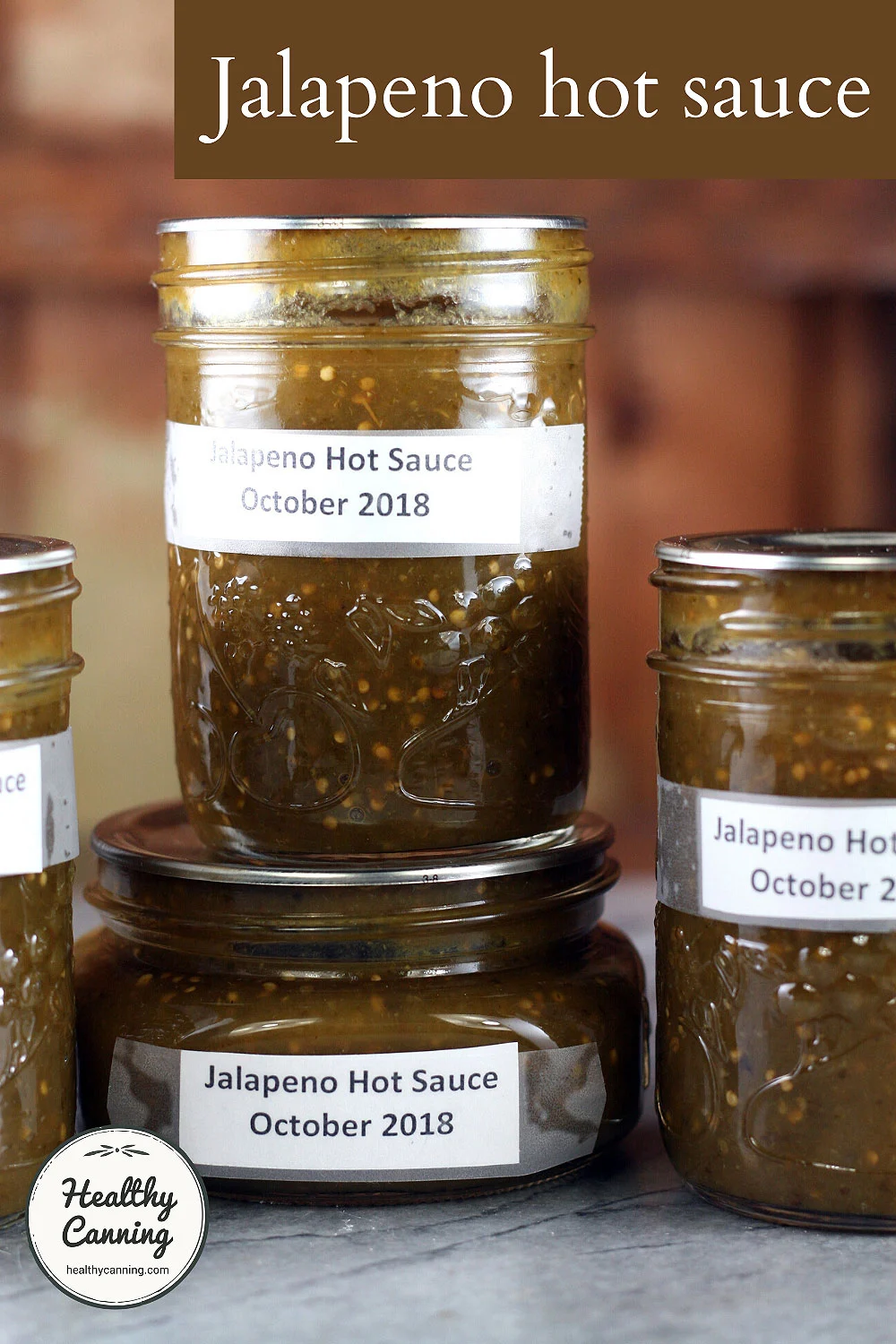
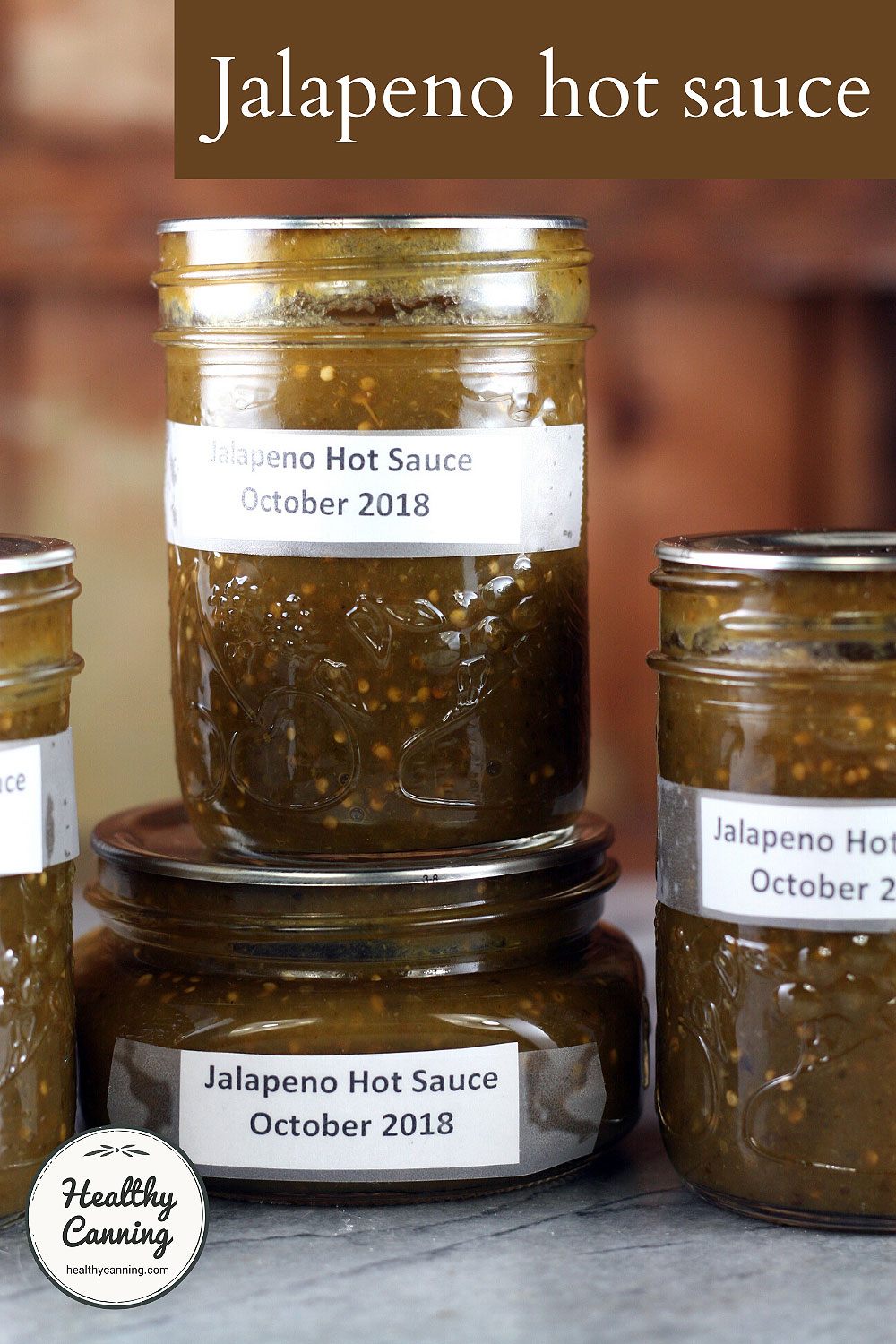
Once the desired consistency is achieved, the sauce is transferred into sterilized jars. The recipe accommodates three primary sizes: 125 ml (4 oz), 250 ml (8 oz), and 500 ml (16 oz). A critical component of this stage is the maintenance of a 2 cm (1/2 inch) headspace. This gap is essential for the creation of a vacuum seal during the cooling process and prevents the sauce from bubbling over into the sealing area during the boiling phase.
Thermal Processing: Water-Bath vs. Steam Canning
The final safety hurdle in the production of jalapeno hot sauce is the thermal process. Both water-bath canning and atmospheric steam canning are approved methods for this specific recipe. The processing time is standardized at 10 minutes for all three jar sizes, though this must be adjusted based on the altitude of the canning location.
The mechanics of these two methods, while different, achieve the same result. Water-bath canning involves the total immersion of jars in boiling water, ensuring that the internal temperature of the sauce reaches a level sufficient to destroy yeasts, molds, and bacteria. Atmospheric steam canning, which has gained popularity in recent years following validation studies by the University of Wisconsin-Madison, uses the heat of steam to achieve the same lethality. Steam canning is often preferred by modern home cooks for its efficiency, as it requires significantly less water and reaches the required temperature faster than a traditional large-capacity kettle.
Nutritional Profile and Chemical Composition
An analysis of the jalapeno hot sauce reveals a condiment that is high in flavor but remarkably low in caloric density. A standard one-tablespoon serving contains approximately 8 calories. The nutritional breakdown is as follows:
- Carbohydrates: 1.6g
- Fiber: 0.3g
- Sugars: 0.8g
- Protein: 0.3g
- Sodium: 2mg (dependent on added salt)
The low sodium content is particularly noteworthy, as many commercial hot sauces rely heavily on salt for both flavor and preservation. In home canning, the preservation is achieved through acidity (pH) and heat, allowing the producer to minimize sodium intake. Furthermore, the presence of capsaicin in the jalapenos provides more than just heat; it is an alkaloid that has been studied for its potential metabolic benefits and its role in triggering endorphin release.
Official Responses and Safety Warnings
The National Center for Home Food Preservation (NCHFP) rarely adds qualitative commentary to its published recipes, yet it makes an exception for this specific pepper sauce formula. The NCHFP explicitly labels this as a "very hot sauce," a warning intended to prevent the misuse of the condiment in large quantities.
Safety experts emphasize that while ingredient swaps like tomatillos for tomatoes are safe, other modifications—such as adding thickeners like cornstarch or flour—are strictly prohibited in home canning. Such additions can alter the heat penetration rate during processing, potentially leaving the center of the jar under-processed and unsafe for room-temperature storage. For those in regions with different vinegar standards, such as Australia or New Zealand, it is imperative to ensure that the vinegar used has an acetic acid strength of at least 5%. Using a weaker vinegar (such as the 4% varieties often found in grocery stores) can compromise the safety of the entire batch.
Broader Impact on the DIY Food Movement
The rise of specialized recipes like the Jalapeno Hot Sauce reflects a broader trend in consumer behavior. As global supply chains face periodic disruptions and the cost of artisanal condiments continues to rise, more households are turning to "edible landscaping" and home preservation. Growing jalapenos and tomatillos in a home garden and processing them into a shelf-stable sauce represents a closed-loop food system that reduces carbon footprints associated with transportation and packaging.
Moreover, the "heat seeker" subculture has created a demand for sauces that offer more than just capsaicin burn. By using tomatillos, this recipe provides a bright, citrusy undertone that balances the earthy heat of the jalapenos, a profile that is often missing from mass-produced cayenne-based sauces. This allows the home cook to participate in the "craft" food movement, producing a gourmet product that is unavailable in standard retail environments.
Implications for the Cottage Food Industry
While this recipe is designed for home consumption, it sits at the intersection of a growing "cottage food" industry. Many small-scale entrepreneurs use USDA-validated recipes as the starting point for commercial ventures. However, regulatory bodies like the FDA and state-level health departments often require "scheduled processes" for any product intended for sale. The existence of these validated home-canning recipes provides a vital educational bridge, teaching prospective entrepreneurs the importance of pH control and thermal processing before they scale up to commercial production.
Conclusion: The Future of Preservation
The adaptation of the USDA’s cayenne sauce into a tomatillo and jalapeno condiment is a testament to the robustness of modern canning guidelines. By understanding the underlying science of acidity and heat penetration, home canners can safely innovate, creating products that are tailored to contemporary palates without sacrificing safety. As the DIY food movement continues to evolve, the reliance on tested, science-based recipes remains the gold standard for ensuring that the art of preservation remains a healthy and rewarding endeavor for the modern kitchen.
Whether used as a dip for chips, a topping for grilled meats, or a base for spicy cocktails, this jalapeno hot sauce represents the perfect marriage of culinary creativity and rigorous scientific protocol. For the home preserver, the reward is five jars of vibrant, green sauce that will retain its quality and safety on the pantry shelf for up to a year, serving as a reminder of the harvest long after the growing season has ended.