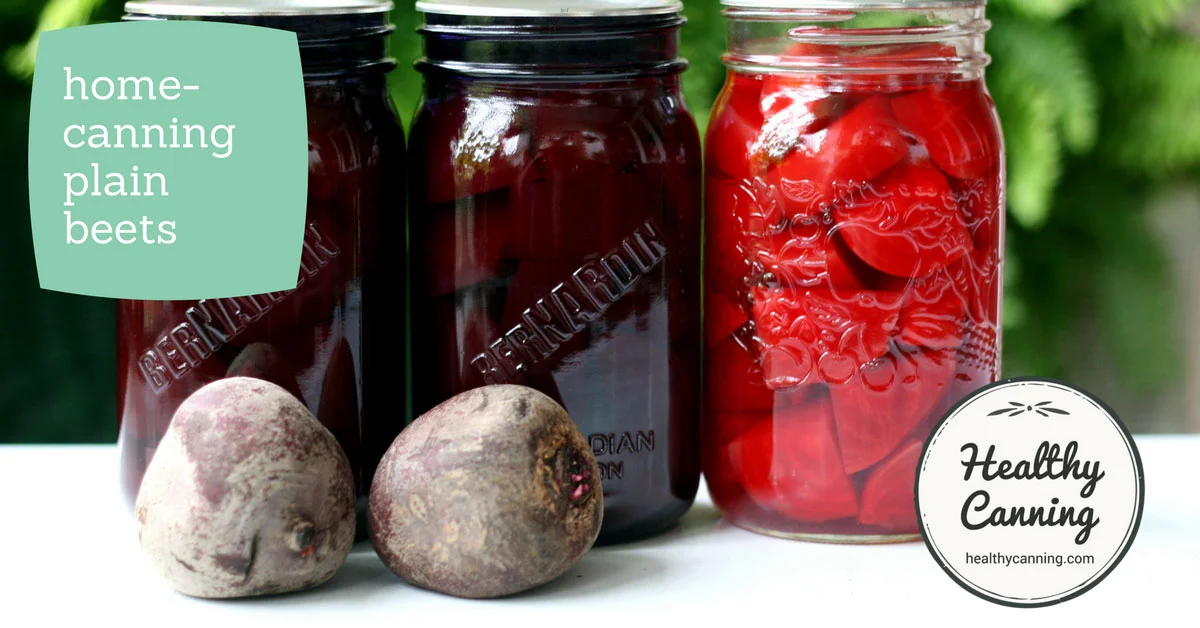

The resurgence of home food preservation has brought traditional techniques back into modern kitchens, but with this revival comes the critical responsibility of adhering to science-based safety standards. Among the various vegetables harvested for winter storage, the beet—often referred to as beetroot—remains a staple due to its versatility and nutrient density. However, food safety experts from the United States Department of Agriculture (USDA) and the National Center for Home Food Preservation (NCHFP) emphasize that plain beets belong to a specific category of low-acid foods that require rigorous processing methods to ensure they are safe for human consumption. Unlike pickled beets, which utilize vinegar to increase acidity, plain beets must be processed exclusively in a pressure canner to eliminate the risk of foodborne illnesses, most notably botulism.

The Critical Necessity of Pressure Canning for Low-Acid Vegetables
The primary concern in home canning is the suppression of Clostridium botulinum, a bacterium that produces a deadly neurotoxin in anaerobic (oxygen-free), low-acid environments. Plain beets have a pH level that typically falls between 4.9 and 5.8, placing them well within the "low-acid" category (defined as any food with a pH greater than 4.6). In these conditions, the heat-resistant spores of C. botulinum can survive the temperature of boiling water (212°F or 100°C). Only the higher temperatures achieved in a pressure canner—typically 240°F (116°C)—are sufficient to destroy these spores.
Public health records provide a sobering look at the consequences of deviating from these standards. Between 1990 and 2012, at least 10 documented cases of botulism in the United States were directly linked to home-canned beets that were processed in a boiling water bath rather than a pressure canner. Experts warn that while "heritage" recipes or old family methods might suggest water-bathing plain vegetables with a small amount of vinegar, these methods are insufficient to guarantee safety. The NCHFP asserts that there is no alternative to pressure canning for plain beets, and any attempt to use a water bath process for non-acidified beets is a high-risk endeavor.
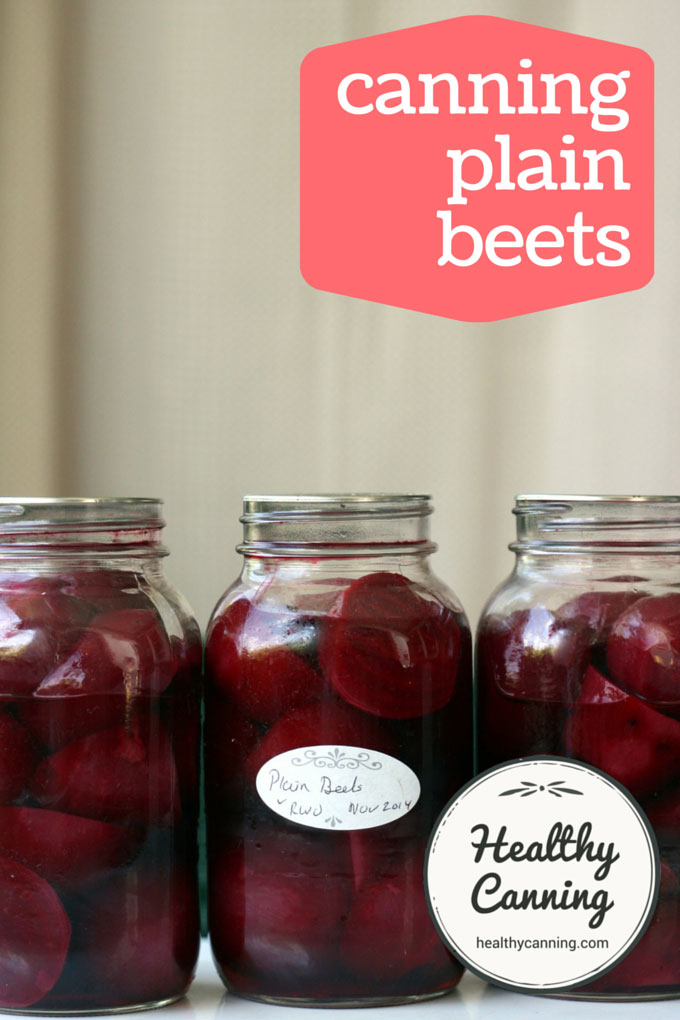
Preparation and Quantitative Guidelines for Home Canners
Successful canning begins with high-quality raw materials and an understanding of the yields required for a full canning run. For those planning to stock their shelves, the USDA provides approximate guidelines for quantities. On average, a home canner will need approximately 1 ¼ kilograms (3 pounds) of beets to fill a one-liter (US quart) jar. For a full canner load of seven quarts, roughly 9.5 kilograms (21 pounds) of beets are required.
When selecting beets, size and uniformity are key factors. Small to medium beets—roughly 5 to 7 centimeters (2 to 3 inches) in diameter—are ideal for canning whole. Larger beets should be sliced or cubed to ensure that heat penetrates the center of the food during the processing cycle. The NCHFP judging criteria specify that beets over 7 centimeters (3 inches) in diameter are often too fibrous for high-quality canning. Furthermore, it is essential to distinguish between the root and the greens. While beet tops are edible and can be preserved, they require a completely separate canning procedure and must never be processed in the same jar as the roots.
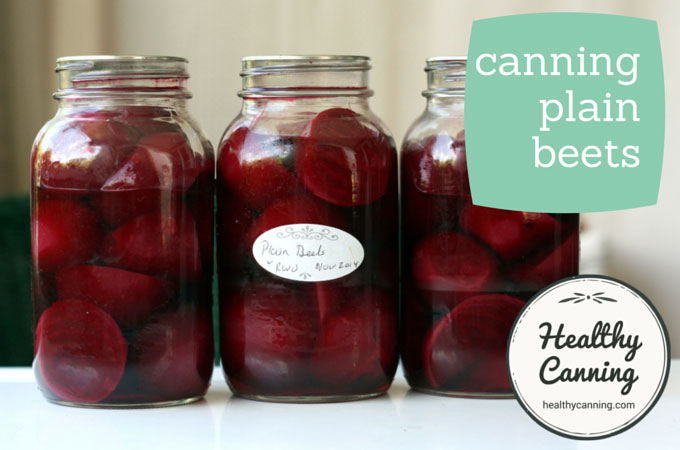
Step-by-Step Chronology of the Canning Process
The process for canning plain beets is a "hot pack" method, which involves pre-cooking the vegetables before they are placed in jars. This method is preferred for firm-fleshed vegetables as it helps to remove air from the plant tissues, shrinks the product to allow for a tighter pack, and ensures the food is at a safe starting temperature before entering the pressure canner.
- Initial Preparation: Leave 2 to 5 centimeters (1 to 2 inches) of the stem and the entire taproot attached to the beets during the initial boil. This prevents "bleeding" or excessive color loss. Wash the beets thoroughly to remove all soil.
- Pre-cooking: Boil the beets in a large pot until the skins slip off easily. This usually takes 15 to 25 minutes depending on the size of the beets. Alternatively, a steam canner or pressure cooker can be used to pre-cook the beets more efficiently, though care must be taken not to overcook them.
- Peeling and Trimming: Once pre-cooked, the skins should be removed. This is a safety requirement, as peeling significantly reduces the microbial load on the surface of the vegetable. After peeling, trim the stems and roots.
- Jar Loading: Pack the hot beets into sterilized half-liter (pint) or one-liter (quart) jars. Leave exactly 3 centimeters (1 inch) of headspace. This space is vital for the vacuum seal to form correctly during the cooling process.
- Seasoning and Liquid: If desired, add salt for seasoning (roughly ½ teaspoon per pint or 1 teaspoon per quart). Salt is not a preservative in this recipe and may be omitted for low-sodium diets. Fill the jars with fresh boiling water, maintaining the 1-inch headspace.
- Processing: Place the jars in the pressure canner. For a weighted-gauge canner at altitudes of 0 to 300 meters, process at 10 pounds of pressure. Half-liter jars require 30 minutes, while one-liter jars require 35 minutes.
The Chemistry of Color: Managing Betalaines
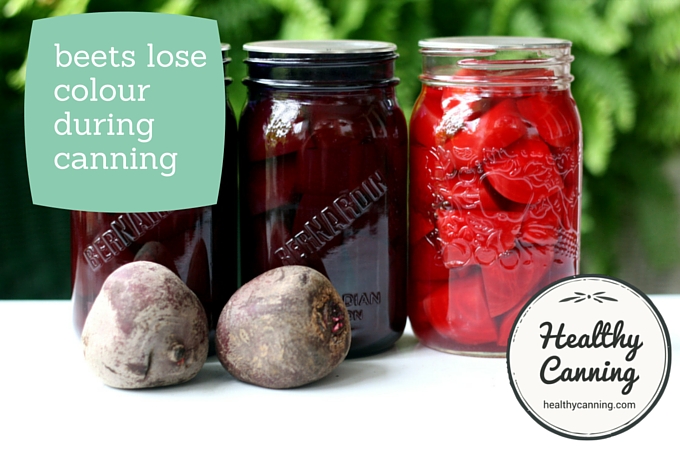
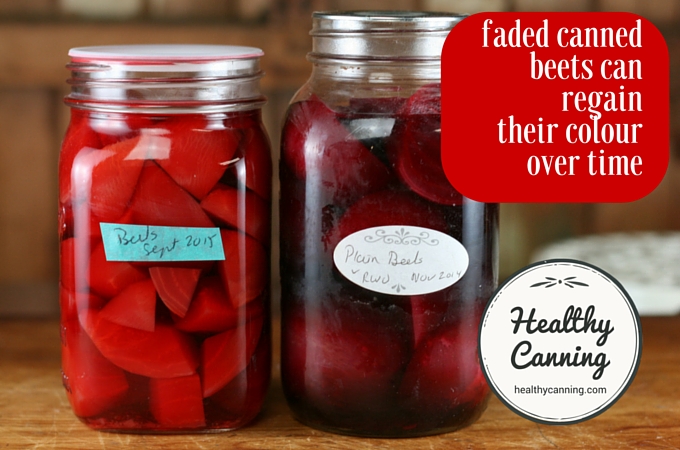
One of the most common complaints among home canners is the loss of the vibrant red color in canned beets. This phenomenon is rooted in the chemistry of betalaines, the pigments responsible for the beet’s hue. Betalaines are sensitive to high temperatures and can occasionally turn into a colorless compound during the intense heat of pressure canning.
According to the Penn State Extension, this reaction is often reversible. It is common for beets to appear pale or brownish immediately after being removed from the canner, only to regain their deep red color after a few days of storage at room temperature. To minimize initial color loss, experts recommend using specific varieties known for their heat stability, such as ‘Detroit Dark Red’ or ‘Formanova.’ Additionally, ensuring that the beets are peeled only after pre-cooking and maintaining the correct processing times can help preserve the aesthetic quality of the product.
Historical Context and the Evolution of Safety Standards
The history of beet canning reveals a long-standing awareness of the dangers of improper processing. As early as 1926, the USDA’s Farmer’s Bulletin No. 1471 explicitly recommended pressure canning for non-acid vegetables to mitigate the risk of C. botulinum. However, during the Second World War, there was a documented shift in some educational materials.

Due to the rationing of metals needed for the war effort, pressure canners were in short supply. Consequently, some University Extension bulletins from the mid-1940s began suggesting an "acid method" for beets, which involved adding a small amount of vinegar and processing the jars in a boiling water bath for 90 minutes. Modern science has since debunked this method, proving that the amount of vinegar suggested was insufficient to lower the pH to a safe level for water-bath canning. These historical "shortcuts" are now cited as cautionary tales, illustrating why home canners should always rely on the most current USDA guidelines rather than vintage cookbooks.
Nutritional Profile and Dietary Impact
Canned beets are a nutritionally dense addition to a pantry. A standard 175-gram serving of home-canned beets contains approximately 124 calories, 4 grams of protein, and 3.6 grams of dietary fiber. They are an excellent source of folate, manganese, and potassium. Because home canning allows the processor to control the ingredients, these beets are often superior to commercially canned versions, which may contain high levels of sodium or added sugars.
For those monitoring their salt intake, the ability to process "salt-free" beets is a significant advantage. In pressure canning, the safety of the product is derived from the heat and pressure, not from salt or acidity, making it an ideal method for health-conscious consumers.
Broader Implications for Food Security and Sustainability
The practice of canning plain beets reflects a broader trend toward food self-sufficiency and the reduction of food waste. By preserving beets at the height of their season, households can reduce their reliance on global supply chains and enjoy locally grown produce year-round. Furthermore, the ability to store these vegetables without the need for refrigeration (as required by freezing) offers a sustainable, energy-efficient solution for long-term food storage.
However, the efficacy of this tradition relies entirely on the precision of the practitioner. The transition from raw garden produce to a shelf-stable jar is a scientific process that leaves little room for error. By following the established protocols—peeling the vegetables, maintaining proper headspace, and utilizing a calibrated pressure canner—home gardeners can ensure that their harvest remains a source of nourishment rather than a health hazard.
As food preservation technology continues to evolve, the core principles established by the USDA remain the gold standard. The consensus among food scientists is clear: while the kitchen is a place for creativity, the canning room is a place for chemistry and compliance. Through the careful application of these high-heat methods, the humble beet can be safely enjoyed through the longest winters, providing a link between the abundance of the summer harvest and the dinner tables of the future.