
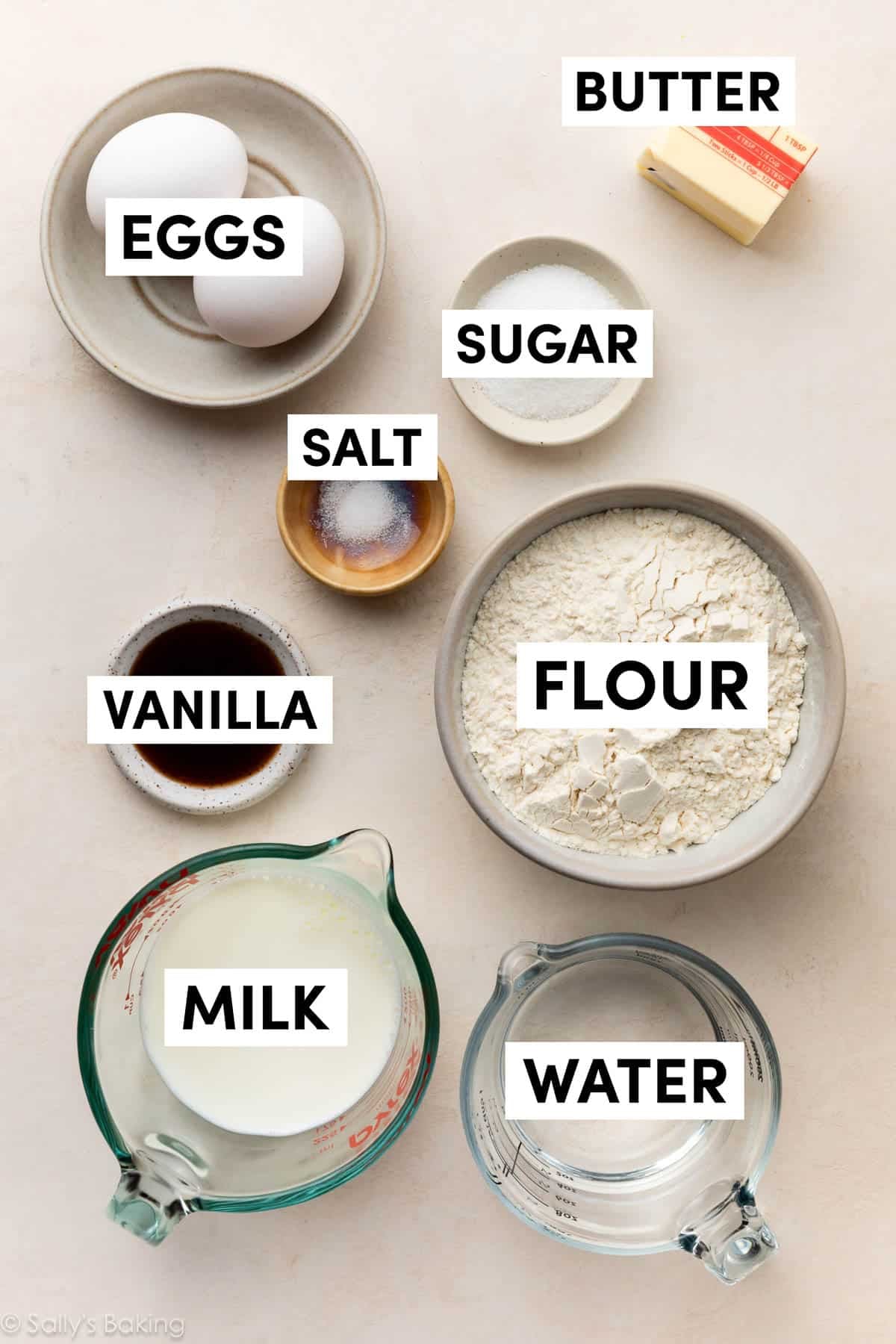
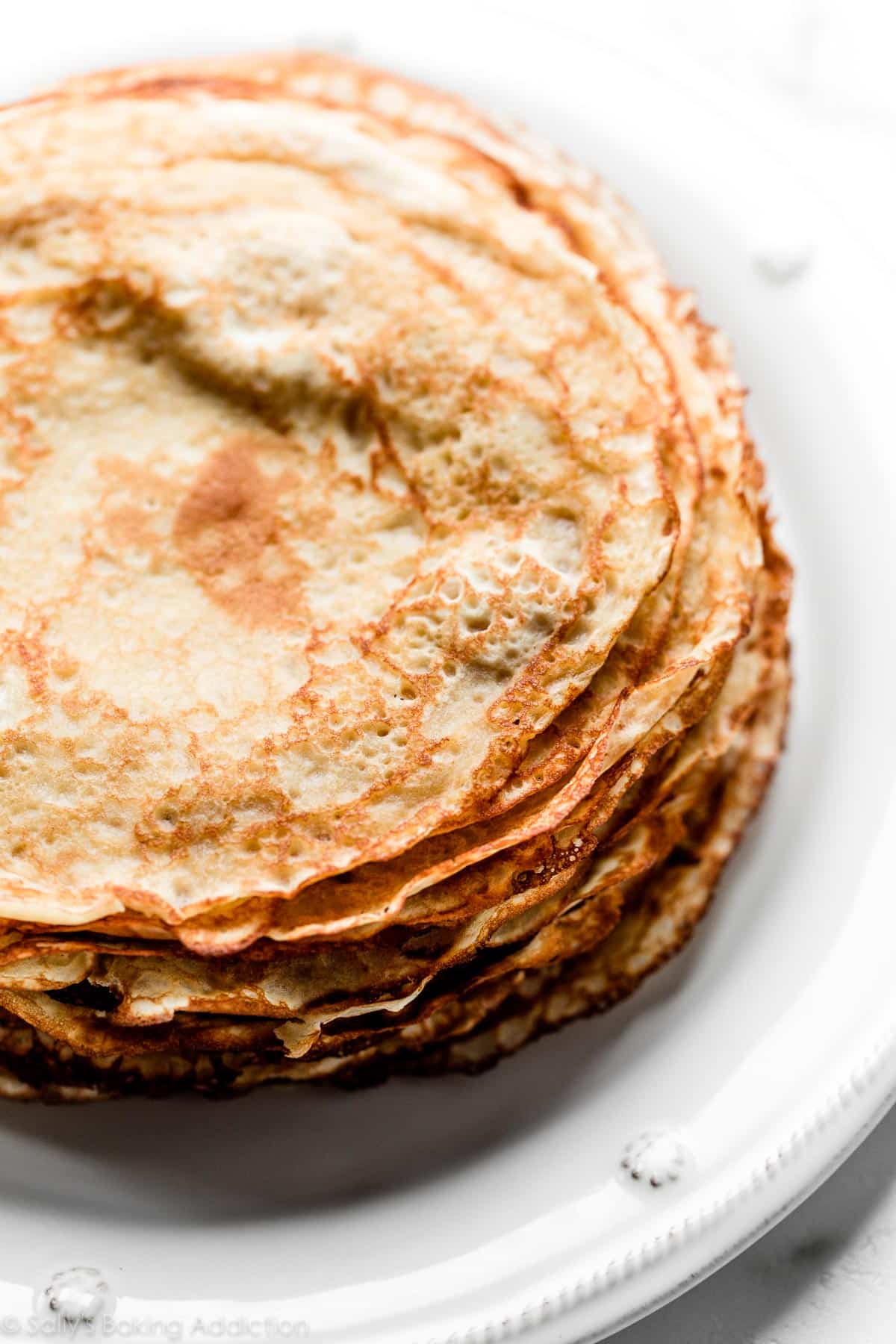
Learning to prepare homemade crepes, those exquisitely thin, buttery, and delicate French-style pancakes, is a culinary skill far more accessible than often perceived. This classic dish, characterized by its incredible versatility, relies on a straightforward batter composed of just eight fundamental ingredients, coming together swiftly, often in mere minutes. Dispelling the myth that specialized equipment is mandatory, a standard non-stick skillet performs admirably, making the joy of crepe-making achievable in any home kitchen. Whether destined for a sweet ensemble of fresh berries and whipped cream or a savory filling of meats, cheeses, and vegetables, a well-executed crepe recipe consistently yields soft, pliable results with subtly crisp edges, embodying a perfect balance of texture and flavor.
This comprehensive guide delves into the nuances of crafting restaurant-quality crepes at home, building upon a foundational recipe refined over years. Originally introduced in 2015, the methodology has been enhanced with visual tutorials and critical success tips, transforming a seemingly intricate process into a confidently executable culinary endeavor. It serves as the ultimate resource for understanding not only the "how" but also the "why" behind each step, from ingredient selection to cooking techniques and a plethora of serving suggestions.
The Enduring Appeal and Culinary Foundations of Crepes
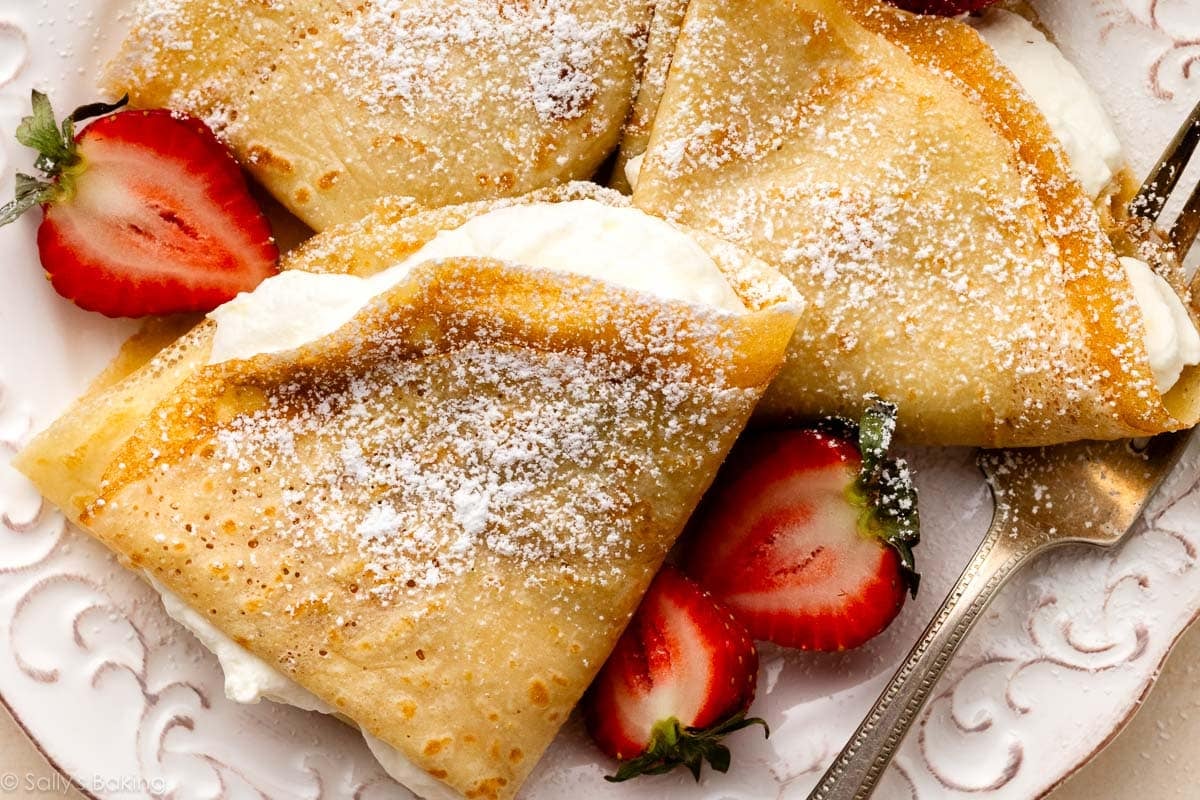
Crepes, unlike their American pancake counterparts, are distinguished by their absence of leavening agents such such as baking powder or baking soda. This fundamental difference results in their characteristic thinness, preventing them from rising and puffing during cooking. Instead, they remain exquisitely tender and flexible, ideal for elegantly folding or rolling around a diverse array of fillings. Their inherently neutral flavor profile is a cornerstone of their versatility, rendering them equally suitable for any meal of the day – breakfast, brunch, lunch, dinner, or dessert. This adaptability is precisely why crepes have transcended their French origins to become a globally celebrated dish, gracing tables from casual cafes to sophisticated wedding receptions.
The simplicity of their core ingredients – typically flour, liquid (milk and/or water), eggs, butter, sugar, vanilla extract, and a pinch of salt – belies the sophisticated culinary experience they offer. While professional establishments might employ specialized crepe griddles, the adaptability of the recipe ensures that an ordinary non-stick skillet is perfectly adequate for achieving authentic results in a domestic setting. The inherent fun and interactive nature of crepes, inviting endless customization through fillings and toppings, solidifies their status as a perennial favorite among home cooks and gourmands alike.
A Glimpse into History: The Breton Origins of Crepes
The history of crepes is deeply intertwined with the culinary traditions of Brittany, a region in northwest France. The earliest forms of crepes, known as galettes, date back to the 13th century and were typically made from buckwheat flour. Buckwheat, a hardy crop, thrived in the poorer soils of Brittany, making galettes a staple food for the local population. These savory versions were often filled with simple ingredients like ham, cheese, and eggs, providing sustenance and flavor.

Over time, with the introduction of wheat flour and sugar, the sweet crepe emerged, expanding the dish’s versatility and appeal. The evolution from buckwheat galettes to the delicate wheat-flour crepes we know today reflects broader culinary advancements and changing ingredient availability across Europe. In France, crepes hold a special place, particularly during Chandeleur (Candlemas) on February 2nd, a day when families traditionally make and eat crepes to celebrate the return of longer days. This tradition often involves a superstition: holding a coin in one hand while flipping a crepe with the other is believed to bring prosperity for the year. This rich history underscores crepes not just as a meal, but as a cultural artifact, embodying centuries of culinary development and tradition.
The Essential Eight: Understanding Key Ingredients
The success of any crepe hinges on the precise balance and quality of its components. While the list is short, understanding the role of each ingredient is paramount, as substitutions are generally not recommended given the delicate nature of the batter.
- All-Purpose Flour: Provides the structural base of the crepe. Its gluten content, when properly hydrated and rested, contributes to the crepe’s characteristic flexibility and tenderness.
- Granulated Sugar: While present in small quantities, sugar aids in browning the crepe, imparting a delicate sweetness, particularly beneficial for sweet preparations. It also contributes to the tender texture.
- Salt: A crucial flavor enhancer, salt balances the sweetness and enriches the overall taste profile, preventing the crepes from tasting bland.
- Eggs: Act as a binder, providing structure and richness. The proteins in eggs coagulate during cooking, giving the crepe its strength and elasticity, preventing tearing.
- Milk: Contributes to the liquid content, ensuring a smooth, thin batter. Milk adds richness and helps create a tender crumb. Whole milk is often preferred for its fat content, which enhances flavor and texture.
- Water: Lightens the batter slightly, contributing to the thinness and delicate texture. A combination of milk and water often yields the ideal consistency.
- Melted Unsalted Butter: Incorporates essential fats, adding flavor and preventing the crepes from sticking to the pan. Butter also contributes to the tenderness and a desirable lightly crisp edge. It must be cooled slightly before adding to prevent scrambling the eggs.
- Vanilla Extract: Primarily for sweet crepes, vanilla adds a warm, aromatic note that enhances the overall flavor profile. For savory crepes, it can be omitted or replaced with other flavorings.
By themselves, crepes possess a subtly flavored profile, making texture and the delicate balance of these ingredients absolutely crucial for achieving the desired thinness and flexibility.

The Art of Preparation: From Blender to Skillet
The process of making crepes is surprisingly streamlined, especially with modern kitchen aids.
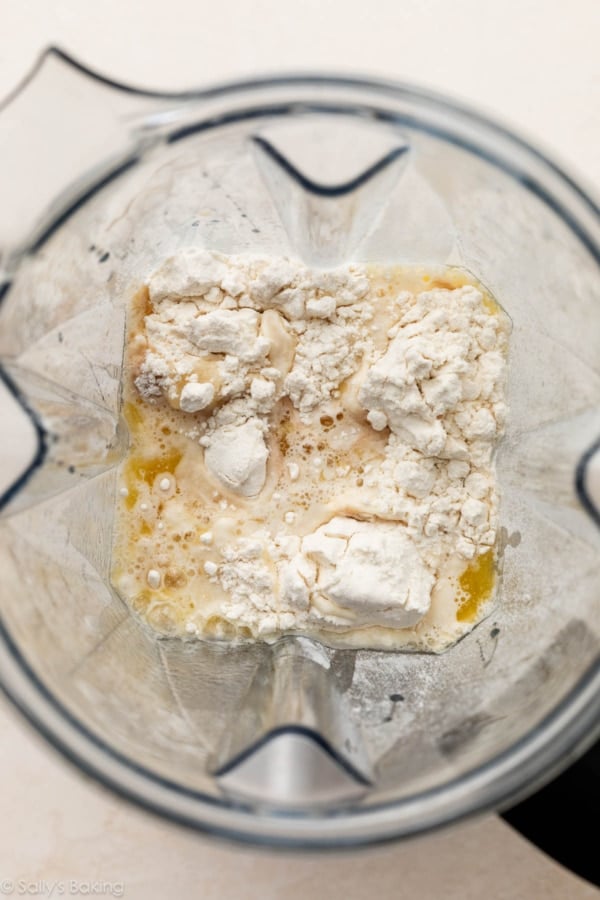
1. Batter Preparation – The Blender Advantage: The initial step involves combining all ingredients, and here, a blender proves to be an invaluable tool. After melting the butter, it is critical to allow it to cool for a few minutes to prevent it from scrambling the eggs upon contact. Once cooled, the melted butter, alongside all other ingredients, is added to the blender. The high-speed action of a blender efficiently processes the flour, ensuring it is perfectly integrated with the wet ingredients, resulting in an exceptionally smooth, lump-free batter. For those without a blender, a traditional whisk and mixing bowl can be used, though extra care must be taken to ensure all lumps are thoroughly whisked out, potentially requiring straining the batter through a fine-mesh sieve. This smooth consistency is also critical for dishes like Dutch baby pancakes, highlighting the blender’s utility across similar recipes.
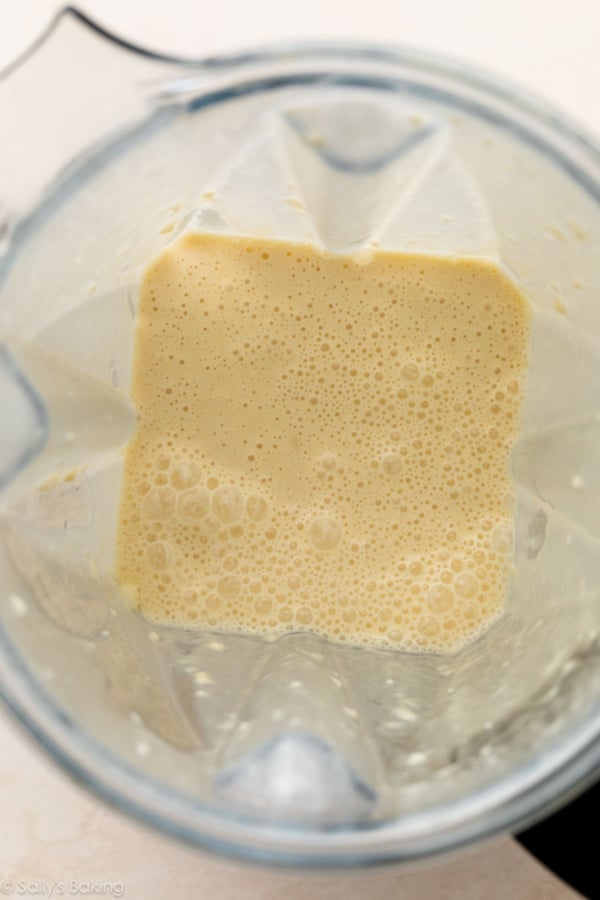
2. The Critical Rest Period: Once blended, the crepe batter must be chilled for a minimum of 30 to 60 minutes, though an overnight rest is often preferred and highly beneficial. This resting period is not merely a suggestion but a crucial step that significantly impacts the taste, texture, and overall success of the crepes. During this time, the flour fully hydrates, allowing the gluten strands to relax. This relaxation prevents the crepes from being tough or rubbery and makes them more pliable and less prone to tearing during cooking. Furthermore, any air bubbles introduced during mixing have time to settle, leading to a smoother, more even cooking surface and a superior final product. This interval also offers a convenient opportunity for kitchen cleanup and pan preparation.
3. Pan Preparation and Heating: Prior to cooking, a small 8-inch non-stick skillet or a dedicated crepe pan should be generously buttered. Maintaining a supply of butter nearby is essential for re-greasing the pan between each crepe to ensure consistent non-stick performance and flavor. While specialty crepe pans are excellent, a regular small skillet works perfectly for home use. If only a larger skillet is available, it can be adapted, but meticulous attention must be paid to keeping the crepes exceptionally thin.
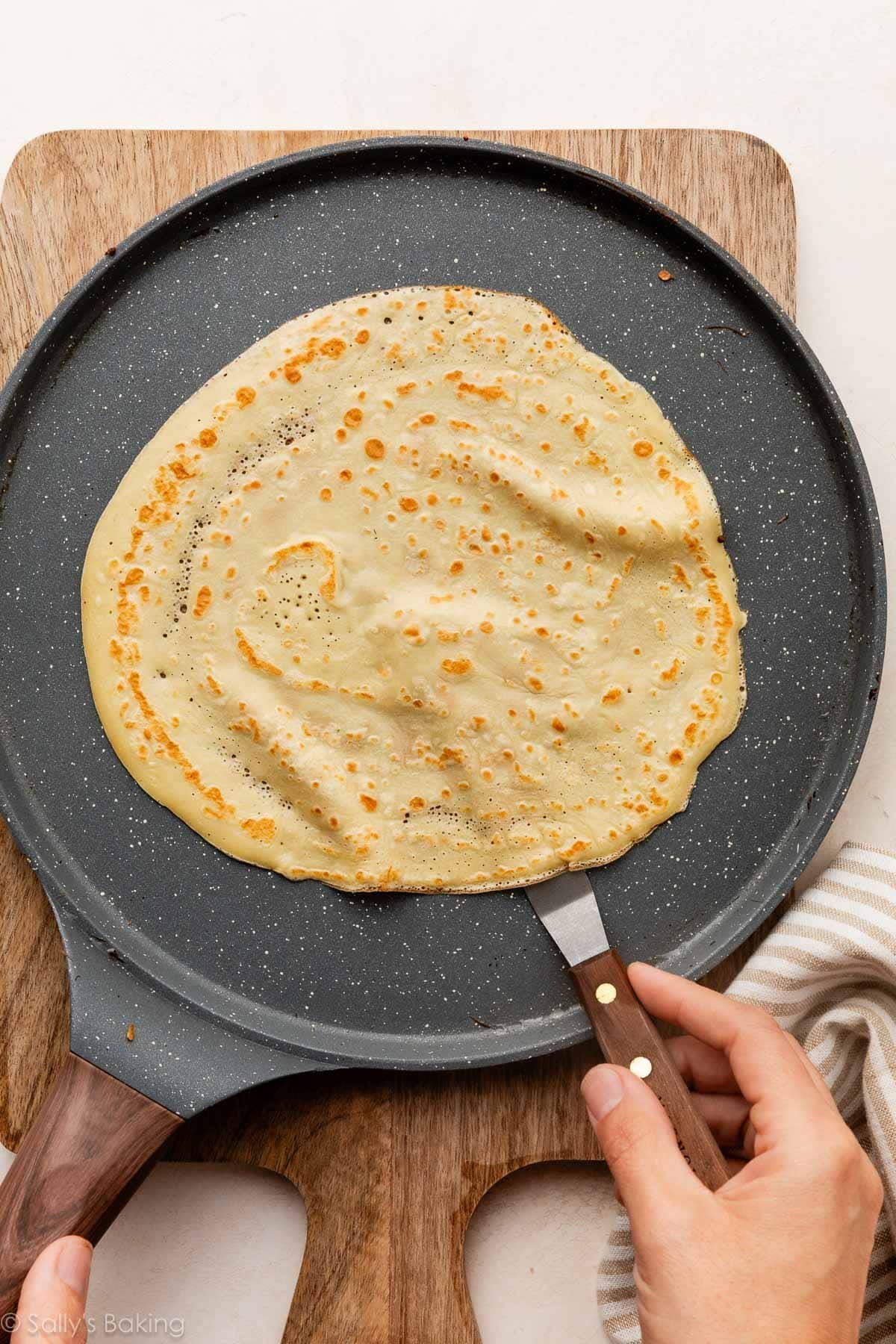
4. Cooking One Crepe at a Time: The most time-consuming aspect of crepe making is cooking them individually over medium heat. For each crepe, approximately 3 to 4 tablespoons of batter are poured into the heated, buttered pan. The key to achieving the signature thinness is to immediately swirl the pan in a circular motion, allowing the batter to spread rapidly and evenly across the entire surface. The less batter used and the more effectively it is spread, the thinner the crepe will be. Insufficient spreading will result in thicker crepes, more akin to tortillas in texture, albeit still delicious. Each side cooks quickly: typically 1 to 2 minutes for the first side, or until the edges begin to crisp and lift, and approximately 30 seconds after flipping. Overcooking is a common pitfall that can lead to rubbery crepes, so vigilance is essential.
Optimizing for Success: Expert Tips and Troubleshooting
Achieving the perfect crepe consistently involves attention to detail and understanding common issues. Culinary experts emphasize these key considerations:
- Batter Consistency: The batter should be thin, similar to heavy cream. If it’s too thick, add a tablespoon of milk or water at a time until the desired consistency is reached.
- Pan Temperature: Medium heat is ideal. If the pan is too hot, the crepes will burn before cooking through; too cool, and they won’t brown properly and may become tough. A drop of water should sizzle and evaporate instantly.
- Greasing the Pan: Lightly grease the pan between each crepe. This prevents sticking and ensures an even, golden-brown finish. A buttered paper towel is an excellent tool for this.
- The First Crepe: Often referred to as the "test crepe," the first one rarely turns out perfectly. It helps gauge the pan’s temperature and the batter’s consistency. Don’t be discouraged; subsequent crepes will likely improve.
- Flipping Technique: Wait until the edges are set and lightly golden, and the center appears mostly dry before attempting to flip. A thin spatula or even your fingers can be used. Practice makes perfect.
- Storing Cooked Crepes: Stack cooked crepes with parchment paper in between to prevent sticking. This is particularly useful when making a large batch.
Troubleshooting Common Issues:
- Rubbery Crepes: This is almost always a sign of overcooking. Crepes cook very quickly, requiring minimal time on the heat. Reduce cooking time per side.
- Tearing Crepes: Insufficient resting time for the batter can lead to tearing due to unrelaxed gluten. Flipping too early, before the crepe has fully set, is another common cause. Ensure the batter has rested and the first side is adequately cooked.
- Thick Crepes (like tortillas): This results from using too much batter or not swirling it quickly and thinly enough across the pan. Reduce the batter quantity (aim for 3-4 tablespoons for an 8-inch pan) and swiftly spread it.
- Lumpy Batter: While a blender largely prevents this, if whisking by hand, ensure thorough mixing. Straining the batter through a fine-mesh sieve after mixing can eliminate any lingering lumps.
The Canvas of Culinary Creativity: Crepe Fillings and Toppings
Crepes are, by design, a blank canvas awaiting artistic culinary expression. Their neutral base makes them exceptionally adaptable to an infinite array of sweet and savory accompaniments.
Sweet Crepe Filling Ideas:
- Classic Lemon and Sugar: A timeless French preparation, a squeeze of fresh lemon juice and a dusting of granulated sugar allows the delicate flavor of the crepe to truly shine.
- Fresh Fruits and Whipped Cream: Berries (strawberries, blueberries, raspberries), sliced bananas, peaches, or apples, often paired with homemade whipped cream, offer a light, refreshing dessert or breakfast.
- Nutella or Chocolate Sauce: A perennial favorite, chocolate-hazelnut spread or a rich chocolate ganache provides a decadent treat.
- Fruit Jams and Compotes: Strawberry, raspberry, apricot, or cherry jams, as well as warm fruit compotes, add a burst of fruity flavor.
- Cream Cheese Fillings: A sweetened cream cheese mixture, sometimes with fruit, offers a rich and tangy option.
- Maple Syrup or Honey: Simple yet satisfying, a drizzle of natural sweeteners is always a welcome addition.
- Cinnamon Sugar: A quick and easy topping for a hint of spice.
- Ice Cream or Sorbet: For an elevated dessert, pairing warm crepes with a scoop of vanilla bean ice cream or a refreshing sorbet creates a delightful contrast.
- Crème Chantilly and Caramel Sauce: A more gourmet approach, combining light, sweetened whipped cream with a rich, buttery caramel.
- Crepes Suzette: A renowned French dessert, traditionally prepared table-side, featuring crepes folded in a butter, sugar, tangerine or orange juice, and Grand Marnier or curaçao sauce, flambéed for a dramatic presentation.
Savory Crepe Filling Ideas:
- Ham and Cheese: A classic combination, often with Gruyere or Swiss cheese, makes for a satisfying lunch or light dinner.
- Spinach and Feta: A Mediterranean-inspired filling, often enhanced with a touch of garlic or herbs.
- Mushroom and Swiss: Sautéed mushrooms with melted Swiss cheese offers an earthy and comforting option.
- Chicken and Asparagus: Diced cooked chicken and blanched asparagus, perhaps in a light cream sauce, make for an elegant meal.
- Smoked Salmon and Cream Cheese: A sophisticated brunch option, often garnished with fresh dill or capers.
- Ground Beef and Vegetables: Seasoned ground beef, often with onions, peppers, and a tomato-based sauce, can transform crepes into a hearty dinner.
- Eggs and Bacon/Sausage: For a breakfast or brunch crepe, scrambled eggs with crispy bacon or sausage crumbles are excellent choices.
- Ratatouille: A vibrant medley of Mediterranean vegetables, stewed to perfection, offers a flavorful vegetarian filling.
- Chicken or Seafood in Béchamel Sauce: Creamy, rich fillings that elevate crepes to a main course.
Practicality for the Modern Kitchen: Making Ahead and Storage
The flexibility of crepe preparation extends to their make-ahead potential, catering to busy lifestyles without compromising quality. The batter itself can be prepared up to one day in advance. After blending, it should be tightly sealed in the blender container or transferred to a mixing bowl and covered securely, then refrigerated. This allows for effortless cooking the following day, making crepes an excellent option for stress-free brunches or quick weeknight meals.
While crepes are undeniably best enjoyed fresh off the pan, leftovers store remarkably well. Cooked crepes can be refrigerated for up to two days. For reheating, they can be gently warmed in a microwave or arranged on a lined baking sheet (they can slightly overlap), covered with aluminum foil, and heated in a 275°F (135°C) oven for approximately 10 minutes until warmed through.
For longer storage, crepes can be frozen. To do so, allow them to cool completely, then stack them with a piece of parchment paper between each crepe to prevent sticking. Wrap the stack tightly in plastic wrap and then aluminum foil, or place them in an airtight freezer-safe bag. Frozen crepes can last for up to one month. To thaw, simply transfer them to the refrigerator overnight or reheat gently from frozen in the microwave or oven until pliable. This makes crepes an incredibly convenient option for meal prepping or having a quick, elegant meal ready at a moment’s notice.
The Broader Implications of Home Baking and Culinary Skill
The accessibility of recipes like homemade crepes underscores a significant trend in contemporary culinary culture: the resurgence of home baking and cooking. This movement, amplified by global events and a renewed focus on health and sustainability, highlights several broader implications. Mastering basic recipes like crepes empowers individuals to take control over the ingredients they consume, fostering healthier eating habits by reducing reliance on processed foods and allowing for dietary customizations. From a nutritional standpoint, homemade crepes, depending on their fillings, can be a balanced meal, providing carbohydrates for energy, protein from eggs and dairy, and fiber from fruit or vegetable fillings.
Furthermore, engaging in home cooking revitalizes traditional skills that may have waned in previous generations. It promotes a sense of accomplishment and creative expression, offering a mindful escape from daily stresses. For families, the act of making crepes together can become a cherished ritual, fostering stronger bonds and introducing children to culinary arts from a young age. The economic benefits are also notable; preparing meals at home is consistently more cost-effective than dining out or purchasing pre-made options, contributing to household budget management.
The widespread availability of online resources, including detailed recipe guides and video tutorials, has democratized access to culinary knowledge, enabling home cooks to confidently tackle dishes once thought to be reserved for professional chefs. This democratization encourages experimentation and a deeper appreciation for diverse food cultures, such as the rich heritage of French crepes. Beyond the immediate satisfaction of a delicious meal, learning to make crepes from scratch represents a small yet significant step towards a more self-sufficient, creative, and informed approach to food.
Ultimately, mastering the art of homemade crepes is a rewarding culinary journey. They are simple enough for a casual breakfast yet possess an inherent elegance suitable for special occasions, from celebratory brunches to sophisticated desserts. With the endless possibilities for sweet and savory fillings – be it fresh fruit and whipped cream, savory eggs and cheese, or an elaborate crepe cake – this versatile dish stands as a testament to the enduring appeal of accessible, delicious, and deeply satisfying home cooking.