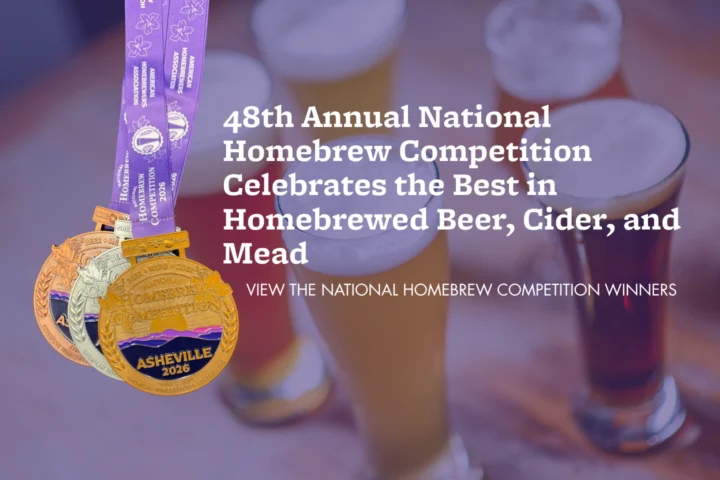

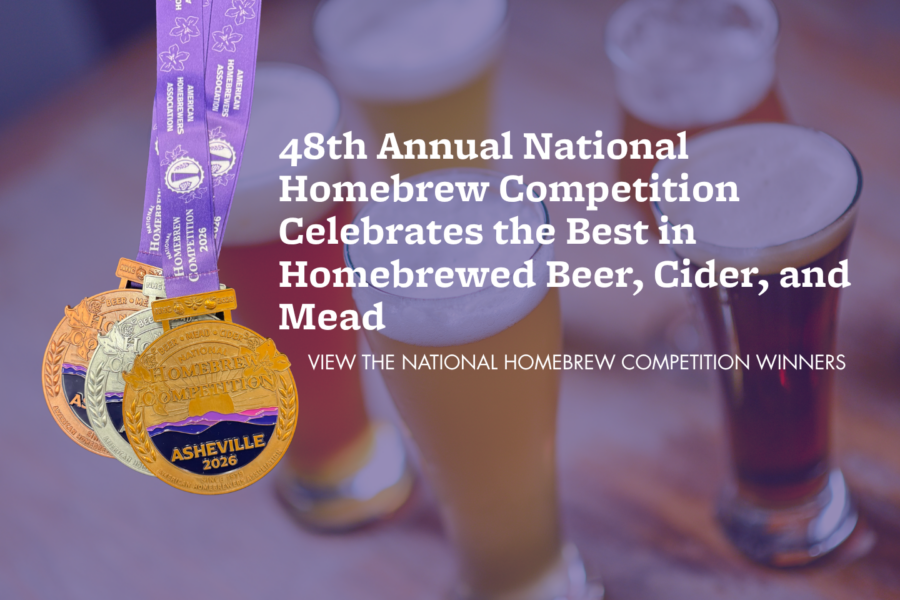
The American Homebrewers Association (AHA) officially concluded its 2026 National Homebrew Competition (NHC) on June 20, 2026, during a prestigious awards ceremony held at Homebrew Con in Asheville, North Carolina. As the national nonprofit organization dedicated to the advancement of homebrewing, the AHA utilized this flagship event to recognize the most exceptional amateur brewers, meadmakers, and cidermakers in the world. This year’s competition culminated in the awarding of 120 medals across 40 distinct style categories, highlighting the technical proficiency and creative innovation currently defining the hobby. Beyond the individual style accolades, the AHA presented eight major awards to individuals, clubs, and organizations whose contributions have significantly bolstered the homebrewing community over the past year.
The 2026 competition serves as a landmark moment for the organization, which has overseen the evaluation of more than 170,000 entries since the inaugural event in 1979. What began nearly five decades ago as a modest gathering in Boulder, Colorado, has evolved into the world’s largest and most enduring homebrew competition. The scale of the 2026 event underscores the continued vitality of the hobby; despite the professionalization of the craft beer industry, amateur brewing remains a critical pillar of innovation and community. This year, the NHC received 3,575 entries from 1,054 AHA members, representing 46 U.S. states, Washington, D.C., and seven different countries. This international participation highlights the global reach of the AHA’s standards and the universal appeal of fermented beverage production as a form of personal and technical expression.
A Chronology of the 2026 Competition Cycles
The journey to the winners’ podium in Asheville was a multi-stage process designed to ensure rigorous and fair evaluation. The competition began with the First Round judging phase, which took place across nine strategic regional hubs: San Diego, California; Chicago, Illinois; Indianapolis, Indiana; Kansas City, Missouri; Longmont, Colorado; Philadelphia, Pennsylvania; San Francisco, California; Seattle, Washington; and Tampa, Florida. These locations were chosen to facilitate the logistics of receiving thousands of bottles while tapping into the expertise of regional Beer Judge Certification Program (BJCP) sanctioned judges.
Following the preliminary evaluations, the highest-scoring entries advanced to the Final Round. This final stage of judging took place in Asheville on June 17 and 18, just days prior to the awards ceremony. The selection of Asheville as the host city for Homebrew Con and the NHC Final Round is significant, as the city is widely regarded as one of the premier "Beer Cities" in the United States. Local infrastructure, including Hi-Wire Brewing, played a pivotal role in the competition’s logistics by receiving and managing the storage of Final Round entries. The Renaissance Hotel served as the backdrop for the ceremony, providing a formal setting for the announcement of the year’s most prestigious amateur brewing honors.
Statistical Analysis and Popular Style Trends
The 2026 data reveals shifting interests within the homebrewing community, particularly a renewed focus on technical precision and traditional European styles. The "Most-Entered Style Categories" provide a snapshot of what amateur brewers are currently perfecting in their home breweries. Topping the list was Table 7, Dark European Lager, which saw 152 entries. The popularity of this category suggests a growing mastery of lager fermentation among homebrewers—a process that requires strict temperature control and patience, often viewed as a benchmark for technical skill.
Following closely was Table 2, Pale European Beer, with 137 entries. This category, which includes styles such as Helles and Pilsner, emphasizes balance and the quality of raw ingredients, leaving no room for brewing flaws. The third most-entered category was Table 26, Strong Belgian Ale, with 123 entries. Known for complex yeast profiles and high alcohol content, these ales represent the more expressive and creative side of the hobby. The high volume of entries in these three categories indicates that today’s homebrewers are moving away from the extreme hops of previous decades and toward styles that demand a deeper understanding of malt chemistry and yeast management.
Major Awards and the Pursuit of Excellence
While the category medals celebrate specific beers, meads, and ciders, the NHC Major Awards recognize the "best of the best." Six major awards were presented to recognize overall brewing excellence, spanning the breadth of fermented beverages. These honors, including the Cidermaker of the Year and the Meadmaker of the Year, are among the most coveted titles in the brewing world. Winning such an award often serves as a springboard for amateur brewers, many of whom go on to open professional breweries or become industry consultants.
The criteria for these major awards are stringent, often requiring high scores across multiple entries or a single "Best of Show" victory that surpasses thousands of competitors. The 2026 winners joined an elite fraternity of brewers who have demonstrated that amateur production can rival, and often exceed, the quality of commercial products. The AHA emphasized that while only a few take home the top trophies, the feedback provided by the judges to every entrant is a core component of the competition’s educational mission.
Leadership Perspectives on the State of Homebrewing
Charlie Harr, Chair of the National Homebrew Competition, offered a reflective analysis of the 2026 field during the ceremony. He noted that the rising quality of entries is a testament to the increasing accessibility of professional-grade equipment and advanced brewing education. Harr emphasized that earning a medal at the NHC is an "incredible achievement," but he also highlighted the importance of the community that supports the event.
"The creativity, technical skill, and care that homebrewers, meadmakers, and cidermakers bring to this competition is remarkable," Harr stated. He further noted that the competition is made stronger by the collective effort of entrants, expert judges, and the volunteers who manage the intricate logistics of the event. According to Harr, the shared passion for the craft is what continues to drive the AHA and the NHC forward, even as the landscape of the broader beverage industry changes.
Community Recognition and Advocacy Awards
In addition to the competitive brewing awards, the AHA recognized the infrastructure that makes the hobby possible. The Homebrew Shop of the Year Award was presented to acknowledge the local businesses that serve as the primary resource for ingredients, equipment, and education. These shops are often the first point of contact for new hobbyists and serve as community hubs where brewers share knowledge and troubleshoot recipes.
The American Homebrewers Association Advocacy Award was also presented, honoring individuals or organizations that have worked to protect and expand the rights of homebrewers. This includes legislative efforts to simplify homebrewing laws, promote the hobby at the state level, and ensure that amateur brewers can safely and legally share their creations. These awards reflect the AHA’s broader mission as a 501(c)(6) membership organization and a 501(c)(3) supporting organization (the A-Ha Foundation), which balances hobbyist enjoyment with serious legal and educational advocacy.
The Broader Impact and Implications for the Industry
The results of the 2026 National Homebrew Competition carry implications far beyond the amateur circuit. Historically, homebrewing has served as the research and development arm of the craft beer industry. Many of the styles that are now staples of the commercial market, such as the American IPA or various experimental fruit sours, were perfected in kitchens and garages long before they reached a professional brewhouse.
The dominance of European lagers in the 2026 entry pool may signal a coming trend in the professional craft sector, as professional brewers often look to the NHC winners for inspiration on what "educated" consumers are currently seeking. Furthermore, the technical proficiency demonstrated in the Dark European Lager and Pale European Beer categories suggests that the next generation of professional brewers will enter the industry with a sophisticated understanding of traditional brewing science.
Looking Toward the Future of the AHA
As the 2026 NHC concludes, the American Homebrewers Association remains focused on its core values: community, education, joy, and volunteerism. Through resources like Zymurgy magazine and the extensive recipe database validated by NHC results, the AHA continues to lower the barrier to entry for new brewers while providing high-level technical data for veterans.
The success of the Asheville event sets the stage for the 2027 competition cycle. With over 170,000 entries evaluated in its history, the NHC has established a legacy of excellence that continues to define the standard for fermented beverages. As the AHA moves toward its 50th anniversary in the coming years, the 2026 competition stands as a testament to the enduring appeal of a hobby that combines scientific rigor with culinary art. For the winners in Asheville, the medals are more than just physical awards; they are a validation of their dedication to the craft and a contribution to the rich history of American brewing.