
A notable re-emphasis on practical, low-tech solutions for household management has recently surfaced, drawing attention to a meticulously organized, paper-based grocery list and weekly meal plan as a powerful antidote to contemporary time constraints. This system, which has undergone refinement over six years, purports to streamline culinary routines, mitigate decision fatigue, and promote home cooking for busy individuals and families amidst increasingly complex schedules. The reappraisal of such an analog approach comes at a time when digital tools proliferate, yet many households still grapple with the practicalities of efficient meal preparation and grocery procurement.
The Modern Culinary Landscape and "Tidsklemma"
In an era characterized by demanding work schedules, extensive family commitments, and an overwhelming array of digital distractions, the simple act of preparing home-cooked meals has become a significant challenge for many. Research from organizations like the Pew Research Center consistently highlights the dual pressures faced by working parents, who often report feeling perpetually short on time. This phenomenon is particularly acute in societies like Norway, where the term "tidsklemma" aptly describes the feeling of being squeezed for time. As explained by cultural commentators, "tidsklemma" encapsulates the daily struggle to balance professional responsibilities, childcare, household duties, and personal well-being, often leaving little bandwidth for meticulous meal planning or frequent grocery trips. This pervasive time poverty often leads to reliance on convenience foods, frequent takeout, or last-minute, inefficient grocery runs, contributing to higher household expenses and increased food waste. The United States Department of Agriculture (USDA) estimates that approximately 30-40% of the food supply is wasted, much of which occurs at the consumer level, often due to poor planning or impulse purchases.
The System Unveiled: A Blueprint for Efficiency
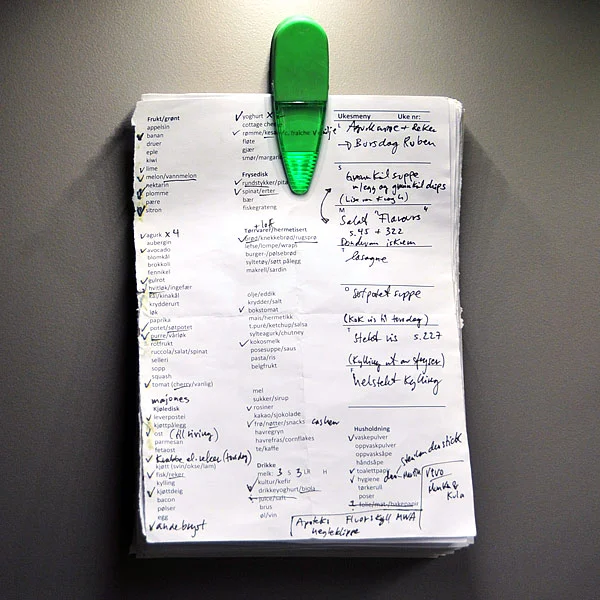
At the core of this advocated system is a generic, pre-populated grocery list, meticulously organized by food categories and designed to mirror the physical layout of a local supermarket. Unlike starting from scratch each week, this adaptable template allows users to simply tick off needed items, with ample space for specific notes or additional, non-standard purchases. The creator of this system, a home cook with extensive experience, emphasizes its evolution over six years, reflecting the changing dietary preferences of a growing family and the specific availability of products in local stores. This continuous adaptation ensures the list remains relevant and practical, serving as a dynamic tool rather than a static document. The integration of a weekly dinner plan alongside the grocery list is paramount. Rather than merely listing ingredients, the plan includes the intended meals for the week, often referencing specific cookbook page numbers for ease of access. This dual approach serves as a constant reminder during shopping, reducing the likelihood of forgetting crucial ingredients and reinforcing the commitment to the week’s culinary agenda.
The Case for Analog: Why Paper Trumps Digital
While numerous digital grocery list applications offer features like sharing, automatic categorization, and recipe integration, proponents of the paper-based system argue for the unparalleled advantages of physical documentation. The "superb resolution" of paper, as one advocate describes it, provides a full overview of both the weekly menu and the entire shopping list on a single, compact A5-sized sheet. This eliminates the need for scrolling or navigating through multiple screens, allowing for quick, comprehensive glances. Cognitive science research frequently supports the benefits of writing things down physically, suggesting enhanced memory retention and reduced cognitive load compared to typing on a screen. Furthermore, a physical list can be easily folded and placed in a pocket, readily accessible without the distractions or battery concerns associated with smartphones.
Beyond immediate convenience, the archival potential of paper lists offers a unique advantage. Users can print multiple copies, typically 10 to 20 at a time, and easily review past weeks’ lists when updating the generic template. This chronological review allows for an organic evolution of the master list, reflecting shifts in family needs and preferences over time. For instance, items crucial during the years when children were small may be removed as they grow, while new favorites are incorporated. This iterative process ensures the list remains highly personalized and efficient, a living document rather than a rigid set of rules.
Strategic Meal Planning: Beyond Just a List
The integration of a weekly meal plan is not merely about dictating what to cook; it is a strategic tool for managing household resources and promoting healthier eating. By pre-determining meals, families can ensure a balanced diet, incorporate diverse ingredients, and avoid the fatigue of daily decision-making. A study published in the Journal of Nutrition Education and Behavior indicated that individuals who plan their meals tend to have higher dietary quality and a lower risk of obesity.
However, the system also acknowledges the importance of flexibility. While a structured plan is the foundation, rigid adherence is not always practical or desirable. The proponent emphasizes the importance of occasionally "deviating from your weekly dinner plan." Spontaneous invitations from friends or unexpected exhaustion might lead to a decision to eat out or order takeout. This built-in flexibility prevents the system from becoming a source of stress, allowing for real-life contingencies while ensuring that, for the majority of the week, the planning framework encourages home cooking. This balance reflects a pragmatic approach to modern living, recognizing that strict adherence can sometimes be counterproductive.
Broader Implications: Health, Economy, and Environment
The adoption of such a structured meal planning and grocery shopping system extends its benefits far beyond mere convenience, impacting household economics, health, and even environmental sustainability.
- Economic Impact: By planning meals and creating a precise list, consumers are less prone to impulse purchases, which often inflate grocery bills. A well-organized list, aligned with store layout, reduces shopping time, preventing additional unplanned purchases. Moreover, by buying only what is needed for planned meals, households significantly reduce food waste, directly translating into financial savings. Consumer reports often highlight that unplanned purchases can add 10-20% to an average grocery bill.
- Health Benefits: Home cooking, facilitated by systematic planning, generally leads to healthier dietary choices. Families have greater control over ingredients, portion sizes, and cooking methods, often resulting in lower intake of sodium, unhealthy fats, and processed sugars compared to restaurant or convenience foods. The proactive nature of meal planning encourages the inclusion of fresh produce and whole grains.
- Environmental Sustainability: Reducing food waste is a critical component of environmental sustainability. When food is wasted, all the resources used to produce, transport, and store it—water, energy, land, labor—are also wasted. Furthermore, discarded food often ends up in landfills, where it decomposes and produces methane, a potent greenhouse gas. A systematic approach to grocery shopping and meal planning can significantly mitigate a household’s contribution to this global issue.
Expert Perspectives and Societal Trends
Organizational psychologists and consumer behavior analysts often concur with the principles underpinning this analog system. Dr. Evelyn Reed, a consultant specializing in household efficiency, suggests that "in an increasingly digitized world, the tactile act of writing and the visual clarity of a physical list can reduce cognitive load and enhance focus. It creates a dedicated space for a specific task, free from the endless notifications and potential distractions of digital devices." This sentiment resonates with a growing trend of "digital detox" and a renewed appreciation for analog tools that offer simplicity and intentionality.
The demand for solutions that address "tidsklemma" is evident in the burgeoning market for meal kit delivery services and various digital meal planning applications. However, while these services offer convenience, they often come at a higher cost or introduce a new layer of digital complexity. The paper-based system offers a cost-effective and low-tech alternative that empowers individuals to maintain autonomy over their food choices and shopping habits without external subscriptions or reliance on technology.
Conclusion and Future Adaptability
The re-emphasis on a time-tested, paper-based meal planning and grocery list system offers a compelling argument for the enduring value of simplicity and intentionality in managing household logistics. In a world constantly pushing towards digital solutions, the tangible benefits of a physical list—its clarity, adaptability, and cognitive advantages—present a robust counter-narrative. The system is inherently dynamic, designed to evolve with a family’s changing needs, ensuring its long-term relevance. For those seeking to regain control over their culinary routines, reduce household waste, and navigate the pressures of modern life more efficiently, exploring such an analog approach could yield significant dividends. Templates for this system are readily available for download in various formats, inviting individuals to adapt and personalize this proven method to their unique circumstances, fostering a more organized, healthier, and economically prudent approach to daily living.