
The American Homebrewers Association (AHA) has officially released the May/June 2026 edition of Zymurgy magazine, marking a significant pivot toward the internationalization of the hobby and the increasing intersection of zymurgy with biotechnology. This latest installment serves as a comprehensive global tour, documenting the evolution of regional styles from Eastern Europe to the Mediterranean, while simultaneously highlighting a groundbreaking medical application for brewer’s yeast developed by an American virologist. As the craft beer movement matures into its fifth decade in the United States, this issue reflects a broader trend of homebrewers moving beyond standard domestic styles to explore indigenous ingredients and sophisticated laboratory-grade fermentation techniques.

The Global Recognition of Ukrainian Golden Ale
The centerpiece of the May/June issue is a deep dive into the Ukrainian Golden Ale, authored by Lana Svitankova, a prominent beer educator and judge who has been instrumental in the style’s international advocacy. For years, the Ukrainian Golden Ale occupied a nebulous space in the European beer landscape, often overshadowed by British Golden Ales and Belgian Strong Ales. However, as Svitankova details, the style has finally begun to secure its own identity on the world stage.
Structurally, the Ukrainian Golden Ale sits in a unique sensory window. It is notably stronger and more malt-forward than its British counterparts, yet lacks the aggressive phenolic and ester-heavy profile characteristic of Belgian Golden Strong Ales. Typically ranging between 6.1% and 7.5% alcohol by volume (ABV), the style is defined by a subtle honey-like sweetness and a smooth, rounded mouthfeel, often achieved through the use of coriander and a specific hopping regime that balances bitterness with floral aromatics. The inclusion of this feature follows the Beer Judge Certification Program’s (BJCP) recent efforts to categorize and formalize local styles, providing homebrewers with the technical parameters necessary to replicate these cultural staples in their own kitchens and garages.

Historical Rigor and Modern Interpretation in Western Europe
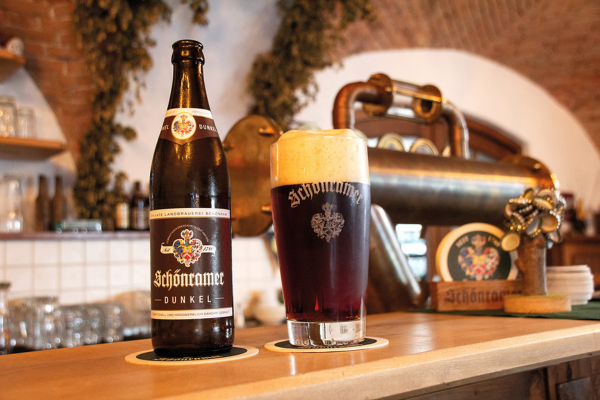
The issue continues its European exploration with a technical analysis of the German Dunkel. While the Dunkel is often viewed as a foundational lager, the Zymurgy feature emphasizes the complexity of balancing its rich, toasted malt notes with high drinkability. The article provides a pedagogical look at decoction mashing—a traditional German technique involving the boiling of a portion of the mash—and how this process develops the Maillard reaction products essential for an authentic Dunkel profile. By focusing on the "secret" of balancing depth with a clean finish, the magazine provides a roadmap for brewers looking to master bottom-fermented beers that remain sessionable despite their dark color.
Shifting to the Mediterranean, the magazine highlights the work of Carlo Sesia, a National Homebrew Competition (NHC) gold medalist based in Northern Italy. Sesia’s contribution focuses on the Italian interpretation of the Saison. While the Saison originated in the farmhouses of Wallonia, Sesia’s approach incorporates the precision of modern Italian craft brewing. His methods underscore the importance of temperature control during fermentation to manage the specific yeast strains that produce the style’s signature spicy and fruity characteristics.
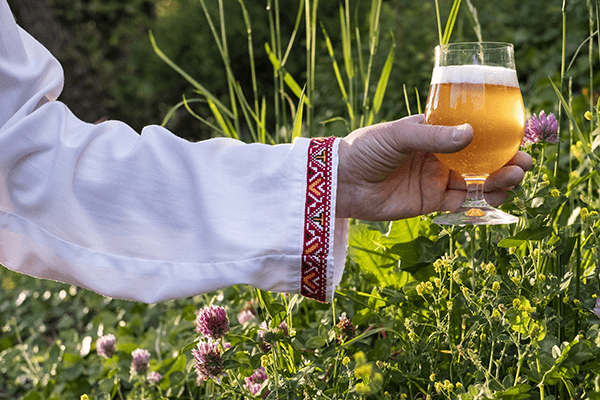
Further south, the "Homebrewers Fiorentini" club in Tuscany demonstrates the regionalization of the hobby. These brewers are increasingly utilizing "terroir" in their recipes, incorporating local ingredients such as grape must, honey, and wine-soaked oak. This movement mirrors the rise of the Italian Grape Ale (IGA), which was the first Italian style to be officially recognized by the BJCP. The Tuscany feature provides a case study in how homebrewers are bridging the gap between oenology and zymurgy, using the resources of Italy’s historic wine regions to create hybrid beverages that defy traditional categorization.
The Intersection of Brewing and Biotechnology: The Vaccine Beer
In perhaps the most unconventional feature in the magazine’s history, American virologist and homebrewer Chris Buck reveals a discovery that transcends the boundaries of beverage production. Buck has identified a method to utilize Saccharomyces cerevisiae—the common brewer’s yeast—to produce vaccines for polyomaviruses. Polyomaviruses are a group of DNA-based viruses that can lead to severe respiratory illnesses and, in immunocompromised individuals, certain types of cancer.
The scientific community has long used yeast as a "bio-factory" for protein production, but Buck’s work simplifies this process, potentially making vaccine production more accessible and cost-effective. By engineering yeast strains to produce virus-like particles (VLPs), researchers can create vaccines that trigger an immune response without the risk of infection. The inclusion of this story in Zymurgy underscores a growing sentiment within the AHA: that the skills learned in homebrewing—sanitation, yeast management, and fermentation kinetics—are directly transferable to high-level scientific innovation. This "Vaccine Beer" narrative serves as a testament to the intellectual depth of the homebrewing community, which includes thousands of professional scientists and engineers.
Technical Resources and Recipe Analysis
The May/June 2026 issue is bolstered by 14 detailed recipes, providing a practical application for the theoretical concepts discussed in the features. These recipes range from traditional clones to experimental hybrids, including:

- Ukrainian Golden Ale: A template for achieving the style’s signature honey-malt balance.
- Tuscan Grape Must Ale: A guide to incorporating fresh pressings from the harvest.
- Modern German Dunkel: A streamlined approach to traditional lager brewing.
- Northern Italian Saison: A recipe focused on high-attenuation yeast strains.
Each recipe is accompanied by water chemistry recommendations and fermentation schedules, reflecting the increasing sophistication of the average homebrewer. According to data from the American Homebrewers Association, the modern homebrewer is more likely to utilize digital tools, such as pH meters and tilt hydrometers, than their predecessors a decade ago. This shift toward data-driven brewing is reflected in the magazine’s editorial direction under Editor-in-Chief Dave Carpenter.
The Role of the American Homebrewers Association
Founded in 1978 by Charlie Papazian, the American Homebrewers Association has grown from a small group of enthusiasts to a national organization with over 37,000 members. Zymurgy magazine remains its flagship publication, serving as a primary source of peer-reviewed brewing information. The organization’s influence was instrumental in the 1978 federal legalization of homebrewing in the United States and continues to be a driving force in the "Right to Brew" legislative efforts across various states.
The release of the May/June issue comes at a time when the homebrewing industry is seeing a resurgence of interest in "slow fermentation" and historical styles. Market analysis suggests that while the rapid growth of the 2010s has stabilized, the current demographic of brewers is more invested in the "craft" aspect of the hobby, prioritizing quality and historical accuracy over mere volume. The AHA’s emphasis on education, through publications like Zymurgy and events like the National Homebrewers Conference (Homebrew Con), remains central to the hobby’s sustainability.
Broader Implications and Industry Trends
The content of the May/June 2026 issue highlights several key trends currently shaping the global beer industry:

- Localization vs. Globalization: While the ingredients for beer (malt, hops, yeast) are more globally available than ever, there is a counter-movement toward hyper-localism. The Tuscan and Ukrainian features exemplify how brewers are using global platforms to share localized traditions.
- Scientific Literacy: The "Vaccine Beer" story highlights the high level of scientific literacy within the brewing community. This literacy is driving innovations in yeast health and fermentation efficiency that eventually trickle up to the commercial craft beer sector.
- Style Formalization: The transition of Ukrainian Golden Ale from a regional specialty to a recognized style illustrates the fluid nature of beer categorization. As more regions document their brewing history, the "official" list of beer styles continues to expand, challenging the dominance of traditional German, British, and Belgian categories.
As Dave Carpenter notes in his editorial introduction, the hobby of homebrewing has evolved into a global language. Whether it is a club in Florence experimenting with oak aging or a virologist in a lab using yeast to fight disease, the fundamental act of fermentation remains a bridge between cultures and disciplines.
The May/June 2026 issue of Zymurgy is currently available to AHA members in both print and digital formats. Non-members can access a free online preview, though full access to the 14 recipes and technical deep dives remains a benefit of membership. As the AHA continues to champion the hobby, this issue stands as a record of the ingenuity and passion that define the modern homebrewing movement.