
The global condiment market is currently undergoing a significant transformation, driven by a surge in consumer demand for plant-based, whole-food alternatives to traditional dairy-based products. Within this landscape, the emergence of high-nutrient, nut-based dressings represents a pivotal shift in how home cooks and professional chefs approach flavor profiles and texture. The Cheesy Jalapeño Cashew Dressing, a culinary innovation requiring only nine ingredients and a five-minute preparation time, exemplifies the modern movement toward "clean label" gastronomy. By utilizing a high-speed blender to emulsify raw cashews with savory and spicy components, this recipe offers a sophisticated alternative to conventional dressings like Ranch or Blue Cheese, catering to a demographic that prioritizes both speed and nutritional density.
The Rise of Plant-Based Emulsions in Modern Gastronomy
The evolution of salad dressings has moved through several distinct eras. Historically, the Western palate was dominated by oil-and-vinegar-based vinaigrettes or heavy, egg-based emulsions such as mayonnaise. However, the late 20th and early 21st centuries saw the rise of dairy-heavy dressings, which often relied on buttermilk and sour cream for their signature "mouthfeel." As dietary preferences have shifted toward veganism, flexitarianism, and dairy-free living, the food industry has sought ways to replicate that creaminess without the use of animal products.

Cashews have emerged as the "gold standard" for plant-based creaminess. Unlike other nuts, such as almonds or walnuts, cashews possess a unique starch content and a relatively high percentage of monounsaturated fats that, when pulverized with water, create a smooth, velvety liquid indistinguishable from heavy cream. This chemical property allows for the creation of dressings that are both rich in texture and devoid of the cholesterol and saturated fats typically found in bovine dairy.
Comprehensive Ingredient Analysis and Functional Roles
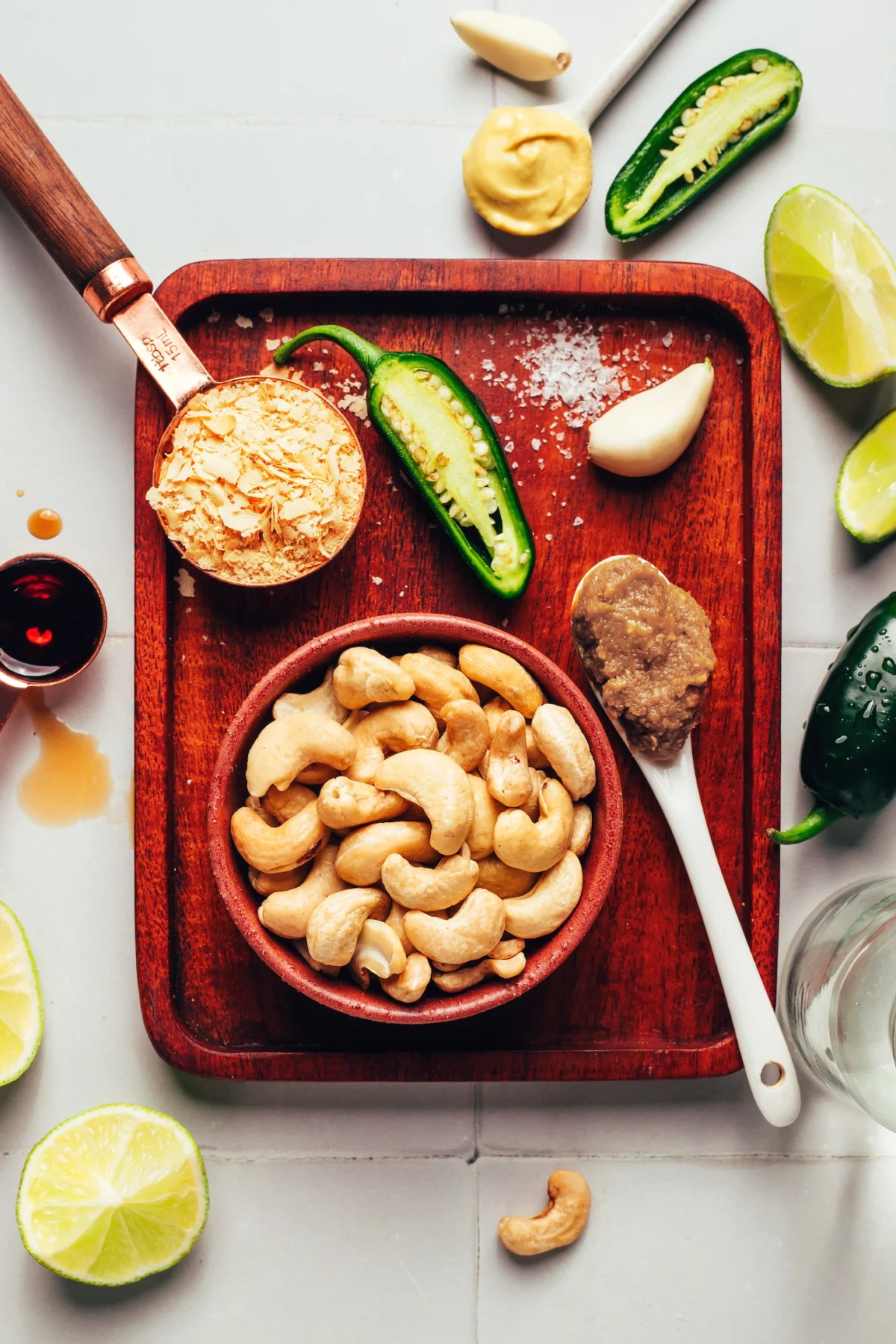
The success of the Cheesy Jalapeño Cashew Dressing lies in its strategic selection of nine core ingredients, each serving a specific chemical or sensory purpose:
- Raw Cashews: The foundational element providing the lipid base. By opting for raw rather than roasted cashews, the dressing maintains a neutral flavor profile, allowing the other ingredients to shine while providing 4.9 grams of fat per serving, mostly in the form of heart-healthy fats.
- Lime Juice: Provides the necessary acidity to brighten the flavor and act as a natural preservative. The citric acid also helps to cut through the richness of the cashew fats.
- Nutritional Yeast: This deactivated yeast is a staple in vegan cooking, prized for its nutty, cheesy flavor profile. It is often fortified with Vitamin B12, an essential nutrient frequently lacking in plant-based diets.
- Miso Paste: A fermented soybean product that introduces "umami"—the fifth basic taste. Miso provides a depth of savory saltiness that mimics the complexity of aged cheeses.
- Dijon Mustard: Acts as both a flavor enhancer and a secondary emulsifier, helping to keep the water and cashew fats from separating over time.
- Maple Syrup: A small amount of natural sugar is utilized to balance the heat of the jalapeño and the acidity of the lime, creating a rounded flavor profile.
- Sea Salt: Enhances all other flavor components and aids in the preservation of the dressing during refrigeration.
- Garlic: Provides aromatic depth and antimicrobial properties.
- Jalapeño: The source of the "kick," containing capsaicin, which has been linked to metabolic benefits and provides a sharp contrast to the creamy base.
Nutritional Profile and Health Implications
From a clinical nutrition perspective, the transition from oil-based or dairy-based dressings to nut-based alternatives offers several health advantages. A standard 2-tablespoon serving of this cashew dressing contains approximately 70 calories. In contrast, traditional ranch dressing can exceed 140 calories for the same volume, often derived from soybean oil and saturated dairy fats.

The macronutrient breakdown of the cashew dressing—2.8 grams of protein and 0.8 grams of fiber per serving—contributes to satiety, a factor often missing from simple vinaigrettes. Furthermore, the inclusion of ingredients like miso and nutritional yeast introduces trace minerals and probiotics (if the miso is unpasteurized and not overheated), supporting gut health. The absence of cholesterol and the low saturated fat content (0.9g) make it a heart-healthy option for individuals managing cardiovascular concerns or hypertension.
Technical Methodology: The Role of High-Speed Emulsification
The preparation of this dressing highlights the increasing reliance on high-performance kitchen technology. While traditional dressings were whisked by hand, the use of a high-speed blender (such as a Vitamix or Blendtec) allows for the mechanical breakdown of cashew phytate and fiber at a cellular level. This process creates a stable emulsion without the need for synthetic stabilizers like xanthan gum or carrageenan.
For consumers without high-speed equipment, the industry standard recommendation is to soak the cashews in hot water for a period of 30 minutes to two hours. This softens the nuts, allowing a standard blender to achieve a similar level of smoothness. This technical flexibility ensures the recipe remains accessible to a wide range of socioeconomic groups and kitchen setups.

Market Context and the "Five-Minute" Consumer Trend
The 5-minute preparation time cited for this recipe is not merely a convenience; it is a response to a broader market trend known as "The Time-Crunched Consumer." Data from market research firms suggests that the modern consumer is increasingly looking for "speed-to-table" solutions that do not compromise on health. The "Minimalist" approach to cooking—defined by short ingredient lists and minimal equipment—has become a dominant force in digital food media.
By offering a recipe that is "Freezer Friendly: No" but "Does it keep? 5-7 Days," the developers target the "meal prep" community. This demographic typically spends one day a week preparing staples that can be used across various meals, such as the Vegan Sweet Potato Chickpea Taco Salad or as a dip for cauliflower wings.
Broader Implications for Sustainable Food Systems
The shift toward cashew-based condiments also carries environmental implications. While cashew production has faced scrutiny regarding labor practices and water usage in specific regions, the carbon footprint of nut-based dairy alternatives generally remains lower than that of industrial bovine dairy production. As global food systems move toward more sustainable models, the integration of plant-based fats from nuts and seeds is expected to play a crucial role in reducing the environmental impact of the average diet.

Furthermore, the versatility of the dressing—functioning as a salad topper, a wrap spread, or a vegetable dip—encourages the consumption of whole vegetables. This "nudge" toward higher vegetable intake is a key component of public health initiatives aimed at reducing the prevalence of diet-related non-communicable diseases.
Chronology of the Plant-Based Condiment Movement
To understand the significance of this specific dressing, one must look at the timeline of vegan culinary development:
- 1980s-1990s: The "Early Adoption" phase. Vegan dressings were largely limited to simple oil/vinegar or tahini-based sauces, often found only in health food cooperatives.
- 2000s-2010s: The "Processed Substitution" phase. Large-scale manufacturers began producing vegan "mayo" and "ranch" using isolated starches and gums to mimic dairy.
- 2015-Present: The "Whole-Food Revolution." Consumers began rejecting highly processed vegan substitutes in favor of homemade, nut-based, and seed-based sauces that offer transparent ingredient lists.
The Cheesy Jalapeño Cashew Dressing sits firmly in this third phase, representing the pinnacle of the "homemade and healthy" movement.

Conclusion and Future Outlook
As the culinary world continues to blur the lines between "health food" and "gourmet food," recipes like the Cheesy Jalapeño Cashew Dressing serve as a blueprint for future innovation. By combining the creamy texture sought by traditionalists with the spicy, umami-rich flavors favored by modern palates, this dressing transcends dietary labels.
The implications for the food service industry are notable; as more restaurants adopt "plant-forward" menus, the ability to produce high-quality, house-made dressings that cater to multiple dietary restrictions (vegan, gluten-free, oil-free) becomes a competitive advantage. This specific formulation, with its balance of heat, acidity, and richness, provides a versatile tool for both the home cook and the professional chef, signaling a continued move away from standardized, shelf-stable condiments toward fresh, nutrient-dense alternatives. Through the lens of nutritional science, culinary technology, and market trends, it is clear that the "cheesy" cashew emulsion is more than a fleeting trend—it is a staple of the new modern pantry.