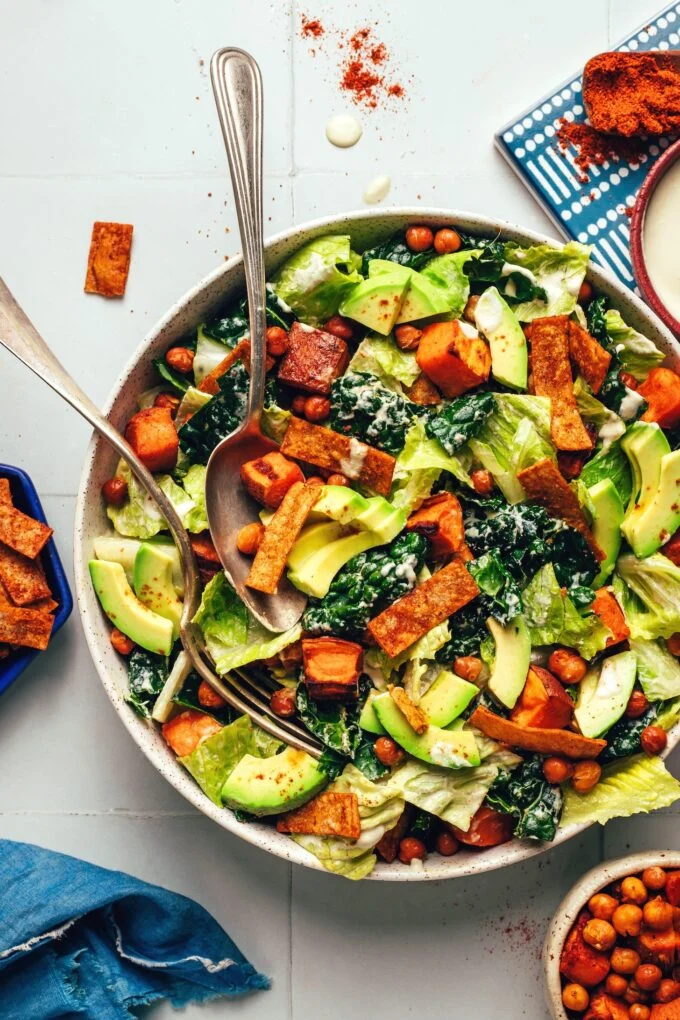

The dish is characterized by a sophisticated interplay of textures and temperatures, pairing warm, smoky roasted sweet potatoes and chickpeas with a crisp foundation of romaine and kale. The inclusion of a jalapeño cashew dressing introduces a dairy-free "cheesy" element, achieved through the strategic use of nutritional yeast and miso paste. This approach to vegan cooking—emphasizing whole foods rather than highly processed meat analogues—aligns with broader dietary shifts toward the Mediterranean and plant-forward patterns of consumption recommended by global health organizations.
Historical Context and Evolution of the Taco Salad
To understand the significance of the Vegan Sweet Potato Chickpea Taco Salad, one must examine the evolution of the taco salad itself. Traditionally, the taco salad is an American creation, often attributed to the mid-20th century. One of the earliest iterations was the "Tacupa," served in a bowl made of a giant Frito chip, pioneered by Fritos founder Elmer Doolin in the 1950s. By the 1960s and 70s, the dish had evolved into the familiar "taco bowl," typically consisting of a deep-fried flour tortilla filled with ground beef, iceberg lettuce, shredded cheddar cheese, sour cream, and salsa.

While the traditional taco salad was a commercial success in the fast-casual industry, it was often criticized for its high caloric density and saturated fat content. The transition toward a vegan version featuring sweet potatoes and chickpeas represents a full-circle evolution. It retains the "crunch" and "zest" of the original while replacing animal fats with monounsaturated fats from avocados and cashews, and swapping simple carbohydrates for the complex carbohydrates found in sweet potatoes. This modern iteration serves as a benchmark for the "Minimalist Baker" style of cooking, which prioritizes accessibility, speed, and nutritional integrity.
Chronology of Preparation: The 30-Minute Efficiency Model
The viability of this dish as a weeknight staple depends on a precise chronological execution. The preparation is divided into three primary phases that occur simultaneously to ensure the 30-minute deadline is met.
Phase I: Roasting and Flavor Development (Minutes 0–25)
The process begins with the preparation of the primary bulk ingredients: sweet potatoes and chickpeas. The sweet potatoes are cubed to a uniform size to ensure even roasting, while the chickpeas are rinsed and dried—a critical step for achieving a crispy texture. Both are tossed in avocado oil, which has a high smoke point suitable for roasting at 400°F (204°C). The flavor profile is established here using a blend of chili powder and smoked paprika, providing a deep, earthiness that mimics the traditional "taco seasoning" without the additives often found in pre-packaged mixes.

Phase II: Dressing Synthesis and Green Preparation (Minutes 5–20)
While the oven facilitates the Maillard reaction in the vegetables, the "cheesy" jalapeño cashew dressing is prepared. This involves blending raw cashews with water, lime juice, nutritional yeast, miso paste, Dijon mustard, and fresh jalapeño. The use of cashews as a base is a hallmark of vegan culinary science, as the nut’s high fat content creates a creamy emulsion that serves as a functional replacement for heavy cream or sour cream. Concurrently, the greens—a mixture of hardy kale and crisp romaine—are washed and chopped.
Phase III: Assembly and Texture Integration (Minutes 25–30)
The final five minutes are dedicated to assembly. The roasted vegetables are removed from the oven and layered atop the greens. Tortilla chips are crumbled over the top to provide the "quintessential crunch." Avocado slices are added for creaminess, and the dressing is drizzled over the bowl. This rapid assembly ensures that the heat from the sweet potatoes slightly wilts the kale, making it more palatable while maintaining the structural integrity of the romaine.
Nutritional Analysis and Supporting Data
The Vegan Sweet Potato Chickpea Taco Salad is not merely a caloric substitute for meat-based dishes; it is a nutritionally dense meal designed for metabolic health. According to nutritional data, a single serving contains approximately 442 calories, 12.6 grams of protein, and 11.9 grams of dietary fiber.

The high fiber content is particularly significant. Fiber is essential for maintaining a healthy gut microbiome and regulating blood sugar levels. The use of chickpeas provides a source of lysine, an essential amino acid often limited in plant-based diets, while the sweet potatoes contribute a massive 4,020 IU of Vitamin A (largely in the form of beta-carotene).
Furthermore, the inclusion of healthy fats is substantial. With 19.4 grams of total fat, the majority comes from monounsaturated and polyunsaturated sources (10.1g and 4.6g, respectively). These fats are known to support cardiovascular health, contrasting sharply with the saturated fats found in traditional beef-based taco salads. The sodium content, while present at 967 mg, is largely controllable by the cook, a benefit over restaurant-sourced salads which can exceed 2,000 mg of sodium per serving.
Market Trends and Consumer Behavior
The rise of recipes like the Vegan Sweet Potato Chickpea Taco Salad is supported by significant market data. According to a report by Bloomberg Intelligence, the plant-based food market is projected to reach $162 billion by 2030, up from $29.4 billion in 2020. This growth is driven by "flexitarians"—consumers who are not strictly vegan but seek to reduce their meat consumption for health and environmental reasons.

Culinary experts note that the success of such dishes lies in their "flavor parity." Consumers are more likely to adopt plant-based meals when they offer the same level of umami and satiety as meat. The use of miso and nutritional yeast in the dressing is a strategic response to this need, providing the savory depth that consumers traditionally associate with aged cheeses.
Environmental Impact and Sustainability
Beyond individual health, the shift toward legume- and tuber-based meals has broader environmental implications. The production of chickpeas and sweet potatoes requires significantly less water and land than the production of beef. Data from the Water Footprint Network suggests that producing one kilogram of beef requires approximately 15,415 liters of water, whereas one kilogram of pulses (like chickpeas) requires only about 4,055 liters.
Additionally, sweet potatoes are known for their resilience and high yield per acre, making them a sustainable choice for food security. By promoting recipes that utilize these ingredients, culinary influencers are contributing to a reduction in the carbon footprint associated with the average household’s diet.

Expert Reactions and Practical Implications
Dietitians have generally responded positively to the "Minimalist Baker" approach to salad construction. "The integration of kale and romaine is a smart move," notes one clinical nutritionist. "It provides the volume and crunch people want from a salad while sneaking in the calcium and Vitamin K found in dark leafy greens."
From a practical standpoint, the dish’s "30-minute" claim is an essential factor in its popularity. In an era of "time poverty," where the average American spends less than an hour a day on food preparation and cleanup, efficiency is a primary driver of dietary choices. The ability to produce a restaurant-quality, nutrient-dense meal in the time it takes to order and receive delivery is a powerful incentive for home cooking.
Broader Impact on Home Cooking
The Vegan Sweet Potato Chickpea Taco Salad represents more than just a recipe; it is an example of the "democratization of nutrition." Through the use of pantry staples—canned chickpeas, common spices, and hardy vegetables—this dish proves that healthy eating does not require expensive, "superfood" labeled products.

As home cooks continue to navigate a post-pandemic world where inflation has impacted grocery prices, the reliance on affordable proteins like chickpeas is expected to increase. This dish serves as a blueprint for future culinary development: it is fast, affordable, sustainable, and nutritionally superior to its predecessors. It marks a definitive point in the timeline of the American salad, moving away from the "diet food" stereotypes of the past and toward a future of flavorful, functional, and ethical eating.