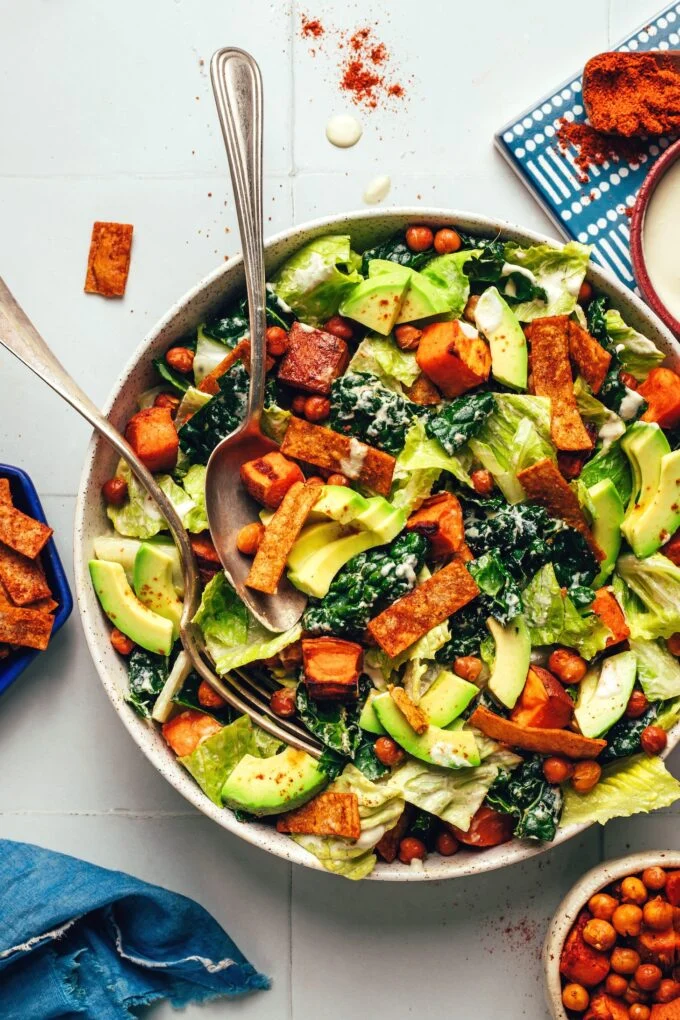

Technical Composition and Flavor Architecture
The structural integrity of the Vegan Sweet Potato Chickpea Taco Salad relies on a dual-base of roasted components and fresh greens. The primary caloric and nutrient drivers are the sweet potatoes and chickpeas, which are subjected to a high-heat roasting process. This method serves a dual purpose: it induces the Maillard reaction in the sweet potatoes, enhancing their natural sugars, and provides a crisp exterior to the chickpeas, which function as a protein-rich alternative to traditional meat-based taco fillings.
To achieve the desired "smoky" flavor profile, a strategic blend of chili powder and smoked paprika is utilized. These spices are paired with avocado oil, chosen for its high smoke point and monounsaturated fat content, ensuring that the roasting process remains stable at elevated temperatures. The use of these specific aromatics reflects a broader trend in vegan cooking that utilizes "umami-adjacent" spices to replicate the depth typically found in animal proteins.

The salad base utilizes a calculated mixture of kale and romaine lettuce. From a culinary standpoint, the romaine provides the necessary aqueous "crunch" associated with traditional Mexican-American taco salads, while the kale offers structural rigidity and a high concentrations of vitamins K, A, and C. This combination ensures that the salad does not become overly wilted when dressed with the heavy, cashew-based emulsion.
The Role of the Jalapeño Cashew Dressing
A critical component of this dish is the Jalapeño Cashew Dressing, which serves as a dairy-free substitute for traditional crema or cheese-based dressings. The development of this dressing highlights the ongoing innovation in "clean label" vegan sauces. By utilizing whole cashews as the fat source, the recipe avoids the need for processed oils or thickeners.
The dressing’s complexity is derived from several key ingredients:

- Nutritional Yeast: Often referred to in the industry as "nooch," this deactivated yeast provides a savory, "cheesy" flavor profile essential for plant-based substitutions.
- Miso Paste: A fermented soy product that introduces a deep umami flavor and beneficial probiotics.
- Jalapeño: Provides a controlled heat level, which can be adjusted based on the removal or inclusion of seeds (capsaicin content).
- Lime Juice: Acts as the bright acidic counterpoint to the heavy fats in the cashews.
This 5-minute blending process represents a shift toward "functional dressings"—sauces that are as nutritionally significant as the main ingredients of the salad itself.
Chronological Workflow and Preparation Strategy
The efficiency of the 30-minute meal is predicated on a "parallel processing" workflow. The timeline of production is optimized to ensure that no time is wasted during the roasting phase.
- Minutes 0-5: Preparation of the sweet potatoes (cubing) and chickpeas (rinsing/drying). Application of oil and spices. Preheating the oven to the standard roasting temperature (typically 400°F/204°C).
- Minutes 5-25: The roasting phase. During this 20-minute window, the chef transitions to the "cold prep" stage. This includes washing and chopping the kale and romaine, and assembling the dressing ingredients for high-speed blending.
- Minutes 25-30: Assembly and integration. The roasted vegetables are removed from the oven and allowed to cool slightly to prevent immediate wilting of the greens. The salad is tossed with the dressing, and the final "crunch" elements—crumbled tortilla chips—are added immediately before service to maintain textural integrity.
This chronological efficiency is a primary selling point for the recipe, appealing to the "busy professional" demographic that seeks to maintain a high-quality diet without the time investment typically required for complex plant-based cooking.

Nutritional Analysis and Data Points
A single serving of the Vegan Sweet Potato Chickpea Taco Salad provides a robust nutritional profile, designed to function as a complete standalone meal. The following data points outline the macronutrient and micronutrient breakdown:
- Calories: 442 kcal
- Total Carbohydrates: 58.7 g (primarily complex carbohydrates from sweet potatoes and chickpeas)
- Dietary Fiber: 11.9 g (representing nearly 43% of the recommended daily intake for an average adult)
- Protein: 12.6 g (derived from the legume-nut combination)
- Total Fat: 19.4 g (with a focus on monounsaturated and polyunsaturated fats)
- Sodium: 967 mg
- Potassium: 902 mg
- Vitamin A: 4020 IU (significantly exceeding daily requirements, primarily from the sweet potato and kale)
The high fiber-to-calorie ratio is particularly noteworthy for weight management and digestive health. Furthermore, the inclusion of 4 mg of iron and 142 mg of calcium per serving addresses common nutritional concerns associated with strictly plant-based diets.
Market Context: The Rise of Plant-Based Convenience
The release of the Vegan Sweet Potato Chickpea Taco Salad occurs within a broader economic context of rapid growth in the plant-based food market. According to data from the Good Food Institute and the Plant Based Foods Association, retail sales of plant-based foods in the United States grew significantly over the last three years, outpacing total food sales by a wide margin.

This growth is driven not only by vegans and vegetarians but by "flexitarians"—consumers who are actively reducing their meat consumption for health, environmental, or ethical reasons. For this demographic, recipes like the taco salad are highly attractive because they utilize familiar formats (the "taco salad") but replace traditional components with nutrient-dense, plant-derived alternatives.
The inclusion of options for higher-protein modifications—such as smoky shredded tofu or Mexican shredded chicken for non-vegans—reflects a "modular" approach to modern recipe design. This allows the dish to serve diverse households with varying dietary preferences, further increasing its market reach.
Broader Implications for Health and Sustainability
The shift toward dishes like the Vegan Sweet Potato Chickpea Taco Salad has implications that extend beyond individual health. From an environmental perspective, the reliance on legumes (chickpeas) and root vegetables (sweet potatoes) significantly reduces the carbon and water footprint of a meal compared to beef-based alternatives.

Research indicates that legume production requires a fraction of the water and land used for livestock. Furthermore, sweet potatoes are recognized as one of the most efficient crops in terms of nutritional yield per acre. By promoting these ingredients in a high-flavor, accessible format, culinary platforms are indirectly influencing environmental sustainability metrics at the consumer level.
From a public health standpoint, the emphasis on whole foods over processed vegan meat substitutes is a critical distinction. While the "first wave" of the plant-based revolution focused on highly processed burgers and sausages, the "second wave"—exemplified by this recipe—focuses on "whole-food, plant-based" (WFPB) principles. This approach is associated with lower risks of cardiovascular disease, type 2 diabetes, and certain forms of cancer.
Conclusion and Future Outlook
The Vegan Sweet Potato Chickpea Taco Salad is more than a mere culinary suggestion; it is a manifestation of the current state of food science and consumer behavior. By prioritizing a 30-minute turnaround, a dense nutritional profile, and a sophisticated use of plant-based fats and spices, it meets the rigorous demands of the modern eater.

As digital platforms like Minimalist Baker continue to refine these formulas, we can expect a further blurring of the lines between "dietary food" and "mainstream cuisine." The success of such recipes suggests that the future of the food industry lies in the ability to deliver high-intensity flavor and optimal nutrition with minimal temporal friction. For the home cook, this represents an empowerment—the ability to produce restaurant-quality, health-aligned meals in the time it would take to order and receive a delivery, marking a significant win for both the individual and the broader food ecosystem.