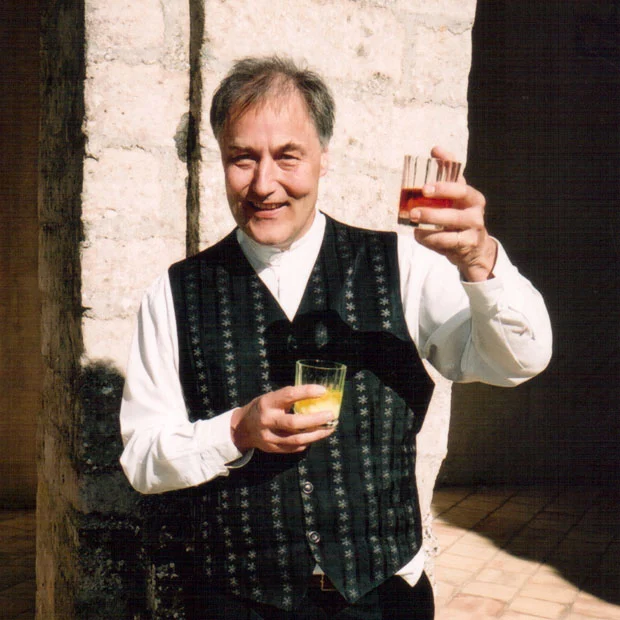

Paris, France – Dr. Hervé This, the renowned physical chemist widely credited as a co-founder of molecular gastronomy, has publicly released a comprehensive summary detailing the findings and experimental results from 20 years of his influential monthly molecular gastronomy seminars held in Paris. This significant compilation, made available in both French and English, is being heralded as an invaluable resource, poised to serve as a foundational "treasure trove" for professional chefs, food scientists, culinary educators, and enthusiasts worldwide, fostering continued experimentation, scientific inquiry, and educational initiatives in the realm of food.
The released document, a succinct yet profound overview, condenses two decades of meticulous research and culinary questioning into an accessible format. While the English version provides brief summaries of key findings, Dr. This has ensured that extensive, detailed documentation for every seminar, including experimental conditions and comprehensive results, remains freely available in French through the AgroParisTech website, emphasizing a commitment to open science and collaborative discovery. This initiative underscores the enduring legacy and ongoing relevance of molecular gastronomy, a discipline that has fundamentally reshaped our understanding of cooking processes through the lens of physics and chemistry.
The Genesis of Molecular Gastronomy: A Scientific Revolution in the Kitchen
The term "molecular and physical gastronomy" was coined in 1988 by Dr. Hervé This and the late Hungarian-born physicist Nicholas Kurti. Their vision was to establish a scientific discipline dedicated to investigating the physical and chemical transformations that ingredients undergo during cooking. Prior to this, culinary arts, while rich in tradition and technique, largely operated on empirical knowledge passed down through generations, often without a deep understanding of the underlying scientific principles. Kurti, a former professor of physics at Oxford University, had long advocated for applying scientific rigor to everyday phenomena, famously remarking in 1969 that "it is a sad reflection on our civilization that while we can measure the temperature in the atmosphere of Venus, we do not know what goes on inside our soufflés."
The formalization of molecular gastronomy sought to bridge this gap, moving beyond anecdotal evidence to systematically explore the mechanisms behind culinary processes. This scientific approach aimed not only to demystify traditional recipes but also to inspire innovation, leading to the creation of novel textures, flavors, and cooking methods. Dr. This’s early work, notably his book Kitchen Mysteries: Explaining the Science of Cooking, served as a foundational text, meticulously questioning and explaining common kitchen phenomena. This rigorous inquiry into everyday cooking, from the perfect egg yolk to the stability of an emulsion, captivated a new generation of culinary thinkers and scientists, including many who would go on to become prominent figures in the field.
A Chronology of Culinary Science
The journey of molecular gastronomy, culminating in this extensive summary, can be traced through several key milestones:
- 1960s-1970s: Nicholas Kurti delivers public lectures, advocating for the scientific study of cooking.
- 1980s: Hervé This begins his systematic research into the physics and chemistry of cooking, compiling a vast database of culinary "adages" and "recipes" to be scientifically tested.
- 1988: Dr. This and Professor Kurti formally coin the term "molecular and physical gastronomy" (later shortened to "molecular gastronomy").
- 1992: The first "International Workshop on Molecular Gastronomy" is held in Erice, Sicily, organized by This and Kurti. This seminal event brought together leading scientists and chefs, marking the official launch of the discipline on an international stage. These workshops continued annually for several years, fostering interdisciplinary dialogue and research.
- Early 2000s: The monthly molecular gastronomy seminars in Paris commence, initiated and led by Dr. This. These seminars become a consistent forum for ongoing experimentation, discussion, and documentation, forming the core body of work now summarized.
- October 2020: Dr. Hervé This releases the summary document, encapsulating two decades of the Paris seminar findings, making this wealth of knowledge widely accessible.
The Erice workshops, in particular, were instrumental in shaping the early trajectory of molecular gastronomy. They provided a unique platform where Michelin-starred chefs could interact directly with Nobel laureates and esteemed scientists, leading to a dynamic exchange of practical culinary expertise and scientific theoretical frameworks. This cross-pollination of ideas laid the groundwork for the more systematic, long-term research undertaken in the Paris seminars.
The Paris Seminars: Two Decades of Empirical Inquiry
The monthly molecular gastronomy seminars in Paris, spanning twenty years, represent a monumental undertaking in empirical culinary science. Unlike the more theoretical or conceptual discussions often associated with broader food science, these seminars have been characterized by a hands-on, experimental approach. Each session focused on a specific culinary claim, myth, or process, subjecting it to rigorous scientific testing. Participants, often a diverse group of scientists, chefs, and students, collaboratively designed and executed experiments, meticulously documented observations, and critically analyzed results.
The methodology employed in these seminars mirrors the scientific method:
- Questioning: Identifying common culinary beliefs or practices that lack scientific explanation.
- Hypothesizing: Formulating testable predictions based on existing scientific knowledge.
- Experimentation: Designing and conducting controlled experiments to test the hypotheses.
- Observation & Measurement: Recording data meticulously, often using precise scientific instruments.
- Analysis: Interpreting the data to draw conclusions, confirming or refuting initial hypotheses.
- Documentation & Dissemination: Publishing the findings for peer review and broader application.
This iterative process has generated a vast repository of data, challenging long-held assumptions and providing concrete, scientific explanations for phenomena ranging from the simplest kitchen tasks to complex gastronomic preparations. For example, some findings detailed in the summary include observations like "The taste of a carrot is in its juice," indicating the primary location of flavor compounds, or the counter-intuitive revelation that "A mayonnaise made with oil and water is more stable than one with oil and vinegar," challenging conventional wisdom about emulsion stability. These seemingly small insights, when accumulated over two decades, form a powerful toolkit for culinary innovation and understanding.
A Treasure Trove for Innovation and Education
The release of this summary is expected to have profound implications across several sectors:
For Chefs and Culinary Professionals: The document provides a scientific foundation for countless cooking techniques. Understanding why a certain process works allows chefs to move beyond rote memorization of recipes to intelligent adaptation and creative innovation. It enables greater precision, consistency, and control over outcomes. Chefs can experiment with confidence, knowing the scientific principles at play, potentially leading to new dishes, textures, and flavor profiles that were previously unimaginable. For instance, understanding protein coagulation or starch gelatinization through these findings can lead to more consistent sauces, perfectly cooked meats, or innovative plant-based preparations.
For Food Scientists and Researchers: The summary offers a rich dataset for further academic inquiry. The empirical results from the seminars can serve as starting points for more in-depth studies, validating existing theories or sparking new research questions. The interdisciplinary nature of the work, combining chemistry, physics, and sensory science, provides a holistic model for food research. It highlights the importance of practical, applied science in understanding complex food systems.
For Culinary Educators and Students: This compilation is an invaluable pedagogical tool. It provides concrete examples for teaching scientific principles within a culinary context, making abstract concepts relatable and engaging. Culinary schools can integrate these findings into their curricula, fostering a new generation of chefs who are not only skilled artisans but also scientifically literate innovators. The seminars’ methodology itself can be replicated in educational settings, encouraging critical thinking and experimental design among students.
For Home Cooks and Enthusiasts: While perhaps less directly applicable for everyday cooking, the underlying philosophy—questioning assumptions and understanding processes—empowers home cooks to approach their kitchens with greater curiosity and confidence. It encourages them to experiment, troubleshoot, and appreciate the science behind their meals, transforming cooking from a chore into an engaging intellectual pursuit.
Official Responses and Broader Implications
While no formal statements from culinary or scientific bodies have been released concurrently with Dr. This’s document, the anticipated reaction from the global food community is overwhelmingly positive. Leading figures in molecular gastronomy and food science are expected to laud this compilation as a pivotal contribution. Dr. This’s decision to share these findings openly aligns with his long-standing commitment to the democratization of knowledge and the promotion of scientific literacy in all aspects of life.
The broader implications extend beyond the kitchen:
- Advancing Food Technology: The detailed understanding of ingredient interactions and cooking processes can directly inform the development of new food products, processing techniques, and equipment in the food industry. This could lead to more sustainable, nutritious, or sensorially appealing food options.
- Challenging Dogma and Promoting Critical Thinking: Molecular gastronomy, as exemplified by these seminars, fundamentally challenges unquestioned traditions. It encourages a culture of inquiry, where claims, no matter how entrenched, are subjected to empirical verification. This mindset is crucial not only in science but in all aspects of modern society.
- Interdisciplinary Collaboration: The success of molecular gastronomy relies on the synergy between different disciplines. The seminars serve as a model for how scientists, artists, and practitioners can collaborate to push the boundaries of knowledge and creativity. This interdisciplinary approach is increasingly recognized as vital for addressing complex global challenges, including those related to food security and sustainability.
- Inspiring Future Generations: By making science tangible and exciting through the universal medium of food, Dr. This’s work inspires younger generations to pursue careers in science, technology, engineering, and mathematics (STEM) fields, demonstrating the practical and creative applications of scientific knowledge.
The release of the 20-year summary of molecular gastronomy seminars by Dr. Hervé This is more than just a collection of culinary facts; it is a testament to the power of sustained scientific inquiry applied to an everyday art form. It reinforces the idea that the kitchen is a laboratory, full of mysteries waiting to be unraveled, and that with curiosity, experimentation, and meticulous documentation, we can continuously enrich our understanding of the world around us, one delicious discovery at a time. The challenge now lies in the global culinary and scientific communities to fully leverage this extraordinary resource, translating its insights into tangible advancements that benefit both the plate and the intellect.