
What constitutes the ideal sourdough loaf? For many, the allure lies in a symphony of sensory experiences. It might be the delightful crunch of toasted walnuts or the subtle nuttiness of sesame seeds woven into the dough. Others are drawn to the fundamental essence of the bread: the pure, unadulterated flavor of the grain, enhanced by the alchemical transformation of fermentation, turning simple ingredients into a culinary revelation that can captivate the senses. As one seasoned baker succinctly puts it, "Flavor comes first—always."
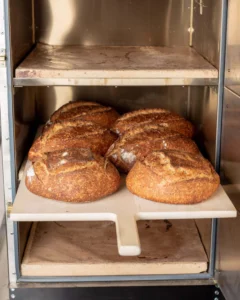
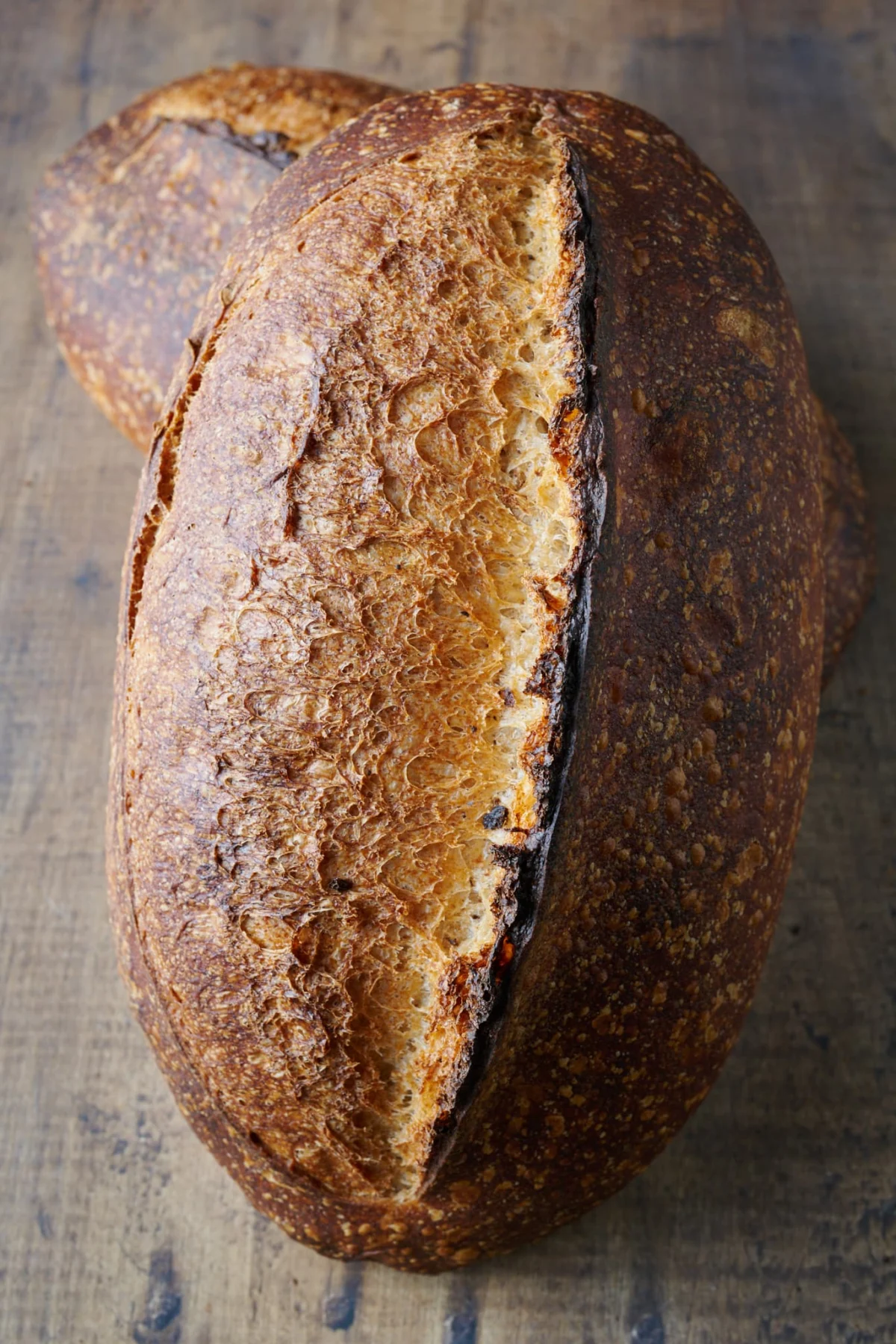
Yet, the visual appeal of sourdough is undeniable. A deep, burnished crust that crackles invitingly under gentle pressure. A precise, razor-sharp score that blooms dramatically in the oven, revealing the artistry within. Or perhaps it’s the elegantly rounded edges, a testament to the baker’s practiced hand and intimate understanding of dough manipulation. For many, however, the ultimate draw is the open crumb – a visually seductive interior, a delicate web of air pockets that promises a light and airy texture.
While the pursuit of an open crumb is a common ambition among sourdough enthusiasts, it’s crucial to understand its place within the broader spectrum of sourdough excellence. In fact, the open crumb, while aesthetically pleasing and indicative of a well-executed bake, is often considered the least critical component when compared to the foundational elements of flavor and texture. However, this nuanced perspective is often gained through experience, and for those new to the craft, the quest for an open crumb can be a primary motivator.
This guide delves into the intricacies of achieving a desirable open crumb in sourdough bread, exploring the critical factors that contribute to this sought-after characteristic. It aims to demystify the process, moving beyond mere aesthetics to underscore how an open crumb is, in essence, a visual cue to the underlying success of fermentation, dough development, and gentle handling.
Understanding the Open Crumb: More Than Just Holes
An open crumb in sourdough is characterized by a light, airy interior with well-distributed air pockets, free from dense or gummy spots. These pockets are formed when the gluten network within the dough, developed through proper mixing and fermentation, effectively traps the carbon dioxide produced by the yeast and bacteria. As the bread bakes, this trapped gas expands, creating the characteristic visual and textural qualities of an open crumb.
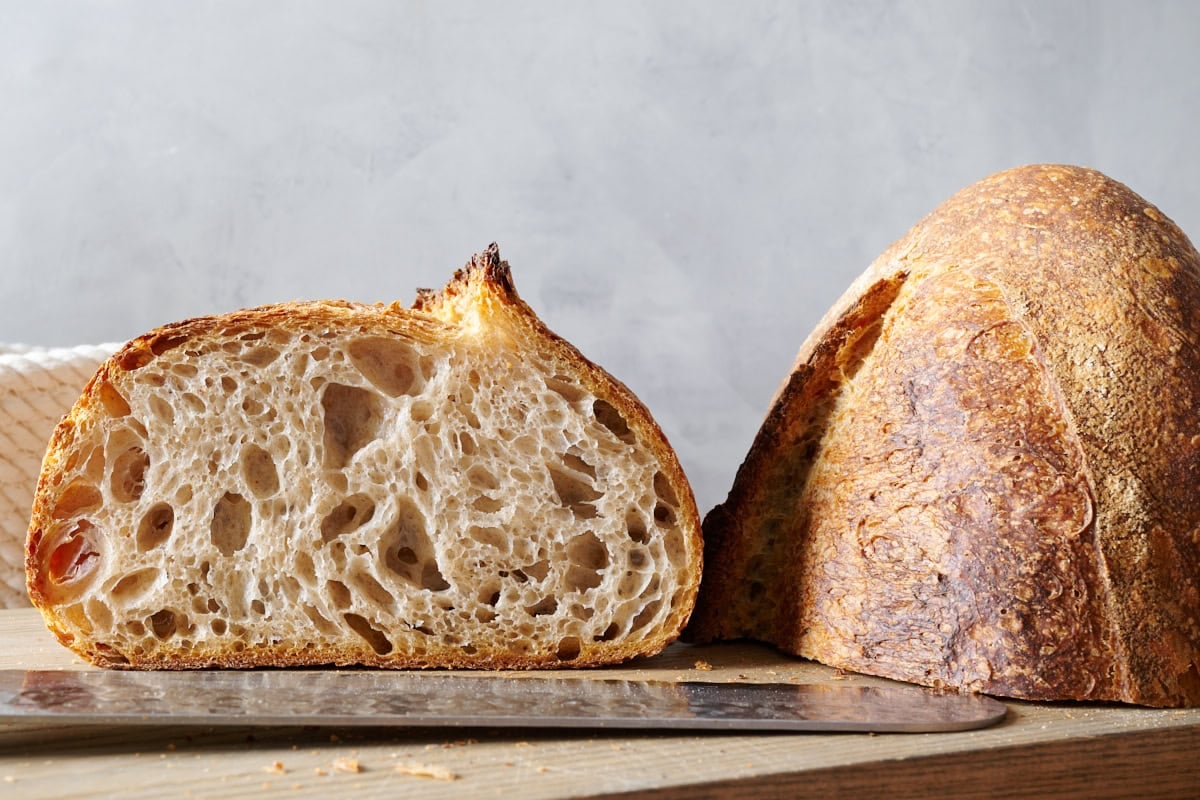
However, it’s essential to differentiate a truly open crumb from underproofed bread, which can sometimes be mistaken for it. Underproofed loaves often exhibit large, irregular holes interspersed with dense, tight areas. This occurs because the dough hasn’t had sufficient time to ferment and develop its structure fully, leading to uneven gas distribution and an unstable crumb. A well-executed open crumb, conversely, presents a uniform distribution of smaller, well-formed holes, indicating a balanced fermentation and a robust gluten structure.
The Critical Role of Flour Selection
The foundation of any successful sourdough loaf, particularly one aiming for an open crumb, lies in the quality and type of flour used. For achieving that coveted airy interior, the choice of flour is paramount.
High-Protein White Flour: The Gluten Advantage
Strong white flours, often characterized by a higher protein content (typically between 11% and 13%), are generally favored for open crumb bakes. This elevated protein level translates to a greater capacity for gluten development. Gluten, a complex network of proteins, acts as the structural scaffold of the bread, trapping the gases produced during fermentation. A more robust gluten network, derived from higher protein flour, is more extensible and elastic, allowing it to stretch and expand significantly without tearing. This resilience is crucial for accommodating the large air pockets that define an open crumb.
Think of it as the difference between a delicate party balloon and a high-quality, thicker balloon. The former is prone to bursting with minimal inflation, while the latter can expand to a considerable size while maintaining its integrity. Similarly, flour with higher protein content provides a greater margin for error and a superior capacity for creating those sought-after open pockets.
The Protein Threshold: Finding the Sweet Spot
While higher protein content is beneficial, there’s a point of diminishing returns. Flour with an exceptionally high protein percentage (above 13% for many bakers) can lead to a loaf that, while open-crumbed, may also be unpleasantly chewy and tough. The ideal lies in finding a balance – a flour strong enough to support large air pockets, but not so strong that it compromises the final texture.
High-Extraction Flours: Flavor and Structure
High-extraction flours, such as Type 85, can also contribute to an open crumb, especially when paired with adequate hydration. These flours contain a higher proportion of the wheat berry, including some of the bran and germ, which can impart richer flavor and nutritional value. When properly hydrated, they can develop a strong gluten network capable of supporting an open structure.

The Whole Wheat Conundrum
Whole wheat flour, while rich in flavor and nutrients, presents a greater challenge when aiming for an open crumb. The bran and germ particles within whole wheat flour can interfere with gluten development, weakening the dough’s ability to trap gas effectively. As the proportion of whole wheat increases, achieving a significantly open crumb becomes more difficult. However, this trade-off is often considered worthwhile for the enhanced flavor and nutritional profile that whole grains bring. A 50% whole wheat loaf, for instance, will naturally have a denser crumb than an all-white flour loaf, and this is a characteristic to be embraced rather than corrected.
In summary: For an open crumb, opt for white flour, preferably with a protein content between 11% and 13%. While whole wheat contributes flavor, it generally leads to a denser crumb.
Sourdough Starter: The Heartbeat of Fermentation
A healthy and active sourdough starter is the bedrock of any successful sourdough bake, and its ripeness plays a crucial role in achieving an open crumb.
Maintaining a Vibrant Starter
Consistent feeding and appropriate temperature are key to a vigorous starter. A common practice for maintaining peak activity involves twice-daily feedings, keeping the starter in a warm environment, ideally between 74°F and 78°F (23°C to 25°C). While less frequent feeding schedules can also yield good results, this diligent approach ensures a consistently robust leavening agent.
The Art of Ripeness
The timing of starter use is critical. For an open crumb, it’s best to use sourdough starter when it has just reached its peak ripeness, before it becomes overly acidic. Signs of ripeness in a liquid starter typically include:
- Doubling or Tripling in Volume: The starter should have visibly expanded significantly from its initial fed state.
- A Domed Top: The surface should have a rounded, dome-like appearance.
- Bubbles Throughout: Numerous small and medium-sized bubbles should be visible on the surface and throughout the starter.
- A Tangy, Slightly Sweet Aroma: The smell should be pleasant and yeasty, not sharply vinegary or alcoholic.
Using starter at this stage ensures that it contributes optimal leavening power without introducing excessive acidity that could weaken the gluten structure. An over-fermented starter contains more active protease enzymes, which continue to break down gluten in the dough, potentially leading to a weaker structure and a tighter crumb.

In summary: For an open crumb, use sourdough starter when it is just ripe, exhibiting significant rise, a domed top, and a pleasant aroma, before it develops excessive acidity.
Hydration Strategies for an Airy Interior
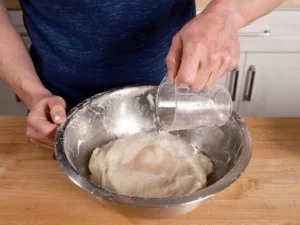
Dough hydration—the ratio of water to flour—significantly influences the extensibility and texture of sourdough bread, playing a vital role in achieving an open crumb.
The Benefits of Higher Hydration
Generally, a higher dough hydration makes it easier to achieve an open crumb. The increased water content results in a more extensible dough that can stretch and expand more readily without tearing. Furthermore, during baking, the excess water turns to steam, which helps to push the crumb open, contributing to a lighter and airier texture.
Navigating the Challenges of Wet Dough
However, higher hydration is not a universal requirement and comes with its own set of challenges. Doughs with a higher water content are more difficult to handle and require greater skill to develop adequate strength. Pushing hydration too high for the flour’s capacity can lead to a dough that is excessively slack and structurally weak, regardless of mixing techniques.
The goal is to find the optimal hydration level for your specific flour and environment. This sweet spot involves enough water to create a soft, extensible dough that can expand freely, but not so much that it becomes unmanageable. The dough should feel lively, silky, supple, and responsive, rather than overly slack or soupy.
While an open crumb is certainly achievable with 70% hydration, a higher hydration level, such as 80%, may make the process easier for experienced bakers working with wetter doughs.

In summary: While a higher dough hydration can facilitate the creation of an open crumb by increasing extensibility, it is not an absolute requirement and demands careful handling and dough strength development.
Strengthening the Dough: The Gluten Network’s Role
The development and strength of the gluten network are fundamental to creating a dough that can effectively trap and expand with fermentation gases, leading to an open crumb.
The Importance of Adequate Gluten Development
During the mixing process, you are actively building a gluten network. This network is responsible for trapping the carbon dioxide produced by the yeast and bacteria, allowing it to expand and form the characteristic air pockets of the crumb. If the dough is under-strengthened, these pockets will be weak and prone to collapsing, resulting in a dense, tight crumb.
Avoiding Over-Elasticity
Conversely, over-mixing can create a dough that is too elastic and resistant to expansion. When the gluten becomes excessively tight, it can inhibit the very stretch needed for an open interior. This scenario can lead to a closed crumb, even when the dough has been developed through other means.
The Balancing Act of Mixing
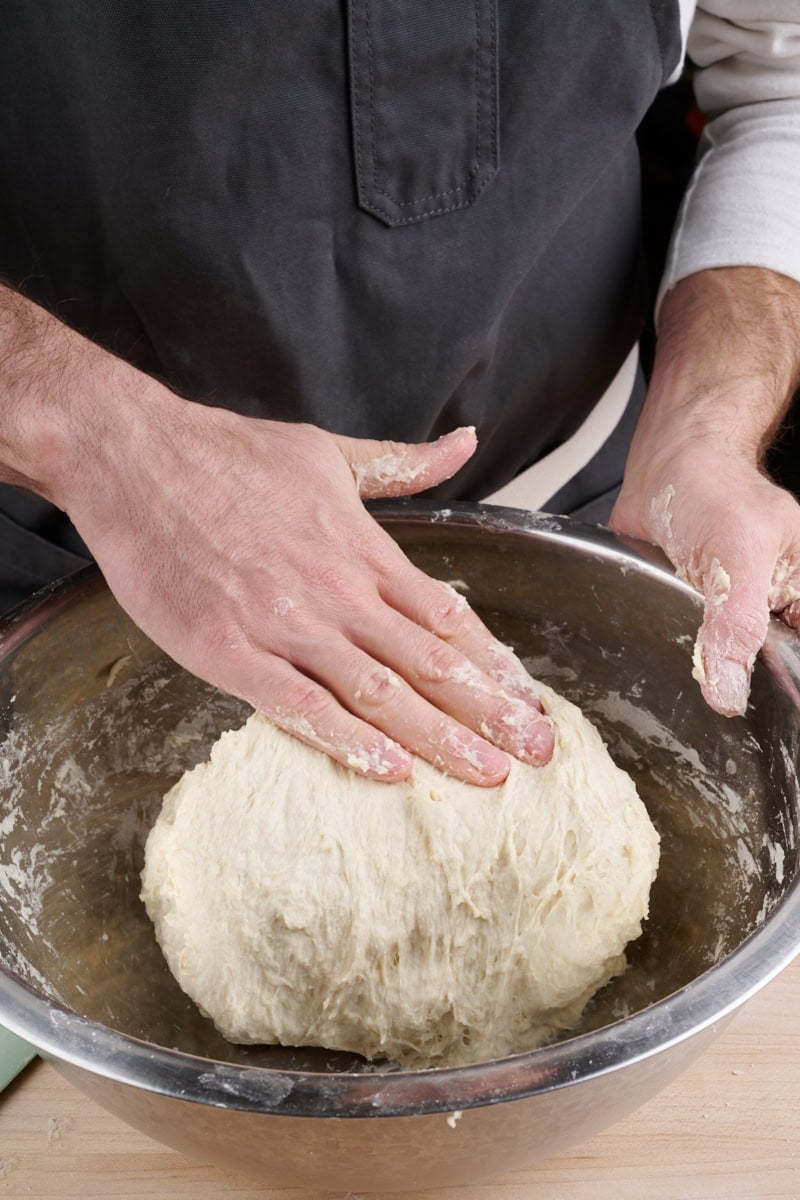
Many home bakers, particularly those mixing by hand, tend to underdevelop their dough. This can manifest as a dough that feels tight and elastic but lacks smoothness and does not hold its shape well. It’s often beneficial to mix for a few minutes longer than feels comfortable, employing techniques like folding the dough repeatedly in the bowl, using slap and folds, or utilizing a stand mixer on a medium speed.
The aim is to achieve a dough that is smooth, elastic, and holds its shape when stretched. Ideally, it should approach the windowpane test, where a thin membrane can be stretched without tearing. When in doubt, it is generally better to err on the side of slightly more mixing.

In summary: Strengthen the dough sufficiently to develop a robust gluten network, but avoid over-developing it to the point of excessive elasticity, which can hinder expansion.
Gentle Preshaping and Shaping: Preserving the Air
The way dough is handled during preshaping and final shaping significantly impacts its internal structure and, consequently, the resulting crumb.
Preserving the Delicate Structure
Your dough is a delicate ecosystem of thousands of gas pockets, each enclosed by gluten walls painstakingly developed during mixing and folding. Rough handling—applying excessive pressure during shaping or slapping the dough against a surface—can rupture these bubbles, breaking them into smaller fragments and leading to a tighter, more uniform crumb.
Gentle handling is therefore paramount, especially during the critical stages of preshaping and final shaping. The dough has spent hours building up its structure, and forceful manipulation can effectively undo this progress.
In summary: Handle the dough with care throughout the preshaping and shaping processes to preserve the delicate gas pockets and maintain the integrity of the structure.
The Batard Advantage: Shape and Crumb
In many bakers’ experience, oval-shaped loaves, or batards, tend to yield a more consistently open crumb compared to round loaves, or boules. This phenomenon can be attributed to two primary factors:

Reduced Compression During Shaping
Batard shaping often involves a more linear motion, rolling the dough into a cylinder. This technique is generally gentler and less prone to compressing the developing gas pockets compared to the more vigorous tucking and tension-building often employed when shaping a boule. The latter can inadvertently deflate some of the carefully created air pockets.
Differential Heat Penetration
The elongated shape of a batard allows heat to penetrate the dough more rapidly and evenly during baking. This faster and more uniform heat transfer can contribute to a more dramatic and even oven spring, further opening the crumb. For an even more pronounced effect, consider the extreme example of a long, thin baguette, which often exhibits a more irregular and open crumb than a thick, round miche. While the same dough might be used, the geometry of the bake significantly influences the final crumb structure.
While achieving an open crumb with a boule is certainly possible, if a baker is consistently struggling with a tight interior, experimenting with batard shaping might reveal a solution.
In summary: The oval shape of a batard generally facilitates a more open crumb due to gentler shaping techniques and more efficient heat penetration during baking.
Proofing to Perfection: The Final Frontier
The final proofing stage is where all the preceding efforts converge, transforming the dough into a light, airy structure ready for baking.
The Golden Window of Proofing
The ideal final proof involves allowing the dough to rise by approximately 75% to 80% of its potential height. This leaves sufficient "reserve strength" for the dough to continue expanding in the oven’s heat—a process known as oven spring. This crucial expansion is what ultimately opens up the crumb in the initial minutes of baking.
The Perils of Over-Proofing
Pushing the proof too far can have detrimental effects. As fermentation continues, protease enzymes begin to break down the gluten network, weakening the dough’s structure. This weakens its ability to trap gases, leading to a less dramatic rise in the oven and a tendency for the bread to spread rather than spring upwards. While an overproofed loaf might still possess good flavor, its interior will likely be denser and tighter.
The Poke Test: A Reliable Indicator
A simple yet effective method for gauging the readiness of the dough is the "poke test." Gently press a floured finger into the dough.
- Under-proofed: The indentation springs back immediately.
- Perfectly proofed: The indentation slowly springs back, leaving a slight impression.
- Over-proofed: The indentation remains completely indented, or the dough feels weak and may show signs of collapsing.
If the dough feels tight and springs back quickly, allow it to proof for another 30 minutes and re-test. If it feels soft and weak, it’s time to bake.
Bonus Technique: The Autolyse for Enhanced Extensibility
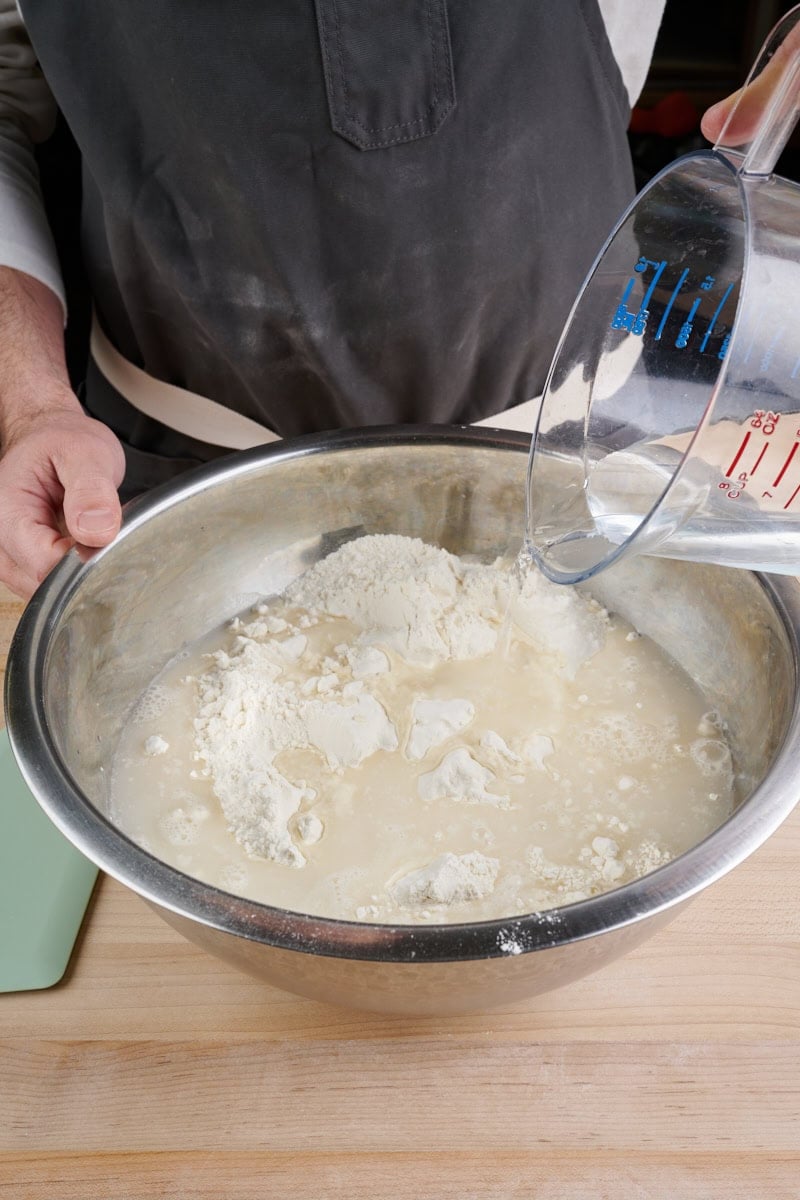
The autolyse technique, which involves mixing flour and water and allowing it to rest before incorporating salt and leavening agents, can significantly enhance dough extensibility. During this resting period, natural enzymes in the flour begin to break down protein bonds, making the dough more pliable and less prone to resisting stretch.
This technique is particularly beneficial when working with high-protein white flours, which can exhibit considerable elasticity. An autolyse of 30 minutes to an hour can help to temper this elasticity, resulting in a dough that is both strong and supple, allowing for greater expansion during fermentation and baking. This increased extensibility is crucial for accommodating the large air pockets that define an open crumb.
In summary: An optional autolyse can improve dough extensibility, especially with strong flours, thereby aiding in the development of an open crumb.
Conclusion: A Holistic Approach to Open Crumb Sourdough
Achieving a consistently open crumb in sourdough bread is not the result of a single trick but rather the culmination of a series of deliberate choices. From the selection of flour and the timing of starter use to hydration levels, gentle handling, and precise proofing, each step influences the final outcome.
The pursuit of an open crumb should be balanced with an appreciation for flavor and overall texture. While an airy interior enhances the eating experience, a dense, hearty whole-grain loaf can be equally, if not more, satisfying. The ultimate goal is not perfection for its own sake, but rather the creation of bread that brings joy to the baker and delight to the palate.
Experimentation is encouraged. Bakers are urged to take detailed notes, observe the results of different techniques, and trust their own evolving intuition. Ultimately, the most rewarding sourdough is the bread that makes you happy to bake and even happier to eat, regardless of whether its crumb is perfectly open or delightfully dense.
Open Crumb Bread FAQs
How can I avoid an open crumb bread?
To achieve a denser crumb, employ a gentle degassing of the dough during shaping. This involves using a flat hand to pat the dough down from top to bottom just before final shaping, which helps redistribute gases and minimizes large holes.
My bread has a nice open crumb. Why is it gummy or tough?
This can often be attributed to using flour that is too strong, meaning it has an excessively high protein percentage. Such flour can result in a tough, rubbery mouthfeel in the final bread.
What’s Next?
For those seeking a definitive guide to crafting an exceptional open crumb loaf, "My Best Sourdough Recipe" offers a transformative approach, resulting in a bread renowned for its creamy, open crumb and visual appeal. This recipe, developed through years of dedicated baking, serves as a benchmark for achieving a truly show-stopping sourdough.