
A prolonged hiatus from regular online publishing has, paradoxically, underscored the enduring importance of efficient household management, particularly in the realm of meal preparation and grocery procurement. Despite a three-year dormancy in digital content creation, the commitment to home cooking has remained steadfast, largely attributed to a meticulously developed, adaptable, and surprisingly analog system for weekly dinner planning and grocery shopping. This system, refined over six years, exemplifies a pragmatic approach to mitigating the pervasive challenges of modern life, often encapsulated by the Norwegian term "tidsklemma"—the struggle to balance numerous obligations within limited time.
Understanding the "Tidsklemma" in a Global Context
The concept of "tidsklemma," which translates loosely to "the time squeeze" or "time crunch," describes the predicament faced by individuals, particularly those with full-time employment and family responsibilities, who find themselves constantly pressed for time. While originating in Norway, this phenomenon is far from localized; it resonates deeply with dual-income households, single-parent families, and individuals navigating demanding careers across the globe. Research from organizations like the Pew Research Center consistently highlights increasing pressures on parents and working adults to juggle professional duties, childcare, household chores, and personal well-being, often leading to elevated stress levels and a diminished capacity for leisure.
This chronic time scarcity often manifests in daily life through reliance on convenience foods, takeout, or pre-prepared meals, which, while offering immediate relief, can have long-term implications for health, budget, and culinary skills. The proponent of this particular grocery list system identifies "tidsklemma" as the primary motivation for adopting a structured approach to meal planning. In an era where spontaneous, inspiration-driven cooking might be idealized, the realities of modern life often necessitate a more disciplined framework to ensure regular, home-cooked meals without succumbing to burnout.
The Analog Advantage: A Detailed Examination of the System
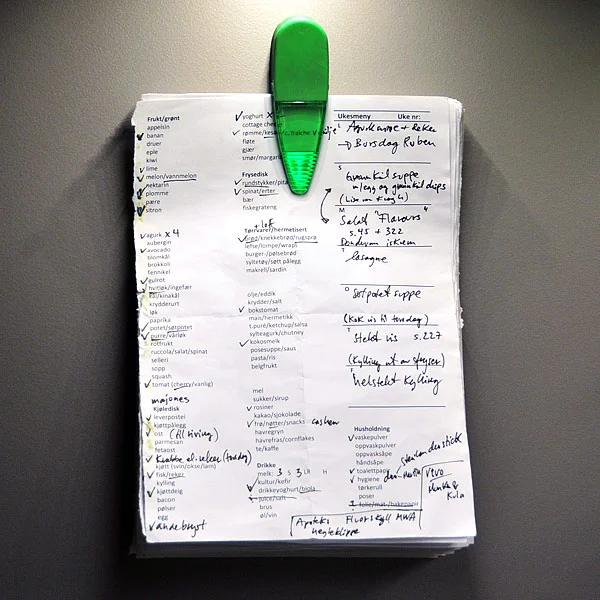
At the core of this effective household management strategy is a generic, pre-populated grocery list, designed for weekly use and printed on paper. This physical document is not merely a blank slate but a thoughtfully organized inventory of commonly purchased items, categorized logically and structured to mirror the layout of a local supermarket. This intuitive organization significantly streamlines the shopping process, reducing the time spent navigating aisles and minimizing the mental effort required to recall necessities.
The list’s design features ample space for adding specific quantities, unique items not already pre-listed, or special requests. This flexibility ensures that while the foundation is generic, the list remains fully customizable to the family’s evolving preferences and specific weekly needs. The list’s creator highlights its continuous refinement over six years, reflecting changes in family size, dietary preferences, and product availability in local stores. This iterative process transforms a simple checklist into a dynamic tool that accurately reflects current household demands.
A crucial aspect of this system is its integration with weekly menu planning. Alongside the grocery items, space is allocated for outlining the week’s meals. For recipes sourced from cookbooks, a simple page number reference suffices, acting as a discreet yet effective reminder. This dual-purpose document serves as both a shopping guide and a meal planner, fostering coherence between intent and execution. During a grocery trip, a quick glance at the menu section can often prompt the recall of forgotten ingredients, acting as a crucial secondary memory aid.
Paper Versus Digital: A Case for Tangible Efficiency
In an increasingly digitized world, the choice of a paper-based system might seem counter-intuitive. However, the system’s proponent argues strongly for the superior efficacy of paper for this specific application. Unlike many digital grocery list applications, a single A5-sized piece of paper offers a complete, high-resolution overview of both the weekly menu and the entire shopping list at a glance. This eliminates the need for scrolling, swiping, or navigating between screens, which can fragment attention and introduce friction into the process.
The physical nature of the paper list also provides practical advantages: it can be easily folded and slipped into a pocket, remaining accessible without the distractions inherent in a smartphone. Furthermore, the tactile experience of ticking off items manually can be psychologically satisfying, reinforcing progress and completion. For additional notes or larger shopping requirements, the reverse side of the paper offers extra space, a simple yet effective solution that digital platforms often complicate with sub-menus or separate note functions.
While numerous grocery list applications boast features like sharing, recipe integration, and automatic reordering, their reliance on screen time and potential for digital distraction can undermine efficiency for certain users. The straightforwardness of paper, devoid of notifications or battery concerns, ensures an uninterrupted focus on the task at hand. This "analog advantage" highlights that for specific tasks, simplicity and tangibility can often surpass the perceived sophistication of digital alternatives.
Chronology of Refinement and Adaptability
The journey of this grocery list system spans over six years, marking a continuous evolution rather than a static creation. Initially compiled as a comprehensive inventory of regularly purchased items, the list has undergone numerous adjustments. This iterative process typically involves printing multiple copies (e.g., 10-20 at a time) and, upon depletion, reviewing the past few weeks’ lists. This review serves as a critical feedback loop, identifying items that have become obsolete, those that need permanent addition, or specifications that require updating.
A compelling illustration of this adaptability is seen in how the list responds to life changes. Items frequently purchased when children were young, such as specific baby foods or snacks, gradually faded from the list as the children grew older. Conversely, new dietary preferences or household needs would prompt the inclusion of new ingredients. This organic evolution ensures that the list remains a relevant and accurate reflection of the family’s current lifestyle.
The proponent emphasizes that no two families would arrive at identical lists. This underscores the highly personalized nature of effective household management tools. While templates are provided for download, their true value lies in serving as a customizable starting point, encouraging users to adapt them to their unique culinary habits, local supermarket offerings, and family dynamics. This continuous refinement transforms a mere list into a living document, a testament to the ongoing process of managing a household.
Broader Impact and Implications
The adoption of such a structured planning system extends beyond mere grocery shopping; it carries significant implications for various aspects of modern life:
- Mental Well-being and Reduced Decision Fatigue: By pre-planning meals and systematizing grocery procurement, individuals significantly reduce daily decision fatigue. Research in cognitive psychology consistently demonstrates that the sheer volume of choices faced in modern life—from what to wear to what to eat—can deplete mental energy. A structured meal plan and grocery list offload these decisions, freeing up cognitive resources for more complex tasks or personal pursuits. This contributes directly to reduced stress and an improved sense of control over daily routines.
- Promoting Home Cooking and Nutritional Control: In an age of ubiquitous convenience, a pre-planned approach actively encourages home cooking. By having all necessary ingredients procured and a meal plan in place, the inertia often associated with preparing meals from scratch is significantly reduced. This, in turn, allows for greater control over ingredients, portion sizes, and nutritional content, potentially leading to healthier eating habits compared to frequent reliance on takeout or highly processed foods.
- Economic Efficiency and Budgeting: Structured meal planning and shopping are widely recognized as effective strategies for household budgeting. By purchasing only what is needed for planned meals, impulse buys are minimized. Furthermore, buying ingredients for specific recipes reduces the likelihood of purchasing items that might spoil before use, leading to significant cost savings over time. Studies by financial advisors often highlight meal planning as one of the simplest yet most impactful ways to manage household expenses.
- Environmental Sustainability and Reduced Food Waste: A direct consequence of planned purchasing is a reduction in food waste. When groceries are bought with specific meals in mind, there is less surplus and fewer perishable items that go unused. Food waste is a significant environmental concern, contributing to greenhouse gas emissions and inefficient resource use. A systematic grocery list, therefore, plays a small but meaningful role in promoting more sustainable household practices.
- Reclaiming Time for Family and Leisure: Ultimately, the efficiency gained from this system—from reduced shopping time to fewer last-minute meal decisions—translates into reclaimed time. This precious commodity can then be redirected towards family activities, hobbies, rest, or other pursuits that enhance quality of life, directly addressing the "tidsklemma" challenge. While the system allows for spontaneous deviations (e.g., accepting a dinner invitation or opting for takeout on an exhausting day), its foundational structure ensures that such deviations are exceptions rather than the norm, maintaining a balance that prioritizes home-cooked meals without rigid inflexibility.
Accessibility and Future Adaptations
To encourage broader adoption and adaptation, the creator of this system has made templates available for download in various formats (Norwegian A4, English A4, and English Legal sizes). This direct accessibility allows individuals to experiment with the framework and customize it to their specific needs, reinforcing the idea that effective tools are those that are personally tailored. The ongoing dialogue around such systems, often through online comments and discussions, further fosters a community of shared strategies for navigating modern household management challenges.
In conclusion, the unassuming paper grocery list, refined over years of practical application, stands as a powerful testament to the efficacy of simple, analog solutions in an increasingly complex and digital world. It offers a tangible, adaptable framework for individuals grappling with the "tidsklemma," providing a pathway to reduced stress, healthier eating, improved financial management, and, crucially, reclaimed time. Its enduring relevance underscores a fundamental truth: sometimes, the most sophisticated solutions are found in the elegance of simplicity and the power of consistent, thoughtful planning.