
The global lockdowns of recent years triggered unprecedented lifestyle shifts across the globe, among the most unexpected of which was a massive, sustained surge in home baking. As millions of households found themselves confined indoors with evenings and weekends entirely cleared of social engagements, grocery store shelves saw sudden, baffling shortages of pantry staples. In Norway and many other nations, yeast vanished from supermarket aisles for weeks and months on end. Yet, while panicked consumers hoarded commercial packets, a deeper look at the biological mechanics of baking reveals that a single sachet of instant dry yeast holds far more potential than most realize—largely due to the startling, counterintuitive mechanics of exponential growth.
Understanding the Mathematics of Microbial Multiplication
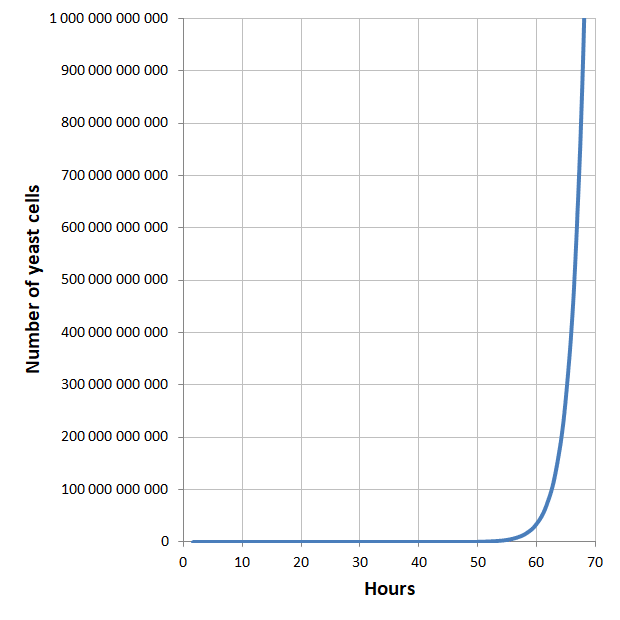
For much of the general public, the concept of exponential growth became a daily fixture in the news cycle, though almost exclusively associated with the grim spread of the SARS-CoV-2 virus. Exponential growth is notoriously difficult for the human brain to grasp intuitively, a cognitive hurdle famously illustrated by ancient mathematical riddles such as the wheat and chessboard problem. In an exponential trajectory, initial changes appear agonizingly slow. For a prolonged period, it seems as though virtually nothing is happening. Then, suddenly, the curve turns sharply upward, and change materializes at an explosive, overwhelming scale.
This exact mathematical principle governs the proliferation of Saccharomyces cerevisiae, commonly known as baker’s yeast. Under ideal laboratory or commercial conditions—characterized by a steady supply of nutrients, adequate oxygen, and optimal thermal regulation—a single yeast cell undergoes cell division, splitting into two distinct cells in approximately 100 minutes. This constitutes a complete generational life cycle in under two hours.
Following this biological rhythm, those two cells become four after another 100 minutes, and the doubling continues relentlessly. After 24 hours of uninterrupted ideal conditions, a solitary cell multiplies into roughly 16,000 descendants. By the 48-hour mark, that population explodes to an astounding 268 million cells. In less than three days—specifically under 72 hours—the original single cell scales up to approximately one trillion individual cells. To put this numerical leap into perspective, one trillion cells roughly equals the total cellular mass found in a standard 50-gram block of compressed commercial baker’s yeast. While such ideal growth can only be sustained temporarily during industrial yeast manufacturing rather than inside a dense, cool bread dough, the underlying kinetic potential remains a powerful tool for the home baker.
The Evolution of Lockdown Baking and Supply Chain Strains
The onset of the COVID-19 pandemic in early 2020 abruptly altered culinary habits worldwide. With restaurants shuttered and remote work removing daily commuting constraints, millions turned to domestic cooking as both a therapeutic pastime and a practical necessity. Baking, in particular, saw a massive cultural resurgence. Social media feeds flooded with images of rustic sourdough boules, artisanal pizza crusts, and sandwich loaves.
However, this sudden surge in demand caught commercial supply chains off guard. Packaging facilities, distribution networks, and grocery store inventories were calibrated for traditional consumer habits, where home baking represented a modest fraction of retail sales. When millions of consumers simultaneously attempted to purchase baking supplies, supermarkets faced severe inventory depletions. In Norway, retail data from early lockdown periods indicated that yeast sales spiked by several hundred percent, leading to protracted shortages that forced consumers to rethink how they utilized their existing kitchen inventories.
Mastering Efficiency: Micro-Dosage and Long Fermentation
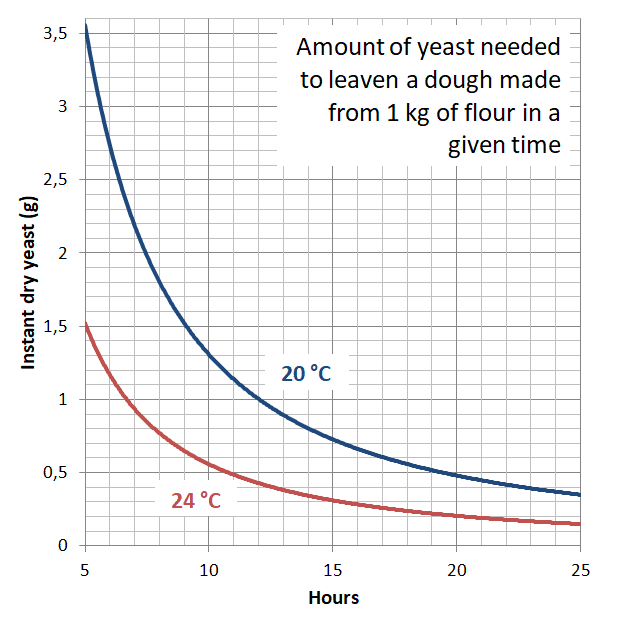
Faced with persistent shortages and restricted access to grocery restocks, resourceful home bakers began looking for ways to maximize the lifespan of their pantry supplies. The key to stretching a standard 12-gram sachet of instant dry yeast over dozens of baking sessions lies in shifting reliance from sheer yeast volume to the dimension of time.
By drastically reducing the amount of yeast introduced to a flour-and-water mixture and extending the bulk fermentation—or proofing—period, bakers can achieve superior structural and flavor profiles without depleting their ingredient reserves. Traditional straight dough methods, when paired with precise micro-measurements, allow a fraction of a gram of yeast to fully leaven a large batch of dough if given adequate time to develop.
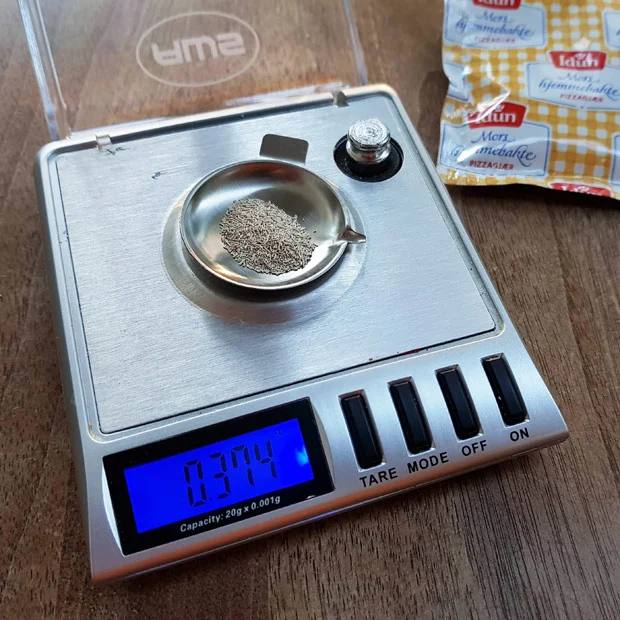
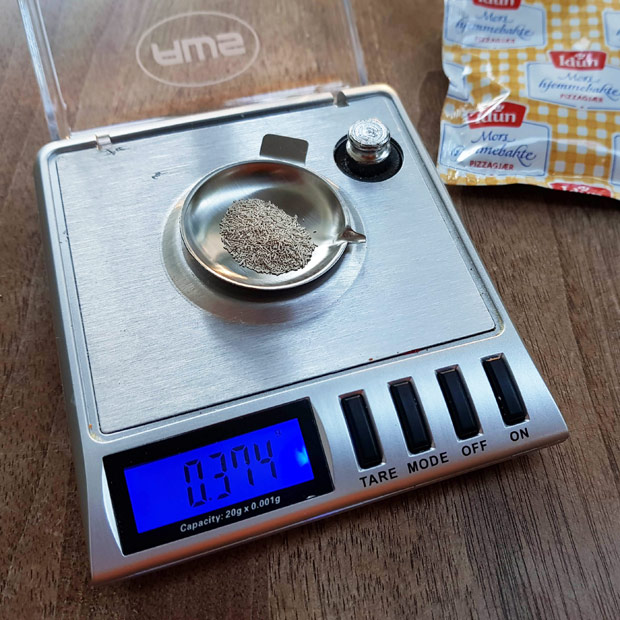
To navigate these precise measurements without relying on expensive laboratory equipment, many home bakers turned to affordable digital culinary scales capable of a 0.001-gram readout. Digital tools designed for artisanal pizza makers, such as the mobile application PizzApp+, became essential resources. Data compiled through such applications demonstrates that a standard dough batch formulated with one kilogram of wheat flour requires a mere 0.48 grams of instant dry yeast when subjected to a 20-hour bulk fermentation at a controlled ambient temperature of 20°C.
Flavor Implications and Microbiological Shifts
Beyond mere resource conservation, extending the fermentation timeline yields significant gastronomic advantages. When yeast population growth is slowed and the bulk fermentation phase is prolonged, secondary microbial and chemical processes take place within the dough matrix.
Lactic acid bacteria, naturally present in flour or introduced from the surrounding environment, find an environment hospitable to gradual metabolic activity during extended cold or room-temperature fermentation. These bacteria produce organic acids, including lactic and acetic acid, which impart complex flavor profiles, subtle sour notes, and enhanced aromas that are entirely absent in rapid, high-yeast commercial doughs. Furthermore, extended enzymatic activity breaks down complex starches into simpler sugars and partially degrades gluten proteins, which can improve both crumb texture and overall digestibility.
While the artisanal sourdough movement captured the imagination of many culinary enthusiasts seeking complete independence from commercial yeast packets, the convenience of instant dry yeast retains a distinct appeal. Sourdough cultures require daily feeding, maintenance, and careful temperature management—a level of commitment that contrasts sharply with the "set-and-forget" nature of a micro-dosed instant yeast dough left to ferment overnight.
Broader Economic and Consumer Trends
The convergence of biological science, digital utility, and pandemic-era lifestyle changes left a lasting imprint on consumer behavior. Retail analysts note that even as pandemic restrictions eased and global supply chains stabilized, a significant percentage of consumers retained the culinary skills and habits acquired during lockdown periods. The market for kitchen scales, specialty flours, and baking accessories has maintained an elevated baseline compared to pre-2020 figures.
Ultimately, the intersection of exponential mathematics and kitchen mechanics highlights a broader lesson in resource management. By understanding the underlying biological drivers of microbial growth, consumers transformed a potential limitation—scarcity of commercial baking supplies—into an opportunity for culinary experimentation, resulting in superior loaves of bread through scientific precision and patience.