
The global specialty coffee landscape has undergone a profound transformation over the past decade, shifting from an artisanal craft heavily reliant on intuition to a rigorous, data-driven discipline. What was once the domain of traditional baristas operating by feel has increasingly become a meeting point for culinary arts and analytical chemistry. This evolution is particularly evident in regions like Scandinavia, where the third-wave coffee movement has flourished, prompting both home enthusiasts and professional cafes to re-evaluate every variable involved in extraction.

The convergence of rigorous scientific methodologies and specialty coffee brewing has opened new avenues for understanding why seemingly identical batches of beans can yield vastly different flavor profiles. By examining the physical and chemical parameters of extraction—such as brew ratios, total dissolved solids, particle size distribution, and water composition—researchers and hobbyists alike are decoding the complex variables that dictate what ultimately reaches the cup.
The Evolution of Extraction Science
Historically, culinary exploration into extractions—whether utilizing water, oil, or ethanol—focused largely on macro-level results. However, recent years have marked a significant departure, driven by an influx of peer-reviewed scientific literature and accessible diagnostic tools. Modern coffee enthusiasts are no longer content with broad generalisations regarding grind size or water temperature; instead, they are deploying laboratory-grade concepts into home kitchens.
This shift mirrors developments in other precision culinary arts, such as molecular gastronomy and craft brewing. As the specialty coffee market expands, consumers demand greater consistency, repeatability, and flavor clarity. Consequently, the industry has turned its focus toward quantifiable metrics to eliminate guesswork, transforming daily brewing routines into controlled biochemical experiments.
Key Variables in Coffee Extraction
Achieving consistency in coffee brewing requires a granular understanding of several interdependent variables. Industry analysts and coffee scientists categorize these factors hierarchically, recognizing that foundational parameters must be optimized before fine-tuning secondary elements.
Brew Ratio (BR) and Strength
The brew ratio serves as the fundamental recipe for coffee extraction, defined simply as the mass of water relative to the mass of coffee grounds. Standard ratios for black coffee typically range between 15 and 25. Establishing a precise brew ratio allows for seamless scaling and forms the baseline for calculating more complex extraction metrics.
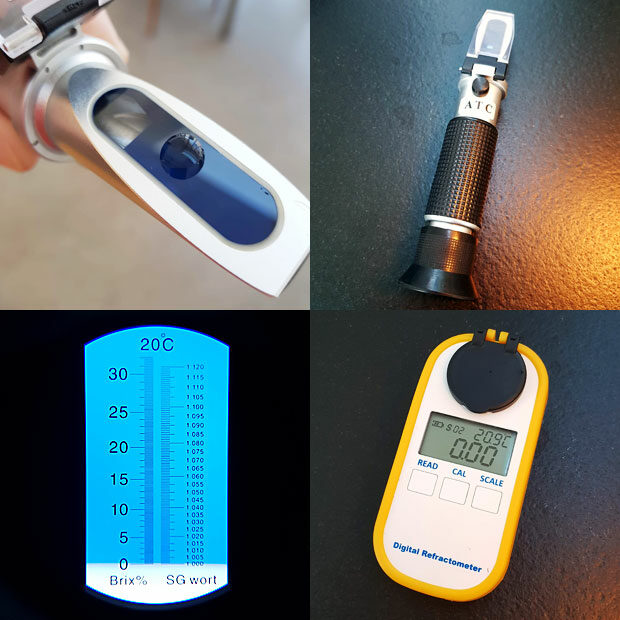
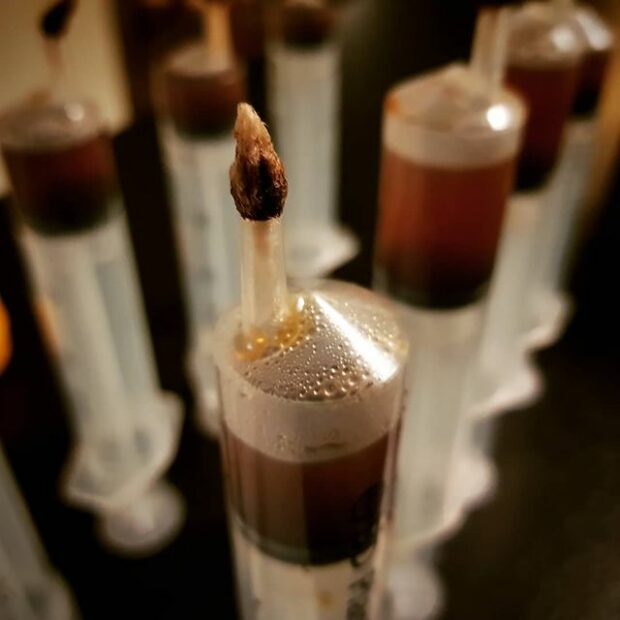
Closely tied to the ratio is the concentration of Total Dissolved Solids (TDS), which measures the strength of the beverage. Traditional gravimetric methods—evaporating a filtered sample to dryness—are impractical for daily use due to the high precision required (measuring milligrams of dry matter within a predominantly water-based solution). Instead, practitioners increasingly rely on handheld or digital refractometers. By measuring the refractive index of light passing through a cooled, filtered coffee sample, users can quickly determine %Brix, which converts directly to %TDS via established calibration factors.
Extraction Yield (EY and EEY)
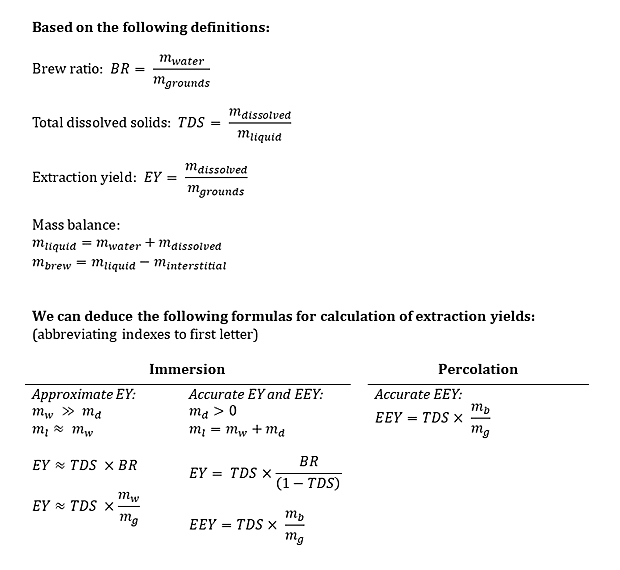
Once TDS is established, calculating the Extraction Yield (EY) reveals what percentage of the original dry coffee mass has been successfully dissolved into the liquid. Depending on the brewing method—immersion versus percolation—the mathematical approach varies.
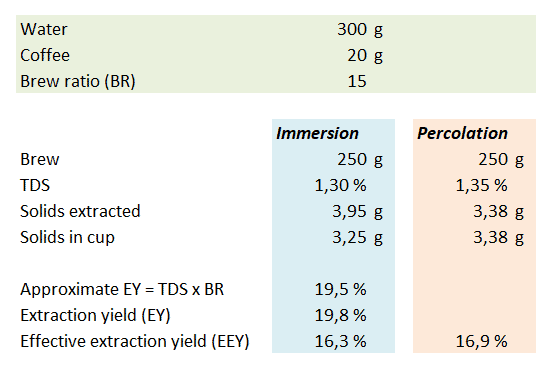
In immersion brewing (such as a French Press or Aeropress), all liquid shares an equal probability of extraction and inclusion in the final cup. Percolation brewing (such as pour-over cones), however, introduces interstitial liquid trapped between coffee grounds that never reaches the final vessel. Recognizing this distinction has led researchers to differentiate between standard extraction yield and effective extraction yield (EEY), providing a more accurate reflection of both economic efficiency and flavor compound delivery. Data consistently shows that percolation methods are highly efficient at delivering dissolved solids to the cup, while immersion methods extract a higher total mass from the grounds themselves, accounting for notable sensory differences between the two styles.
Particle Size Distribution (PSD)
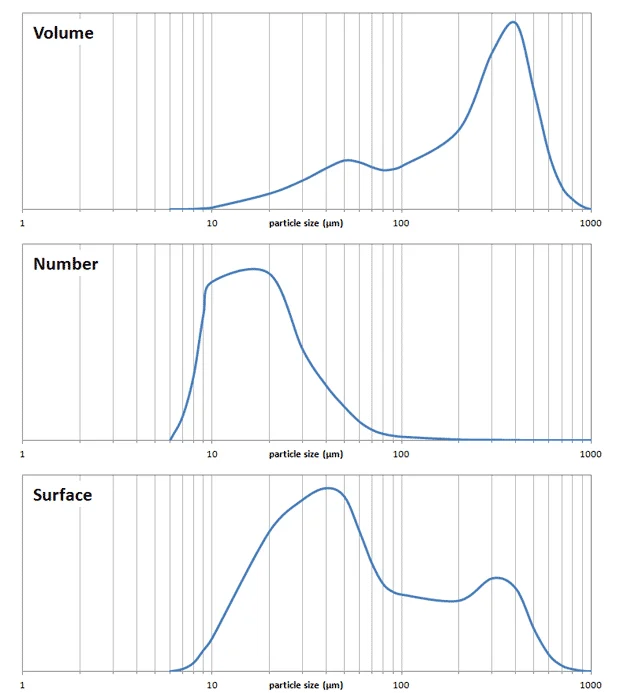
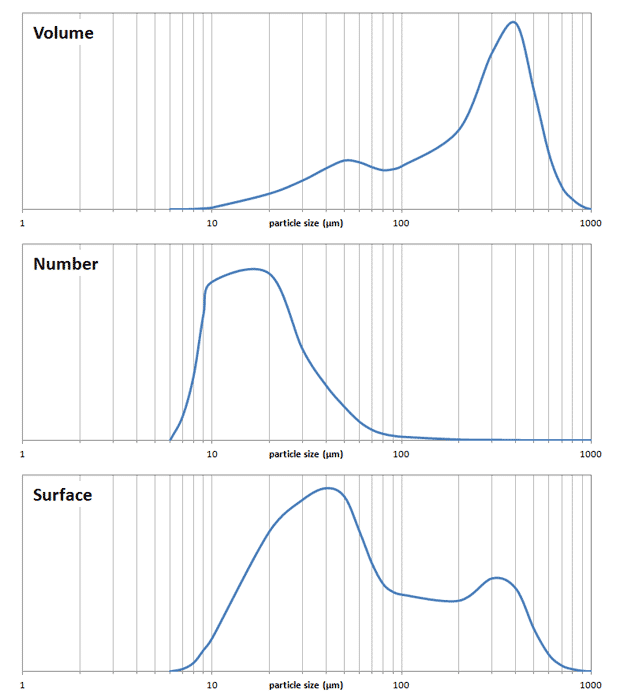
Grind size is rarely uniform; when a roasted bean is fractured by a burr grinder, it produces a spectrum of particle sizes ranging from large fragments to microscopic "fines" (particles typically smaller than 100 micrometers).
Advanced particle size distribution analysis reveals that a significant portion of extraction occurs entirely on the surface of these microscopic fines. Preliminary studies suggest that water only extracts coffee solids to a depth of approximately 100 micrometers, meaning the dense cores of larger particles often remain unextracted. Consequently, achieving a narrow, uniform particle size distribution is critical for avoiding over-extraction of fines—which leads to bitterness and clogging—and under-extraction of boulders. While industrial cylindrical grinders and specialized home sifters attempt to address this variance, the choice between flat and conical burrs continues to be a central point of technical debate within the barista community.
Environmental and Material Factors
Beyond the mechanics of grinding and brewing, secondary factors exert profound influence on the final cup profile.
- Water Composition: Because a standard cup of black coffee consists of more than 98% water, mineral content plays a decisive role in extraction efficiency. Calcium and magnesium ions, in particular, act as chemical binding agents that extract specific flavor compounds from roasted beans. Tailoring water chemistry via targeted mineral additions has become a hallmark of advanced brewing setups.
- Temperature and Diffusion: Thermal energy dictates both the solubility and diffusion rates of chemical compounds within coffee grounds. Higher water temperatures accelerate extraction, while lower temperatures—utilized in cold brew techniques over extended periods—selectively extract different compounds, resulting in lower acidity and distinct flavor profiles. Furthermore, beverage temperature directly alters human sensory perception, dampening the detection of sweetness and bitterness as the liquid cools.
- Filter Media: The choice between paper, metal, and cloth filters fundamentally alters the composition of the beverage. High-density paper filters effectively retain micro-particles and lipids (coffee oils), yielding a cleaner cup with distinct flavor clarity. Conversely, metal filters allow oils and microscopic fines to pass through, enhancing body and mouthfeel at the potential cost of perceived cleanliness.
Broader Implications and Industry Impact
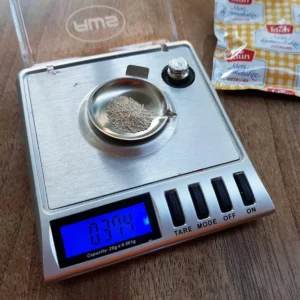
The increasing adoption of scientific principles in coffee preparation points to a maturing culinary sector. As home enthusiasts and commercial cafes alike embrace tools such as refractometers, precision scales, and specialized water treatments, the boundary between laboratory science and daily hospitality continues to blur.
Industry experts note that this analytical approach democratizes high-end coffee preparation, enabling consistent replication of complex flavor profiles that were previously achievable only by elite professionals. However, researchers caution against over-complication; foundational elements—such as bean freshness, precise brew ratios, and grind uniformity—must be systematically mastered before investing in advanced diagnostic equipment. As ongoing research continues to illuminate the complex chemistry of extraction, the global coffee community moves steadily closer to a standardized understanding of the art and science of the brew.