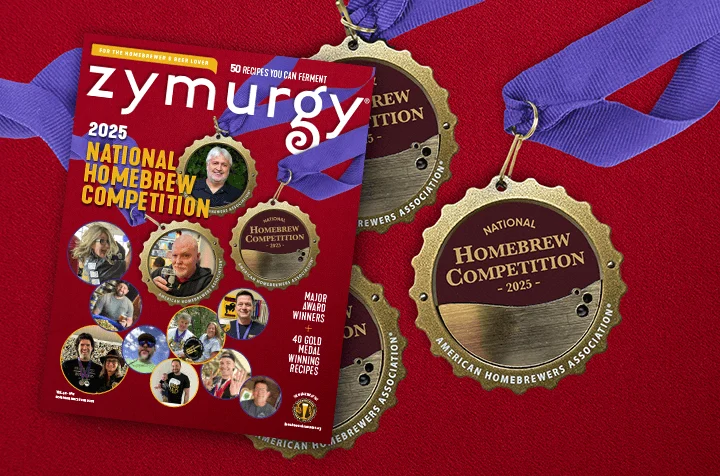

The American Homebrewers Association has officially crowned the top tier of amateur brewing talent for the 2026 National Homebrew Competition Final Round, highlighting an extraordinary display of technical precision, historical adherence, and creative mastery among the global homebrewing community. Among the thousands of entries submitted from across the United States and international affiliates, two standout brewers rose to the top of their respective categories, navigating rigorous rounds of sensory evaluation to secure gold medals in some of the competition’s most competitive and historic style divisions.
Sebastian Seith of Hinsdale, Illinois, representing the local club Brixie’s Brewers, claimed the prestigious gold medal in Category 14: Brown British Beer. Seith’s formulation triumphed over a formidable field of 92 entries, a bracket defined by subtle malt complexity, low hop bitterness, and exceptional drinkability. Meanwhile, in the robust and intensely scrutinized arena of dark ales, Preston Booth of Easley, South Carolina—a dedicated member of South Carolina Upstate Brewers Anonymous, commonly known as SCUBA—captured the gold medal in Category 15: Irish and British Stout. Booth’s masterpiece stood out among 102 entries, navigating a rigorous judging process that demands a delicate balance of roasted barley character, creamy mouthfeel, and ester profiles true to traditional island brewing heritage.
These victories highlight the ongoing evolution of the American homebrewing landscape, where hobbyists routinely match the technical proficiency of commercial craft breweries. The announcement of these medalists marks another milestone in a multi-decade tradition that has shaped the modern craft beer industry, serving as both a competitive arena for culinary artisans and a crucial incubator for future commercial brewing talent.
The Evolution and Prestige of the National Homebrew Competition
To understand the weight of securing a gold medal in the National Homebrew Competition (NHC), one must examine the historic scale and rigorous nature of the event. Organized annually by the American Homebrewers Association (AHA)—a division of the Brewers Association—the NHC is universally recognized as the world’s largest international amateur beer competition.
The roots of the competition trace back to the late 1970s, a period when homebrewing was still federally illegal in the United States. Following the passage of federal legislation in 1978 that legalized home winemaking and homebrewing at the federal level (paving the way for subsequent state-level approvals), the hobby exploded from an underground subculture into a passionate community of scientific experimentation and culinary preservation. The National Homebrew Competition was established to celebrate this burgeoning craft, providing a standardized platform where amateur brewers could receive constructive feedback from certified judges while competing for ultimate peer recognition.
Over the decades, the NHC has expanded exponentially. What began as a modest gathering of local enthusiasts evaluating a few dozen homemade ales has evolved into a massive, multi-tiered tournament. Today, the competition routinely evaluates thousands of entries spanning dozens of distinct style categories defined by the Beer Judge Certification Program (BJCP).
The journey to an NHC gold medal is a gauntlet of sensory scrutiny. Brewers first enter regional first-round competitions held across various zones in the United States. Only entries that achieve top scores advance to the highly anticipated National Final Round. At this ultimate stage, panels of elite, highly trained BJCP judges—many of them professional brewmasters, advanced cicerones, and veteran sensory panelists—blind-taste the beers. Evaluators assess each entry based on strict adherence to published style guidelines, looking at aroma, appearance, flavor, mouthfeel, and overall technical execution. Flaws such as diacetyl, oxidation, acetaldehyde, or phenolic off-flavors are swiftly identified and penalized, meaning that winning a gold medal requires near-flawless brewing technique and precise process control.
Anatomy of the Winning Styles: Brown British Beers and Stouts
The specific categories conquered by Seith and Booth represent foundational pillars of brewing history, tracing their lineages back to the public houses and industrial brewing centers of the United Kingdom and Ireland.
Category 14: Brown British Beer encompasses several historic substyles, including Ordinary Bitter, Best Bitter, Strong Bitter (often referred to as English Pale Ale), Mild, and English Brown Ale. These beers are defined by their malt-forward profiles, which typically showcase notes of caramel, toasted biscuit, nuttiness, and soft chocolate, balanced by earthy, herbal traditional English hop varieties such as East Kent Goldings or Fuggles. Unlike their American craft counterparts, which frequently lean into aggressive hop bitterness and high alcohol content, British brown ales and bitters prioritize balance, drinkability, and a restrained alcohol-by-volume (ABV) profile. For Sebastian Seith to emerge victorious from a pool of 92 entries in this category, his brew must have exhibited exceptional clarity, immaculate fermentation cleanliness, and a harmonious interplay of specialty malts without tipping into cloying sweetness.
On the other side of the spectrum, Category 15: Irish and British Stout encompasses styles such as Irish Stout (the iconic dry stout popularized globally by breweries in Dublin), Sweet Stout (often called milk stout, featuring unfermentable lactose sugars), Oatmeal Stout, and Tropical Stout. These beers rely heavily on roasted dark grains—specifically roasted barley—which impart deep coffee, dark chocolate, and subtle char characteristics, complemented by a smooth, medium-to-full body. With 102 entries competing in Category 15, Preston Booth’s gold-medal-winning stout had to navigate a sensory landscape where achieving depth of flavor without harsh astringency or excessive burnt bitterness is the ultimate challenge. The judges look for a creamy foam head, a velvety mouthfeel, and a clean, satisfying finish that honors the centuries-old traditions of British and Irish pub culture.
The Vital Role of Homebrewing Clubs: Brixie’s Brewers and SCUBA

The achievements of Sebastian Seith and Preston Booth did not happen in a vacuum; they are emblematic of the collaborative, community-driven nature of homebrewing clubs across North America.
Seith’s affiliation with Brixie’s Brewers, based in Illinois, places him within a rich regional network of brewing enthusiasts who share knowledge, equipment, and critical palate feedback. Homebrewing clubs often function as peer-review laboratories. Members regularly bring experimental batches to club meetings, subjecting their beers to rigorous, constructive critiques long before submitting them to official competitions. This culture of collaborative improvement helps elevate the baseline skill level of every member involved.
Similarly, Preston Booth’s membership in South Carolina Upstate Brewers Anonymous (SCUBA) highlights the vibrant and rapidly expanding craft beer culture in the American Southeast. Regional clubs in areas with burgeoning craft beer scenes often serve as community hubs where traditional brewing knowledge is preserved, taught, and adapted to modern equipment setups. Whether troubleshooting water chemistry profiles, mastering temperature-controlled fermentation, or sharing bulk grain orders, organizations like SCUBA provide the logistical and educational infrastructure necessary for amateur brewers to reach elite competitive levels.
The Impact of Amateur Competitions on the Commercial Craft Beer Industry
Beyond the pride of winning a coveted ribbon or medal, achievements in the National Homebrew Competition carry significant implications for the broader commercial brewing landscape. For decades, the amateur homebrewing community has served as the primary R&D wing of the American beer industry.
Countless commercial craft breweries—ranging from small neighborhood brewpubs to massive regional distribution powerhouses—were founded by alumni of the National Homebrew Competition. Winning an NHC gold medal provides amateur brewers with instant credibility, validating their recipes and brewing acumen. For those looking to transition into professional brewing, whether by opening a startup enterprise or accepting a position as a professional brewer at an established facility, an NHC medal is one of the most prestigious credentials a resume can feature.
Furthermore, the recipes developed and perfected for homebrewing competitions frequently transition into commercial production. Craft breweries often look to winning homebrew recipes when designing seasonal releases, pilot batches, or collaboration beers. By pushing the boundaries of recipe formulation and technical execution on a five-gallon scale, homebrewers discover innovative ingredient combinations and process tweaks that ultimately influence commercial brewing trends.
Economic and Cultural Significance of the American Homebrewers Association
The American Homebrewers Association, which administers the competition and protects the legal and cultural interests of hobbyists, plays a vital role in sustaining this ecosystem. Founded in 1978 by Charlie Papazian—a seminal figure in the American craft beer movement—the AHA provides educational resources, publishes Zymurgy magazine, and organizes events like the annual Homebrew Con alongside the National Homebrew Competition.
In recent years, the association has continued to adapt to shifting economic landscapes and changing consumer demographics within the beverage industry. By offering educational platforms, validated recipe archives, and technical guides, the AHA ensures that both novice and advanced brewers have access to the latest scientific insights regarding yeast management, sanitation, hop chemistry, and brewing hardware.
The announcement of the 2026 Final Round medalists serves as a reminder of the enduring passion driving the homebrewing hobby. Despite the proliferation of commercial craft breweries offering thousands of unique options on retail shelves, hundreds of thousands of individuals worldwide continue to embrace the art and science of brewing beer at home. It is a pursuit defined by patience, precision, and an appreciation for agricultural history—qualities that are vividly reflected in the gold-medal-winning brews crafted by Sebastian Seith and Preston Booth.
Looking Ahead: The Future of Amateur Brewing
As the craft beer industry matures, the baseline expectations for amateur brewing continue to rise. Innovations in homebrewing equipment—such as automated electric brewing systems, precise digital temperature controllers, and accessible water chemistry profiling tools—have democratized techniques that were once exclusive to industrial-scale facilities. Consequently, the quality of entries in competitions like the NHC has never been higher, making victories in historical categories like Brown British Beer and Irish and British Stout all the more impressive.
The triumphs of Seith and Booth demonstrate that while modern technology plays a supporting role, the true differentiator remains the brewer’s dedication to process control, sensory evaluation, and an understanding of traditional style parameters. As these champions celebrate their success, they join an elite lineage of amateur brewers whose dedication to the craft continues to enrich the global tapestry of brewing culture, ensuring that the art of making great beer at home remains as vibrant, competitive, and innovative as ever.