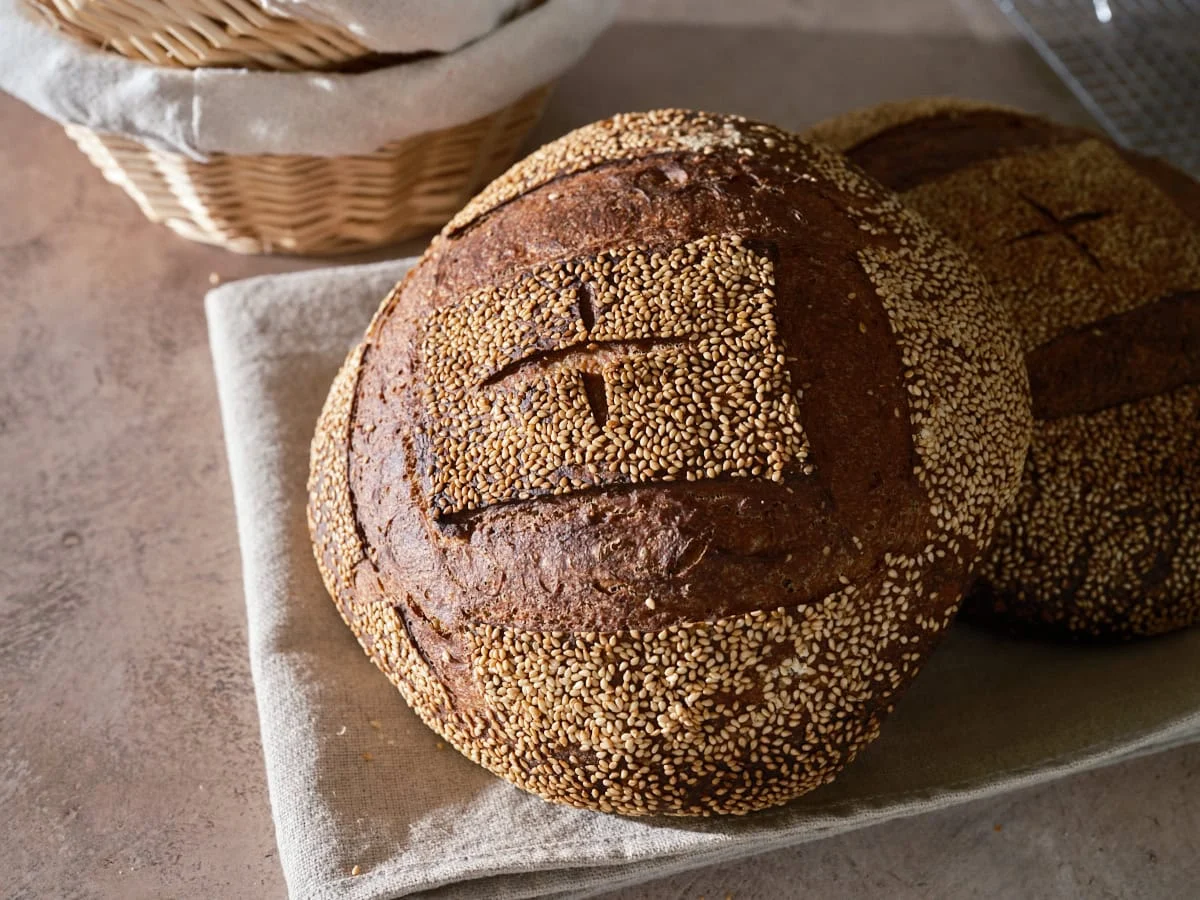

The intersection of traditional baking techniques and modern artisanal sourdough development has yielded a distinctive winter loaf that emphasizes deep regional grains, ancient scent profiles, and advanced gelatinization methods. Master artisan bakers and culinary scientists are increasingly turning to century-old preparation techniques—specifically the flour scald—to combat the structural challenges of working with mineral-rich, low-gluten whole grains during periods of extreme ambient temperature fluctuation.
This comprehensive technical evaluation examines the formulation, scheduling, and chemical implications of producing a high-extraction, spice-forward sourdough loaf incorporating organic buckwheat, ground aniseed, and barley malt syrup. By examining the precise mechanics of starch gelatinization and thermal management, commercial and domestic bakers alike can replicate a sandwich-style loaf designed to withstand the sensory fatigue of extended winter seasons while maintaining high nutritional integrity.
The Role of Ancient Spices and Mineral-Rich Grains in Modern Sourdough
The foundational flavor profile of this specific formulation relies on the immediate olfactory impact of ground aniseed, a spice historically utilized in European hearth baking to cut through dense, heavy grain profiles. Unlike delicate aromatics that develop subtly over time, aniseed delivers an immediate, licorice-forward volatile compound profile dominated by anethole. When paired with the earthy, tannic, and mineral characteristics of buckwheat, the resulting crumb achieves a sensory equilibrium that avoids the monolithic sourness common in standard wild-fermented loaves.
Buckwheat, despite its pseudocereal classification and lack of traditional gluten-forming proteins, brings essential structural and aesthetic qualities to the dough matrix. When incorporated alongside high-extraction Type 85 wheat flour—such as Cairnspring’s Trailblazer workhorse flour—and whole red wheat, the buckwheat contributes a striking slate-grey speckling and a dense, nutty depth. However, because buckwheat lacks gluten, even low percentage inclusions tend to tighten the internal crumb structure, necessitating targeted hydration strategies to preserve mouthfeel.
Chemical Mechanics: Why Flour Scalding Enhances Texture and Longevity
To mitigate the tightening effect of buckwheat and enhance the overall textural silkiness of the finished loaf, the recipe employs a flour scald. Often paralleling the Asian tangzhong or yudane methods widely utilized in enriched bread production, scalding involves dousing a portion of the raw flour with boiling water at a ratio of roughly 1:1.6 by weight.
This thermal shock instantly gelatinizes the starches within the buckwheat flour, transforming the mixture into a thick, highly viscous paste. From a biochemical standpoint, gelatinization locks free water molecules into a stable crystalline starch network. Consequently, this bound moisture remains trapped throughout the bulk fermentation, shaping, and prolonged cold retard stages.
The analytical implications of this technique are twofold. First, the resulting dough exhibits superior extensibility and a silky, manageable texture despite high overall hydration levels. Second, the gelatinized starches significantly delay retrogradation—the process responsible for bread staling—ensuring that the final baked product maintains a soft, resilient crumb for days longer than conventionally mixed loaves of similar whole-grain composition.
Comprehensive Baking Timeline and Chronology
Successful execution of this high-hydration, two-day sourdough protocol requires strict adherence to temperature controls and timing milestones. The process is engineered to minimize active intervention while maximizing enzymatic activity and flavor development through a mandatory overnight cold retard.
Day One: Preparation, Mixing, and Bulk Fermentation
- 09:00 A.M. – Levain Preparation: Combine equal parts high-extraction wheat flour, water, and mature 100% hydration sourdough starter. Allow the mixture to ripen in a controlled environment maintained at 74°F to 76°F (23°C to 24°C) for approximately three hours.
- 09:10 A.M. – Flour Scald Execution: Measure the organic buckwheat flour in a dedicated vessel and pour boiling water directly over the top. Stir vigorously until a uniform, highly aromatic paste forms. Cover tightly and set aside to cool.
- 11:00 A.M. – Autolyse Phase: Combine the remaining high-extraction wheat flour, whole wheat flour, autolyse water, and the cooled flour scald. Utilizing water temperature calculations targeting a Final Dough Temperature (FDT) of 78°F (25°C), mix until no dry flour remains. Allow the shaggy mass to rest for one hour, during which endogenous enzymes begin breaking down proteins to build natural extensibility.
- 12:00 P.M. – Dough Incorporation (The Mix): Add the fine sea salt, ripe levain, and barley malt syrup to the autolysed dough. Due to the exceptionally high hydration level—75% baseline, scaling up to roughly 83% inclusive of the scald water—bakers must employ the bassinage technique, holding back a secondary portion of water (Water 2) and incorporating it only if the developing gluten network demonstrates adequate structural tensile strength.
- 12:30 P.M. to 03:30 P.M. – Bulk Fermentation: Maintain the dough at a warm ambient temperature of 74°F to 76°F. Perform two structured sets of stretches and folds at 30-minute intervals during the first hour to align the gluten strands, followed by an undisturbed rest period until the dough displays a 30% increase in total volume, characterized by a smooth, aerated surface texture.
- 03:30 P.M. – Pre-shaping: Gently invert the fermented dough onto an un-floured or lightly floured work surface, divide the mass evenly into two 900-gram portions, and round them loosely. Allow the dough pieces to rest uncovered for 30 minutes to relax internal gluten tension.
- 04:00 P.M. – Final Shaping and Seeding: Invert the relaxed rounds onto a clean surface, apply a gentle envelope fold to establish surface tension, and drag the dough against the counter to form a tight, unformed round. Roll the exterior in raw white sesame seeds before inverting the loaves, seam-side up, into round proofing baskets.
- 04:15 P.M. – Cold Retard: Place the bagged baskets into a refrigerated environment overnight to slow yeast activity while permitting continued lactic acid bacterial development.
Day Two: Baking and Thermal Processing
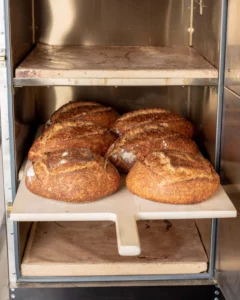
- 09:00 A.M. – Hearth Baking: Preheat an oven equipped with a Dutch oven, baking stone, or dedicated bread steel to 450°F (230°C). Invert the chilled dough onto parchment paper, score the top crust to direct expansion, and introduce steam via a covered baking shell or water-filled steaming pan for the first 20 minutes of baking. Remove the steaming apparatus or lid to vent moisture, and continue baking for an additional 30 minutes until the internal temperature reaches approximately 204°F (95°C) and the crust achieves a dark, caramelized finish. Allow the loaves to cool for two hours prior to slicing.
Technical Formulation and Recipe Metrics
To ensure reproducibility across commercial bakeries and advanced home kitchens, the formulation is calculated using standard baker’s percentages based on total flour weight.
- Total Dough Weight: 1,800 grams
- Target Hydration: 75.0% base (83.0% inclusive of scald moisture)
- Yield: Two 900-gram loaves
| Weight | Ingredient | Baker’s Percentage |
|---|---|---|
| 46g | Buckwheat Flour (Scald) | 5.0% |
| 73g | Boiling Water (Scald) | 8.0% |
| 687g | High-Extraction Wheat Flour (Type 85) | 75.0% |
| 183g | Whole Wheat Flour (Hard Red Wheat) | 20.0% |
| 46g | Barley Malt Syrup | 5.0% |
| 6g | Ground Aniseed | 0.6% |
| 596g | Water 1 (Levain & Autolyse) | 65.0% |
| 92g | Water 2 (Mix / Bassinage) | 10.0% |
| 18g | Fine Sea Salt | 2.0% |
| 53g | Ripe Sourdough Starter (100% Hydration) | 5.8% |
Nutritional and Economic Implications of High-Extraction Grains
The commercial adoption of high-extraction flours like Type 85 represents a growing consumer demand for bread that bridges the gap between refined white flour loaves and dense, hard-to-digest whole grain bricks. By retaining a significant portion of the wheat kernel’s bran and germ, high-extraction milling preserves essential B-vitamins, dietary fiber, and trace minerals without completely compromising the gas-retention capabilities required for an open, airy crumb structure.
Furthermore, incorporating alternative sweeteners and adjuncts such as barley malt syrup introduces complex maltose sugars that feed lactic acid bacteria more efficiently than refined white sugar. This biological interaction sharpens the sour profile while promoting Maillard browning during the high-temperature hearth baking phase.
Troubleshooting and Ingredient Substitutions
For bakers operating under supply constraints or dietary restrictions, several validated substitutions can be integrated without fundamentally disrupting the moisture balance of the dough:
- Aniseed Alternatives: Caraway seeds offer a robust, earthy spice note with similar aromatic dominance, though they impart a distinctly savory rather than licorice-sweet profile.
- Sweetener Adjustments: Blackstrap molasses can replace barley malt syrup to achieve a more bitter, intensely rich flavor profile reminiscent of traditional pumpernickel loaves. Conversely, raw honey introduces floral sweetness that pairs exceptionally well with the volatile aromatics of anise.
- Flour Modifications: In the absence of specialized high-extraction flour, bakers can substitute standard unbleached bread flour blended with 10% stone-milled whole wheat flour, though water absorption rates may require minor downward adjustments during the initial mixing phase.