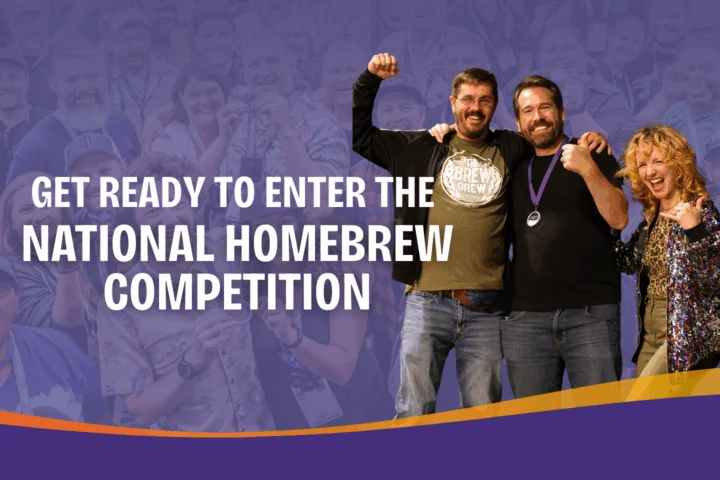

Thornton, Colorado homebrewer Weston Wright has secured the gold medal in Category 17: American IPA at the final round of the 2026 National Homebrew Competition. Representing the esteemed local club Indian Peaks Alers, Wright triumphed over an exceptionally competitive field, taking top honors among 105 entries in one of the most rigorously judged classifications in the entire competition. This prestigious victory not only highlights Wright’s meticulous craftsmanship and dedication to the art of brewing but also reinforces Colorado’s long-standing reputation as a powerhouse in both commercial and amateur craft brewing circles.
The National Homebrew Competition, organized annually by the American Homebrewers Association (AHA), stands as the largest and most prestigious amateur brewing event in the world. Every year, thousands of homebrewers from across the globe submit their finest fermented creations to local and regional qualifying rounds in the hope of advancing to the highly anticipated final round. Winning a medal at this level requires an extraordinary command of brewing science, recipe formulation, and sensory evaluation, as entries are evaluated against strict style guidelines by a panel of certified judges certified through the Beer Judge Certification Program (BJCP).
Category 17, dedicated to the quintessential American IPA, is historically one of the most crowded and fiercely contested brackets in the competition. The style demands a delicate yet vibrant balance of malt backbone and expressive American hop characteristics, featuring prominent citrus, floral, piney, or fruity aromas without tipping into astringency or excessive harshness. To emerge victorious out of 105 top-tier entries signifies that Wright’s formulation achieved the flawless execution, clarity, and aromatic profile that judges look for in a world-class example of the style.
The Journey to the Podium: A Rigorous Timeline of Competition
The path to the 2026 National Homebrew Competition podium is a grueling, multi-month process that tests the endurance and consistency of participating brewers. The timeline officially begins months in advance, when homebrewers across North America and beyond begin brewing, refining, and packaging their recipes for entry into the first phase of the tournament.
In the initial spring months, regional first-round competitions are held across multiple geographic zones. Judges evaluate thousands of beers spanning dozens of distinct style categories, ranging from traditional English ales and robust storters to experimental wild ales and modern IPAs. Only the highest-scoring entries from these regional qualifiers earn the right to advance to the final round, where they face off against the best homebrewed beer from every corner of the globe.
By late spring and early summer, the finalists are collated, transported under temperature-controlled conditions, and readied for the final judging panels. The final round of the 2026 competition brought together top industry professionals, master brewers, and veteran BJCP judges to conduct blind evaluations of the surviving entries. Within Category 17, the panel sifted through 105 elite American IPAs, narrowing down the field through rigorous sensory analysis before ultimately awarding Weston Wright the gold medal.

The Craft and Culture of the Indian Peaks Alers
Behind every successful homebrewer is often a supportive, knowledge-sharing community of peers. Wright is an active member of the Indian Peaks Alers, a prominent Colorado-based homebrewing club known for fostering technical excellence, camaraderie, and a deep appreciation for the brewing sciences. Clubs like the Indian Peaks Alers play an instrumental role in the American craft beer ecosystem, serving as incubators for talent where members can share feedback, critique each other’s batches, and collaborate on experimental techniques.
Colorado boasts one of the densest and most vibrant craft beverage cultures in the United States, supported by pristine Rocky Mountain water, agricultural access to quality hops and grains, and a discerning consumer base. For a local brewer like Wright to claim a gold medal on a national stage speaks volumes about the quality of mentorship and collaborative peer review fostered within regional clubs like the Indian Peaks Alers. Members frequently conduct structured blind tastings, technical seminars, and ingredient-sourcing workshops, all of which contribute to the elevated standard of brewing displayed in competitions like the AHA event.
Statistical Context and the Growing Scale of the Competition
The National Homebrew Competition has grown exponentially since its inception decades ago, mirroring the broader explosion of the American craft beer movement. While commercial craft breweries have expanded into nearly every zip code, the homebrewing community remains the creative grassroots engine of the industry. Many of today’s most celebrated commercial brewmasters and brewery owners began their journeys honing recipes in home kitchens, garages, and makeshift basements, entering competitions like this one to validate their skills.
In Category 17 alone, competing against 105 entries places Wright in an elite echelon. The sheer volume of submissions means that minor flaws—such as slight oxidation, diacetyl off-flavors, or improper carbonation levels—are often enough to eliminate an otherwise well-crafted beer. The judging criteria evaluate aroma, appearance, flavor, mouthfeel, and overall impression on a 50-point scale. Gold medals are exclusively awarded to entries that demonstrate world-class adherence to style guidelines with virtually no technical flaws, underscoring the remarkable precision of Wright’s winning brew.
Implications and the Broader Impact on the Amateur Brewing Community
Awards of this magnitude carry significant implications not only for the individual brewer but also for the broader hobbyist community. For Weston Wright, capturing a gold medal in the American IPA category provides definitive validation of his technical mastery. American IPA is a notoriously unforgiving style; because hops degrade rapidly, maintaining freshness and vibrant aromatics requires exceptional mastery of brewing chemistry, oxygen-reduction practices, and cold-chain logistics during packaging and transport.
Furthermore, success at the National Homebrew Competition often servesas a springboard for those looking to transition from amateur enthusiasts to professional brewing professionals. Many commercial craft breweries scout competition result lists to identify rising stars, innovative recipe developers, and individuals possessing a rigorous understanding of quality control. Even for those content to remain within the hobbyist sphere, such accolades elevate the profile of local clubs and inspire a new generation of brewers to refine their processes, experiment with new hop varieties, and submit their own creations to future judging panels.
As the craft beverage landscape continues to evolve with changing consumer preferences, shifting flavor profiles, and advancements in brewing technology, events like the National Homebrew Competition remain vital anchors of the community. They celebrate the dedication, science, and artistry required to transform simple ingredients—water, malt, hops, and yeast—into liquid excellence. Weston Wright’s gold medal win in the fiercely contested American IPA category stands as a shining example of what can be achieved through unwavering commitment to the craft, cementing his name among the finest amateur brewers in the world today.